
Football Nutrition Guide: The Four Pillars of Fueling
This post contains affiliate links. As an Amazon Associate, we earn from qualifying purchases.
Football nutrition is about matching four numbers to the matchday timeline: 6–8 g/kg of carbs the day before, 1–3 g/kg 3–4 hours pre-match, 30–60 g/hour during play, and 1.2 g/kg/hour of carbs plus 40g of protein in the first 20 minutes after the final whistle. The reality, as studies show, is that most players miss these targets, especially during the match itself.
Those numbers are the consensus, but they come from interpreting data and practitioner experience. A 2025 scoping review noted the lack of gold-standard trials on elite players. That means your individual response matters as much as the textbook. The guidelines are a map, not the territory, which is a key principle in any football nutrition guide.
What follows is a breakdown of those four pillars, the specific foods that fit them, the supplements that have evidence, and the common gaps, like that critical 15-minute second-half window, that decide whether you finish strong or fade.
Key Takeaways
- Match-day fueling starts 48 hours out. Muscle glycogen stores remain low for 48 hours post-match, so consistent high-carb intake (6–8 g/kg/day) between games is essential.
- In-match intake is where most fail. A 2024 study of an English Premier League squad found 81% missed the 30–60 g/h target, averaging only 17 g/h.
- The post-match 20-minute window is for structure, not guesswork. Aim for 1.2 g/kg of carbs and 40g of protein to kickstart recovery.
- Caffeine works, but the dose is lower than you think. Observed intake for EPL consumers averages 233 mg (about two strong coffees).
- Female players face a distinct challenge: systematic reviews show they often underestimate energy expenditure and consume too little carbohydrate post-match, leading to low energy availability.
The Four Pillars of Football Fueling
Think of your body’s energy system like a stadium’s logistics. You need the main stores full before gates open (pre-match), a steady supply during the event (in-match), and a rapid restock for the next fixture (recovery). The four key numbers from the UEFA expert group statement and other consensus papers give you the schedule.
The physical demands of football are fueled primarily by muscle glycogen, a limited storage form of carbohydrate. Glycogen levels drop drastically during a match and can remain low for 48 hours if not actively replenished. Nutritional strategies are therefore periodized around match day to load, maintain, and restore this critical fuel source.
The first pillar is the pre-match load: 6–8 grams of carbohydrate per kilogram of body mass per day in the 24-48 hours before the game. That’s a lot of pasta. The Portuguese Football Federation consensus stresses this is the foundation because muscle glycogen storage is physically limited.
The second pillar is the pre-match meal, 3–4 hours before kickoff: 1–3 g/kg. This isn’t about eating a giant meal right before; it’s a top-up from the loading you’ve already done.
The third pillar is in-match fueling: 30–60 grams per hour. This is where the wheels most often fall off. The fourth pillar is the post-match recovery sprint: 1–1.5 g/kg/hour of carbs and about 40g of protein, starting within 20 minutes of the final whistle.
| Fueling Pillar | Timing | Carbohydrate Target | Key Purpose |
|---|---|---|---|
| Pre-Match Load | Day(s) Before Match | 6–8 g/kg body mass/day | Maximize muscle glycogen stores. |
| Pre-Match Meal | 3–4 Hours Before Kickoff | 1–3 g/kg body mass | Top up liver glycogen, settle stomach. |
| In-Match Fueling | During Play | 30–60 g/hour | Maintain blood glucose, delay fatigue. |
| Post-Match Recovery | First 4 Hours (start within 20 min) | 1–1.5 g/kg/hour + 40g protein | Replenish glycogen, repair muscle. |
Why the 15-Minute Second-Half Drop Happens
You’ve felt it. The game restarts, and within minutes your legs feel heavy, your first touch is off, and the game seems faster. That’s not just in your head. A systematic review on carbohydrate intake highlighted that blood glucose levels frequently drop during the first 15 minutes of the second half.
This happens because halftime isn’t long enough to digest a full meal, so you’re running on what’s left in your tank from the first half. If you started with suboptimal glycogen or didn’t take on carbs during the first half, this dip is inevitable. The solution isn’t a magic halftime talk; it’s a halftime nutrition protocol.
Common mistake: Drinking only water at halftime. A carb-electrolyte drink (30-45g of carbs) is the single fastest way to buffer that second-half glucose crash and maintain technical performance.
This is where practical, easily digestible options come in.
The Recovery Clock Starts at the Whistle
When the match ends, your muscle glycogen is shattered. The data is clear: it remains low for 48 hours if you do nothing. That’s two full days. The most important recovery window is the first four hours, and the most critical phase within that is the first 20 minutes.
The practical recovery strategies guide from the Journal of the International Society of Sports Nutrition gives the exact formula: aim for ~1.2 g⋅kg−1⋅h−1 of carbs and ~40 g of protein in that first 20-minute window. This isn’t a leisurely post-game meal; this is a scheduled refueling stop.
Think of it as a fixed appointment. A recovery shake that hits these numbers works because it’s fast and precise. If you prefer real food, The goal is to flood your system with the building blocks for repair before you even hit the showers.
After that initial burst, continue with 1-1.5 g/kg/hour for the next 3-4 hours. This is where your post-match meal, a plate of food providing 1-1.5 g/kg/hour, takes over. Pair this with rehydrating with 150% of the body mass you lost during the match.
Navigating Supplements: Creatine, Caffeine, and the Rest
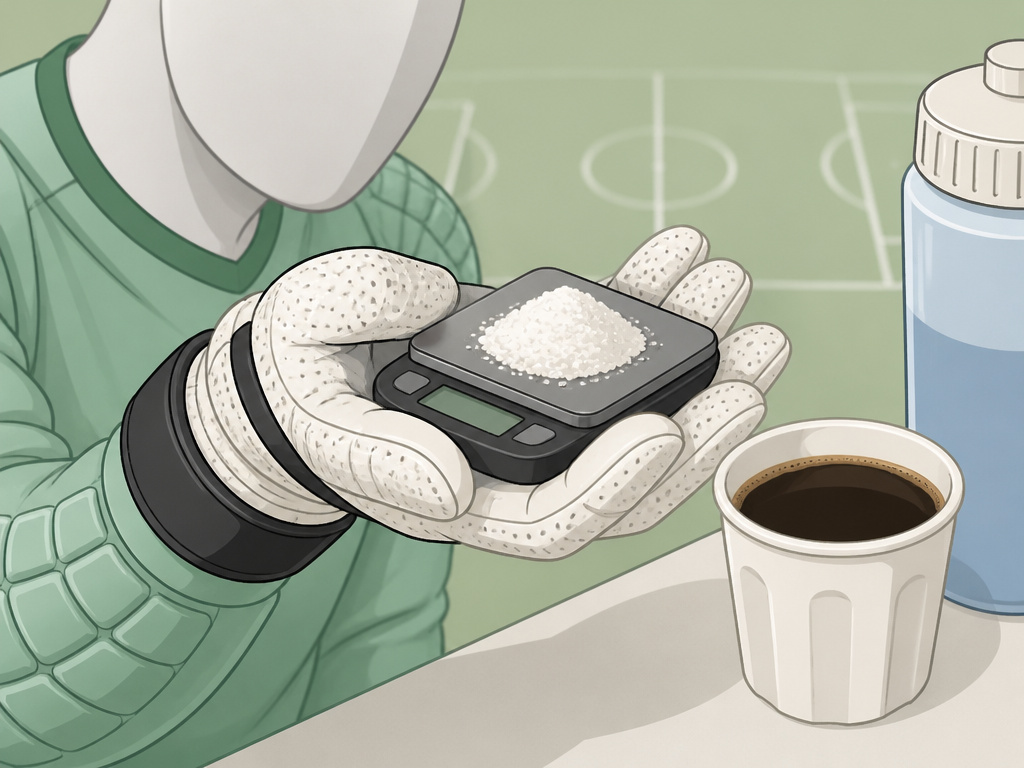
The supplement aisle is overwhelming. A simpler approach is to only consider what has consistent evidence for football performance and safety. The two with the strongest case are creatine and caffeine.
The Portuguese Football Federation consensus outlines the standard creatine protocol: a loading phase of 20 g/day for 5 days, followed by a maintenance dose of 3–5 g/day. They note the loading phase can be skipped, relying just on the 3–5 g/day dose, which takes longer to saturate muscles but avoids potential stomach issues. The benefit for football is about supporting power output in repeated sprints and aiding recovery in congested fixtures.
Caffeine is a proven ergogenic aid, but more isn’t better. An observational study of English Premier League player habits found the average dose for consumers was 233 ± 148 mg (about 2.8 mg/kg). That’s roughly two cups of coffee. It can sharpen focus and reduce perceived effort.
The foundational rule is that no supplement replaces a flawed core nutritional strategy. They are the finishing touches, not the foundation.
| Supplement | Evidence Level for Football | Common Protocol | Primary Benefit |
|---|---|---|---|
| Creatine | Strong | 3-5 g/day daily maintenance | Increases phosphocreatine stores, supports power and recovery. |
| Caffeine | Strong | 3-6 mg/kg, 60 min pre-exercise | Reduces perceived effort, increases alertness. |
| Beta-Alanine | Moderate | 4-6 g/day (split doses) | Buffers muscle acidosis, may help repeated high-intensity efforts. |
| Electrolytes | Situational | As needed in fluid replacement | Replaces sodium lost in sweat, aids hydration. |
The Gap Between Guidelines and the Dressing Room
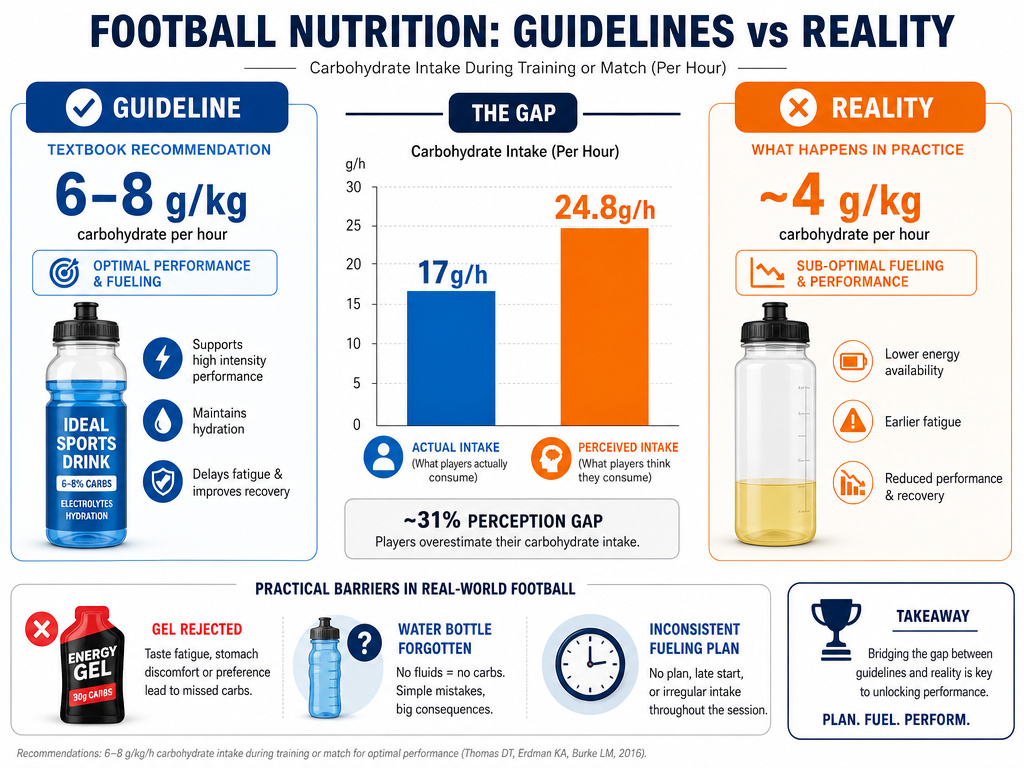
In football, the textbook and the dressing room are often in different leagues. The UEFA expert group statement openly states that players often consume less than recommended, with daily intake closer to about 4 g/kg BM, not the ideal 6-8.
A 2024 study put numbers to this. It found 81% of an EPL squad failed to meet the in-match CHO intake recommendation. The mean intake was just 17 ± 11 g/h, while players reported consuming more (24.8 ± 11 g/h). They thought they were doing better than they were. This gap is the difference between finishing strong and fading.
Why the gap? Practicality. It’s hard to drink a sports drink when you’re breathing heavily. Some players dislike the taste or feel of gels. Others just forget. This is where individualization and habit trump perfect theory. Finding one in-match fuel source you tolerate and will actually use is worth more than knowing the perfect number.
Where this goes sideways: Assuming elite guidelines apply directly to amateur training. A Sunday league player training twice a week doesn’t need to hit 8 g/kg/day on a Tuesday. Your nutritional principles should scale with your actual training load.
Special Considerations: Female Players and Congested Fixtures
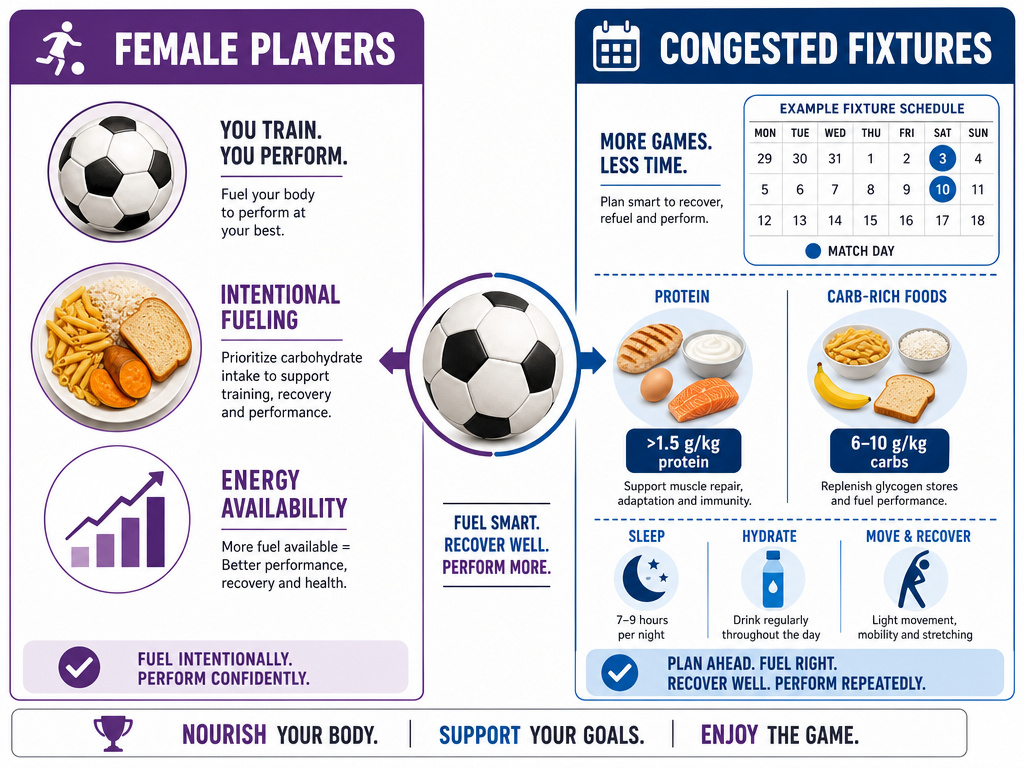
Two scenarios bend the standard rules: the women’s game and periods of multiple matches per week.
The systematic review on carbohydrate intake notes that female players have a similar physical demand to men, but energy availability is low, especially post-match. They tend to underestimate energy expenditure and not consume enough carbs. The guidelines might be similar, but the social and habitual barriers to meeting them can be higher. The focus must be on intentional, adequate fueling to match output.
For congested fixtures, like two matches in a week, recovery nutrition becomes your primary focus. The practical recovery strategies guide recommends daily protein intake be >1.5 g⋅kg−1 body mass during these periods to support muscle repair. There’s also a disagreement in the literature worth noting: the Practical Recovery Strategies Paper (2017) recommends a broader 6–10 g/kg/day carb range between matches, while the newer UEFA consensus and a 2024 systematic review stick to 6–8 g/kg/day. The takeaway? Err on the side of more carbs, not fewer, when games are close together.
Your football recovery during these spells requires a complete recovery plan that includes sleep, hydration, light movement, and mobility work, not just food. As outlined in a football nutrition guide, nutrition is the engine, but it can’t run smoothly if the rest of the machine is neglected.
How often should a footballer eat?
Think of your muscle glycogen storage as limited, so consistent carbohydrate intake is key. The day before a match, aim for a carbohydrate intake of 6–8 g/kg body mass/day. In the 3-4 hours before kick-off, have a substantial pre-match meal. During the match, consume carbohydrates to maintain energy, especially as glucose levels can drop in the first 15 minutes of the second half. Post-match, begin refueling within 20 minutes. For congested fixtures, maintain high daily carbohydrate intake to replenish glycogen, which remains low for 48 hours. Regular eating and drinking supports this constant energy demand.
What are the best fats for footballers?
Your focus should be on including healthy fats while limiting unhealthy ones. Healthy fats support overall health, hormone function, and can be a useful energy source during lower-intensity training periods. These are found in foods like avocados, nuts, seeds, and olive oil. Unhealthy fats, often found in processed foods, fried items, and certain baked goods, offer no performance benefit and can negatively impact recovery and inflammation. Prioritize getting your fats from whole food sources as part of a balanced plate centered on carbohydrates and protein for training and match days.
How does alcohol affect football performance?
Alcohol consumption impairs recovery and hinders subsequent performance. It dehydrates the body, directly counteracting the critical need for post-match fluid replenishment. Alcohol interferes with muscle repair and protein synthesis, slowing down the recovery process after the physical stress of a match or intense training. It can also disrupt sleep quality, which is essential for both physical and cognitive restoration. For players facing congested fixtures, where recovery windows are short, alcohol creates a significant obstacle to being ready to perform at the required level again.
Frequently Asked Questions
What is the 3-3-3 rule for nutrition?
The “3-3-3” rule is a simplified, easy-to-remember heuristic some coaches use, rather than a formal, evidence-based guideline from sports science bodies. It involves eating meals about 3 hours before activity, aiming for a plate balanced across 3 macronutrients, and rehydrating with 3 big gulps of water regularly. While its simplicity is appealing, for football performance, the specific gram-per-kilogram targets for timing and carbs are more precise and effective.
What should I eat the night before a match?
The night before is part of the “pre-match load” pillar. Focus on a carbohydrate-rich meal that’s also familiar and easy to digest. Aim for 1-2 g/kg of carbs at this meal as part of your 6-8 g/kg daily goal. Examples: a large portion of pasta with a tomato-based sauce and lean meat, a chicken and rice bowl, or a potato-based dish. Avoid overly fatty, spicy, or high-fiber foods that might cause gastrointestinal discomfort.
Are protein shakes necessary for football players?
Not necessarily. The primary goal post-match is rapid carb and protein intake. A shake is a convenient and fast way to hit the 40g protein and high-carb target within the 20-minute window, especially when real food isn’t available. However, a well-planned post-match meal with lean meat, rice, and vegetables can achieve the same result. They are a tool for convenience and precision, not a requirement.
How much water should I drink during a match?
The goal is to replace sweat losses, which vary hugely. Weighing yourself before and after training can establish your sweat rate. The hard rule from research is to replace 150% of the body mass lost after the match to fully rehydrate.
Is carb loading still relevant?
Absolutely, but modern carb loading involves a sustained, high-carbohydrate intake (6-8 g/kg/day) over the 24-48 hours before competition, rather than a single giant pasta meal. This strategy, rooted in the science of limited muscle glycogen storage, is one of the most effective nutritional interventions for endurance and intermittent sports like football.
Before You Go
The numbers here, 6-8, 30-60, 1.2, 40, are your targets. But the real skill is in the translation: turning those grams into actual food and drink you’ll consistently consume. Start by nailing one pillar. Maybe it’s the post-match 20-minute window this week. Maybe it’s actually bringing a drink with carbs to your next match.
The biggest performance leak for most players isn’t a lack of knowledge; it’s the in-match gap. If you take one thing, let it be this: get 30g of carbs in you at halftime. Whether it’s a gel, a drink, or applesauce, that single habit will do more for your second-half performance than any other change. The rest is building the system around it.
