
What to Eat Before a Football Match: A Player’s Guide
This post contains affiliate links. As an Amazon Associate, we earn from qualifying purchases.
To fuel a 90-minute football match, eat a carbohydrate-rich meal providing 1–4 grams of carbohydrate per kilogram of your body weight, 1–4 hours before kick-off. For a 70 kg player, that’s 70–280 grams of carbs from foods like pasta, rice, or whole-grain bread. Pair this with 500ml of fluid in the 60–90 minutes before the game and avoid high-fat, high-fiber, or spicy foods that can cause stomach upset.
That range is supported by several major sports science bodies, though the specific recommendations vary: FIFA suggests 1–4 g/kg, while UEFA suggests 1–3 g/kg. The gap between the recommendation and what players actually do is where matches are lost. A study of Premier League players found their pre-match meal averaged just 0.9 g/kg, falling short of the minimum, which shows many players don’t know what to eat before a football match. They were starting on half a tank.
What follows is a breakdown of the why, the how, and the what-if. This explains the science of glycogen, shows what the grams mean in actual food, and solves practical issues such as a 9 AM start or pre-game nerves that kill your appetite.
Key Takeaways
- Your pre-match meal is about liver glycogen as much as muscle fuel; an overnight fast can reduce liver glycogen stores by about 50%, making a morning meal critical.
- For a 70 kg player, a common recommendation is to aim for 140 grams of carbohydrate (2 g/kg) in your main pre-game meal, equivalent to a large bowl of pasta or 4 stack pancakes with syrup, though some guidelines suggest up to 4 g/kg.
- Urine color can be a practical hydration check: aim for a light color. For a more precise measure, the UEFA expert group states a urine specific gravity of <1.020 suggests euhydration.
- Low-glycaemic index carbs (oats, whole grains) may offer more sustained energy than high-GI options (white bread, sugary cereals) for some players.
- If you can’t stomach solid food, a liquid meal or smoothie 1–2 hours before is a valid, performance-saving alternative.
The 3 Things Your Pre-Match Meal Must Do
The goal is to solve three specific physiological problems that happen during a match, not merely to feel full. Miss one, and you’ll feel it around the 70th minute.
First, it must top up liver glycogen. This is the emergency glucose reserve for your brain and blood. The UEFA expert group notes liver stores can drop by about 50% after an overnight fast. If your kick-off is before noon and you skip breakfast, your concentration and decision-making will dip long before your legs do.
Second, it must top up muscle glycogen. This is your engine fuel. Research suggests approximately 50% of muscle fibres are empty or partially empty after a match. Starting low means you’ll cover less distance, especially at high speed, in the second half. A high-carb diet for 3–4 days before a match can have a measurable impact. One systematic review found a diet providing 8 g/kg/day of carbohydrate allowed players to cover 17% more distance at higher speeds compared to a low-carb diet of 3 g/kg/day.
Third, it must leave your stomach settled. Gastrointestinal distress is a common reason players under-eat. The meal should be familiar, easily digestible, and practiced during training.
A pre-match meal providing 1–4 g/kg of carbohydrate in the 1–4 hours before exercise tops up liver and muscle glycogen stores while allowing time for digestion. This range is supported by the Gatorade Sports Science Institute, FIFA, and a review of women’s football nutrition.
Translating Grams into Real Food (With a Sample Plan)
Telling a player to eat “2–3 g/kg of carbs” is useless without a plate in front of them. Here’s what that looks like for a 70 kg (154 lb) player aiming for 2 g/kg, or 140 total grams of carbohydrate.
| Food Option | Serving Size | Approx. Carbs (g) | Notes |
|---|---|---|---|
| Cooked Pasta | 2.5 cups | 90 | Base of the meal. |
| Tomato Sauce | 1 cup | 20 | Adds flavor and carbs. |
| Whole-Grain Bread | 2 thick slices | 30 | Easy to add on the side. |
| Total | 140 g | = 2 g/kg for 70 kg player |
The FIFA nutrition guide provides examples of foods that each provide 140 g of carbohydrate (2 g/kg for a 70 kg player).
The timing of this meal is where guidelines flex. Many guidelines, such as UEFA’s, recommend 3–4 hours for a large meal to digest fully, though others suggest a wider 1–4 hour window. But for morning matches, the Johns Hopkins Medicine guide notes the meal might need to be closer to 1–2 hours before kick-off, focusing on simpler, quicker carbs.
The short version: Pick a carb source you like and can digest, and build a meal around it. The numbers are a target, not a prison sentence.
The Day Before: Don’t Just Taper Training, Taper Carbs
Match day minus one (MD-1) is your last chance to fill the tank. Training is usually light, but your eating shouldn’t be. The UEFA expert group statement is clear: on the day prior to a match (MD-1), carbohydrate intake should be at least 6–8 g/kg body mass.
This process involves spreading those carbs throughout the day, rather than consuming one massive meal. A study tracking an English Premier League team found players increased intake on MD-1 to 4.6 ± 0.8 g/kg/day (from 3.5 ± 0.8 g/kg/day on a training day). They did it by adding carbs to every meal and snack.
Common mistake: Reducing food intake because training is lighter. The goal is to super-compensate glycogen stores, not match calories burned.
That sounds like a lot, but a structured football diet plan makes it manageable. Think a large bowl of cereal, a pasta-based lunch, a rice dish for dinner, and carb-rich snacks like fruit, smoothies, or sports drinks in between.
Hydration: It’s Not Just About Water
You can nail the carbs and still fail if you’re dehydrated. A ~2% decrease in body weight from fluid loss can hurt performance, especially in heat. Your pre-match hydration strategy has two phases.
First, slow and steady hydration throughout the day before and the morning of the match. Use your urine as a guide. The UEFA group states a urine osmolality of <700 mOsmol/kg or a specific gravity of <1.020 suggests euhydration. At home, just aim for light yellow color.
Second, a targeted drink before kick-off. The FIFA guide recommends approximately 500 ml during the 60-90 minute period before the start. This allows time for a bathroom break. In very hot conditions, they suggest an additional 300-600 ml in the 15 minutes immediately before.
This hydration for a match is a discipline, not an afterthought. A sports drink in this window can serve double duty, providing both fluid and easily digestible carbohydrates.
Foods to Avoid Before Kick-Off
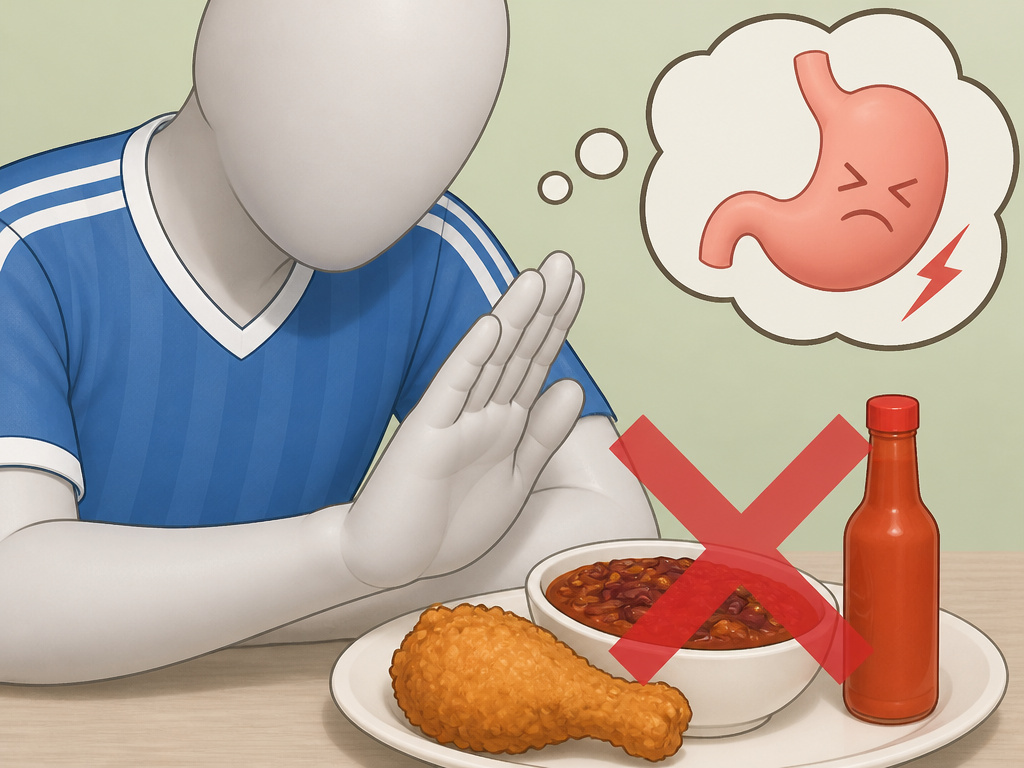
Knowing what to skip is as important as knowing what to eat. The wrong choice can lead to cramping, bloating, or a desperate sprint to the toilet.
- High-Fat Foods: Fried foods, fatty meats, creamy sauces. Fat digests slowly and can make you feel sluggish and heavy.
- High-Fiber Foods: Excessive amounts of beans, lentils, broccoli, or high-fiber cereals. Fiber can cause gas and abdominal distress during exercise.
- Overly Spicy or Novel Foods: This is not the time to try a new hot sauce. Stick to familiar, bland foods your stomach is used to.
- Excessive Protein: While important for recovery, a huge steak pre-match diverts blood flow to digestion and away from your muscles. Keep protein in the meal, but don’t make it the star.
The Johns Hopkins guide adds high-lactose foods (large amounts of milk) and new caffeine routines to this list. If you use caffeine, practice it in training first.
What If You Can’t Eat? Solutions for Nerves and Early Games
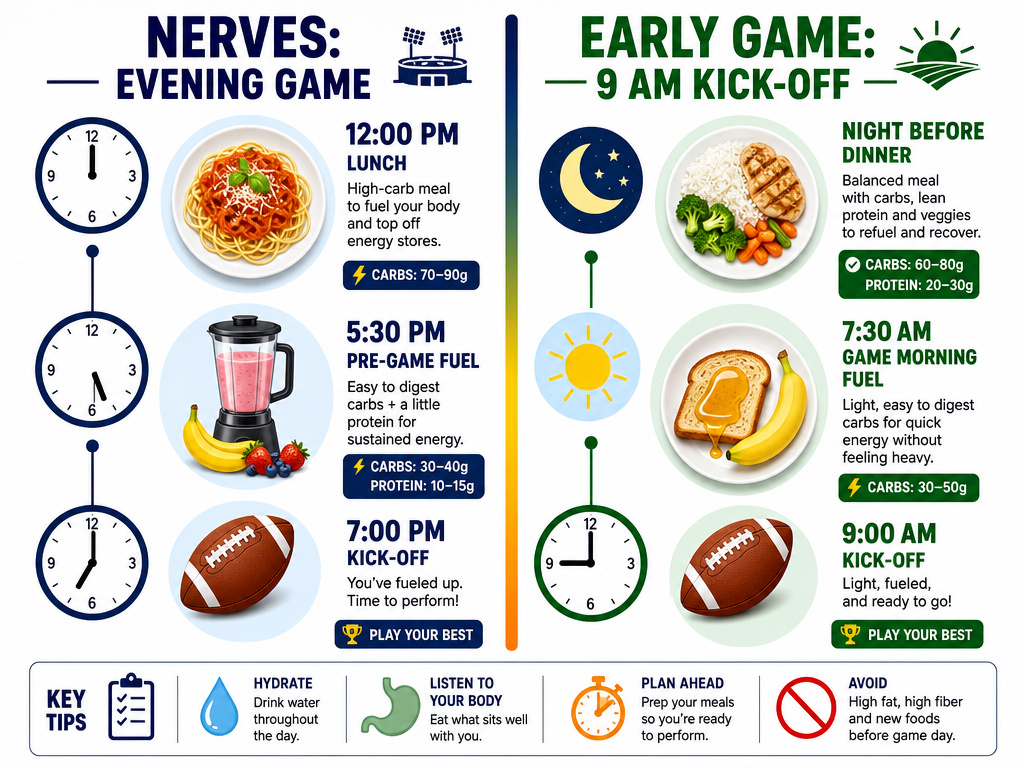
A tight stomach is normal. I’ve seen seasoned pros pick at their food. The solution isn’t to force down a plate of pasta and feel sick.
For nervous eaters: Shift your calories earlier. Have a larger, carb-focused meal at lunch for an evening game. Then, 90 minutes before kick-off, have a liquid meal—a smoothie, a commercial carbohydrate loading shake like Maurten Drink Mix 160, or even a simple sports drink. Your body absorbs it with minimal digestive work.
For early morning games: The “3-4 hour rule” is impossible if you wake up at 7 AM for a 9 AM kick-off. Here, you need a two-stage approach.
- The night before: Make your evening meal your primary “pre-match” meal, rich in carbs.
- The morning of: Have a very light, high-carb snack 60-90 minutes before. A banana, some toast with honey, or an energy gel 30 minutes before can provide the final top-up without gut trouble.
This is where practical halftime snacks and quick-fuel strategies become part of your overall post-match nutrition plan, not just an in-game fix.
Supplements: What’s Actually in the Professional’s Kit Bag?
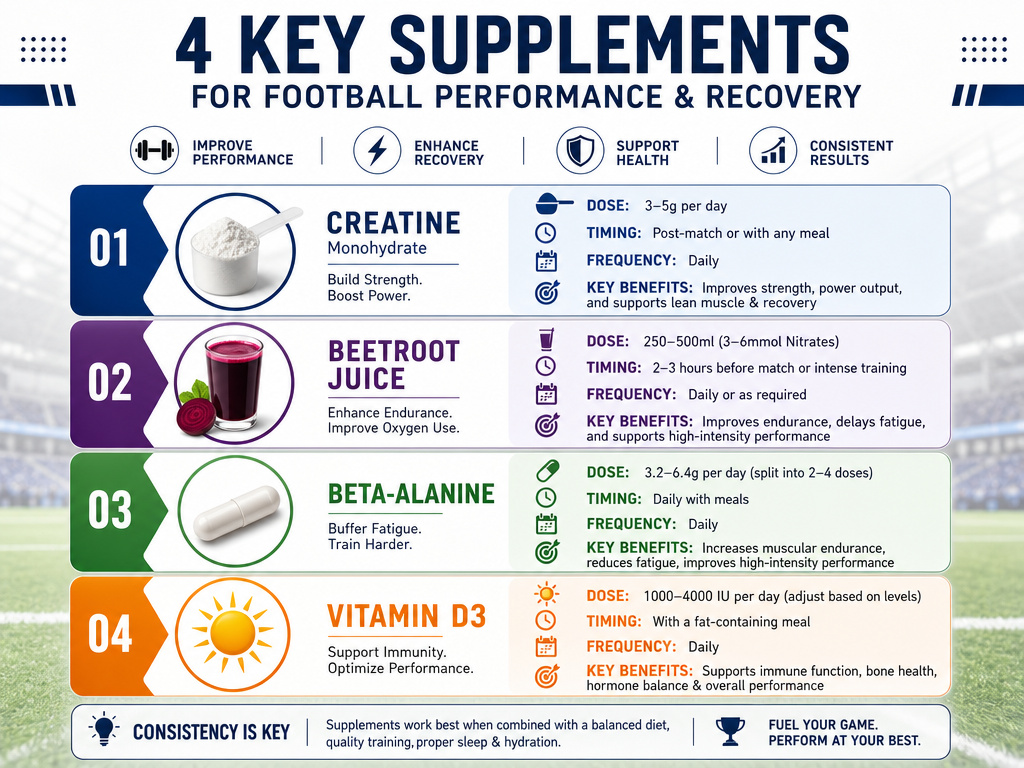
The “food first” philosophy is paramount. But at the elite level, specific supplements are used to fine-tune margins. According to the Portuguese Football Federation consensus, a few have decent evidence for football.
| Supplement | Typical Protocol | Claimed Benefit for Football | Reality Check |
|---|---|---|---|
| Creatine Monohydrate | 20 g/day for 5 days (load), then 3–5 g/day (maintain). | Improves power in repeated sprints; may boost glycogen reload. | Well-researched. Loading phase often skipped to avoid fluid retention. Take post-match. |
| Beetroot Juice (Nitrate) | Shot with ~400 mg nitrate before exercise. | May improve blood flow and efficiency in high-intensity efforts. | Benefits are clearer in lab tests than in complex match play. Can turn urine red. |
| Beta-Alanine | 4–6 g/day for at least 28 days. | Acts as a muscle buffer, potentially delaying fatigue from sprints. | Requires long loading; benefits less obvious in already-trained athletes. |
| Vitamin D3 | 2000–4000 IU daily (if deficient). | Supports bone health and immune function. | A medical test should guide this, not guesswork. |
These are tools, not magic. They sit alongside a solid football nutrition guide. For every player using beetroot juice, there are ten who would benefit more from simply hitting their daily carbohydrate target. The pros and cons of football supplements are worth understanding before you spend a penny.
Sample meal plans or a full-day timeline
Your match day starts the day before. Research shows players often eat less than the recommended amount, so plan ahead. The day before the match, focus on consistently eating carbohydrate-rich meals and snacks to build up your energy stores. On match day itself, your main meal should be a substantial carbohydrate-based option consumed 3 to 4 hours before kick-off. This gives your body time to digest. In the final 60 to 90 minutes, sip on fluids. If you have an early kick-off, don’t skip this meal; your liver glycogen will already be low from the overnight fast. Keep foods familiar and easy to digest to avoid any stomach issues.
Simple vs. Complex carbohydrates
Not all carbs are the same for your pre-match meal. The question of what to eat before a football match hinges on understanding complex carbohydrates, like those found in whole grains, pasta, and rice, which break down slowly. This provides a steady release of energy. Simple carbohydrates, found in sugars, are digested quickly and can cause a rapid spike and crash in blood sugar. Evidence suggests there are benefits to a pre-match meal composed of low-glycaemic index foods, which are typically complex carbs, rather than high-GI foods. For your main meal hours before the game, choose complex carbs to fuel you steadily. Save simple carbs, like sports drinks or gels, for quick top-ups much closer to kick-off or during the match itself.
Frequently Asked Questions
What is the best food to eat 2 hours before a football match?
With two hours to go, focus on easily digestible, solid carbohydrates. A good option is a plain bagel or two slices of toast with honey or jam, plus a banana. This could provide 60-80 grams of carbs with minimal fat or fiber. Alternatively, a 500ml sports drink or a smoothie can work if you’re too nervous for solids.
What do professional footballers eat before a match?
They follow the same principles above, but with more precision. Their pre-match meal is often a set menu chosen by the club’s nutritionist—typically pasta or rice with a lean protein like chicken or fish, and simple vegetables. They will hydrate systematically, often using personalized sweat-rate data. Studies, like the LJMU study on Premier League diets, show they still often under-eat carbs pre-match, highlighting how hard it is to get perfect.
Is it okay to drink coffee before a game?
Yes, if you’re used to it. Caffeine is a proven performance aid, but introducing it on match day can cause stomach upset or jitters. The clinical nutrition for competitors advice is to practice your caffeine routine in training first. A small coffee 60 minutes before kick-off can sharpen focus.
What should I eat at halftime?
The goal is fast carbs. Aim for 30-60 grams of carbohydrate. This could be a gel, a few energy chews, half a banana, or 250-500ml of a sports drink. The key is choosing something you’ve tested that doesn’t upset your stomach. Check our dedicated guide on specific halftime snack ideas for more.
The Bottom Line
Football nutrition is simpler than the supplement aisles suggest, but harder than just “eat some pasta.” It’s a discipline of numbers and timing centered on what to eat before a football match. The single biggest lever you can pull is hitting your daily carbohydrate target, especially the day before the match.
Start by nailing the MD-1 intake of 6–8 g/kg. Then, build a pre-match meal you can actually eat. If the science feels overwhelming, just remember this: a player who starts with full glycogen and fluid stores has already gained a physical and mental advantage over one who didn’t. That advantage shows up in the 80th minute, when you’re making a run and they’re not.
For the evidence, the PMC systematic review on carbohydrate intake is a solid deep dive. But your first move should be to look at your plate the day before a game and ask, “Is this enough?”
