
Supplements for Football Players Pros and Cons
This post contains affiliate links. As an Amazon Associate, we earn from qualifying purchases.
Supplements for football players offer specific, evidence-backed benefits like improved jump height, sprint speed, and endurance, but carry significant cons: risk of contamination with banned substances, adverse side effects at high doses, and a high financial cost for marginal gains if your diet and training aren’t already optimized. The International Olympic Committee consensus states that only a few supplements have good-to-strong evidence for performance, with caffeine, creatine, nitrate, and beta-alanine often cited among them.
The evidence is narrow, not broad. Most of the hype around supplements targets the 1% of elite athletes, not the 99% playing Sunday league or academy football. For the majority, a consistent diet with enough carbohydrates and protein will deliver more reliable gains than any powder. A key consideration is supplements for football players pros and cons.
What follows is a breakdown of what the research actually says works, the precise dosing protocols that matter, and the sobering reality of a poorly regulated market where one in ten products may contain a banned substance, all central to the supplements for football players pros and cons. This isn’t about banning supplements; it’s about knowing exactly what you’re buying, and why.
Key Takeaways
- Only a handful of supplements have good-to-strong evidence for football performance: caffeine, creatine, nitrate (from beetroot), and beta-alanine.
- The risk of inadvertent doping is high; research indicates 10 to 30% of dietary supplements may contain prohibited substances.
- Caffeine doses above 9 mg/kg of body weight increase side effects without boosting performance; the sweet spot is 3–6 mg/kg taken about an hour before play.
- Creatine loading (20g/day for 5–7 days) boosts repeated sprint ability, but the resulting 1–2 kg weight gain from water retention can be a detriment in some positions.
- Always choose supplements with third-party certification (Informed Sport, NSF Certified for Sport®) to verify purity and avoid contamination.
The Top 4 Evidence-Backed Supplements
The International Olympic Committee’s consensus statement is the closest thing to a universal playbook for high-performance athletes. It names just four supplements with good-to-strong evidence for improving performance in specific scenarios. Everything else sits on shakier ground.
Caffeine: 3–6 mg/kg of body mass, consumed ~60 min prior to exercise. Larger doses (≥9 mg/kg) do not increase the benefit and raise the risk of nausea, anxiety, and restlessness.
For football, caffeine may offer performance benefits. A network meta-analysis of studies on soccer players found caffeine had a small effect on enhancing jump height. A network meta-analysis of 80 studies on soccer players found caffeine had a small effect on enhancing jump height. The key is timing and pairing it with carbohydrates if taken during activity for improved efficacy. Forget the triple-shot espresso an hour before kickoff. For a 70kg player, 210–420mg of caffeine is the target range, about two strong cups of coffee. More isn’t better; it’s a fast track to the jitters and an upset stomach when you need to focus.
Creatine is the workhorse for power. The protocol is two-phase: a loading phase of roughly 20 grams per day (split into four doses) for 5–7 days, followed by a maintenance phase of 3–5 grams per day. This increases muscle phosphocreatine stores, aiding in rapid energy regeneration during repeated high-intensity efforts common in football. Studies show it can improve agility and sprint performance. The catch? Creatine supplementation often causes water-weight gain, which could be a detriment in some positions. For a centre-back, that might be irrelevant. For a winger whose game is based on pure acceleration, it could be a tangible negative.
| Supplement | Primary Benefit for Football | Evidence Strength | Key Risk / Consideration |
|---|---|---|---|
| Caffeine | Increased alertness, reduced perceived exertion, improved repeat sprint performance. | Good-to-Strong (IOC Consensus) | Doses ≥9 mg/kg increase side effects (anxiety, GI distress). Individual tolerance varies widely. |
| Creatine | Enhanced power for jumps, sprints, and tackles; improves training adaptation. | Good-to-Strong (IOC Consensus) | Causes 1–2 kg water-weight gain. No long-term health risks noted with proper use for up to 4 years. |
| Nitrate (e.g., Beetroot Juice) | May improve efficiency in type II muscle fibers, aiding high-intensity intermittent exercise. | Moderate-to-Good (IOC Consensus) | Benefits are harder to obtain in highly trained athletes. Upper limit exists (~520mg seems as good as ~1040mg). |
| Beta-Alanine | Increases muscle buffering capacity, potentially delaying fatigue in sustained high-intensity efforts. | Good-to-Strong (IOC Consensus) | Requires a long loading phase (10–12 weeks of split doses). Common side effect is harmless but annoying paresthesia (tingling). |
Nitrate, typically from beetroot juice, is the endurance helper. Acute benefits are seen 2–3 hours after a bolus of 310–560mg. It works by improving blood flow and muscle efficiency. The research in football is promising but not definitive, it may help attenuate a performance drop in the final quarter of a match. Beta-alanine is the long-game supplement. You need to take it daily for 10–12 weeks to increase muscle carnosine levels, which help buffer acid buildup. The effect is moderate; a network meta-analysis found beta-alanine had a moderate effect size on enhancing jump height in soccer players. The tingling side effect is harmless but can be distracting if you’re not expecting it.
Where the Evidence Gets Murky (And Marketing Fills the Gap)
For every caffeine or creatine, there are a dozen supplements with flashy claims and thin data. The systematic review of supplements for elite soccer put it bluntly: the evidence is “somewhat contradictory, scarce, or even nonexistent” for most products.
Protein powders are the classic example. If your diet already provides adequate protein, adding a protein supplement may not provide extra benefits for muscle growth. The supplement industry sells protein as the magic bullet, but for most amateur players, the real gap is in carbohydrate intake, not protein. Your body uses carbohydrates for high-intensity work. Inadequate carbohydrate intake can impair performance regardless of supplement use.
Where this goes sideways: Stacking multiple “performance” supplements. A pre-workout, a intra-workout carb mix, and a post-workout recovery shake can easily lead to “poly-supplementation,” where you unknowingly double or triple dose on ingredients like caffeine, risking adverse events.
Other supplements like branched-chain amino acids (BCAAs), glutamine, and individual vitamins are often solutions in search of a problem. Unless a blood test confirms a deficiency, like low Vitamin D or iron, supplementing is unnecessary and can be harmful. The principle is simple: food first. A solid football nutrition foundation built on a complete nutrition guide makes the supplements for football players pros and cons question far less urgent.
The Contamination and Doping Risk Is Real
This is the unavoidable con. The supplement industry is poorly regulated. A Frontiers article on supplement adulteration prevalence states that research indicates 10 to 30% of dietary supplements may contain prohibited substances. You can follow every dosing guideline perfectly and still fail a drug test.
The stories aren’t theoretical. A study of multi-ingredient pre-workout supplements found caffeine amounts ranged from 59% to 176% of what was claimed on the label. Another found unapproved cognitive drugs like centrophenoxine in products that didn’t list it. This isn’t a minor labelling error. For a player subject to WADA testing, it’s a career-ending gamble.
Common mistake: Trusting a brand’s reputation over independent verification. A big name on the bottle means nothing without a certification seal.
The only way to mitigate this risk is to use third-party certified products. Programs like Informed Sport, NSF Certified for Sport®, and BSCG Certified Drug Free® test batches for banned substances and label accuracy. They operate to ISO 17065 standards. This isn’t a guarantee of safety, but it shifts the odds dramatically in your favor. The official NATA supplement safety statement emphasizes this verification as a cornerstone of risk management.
The stakes are physical, too. In a survey of over 1,000 pre-workout users, more than half reported an adverse event. Pre-workout products specifically had 1.75 times the odds of an adverse event being death or life-threatening compared to general supplements. The line between “energy boost” and “emergency room” is thinner than many realize.
A Practical Protocol: How to Integrate Supplements Safely
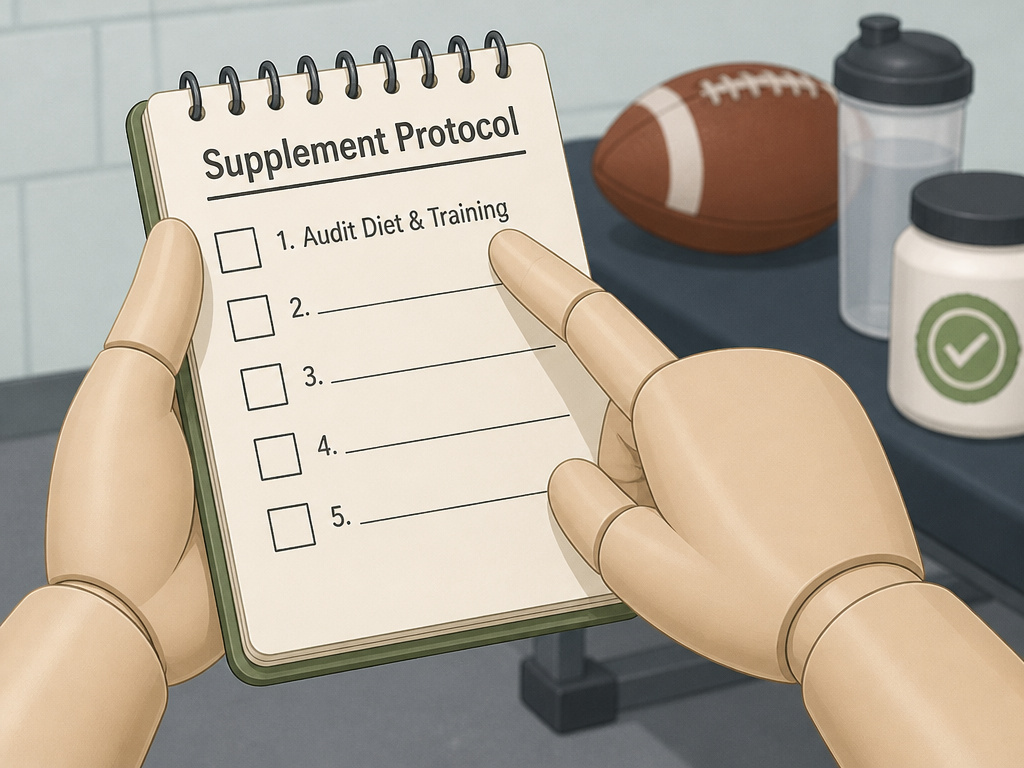
Thinking about adding a supplement? Follow this sequence. Skipping steps is how you waste money and assume unnecessary risk.
- Audit Your Diet and Training. This step is essential. Use a football player nutrition plan to check your basics. Are you eating enough to fuel your training? Are you sleeping eight hours? Is your hydration strategy solid? If the answer to any of these is no, a supplement is a distraction.
- Define Your Goal. Be specific. “Get better” isn’t a goal. “Improve my repeat sprint performance in the last 15 minutes of matches” is. That goal might point you toward caffeine or nitrate, not creatine.
- Research the Evidence. Go beyond the product’s marketing. Look for the IOC consensus or meta-analyses specific to soccer. The efficacy of dietary supplements for footballers review is a starting point for an overview of what the science says works.
- Source a Certified Product. Never buy a supplement without a third-party certification seal from one of the major verifiers. This is your only shield against contamination.
- Trial in Training. Never debut a supplement on match day. The IOC consensus explicitly states performance supplements should be trialled in training or simulated competition first. Start with a half-dose to assess tolerance. How does your stomach feel? Do you get a headache? This is also the time to dial in post-match nutrition to support recovery alongside any new supplement.
- Monitor and Re-evaluate. After 4-6 weeks, ask honestly: is this making a measurable difference? If not, stop. The money is better spent on better quality food or a session with a sports dietitian.
Carbohydrate and Electrolyte Supplements for Energy and Hydration
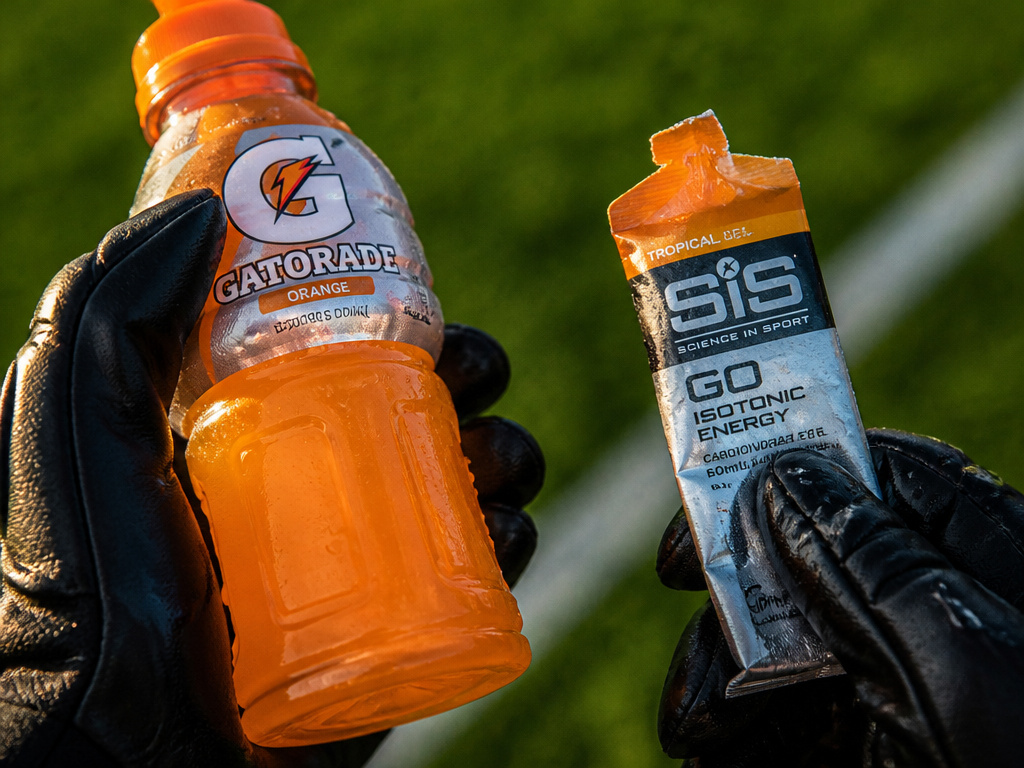
For football players, maintaining energy and hydration is critical for performance and recovery. Research involving soccer players shows that carbohydrate and electrolyte supplementation has a small effect on improving a player’s rating of perceived exertion, meaning it can help workouts and matches feel less strenuous. These supplements work by replenishing the glycogen stores used for fuel and replacing electrolytes lost in sweat. They are particularly useful during long training sessions or in hot conditions. Players should always test any new supplement during training first to assess personal tolerance and effectiveness.
Vitamin D Benefits
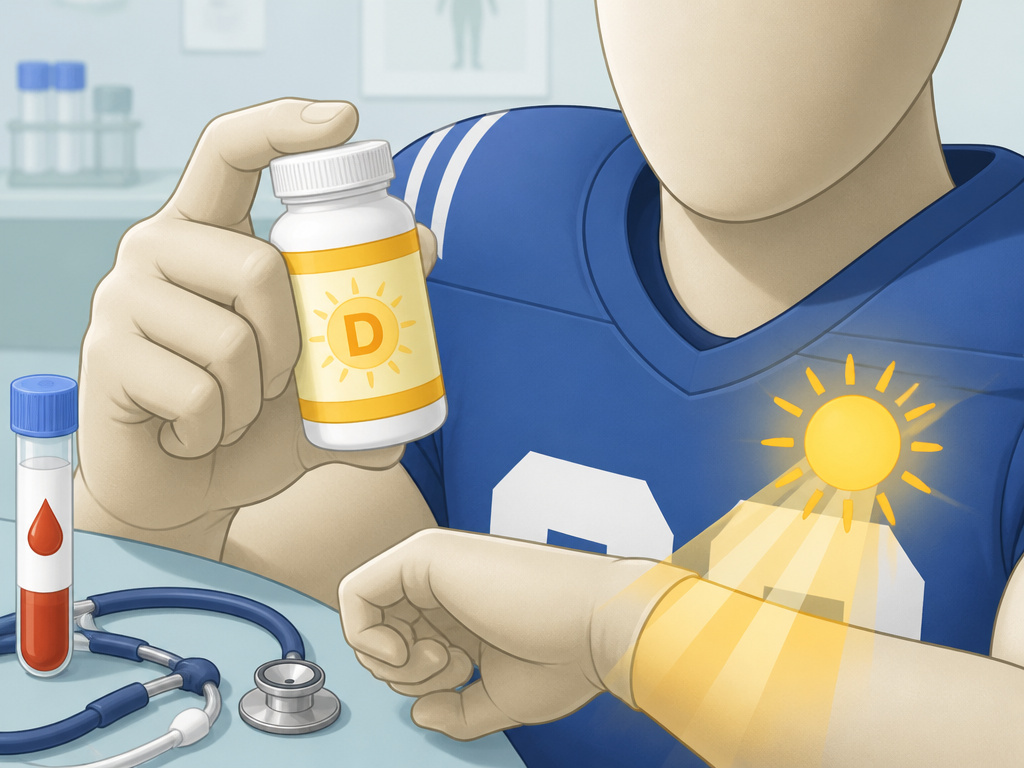
The fact sheet does not contain specific performance research on vitamin D for footballers. However, it notes that athletes should undergo laboratory tests for nutrients like vitamin D prior to supplementing to avoid toxicity. This highlights a key point: vitamin D is crucial for bone health and immune function, but supplementing blindly can be risky. A player’s need is determined by their current blood levels, sun exposure, and diet. The best practice is to get tested first and then follow the personalized advice of a healthcare professional or sports dietitian to determine if and how much to supplement.
Frequently Asked Questions
What are the most important supplements for a football player?
For performance, the evidence strongest supports caffeine, creatine, nitrate (from beetroot juice), and beta-alanine. However, “important” is relative. For the vast majority of players, ensuring adequate daily carbohydrate intake and proper hydration will have a far greater impact than any of these.
Does the FA or FIFA ban creatine?
No. Creatine is not a banned substance by WADA, FIFA, the FA, or any major football governing body. It is considered a legal dietary supplement. The risk with creatine, as with any supplement, comes from potential contamination during manufacturing, not the substance itself.
Why do some doctors advise against creatine?
Some general practitioners may caution against creatine due to outdated concerns about kidney strain or dehydration. However, the IOC consensus, based on current evidence, states that no negative health effects are noted with long-term use (up to 4 years) when appropriate loading protocols are followed. It’s always wise to consult a doctor who specializes in sports medicine.
Are supplements worth it for amateur players?
Rarely. The performance gains demonstrated in studies, while statistically significant, are often marginal for amateur players. For an amateur whose diet, sleep, and training consistency have large room for improvement, the cost-benefit analysis rarely favors supplements. The financial cost and the inherent risk of contamination are hard to justify when the solution is often just another serving of potatoes and an early night.
Before You Go
The supplement conversation in football is backwards. We talk about pills and powders before we talk about plates of food. The pros are specific, small, and conditional. The cons, cost, contamination, side effects, are broad and concrete.
If you take one thing from this, let it be this filter: before buying anything, ask if you’ve maxed out your recovery techniques through sleep, nutrition, and hydration. If the answer is yes, and you have a specific, evidence-backed performance gap, then, and only then, consider a certified supplement. Start with caffeine. It’s cheap, well-researched, and easy to trial. See if that 3-6 mg/kg dose an hour before a tough training session makes a difference you can actually feel.
Otherwise, save your money. The foundations of performance aren’t sold in a tub. They’re built in the kitchen, the bedroom, and on the training pitch, day after day.
