
What to Eat After a Football Match: Refuel & Recover
This post contains affiliate links. As an Amazon Associate, we earn from qualifying purchases.
After a football match, eat carbohydrates to replenish glycogen and protein to repair muscle, starting within the first 20 minutes and continuing for the next 4 hours. Rehydrate by drinking 1.5 liters of fluid for every kilogram of body mass lost, preferably within 2–4 hours, and prioritize a balanced meal within 2–3 hours. For an 80 kg player, this means aiming for roughly 1–1.5 grams of carbohydrate per kilogram of body weight per hour initially.
That 20-minute window isn’t a marketing gimmick. A peer-reviewed Journal of Sports Nutrition article shows that delaying carbohydrate intake for just two hours can leave your muscle glycogen levels 45% lower four hours after the final whistle, which is why knowing what to eat after a football match is critical. The clock starts ticking as soon as you stop.
What follows is a breakdown of the three recovery pillars, the exact numbers from sports science for what to eat after a football match, and a heap of practical, no-fuss food ideas to get you refueled and ready for the next session.
Key Takeaways
- Start refueling within 20 minutes of the final whistle, delay by 2 hours and you risk cutting muscle glycogen restoration almost in half.
- Rehydrate aggressively: drink 1.5 liters of fluid per kilogram of body mass lost (as recommended by the Portuguese Football Federation) or at least 150% of body mass lost within 1 hour (as recommended by a JISSN review), and include electrolytes if you sweated heavily.
- For the first 4 hours, target 1–1.5 grams of carbohydrate per kg of body weight per hour (as recommended by the Portuguese Federation and a JISSN review) or ~1 g/kg/h (as suggested in another JISSN review), e.g., ~96g/h for an 80kg player at the 1.2 g/kg/h midpoint.
- Consume 30–40 grams of protein soon after the match (per some sources) to kickstart muscle repair, and space further servings of 20–25g every 3–5 hours (per other sources) or every 3–4 hours.
- During a congested fixture week, daily targets shift to 6–10 g/kg of carbohydrate and >1.5 g/kg of protein.
The 3-R Framework for Post-Match Recovery
Think of your recovery in three phases: Rehydrate, Replenish, Repair. They overlap, but each has a primary job and a specific timeline. Get the sequence and the quantities right, and you turn a 48-hour recovery slog into a 24-hour reset.
The Portuguese Football Federation’s 2020 consensus statement frames recovery around the “3-R” model: Rehydration, Replenishment (of glycogen), and Repair (of muscle tissue). Each requires distinct nutritional strategies with specific timing windows in the hours and days after a match.
Rehydrate comes first because dehydration directly impairs every physical and cognitive function needed for recovery. You can eat all the carbs in the world, but if you’re dehydrated, your body can’t shuttle them efficiently into muscle cells.
Replenish is about glycogen, the stored carbohydrate in your muscles and liver that you just spent 90 minutes burning. A match can significantly deplete your glycogen stores. Without a deliberate refuel, you’ll start the next session already in a hole.
Repair addresses the microscopic muscle damage caused by high-intensity actions, sprints, and tackles. Protein provides the amino acid building blocks to patch those tears, making the muscle stronger for next time. Skip this, and soreness lingers, power drops, and injury risk climbs.
The Critical First 4 Hours (And Why 20 Minutes Matters)
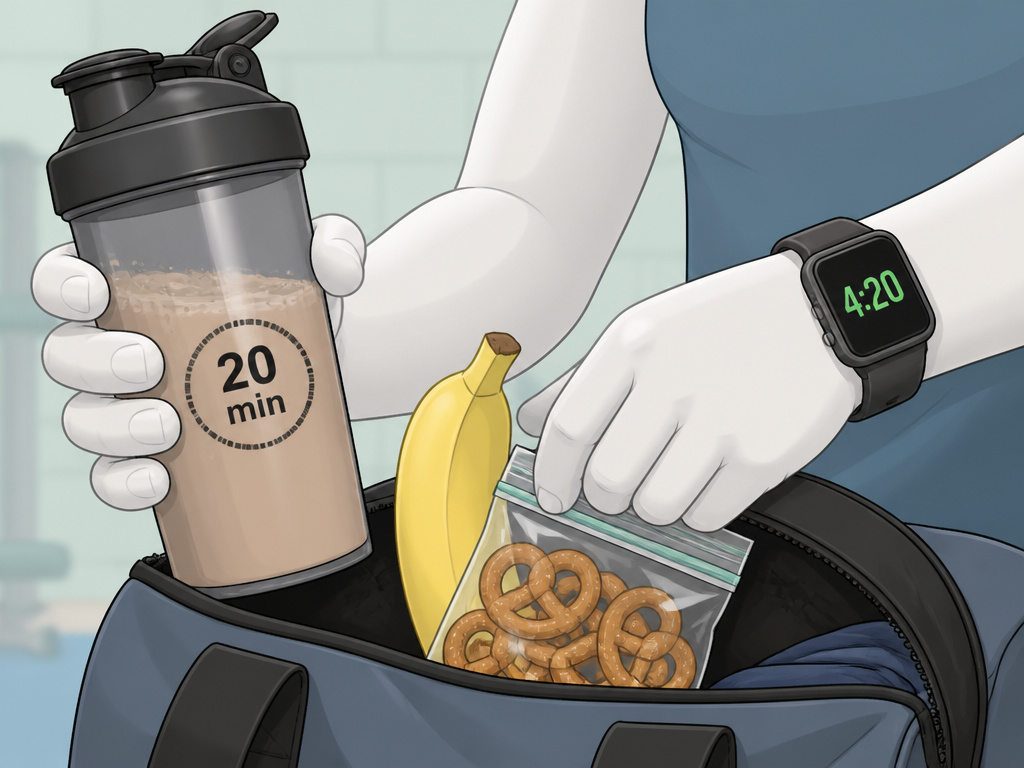
The recovery process doesn’t wait for you to shower and get home. It starts the moment you stop exercising. Your muscles are most receptive to absorbing nutrients in this immediate post-exercise period, a state often called the “metabolic window.”
Skeptical? The evidence isn’t vague. Research in the Journal of Sports Nutrition article found that waiting two hours to start carbohydrate intake resulted in muscle glycogen levels being 45% lower four hours post-exercise compared to starting right away. That’s a massive deficit to carry into the next day.
Carbohydrate: The Glycogen Refill Rate
So how much carbohydrate do you actually need? The consensus from both the Portuguese Federation and the JISSN review points to a rate of 1–1.5 grams of carbohydrate per kilogram of body weight per hour for the first four hours after the match.
To put that in real terms. For an 80 kg player:
- Lower end (1 g/kg/h): 80 grams of carbohydrate per hour.
- Upper end (1.5 g/kg/h): 120 grams of carbohydrate per hour.
For an 80 kg player aiming for 1.2 g/kg/h, that’s roughly 96 grams per hour. Frequent, smaller servings are better than one giant bolus. The same research notes that taking carbohydrate every 30 minutes beats a single serving every two hours for maximizing glycogen synthesis.
Where this goes sideways: Chugging a sports drink and calling it done. A single 500ml bottle with 30g of carbs might cover your first 30 minutes, but it leaves you 66g short for the rest of that first critical hour for an 80 kg player.
Protein: The Muscle Repair Trigger
While carbohydrate is the priority, protein plays a crucial supporting role from the very start. The goal is to provide a rapid supply of amino acids to switch your body from a breakdown state to a repair state.
A JISSN review recommends prioritizing ~40 g protein in the first 20 minutes, while other guidance suggests at least 30 g of protein after a game. This combination has been shown in studies like the PMC full-text article to optimally stimulate muscle protein synthesis.
| Carbohydrate | ~1.2 g/kg/h (first 20 min) | 1–1.5 g/kg/h (first 4 h) | Replenishes glycogen stores for next session; delays cause major deficits. | | Protein | 30–40 g | 20–25 g every 3–5 h | Provides amino acids to repair muscle damage from high-intensity actions. | | Fluid | Begin immediately | 1.5 L/kg of body mass lost | Restores plasma volume, aids nutrient transport, and supports thermoregulation. |
This table is the playbook used by professional academies for what to eat after a football match. The specific numbers turn “eat something after the game” into an actionable plan.
Rehydration: It’s More Than Just Water
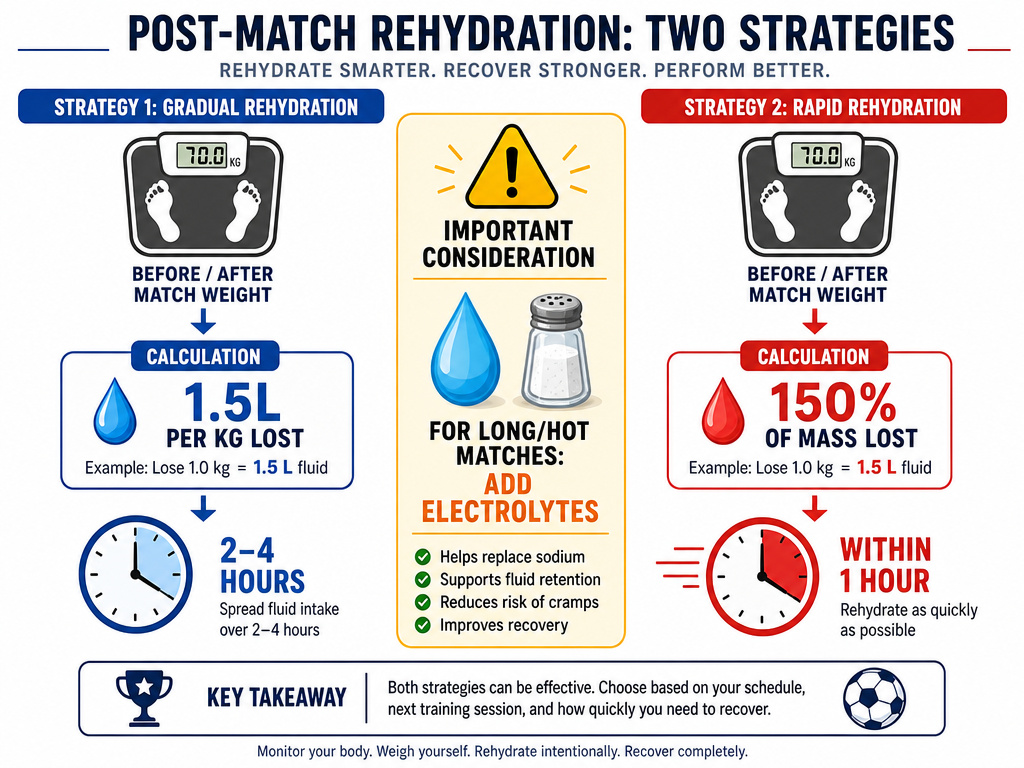
You finished the match drenched. Replacing that fluid is essential, but doing it effectively requires a bit of strategy. The old advice to “drink until your urine is clear” is a decent proxy, but for precise recovery, we need to talk about volume and electrolytes.
Here’s where the sources present a clear disagreement, and it’s useful to know both sides:
- Portuguese Football Federation: Recommends drinking 1.5 liters of fluid for every kilogram of body mass lost, and suggests this should ideally be achieved within 2–4 hours after the match.
- JISSN Review (PMC): Advocates for a more aggressive timeline, recommending you drink at least 150% of the body mass lost within 1 hour.
Weigh yourself before and after a match (in minimal clothing) to find your true sweat loss.
Easy to miss: Plain water can dilute your blood sodium levels if you drink a huge volume quickly after heavy sweating. If your match was long, hot, or you’re a salty sweater, include electrolytes, a sports drink, an electrolyte tablet, or even a pinch of salt in your recovery shake helps your body retain the fluid you’re taking in.
The Full Post-Match Meal: Building Your Plate
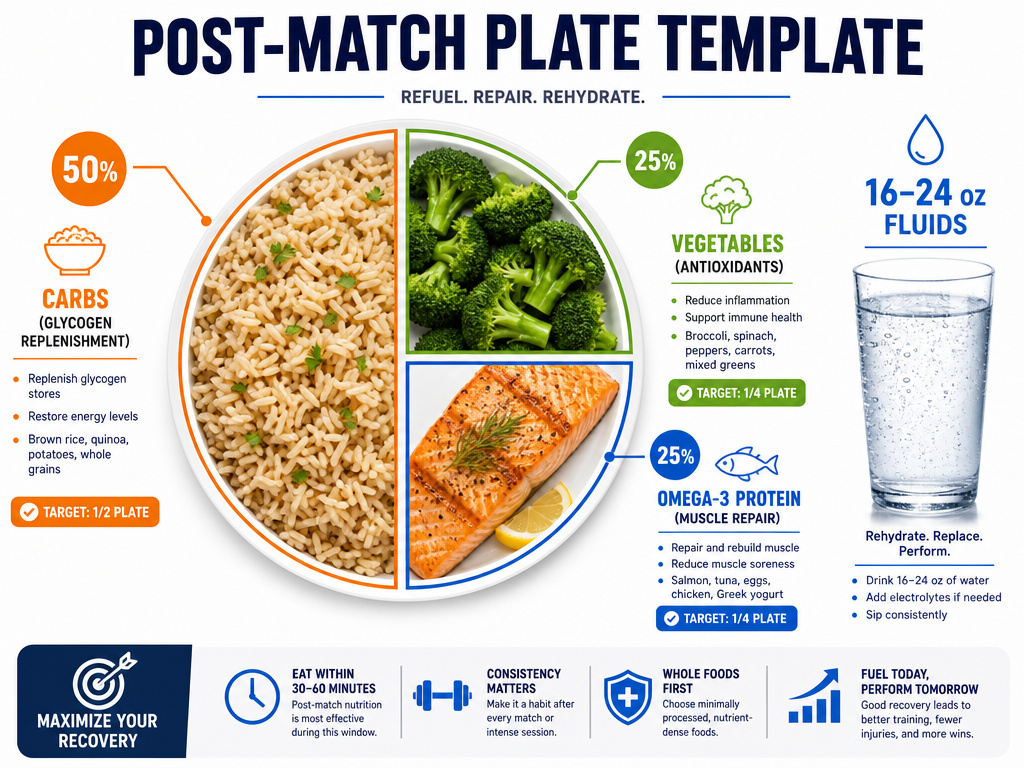
The initial snack bridges the gap, but within 2–3 hours, you should aim for a substantial, balanced meal. This is where you consolidate your recovery, top up nutrient levels, and set the stage for the next day.
Think of your plate as a template. The LA Galaxy’s nutrition team uses a simple, effective model for their players’ post-match meals:
- Half the plate: Carbohydrates (for glycogen replenishment)
- A quarter of the plate: Vegetables (for antioxidants, vitamins, and fiber)
- A quarter of the plate: Omega-3 rich protein (for muscle repair and inflammation modulation)
- Alongside: 16–24 oz (~500–700 ml) of fluids
This is a visual guide to ensure you’re hitting all the targets without a calculator. A chicken and rice bowl with a side salad and a glass of milk fits perfectly. So does salmon with sweet potato and steamed broccoli.
Managing Real-World Appetite
Here’s a truth most guides gloss over: you might not be hungry. Intense exercise can suppress appetite for an hour or two. Conversely, you might be ravenous and tempted to eat everything in sight.
- If you’re not hungry: This is where your 20-minute snack is essential. A liquid option like a recovery shake or chocolate milk goes down easily and starts the refueling process without needing a big appetite.
- If you’re starving: Stick to the plate template. It’s easy to overeat hyper-palatable, fatty foods when you’re exhausted. That heavy feeling will slow down digestion and hinder, not help, your recovery. Fill up on the carbs and lean protein first.
Special Considerations: Congested Fixtures and Busy Schedules
What if your next match or tough training session is in 48 hours? The standard 24-hour recovery protocol gets compressed. Your nutrition needs to be more aggressive and more precise.
During congested fixtures, the daily targets from the research shift upward: – Daily Carbohydrate: 6–10 grams per kilogram of body weight. For an 80 kg player, that’s 480–800 grams of carbohydrate per day. – Daily Protein: More than 1.5 grams per kilogram per day (per a JISSN review) or 1.6 g/kg/day (per the Portuguese Federation), distributed across multiple servings. That means protein with every meal and snack.
The goal is to flood the system with building materials around the clock. In these scenarios, convenient, high-quality carbohydrates and easily digestible protein sources become even more valuable. This is where a structured football player diet plan moves from a nice-to-have to essential.
| Scenario | Carbohydrate Focus | Protein Focus | Practical Tweak |
|---|---|---|---|
| Standard Recovery (5+ days between matches) | 1–1.5 g/kg/h for first 4 h | 30–40g post-match, then 20–25g every 3–5h | Follow the plate method for your next full meal. |
| Congested Fixtures (2-3 days between matches) | Upper end of 1.5 g/kg/h; daily intake of 6–10 g/kg | >1.5 g/kg/day, split into 6 servings | Prioritize rapid, high-GI carbs post-match and increase meal frequency. |
| Late-Night Match | Liquid carb/protein shake immediately, smaller solid meal if possible | Include 30–40g casein (e.g., cottage cheese) before bed | Don’t skip the bedtime protein; it provides a slow amino acid release overnight. |
Foods, Snacks, and What to Actually Eat
Theory is fine, but you need a grocery list. Here are practical options categorized by the 3-R framework. Mix and match based on what’s available, what you can stomach, and what you actually enjoy.
Immediate Post-Match (First 20-30 minutes):
- Commercial Recovery Shake: Some brands offer precise carb-protein ratios.
- Chocolate Milk: The classic for a reason, good carb-to-protein ratio, electrolytes, and palatable.
- Fruit Smoothie: Banana, berries, yogurt, and a scoop of protein powder blended with water or milk.
- Rice Cakes with Jam & Nut Butter: Quick, portable, and provides both fast and slower-release energy.
The First Full Meal (Within 2-3 hours):
- Pasta with Lean Meat Sauce & Side Salad
- Rice Bowl with Grilled Chicken, Vegetables, and Avocado
- Baked Salmon, Sweet Potato Mash, and Green Beans
- Hearty Chicken and Vegetable Soup with a Bread Roll
Hydration Focus:
- Water (with an electrolyte tablet if you sweated profusely)
- Skimmed or Low-Fat Milk (provides fluid, protein, and electrolytes)
- Oral Rehydration Solution (for significant dehydration)
- Coconut Water (a natural source of potassium)
Common mistake: Relying solely on a protein shake after a match. For glycogen replenishment, carbohydrate is king. Adding protein helps, but if your shake has 30g of protein and only 10g of carbs, you’ve missed the primary refueling target. Ensure your immediate recovery snack contains sufficient carbohydrates alongside protein.
The best post-match recovery methods combine nutrition with strategies like a proper cool down and sleep. Your hydration strategy also needs to continue into the next day, especially if you’re training again soon.
What Should Young Football Players Eat After a Match?
For kids and young athletes, the core principles are the same, but the focus is on practicality and consistency. Rehydration is critical; they should drink fluids to replace what was lost through sweat. Start carbohydrate intake soon after the final whistle to replenish energy stores, as delaying can significantly slow recovery. Offer tempting, practical foods and provide multiple opportunities to consume carbohydrates and electrolytes, like in changing rooms. The goal is to establish a routine that supports their growth and the demands of training, ensuring they get a balance of carbohydrates for fuel and protein for repair throughout the day.
How Can Food Reduce Inflammation After a Game?
While the primary focus after a match is on rehydration, carbohydrates, and protein, the foods you choose can also help manage inflammation. A practical approach is to build a recovery plate that includes a variety of colorful vegetables alongside your carbohydrates and protein. These foods contain natural compounds that support the body’s recovery processes. Including a source of omega-3 protein, like certain fish, can be beneficial. This strategy complements the essential work of refueling glycogen stores and repairing muscle tissue, creating a more complete recovery environment.
Frequently Asked Questions
What is the single best thing to eat after a football game?
There’s no magic bullet, but the most effective single item is often chocolate milk. It provides the ideal 3:1 or 4:1 carbohydrate-to-protein ratio needed for simultaneous glycogen replenishment and muscle repair, along with fluid and electrolytes like sodium and potassium. It’s cheap, widely available, and easy to digest when you might not feel like eating solid food.
I’m not hungry after a match. What should I do?
Force the liquid. Your appetite will return, but the metabolic window won’t wait. Drink a recovery shake, chocolate milk, or a fruit smoothie. The liquid format bypasses the lack of hunger cues and delivers the essential nutrients directly. Even 300-400 calories from a drink is infinitely better than nothing.
What should I avoid eating after a game?
Limit foods that are very high in fat or fiber immediately after the match. A greasy burger and fries, while tempting, will slow down gastric emptying and delay the absorption of carbohydrates and protein into your bloodstream. Save the celebratory feast for later. Also, avoid alcohol, it dehydrates you, impairs protein synthesis, and disrupts sleep, sabotaging all three pillars of recovery.
How does this change for a late-night game?
The principles stay the same, but logistics change. Have your recovery shake ready in your bag for the changing room. When you get home, opt for a lighter, easily digestible meal, perhaps scrambled eggs on toast or a bowl of cereal with milk. Crucially, include a slow-digesting casein protein before bed, like a serving of cottage cheese or a casein shake, to provide a steady stream of amino acids overnight.
Are supplements necessary for recovery?
No, but they can be convenient. Whole foods should always be the foundation of your football nutrition. A pre-match meal of real food is best, and a post-match meal of real food is best. However, a well-formulated recovery powder or a protein shake is a practical tool when you’re short on time, lack appetite, or are traveling. If you do use them, see them as a supplement to your diet, not a replacement for it. Our analysis of football supplements covers the pros and cons in detail.
Before You Go
The biggest shift isn’t finding exotic superfoods; it’s committing to the clock and the calculator. The difference between feeling shattered for two days and bouncing back in one often comes down to what you do in the first hour after the whistle.
Start with the 20-minute rule. Get that initial mix of carbs and protein in you, even if it’s just a banana and a yogurt. Weigh yourself to understand your sweat loss and drink accordingly. Then, within a couple of hours, build that balanced plate.
It feels mechanical at first. But after a few cycles, you’ll notice the difference in your legs during the next training session. That’s the real win: recovering from the last game and being properly fueled for the next one.
