
How to Do a Driven Pass in Football: The Coaching Debate
This post contains affiliate links. As an Amazon Associate, we earn from qualifying purchases.
To do a driven pass in football, strike the ball with speed and power using your instep or laces. Approach at a 30-degree angle, plant your non-kicking foot about 15cm beside the ball, and drive your kicking leg through the ball with a low follow-through to keep the pass low and fast. It’s a straight-line pass for quickly covering ground or splitting a defense.
The 15cm rule for your plant foot is the mechanical anchor. Get that wrong, and your swing loses its power base, turning a sharp pass into a weak, looping ball. Every other part of the technique, the angle, the strike, the follow-through, depends on that foot being in the right spot. This is a fundamental principle for how to do a driven pass in football.
What follows is the full breakdown of how to do a driven pass in football: the exact technique from primary coaching sources, the real disagreement on whether to use your instep or laces, the most common errors that send the ball sailing, and a progression of drills that takes you from a static wall to a moving target.
Key Takeaways
- The driven pass definition is a fast, powerful pass sent on a straight line, often low, to quickly switch play or beat a defender.
- Place your plant foot 15cm beside the ball with toes pointing at your target, this is the essential foundation for power and accuracy.
- For a low trajectory, keep your body over the ball and follow through low; according to ActiveSG, leaning back further can increase the height of a long pass.
- You must practice with both feet; being one-footed with this pass is a tactical liability.
- Start with stationary wall drills before progressing to moving balls and leading a receiver.
The Step-by-Step Driven Pass Technique
Forget highlight-reel passes for a second. A driven pass is a player’s attempt to pass the ball to a team-mate with speed and power. You have a teammate in space, and you need to get the ball to them before a defender closes the gap. Here’s how to build the motion from the ground up for how to do a driven pass in football.
Approach and Stance. Don’t run straight at the ball. Coaches at ActiveSG, Singapore’s national sports agency, specify an approach at a 30-degree angle. This gives your kicking leg the room it needs for a full, powerful swing. It’s the difference between a cramped stab and a fluid strike.
Plant Foot Placement. As you reach the ball, plant your non-kicking foot firmly. The same source gives the exact measurement: about 15cm beside the ball. Your toes on that plant foot should be pointing directly at your target. This isn’t a suggestion, it’s the anchor point that aligns your hips and shoulders and generates the transfer of power from the ground up. Get this wrong, and everything else is a compensation.
Striking the Ball. This is where sources disagree, and it’s a crucial detail. You have two schools of thought:
- The Instep School: The BBC Sport Academy and Coaching American Soccer advocate using the instep, the broad, flat area on the inside of your laces. The argument is control and a cleaner strike through the ball’s center.
- The Laces School: ActiveSG and Pitchero instruct you to hit it with your laces, “almost like taking a shot.” This is for pure, unadulterated power.
Technical Snippet: The driven pass is defined by FIFA as a player’s attempt to pass the ball to a team-mate with speed and power. It is the first application of the powerful instep drive to the task of passing, intended to send the ball on a straight line along the ground or just above it to an open teammate.
My take? Beginners should start with the instep. It’s a larger, more forgiving surface that makes it easier to keep the pass low. As you get comfortable and need more zip, you can shift to the laces. Aim to strike the center of the ball. Hit the bottom half, and it goes up. Hit the top half, and you’ll drive it into the ground.
Follow-Through. Your follow-through dictates everything. To keep the pass low, you must follow through low, with your kicking foot ending up pointing at your target and your body leaning forward over the ball. Want more height? Then you lean back slightly as you strike. This isn’t a lofted pass, it’s a subtle tilt that changes the ball’s trajectory. The power comes from driving your entire leg through the ball, not just snapping your foot at it.
Instep vs. Laces: The Great Coaching Debate
So which is right? If you read the coaching manuals, you’ll find reputable sources on both sides. This isn’t a case of one being wrong; it’s about precision versus power.
The instep provides a larger, flatter striking surface. This makes it easier to consistently make clean contact with the ball’s center, promoting accuracy and a lower trajectory. It’s the technician’s choice. The BBC Sport Academy drive pass guide explicitly advises using the instep to drive through the ball for a low pass with strength.
Using your laces means you’re striking with the hard bones on the top of your foot. This can generate more raw power and speed, as you’re essentially taking a shot. However, it’s a smaller contact point, making it less forgiving. It’s the power hitter’s choice.
| Striking Surface | Best For | Key Risk |
|---|---|---|
| Instep | Accuracy, low trajectory, consistency | May lack ultimate power for very long distances |
| Laces | Maximum power and speed | Less forgiving; easier to mishit and balloon the ball |
For most players learning the long pass or driven pass, I recommend starting with the instep. Master making solid, central contact every time. Once that muscle memory is locked in, experiment with the laces for situations where you need to absolutely rocket the ball 40 yards to a winger in space.
Common Mistakes and How to Fix Them
You can know every step and still get it wrong. These are the errors I see every weekend on pitches everywhere, and each has a direct, physical cause.
Where this goes sideways: Leaning back too early. You launch the ball over your target and out of play, killing a promising move. It happens in the split-second before contact.
The Balloons Over the Bar. This is the classic. You’re trying to pass, but it turns into a shot that sails high. The cause is almost always leaning your upper body back as you strike, or hitting the bottom half of the ball. Keep your chest and head over the ball. Visualize driving your knee through the shot, not lifting it.
The Weak Toe Poke. The pass has no pace and wobbles awkwardly. This comes from a stiff leg and no follow-through, or using your toe instead of the proper striking surface. You’re jabbing, not swinging. Focus on a smooth, full leg swing and make sure you’re striking with the correct part of your foot. It’s why mastering the fundamentals of passing is a prerequisite.
Poor Body Alignment. The pass veers off to the side. Check your plant foot. Is it pointing where you want the ball to go? If it’s pointing left, your hips open and the ball will follow. Also, check your approach angle. A straight-on approach forces an unnatural swing path.
When and Why to Use a Driven Pass
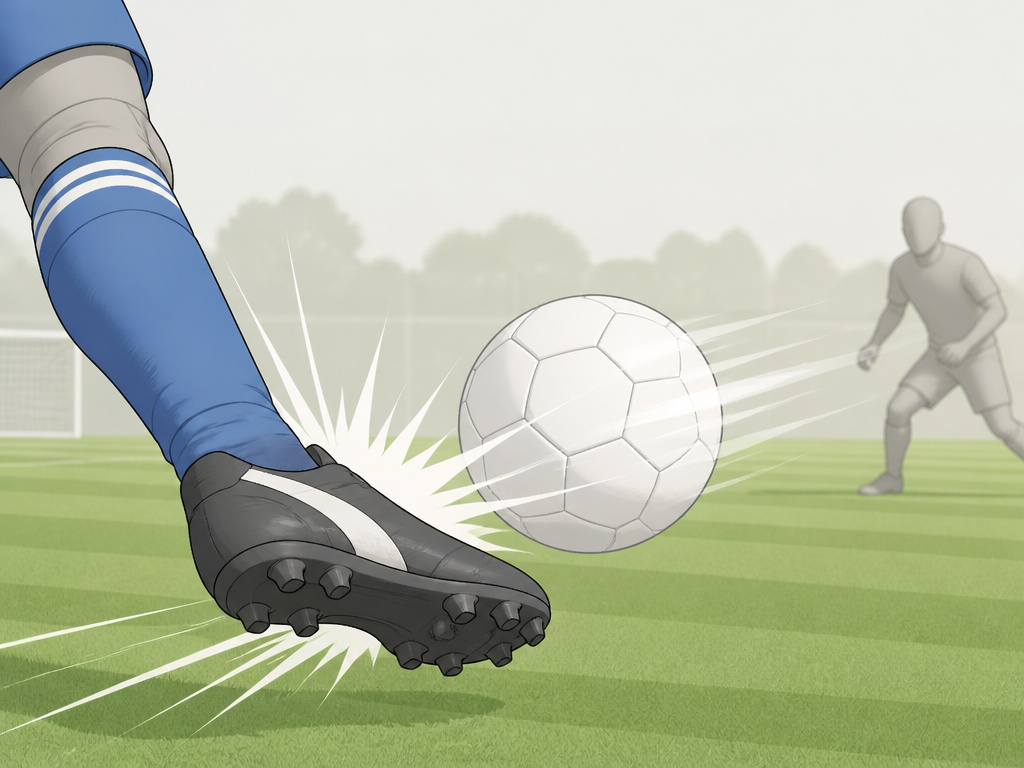
A driven pass isn’t just a “hard pass.” It’s a specific tool for specific jobs. You use it when the situation demands speed over subtlety.
The primary job is to switch the point of attack. The ball is on the left flank, the defense is shifted over, and your right winger is in acres of space. A lofted pass takes too long. A ground pass might get intercepted. A driven, low-trajectory pass zips across the pitch and reaches him before the defense can react.
It’s also the perfect through ball to split a defense. When a striker is making a run between two centre-backs, a delicately curled pass might be ideal, but a powerfully executing a through ball on the ground is often harder to cut out. The pace on the ball also means the striker doesn’t have to break stride.
Finally, use it for quick, direct passing in midfield under pressure. If you’re being closed down and need to release the ball firmly to a teammate’s feet before you’re tackled, a driven pass gets it there. It’s a safer option than trying a tricky outside of the foot pass in a tight spot.
Essential Practice Drills

You won’t learn this by just playing matches. You need deliberate, repetitive practice. Here’s a progression, from solo work to game-like scenarios, pulled straight from coaching manuals.
1. The Wall Drill (Solo Foundation). Pitchero’s academy sets the baseline: stand at least 5 metres from a wall and drive the ball into it. Focus on clean technique, plant foot, strike, low follow-through. Control the rebound and repeat. This is your bread and butter for building muscle memory. It’s the core of all good football wall passing drills.
2. Partner Passing (Static to Moving). Find a partner. Start with both of you stationary at a distance. Pass back and forth, focusing on technique. Then, practice striking a moving ball. This introduces the timing element for a moving ball. As Coaching American Soccer notes, for a moving ball, “the plant foot is placed beside the ball as the ball rolls past it into position.”
3. Leading a Moving Receiver (Game Scenario). This is where it gets real. Set up as Coaching American Soccer describes: have a receiver start 10 yards in front and 5 yards to the side of you. As the receiver starts a forward run, play a driven pass into the space ahead of them. They run onto it. This drill teaches you to judge weight and lead a teammate, turning a technique into a functional technique for crossing or through pass.
Don’t skip this: Practice with your weak foot. Every single session. Sportplan’s drill video explicitly states players should “pass using the instep of both their feet.” Being one-footed with this pass makes you predictable and halves your options on the pitch.
Developing Your Weak Foot
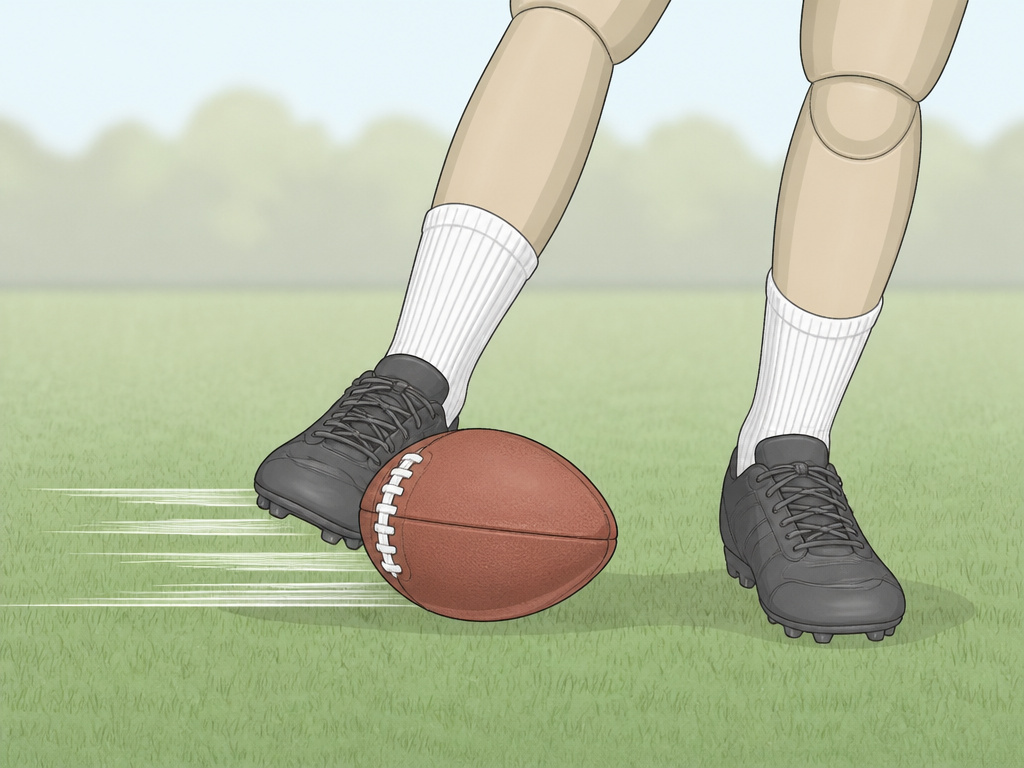
This is a fundamental requirement. If you can only drive a pass with your right foot, you are a much easier player to defend. The defense knows to show you onto your left. It stifles your team’s movement.
Start simple. Use the wall drill but only with your weak foot. It will feel awful. The coordination will be off, the strikes will be weak. That’s the point. Do multiple repetitions consistently. Then move to short, gentle passing drills with a partner using only your weak foot. Don’t worry about power; worry about clean contact and direction.
The goal isn’t to make your weak foot as good as your strong one, though that’s the dream. The goal is to make it functional. You need to be able to play a reliable driven pass with your weak foot under mild pressure. That alone will significantly improve your game.
Frequently Asked Questions
What is a drive pass in football?
Drive pass, or driven pass, is a fast, powerful pass intended to travel a longer distance on a relatively straight and often low trajectory. It’s used to pass the ball to a teammate with speed and power on a straight line.
How do I perform a driven pass in FC 26?
While this article focuses on real-world technique, in football video games like FC 24/EA FC, a driven pass is usually executed by pressing the pass button (e.g., X on PlayStation, A on Xbox) along with the through pass modifier (R1/RB). This makes the pass faster and firmer along the ground.
What’s the difference between a driven pass and a low driven pass?
In real football coaching, they are generally the same thing, a powerfully struck pass with a low trajectory. The term “low driven” emphasizes keeping the ball down. In video game contexts, “low driven” has sometimes referred to a specific type of low, powerful shot, which has caused some confusion between the terms.
How can I get more power on my driven pass?
Power comes from proper technique, including plant foot stability and a full leg swing. Make sure you’re approaching at an angle, planting your foot firmly about 15cm from the ball, and following through completely. Striking the ball with your laces instead of your instep can also add power, but at the potential cost of accuracy.
Before You Go
The driven pass is a multiplier. It turns possession into threat. But the technique is unforgiving; a small error in your plant foot or your lean turns a sharp weapon into a wasted opportunity.
One final, contrarian bit of advice: don’t just practice this pass on a perfect pitch. Find a slightly bumpy patch of grass. The true test of a driven pass isn’t how it looks in a drill, but whether you can still execute it when the ball isn’t sitting pretty. That’s where you learn the real feel of the strike.
Everything here builds on the basics. If your standard accurate passing isn’t solid, go back and lock that in first. Then come back here, find a wall, and start building that powerful, driven swing. What’s the first passing combination you’ll try to use with this new tool?
