
How to Play a Long Pass in Football: Step by Step
This post contains affiliate links. As an Amazon Associate, we earn from qualifying purchases.
To learn how to play a long pass in football, approach at a slight angle and plant your non-kicking foot beside the ball. Strike through the laces and follow through toward your target; leg speed sets power, and foot contact sets height.
That angle and plant foot are where many passes drift. A rushed swing turns a switch into a loose ball.
What follows: the stage-by-stage setup, the main pass types, practice drills, and the receiving touch that makes the pass useful.
Key Takeaways
- Plant the support foot 15 cm beside the ball if following the ActiveSG setup, but note that BBC Bitesize advises placing it to the side, and SYSA recommends placing it diagonally behind the ball.
- Strike with the laces to keep power clean, and SYSA advises keeping a firm ankle.
- Choose height by contact point: BBC Bitesize advises hitting the middle for a low pass and the lower half for lift.
- Match the pass to the runner: space for a through ball, feet if blocked.
- Practice from 20 to 30 yards as suggested in a SYSA drill, then shorten if the ball falls short.
What a Long Pass Is for Before You Swing
A long pass is a decision. It switches play, finds a runner, or clears a crowded flank. BBC Bitesize defines it as an attacking skill that changes direction quickly to create space, find a teammate, or catch out the opposition.
A long pass uses an angled approach, a planted support foot, and a laces strike. The kicking-leg speed sets power. Contact with the middle keeps it low; contact with the lower half lifts it. A full follow-through sends the ball toward the target, while leaning back raises the pass and leaning forward keeps it lower.
The BBC Bitesize long pass guide breaks the movement into stages. Look up, strike with the laces, and keep your eyes on the target.
- Use it to switch from a crowded left flank to an open right.
- Use it when a teammate is running into space.
- Avoid it when you can’t see the target.
If you want progressive passes, the long pass must move the team forward.
How to Play a Long Pass in Football: The Five-Step Setup
The setup decides the pass. The ActiveSG football technique guide gives these numbers: a 30-degree approach and a support foot 15 cm beside the ball. SYSA adds a firm ankle, a laces strike, and a sweep through the ball.
Before you start: Warm up the hips and hamstrings. A cold leg can pull when swinging through a long pass. Check the ball and ground. If the grass is wet, plan for a faster ball.
The driven pass is the low version. It keeps pace on the ground and helps the receiver move forward.
- Look up before you move. If you don’t know the target, the pass goes to no one.
- **** A straight run gives the kicking leg too little room to swing.
- Sources disagree on placement: BBC says to the side, ActiveSG says about 15 cm beside, and SYSA says diagonally behind. Too close throws your balance; too far weakens contact.
- Strike with the laces and a firm ankle. A toe poke loses power and sends the ball sideways (it also feels sloppy).
- Follow through toward the target. Stopping the swing short leaves the pass short and weak.
Do you see the target before you move? That is the real question. For me, the setup is done when contact feels clean.
Where to Put the Non-Kicking Foot: The Sources Disagree
BBC says place it to the side of the ball. ActiveSG says plant it around 15 cm beside the ball with toes pointing at the target. SYSA says place it diagonally behind the ball, not immediately next to it.
| Source | Placement | Cue |
|---|---|---|
| BBC Bitesize | To the side of the ball | Move parallel, look up |
| ActiveSG | 15 cm beside the ball | Toes point to target |
| SYSA | Diagonally behind, not next to it | Angled approach, firm ankle |
Striking the Ball: Laces, Lean, and Follow-Through
A clean strike with the laces gives a short, flat thud. A mis-hit gives a dull slap and the ball squirts sideways. BBC says speed of kicking leg directs power. ActiveSG says a bigger follow-through covers longer distance.
For height, hit lower half and lean back. For low, hit centre and lean forward.
Which Long Pass Should You Use: Driven, Lofted, Through Ball, or Curled?
Use the pass that matches the receiver’s situation. Grassroots Football UK lists four long-pass types: lofted, driven, chipped, and curled. ActiveSG says the receiver’s position decides the pass: into space if running, to feet if blocked.
| Pass | Best for | Source cue |
|---|---|---|
| Driven pass | Quick ground switch | Hit centre, lean forward slightly |
| Lofted pass | Lifting over players | Hit lower half, lean back further |
| Through ball | Runner into space | Play in front, not at feet |
| Curled pass | Listed as a long-pass type | Practice after driven and lofted basics |
If you need height, practice the lofted pass before trying curl. If your teammate is running, the through ball goes into space.
Driven Pass vs Lofted Pass: Pick the One That Helps the Receiver
For a teammate standing still, use a driven pass. For a teammate running into space, use a through ball. If defenders block the lane, hit the lower half and lean back. That lifts the pass over them.
How Do You Control a Long Pass After It Arrives?
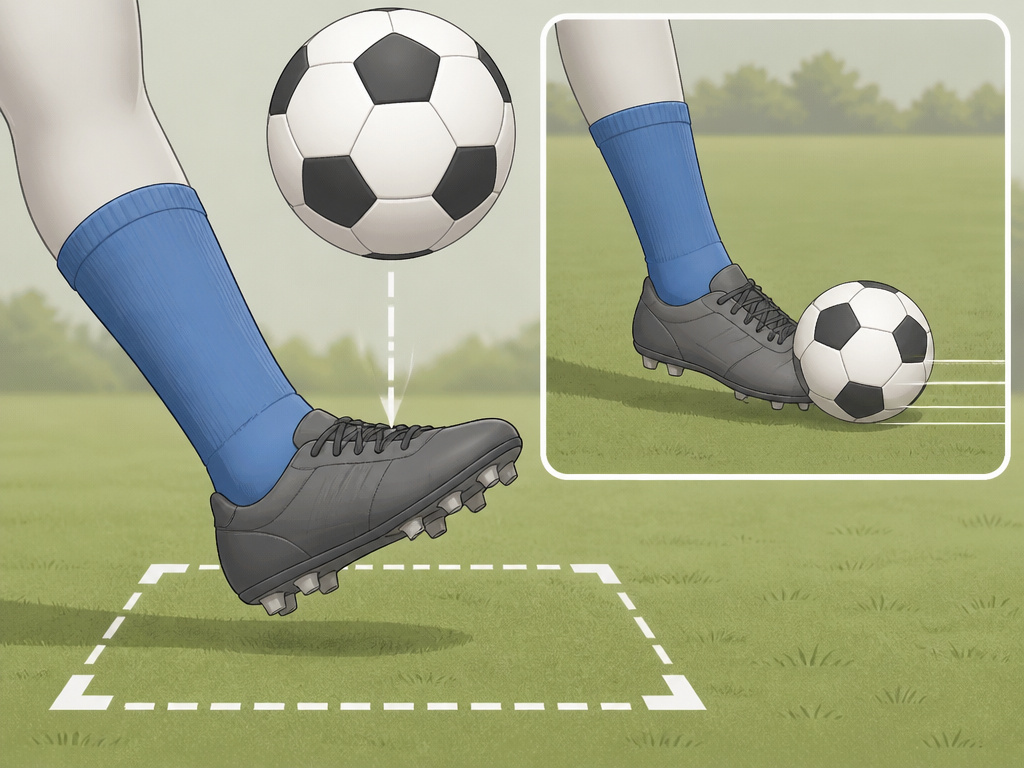
The first touch decides whether the long pass becomes an attack or a giveaway. When receiving a long pass, the receiver must cushion the ball inside the target zone.
- Cushion a lofted ball with the laces.
- Soccer Coach Weekly advises cushioning a driven ball with the side of the foot, while Grassroots Football UK notes a driven pass can be played on the ground.
- Keep the ball inside the two-yard square before the second touch.
I judge a long pass by what the receiver can do next. If it arrives at their feet and forces a backward touch, the pass didn’t solve the problem.
Cushioning Lofted and Driven Balls
The target is visible: the ball drops inside a two-yard square. Soccer Coach Weekly says cushion a lofted pass with the laces and a driven pass with the side of the foot. Grassroots Football UK says the ball should arrive without bouncing unless you are playing a driven pass on the ground.
A lofted pass needs a soft first touch. A driven pass needs the side of the foot. If the ball bounces past the square, the touch was too hard.
How to Practice Long Passing Without a Full Team
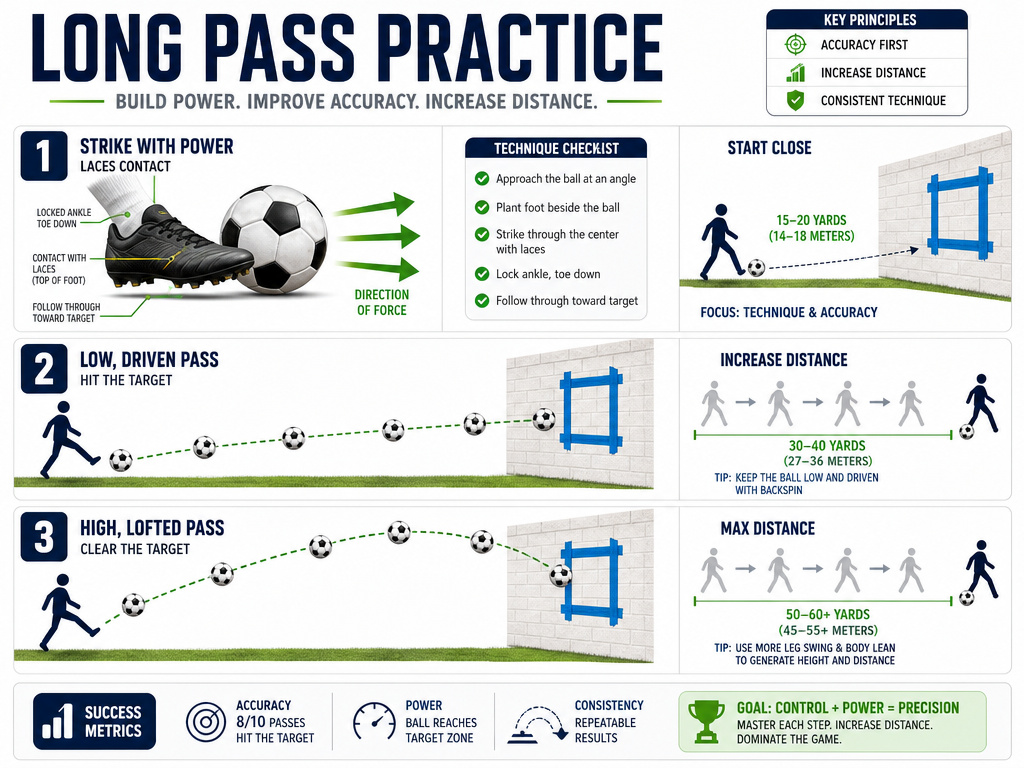
You have a ball, a wall, and a short session. That is enough if you keep the reps honest. If players struggle, shorten the distance until the pass in the air feels comfortable.
When you practice how to play a long pass in football, start closer than match distance. To improve your vision, scan the far flank before your first touch. To play with your head up, look at the target before the swing. For accurate passing, repeat the same target before adding height.
- Pick a fixed target: a crossbar, a fence post, or a taped square.
- Hit a set of low driven passes. If the target is too small, use a bigger zone.
- Move back only when the first set lands in the target. If you move back too soon, form breaks and the ball flies wide.
- Add lofted passes after the driven passes feel clean. If height hurts accuracy, drop back to the ground.
Simple. Don’t add distance before form holds. I prefer short passes with clean contact over wild swings. If the grass is wet, plan for a faster ball and a shorter first touch.
The study tested training, so the numbers are scores for the test.
What matters is clean laces and a locked ankle.
When the Long Pass Stops Helping Your Team
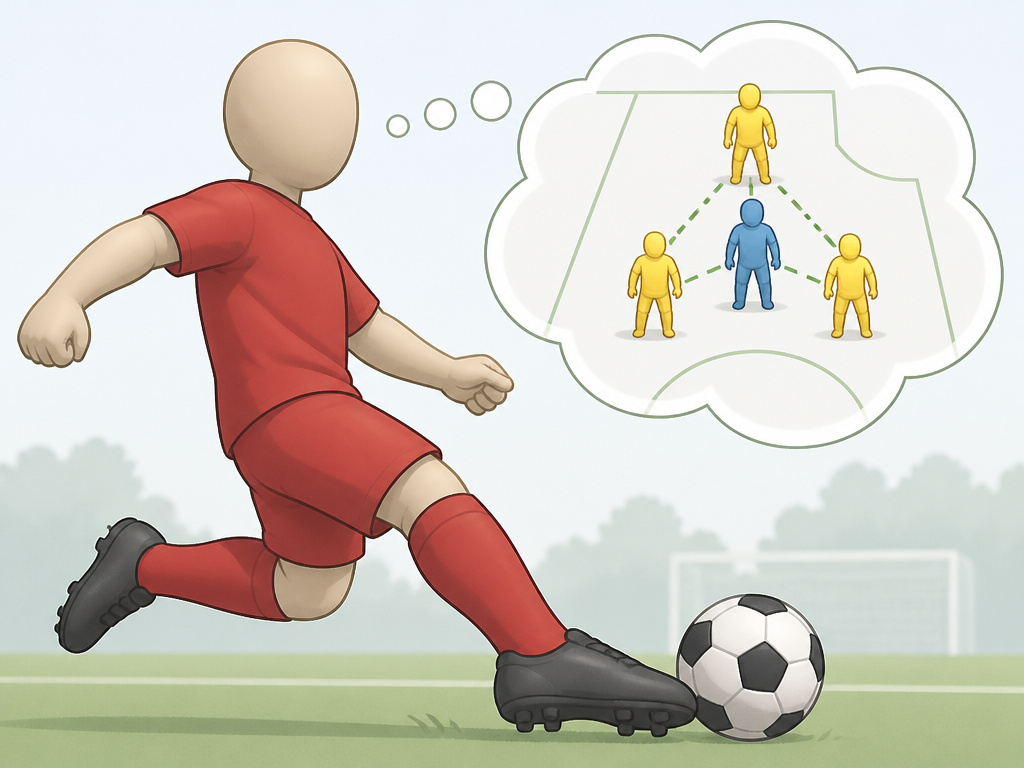
The prettiest long pass is useless if it solves no problem. I used to assume older football was all long balls and no thought. Reading about old systems showed me how much planning went into shapes decades ago. It made me careful about dismissing history.
Common mistake: Crossing before looking up to see where the runners are. The delivery arrives without a target, and the chance dies on the next touch.
Skip this if: Your receiver is blocked and no teammate is running. A long pass into bodies becomes a turnover on the next touch.
Pass completion can flatter sideways teams. Judge the pass by the next player’s options. Distance alone is a weak guide.
How to control a long pass
Your first touch is critical. The technique depends on the type of pass you receive. For a lofted ball coming down from the air, cushion it with the laces of your foot to kill its momentum. If you are receiving a driven pass on the ground, use the side of your foot to absorb the pace and guide the ball into your path. The goal is to soften the impact so the ball stays close, allowing you to make your next move quickly. Practice by having a partner send different types of long passes to you, focusing on bringing the ball under control with one touch.
Frequently Asked Questions
How do you properly perform a long pass in football?
Approach at a slight angle, plant the support foot, strike with the laces, and follow through. Keep your head steady and your ankle firm.
What is a long pass in football called?
The term covers different passes. Grassroots Football UK lists lofted, driven, chipped, and curled long passes.
Should a long pass be hit low or lofted?
Hit low when you need pace on the ground. Hit lofted when you need to clear players. The receiver’s situation decides it.
How far should beginners practice long passes?
Start at the short end of 20 to 30 yards. Shorten the distance if the ball falls short or the receiver has to chase it.
What is the hardest part of a long pass?
The hardest part is matching height and weight to the runner. A little too hard or too weak can make the pass useless.
The Bottom Line
If you want to know how to play a long pass in football, start low. If the receiver has to stop, turn, or save the ball, the pass didn’t do its job.
SYSA says shorten the distance when players struggle. That is the threshold I trust: if the pass falls short or floats without control, move in. A long pass should help the next player play forward.
Which long pass solves the most problems in your team: the driven pass into space, or the lofted pass over a line?
