
How to Control a High Ball in Football: Step-by-Step
This post contains affiliate links. As an Amazon Associate, we earn from qualifying purchases.
How to control a high ball in football starts with moving to the drop point early, picking your surface, and cushioning the ball down fast. Use the chest, thigh, or inside of the foot. A first touch that brings the ball down quickly turns a loose aerial ball into a playable pass or shot.
That early move matters because a lofted pass spends time in the air, and opponents get time to close you down. The receiver must decide whether to cushion, wedge, or take it in stride before the ball reaches the ground.
What follows: surfaces, coaching progressions, and the mistakes that make the ball bounce away.
Key Takeaways
- Move to the drop point early. Long passes rarely come right to you, so small steps decide the contact.
- Use the chest, thigh, or inside of the foot. Easy2Coach lists these as strong receiving surfaces for high balls.
- Bring the ball down fast. The second touch should come immediately after the ball touches the ground.
- Scan before the ball arrives. When the ball is in the air for longer, opponents have time to disrupt control.
- Practice thrown balls before kicked balls. A short-distance throw reduces pace and builds confidence.
How to Control a High Ball in Football: Body Position and Footwork
A lofted pass gives opponents time to close you down. That is the moment.
Technical note: A high ball arrives faster than the ground. The receiver must read speed, path, and height, then move to the ball before it drops. The first contact should be selected early: chest, thigh, or inside of the foot. The body angle decides whether the ball lands under control or runs away from the next action.
The first job is to get into line. FIFA’s goalkeeping coach, Thierry Barnerat, says the goalkeeper must read speed, path and height of the ball to meet it at the correct moment. The same rule fits outfield play.
You’ll need small steps to keep the body under the ball. A plant foot 45-90 degrees to the path of the ball gives the free foot a clean surface to work with. A reliable first touch starts with that early step. I would keep a new player away from full-power goal kicks.
Which Surface Should You Use?
Choose the surface early. Players can receive high balls well with the chest, thigh, or inside foot. They can also control with the instep or outside foot. Soccer Coach Weekly calls the basic idea cushion control: pull the surface back on impact to take the sting out.
| Surface | Best When | Key Cue |
|---|---|---|
| Chest | Ball drops at shoulder height | Cushion with the upper chest |
| Thigh | Ball drops around waist height | Aim halfway up the top of the thigh |
| Inside of foot | Ball is low enough to meet with the arch | Plant the support foot 45-90 degrees |
| Instep or outside foot | Ball is moving across you | Reach early and keep the surface firm |
Chest: Use It When the Ball Drops at Shoulder Height
The chest gives a big target, but it can also pop the ball straight up. A soft contact means pulling away as the ball lands. If the next action is control, use the chest and bring it down quickly.
A chest control that lands wrong feels like a slap against the sternum. If the next action is control, use the chest and bring it down quickly.
Thigh: A Forgiving First Surface
The thigh is forgiving. A well-timed thigh control feels like a soft thud. A bad one feels like a slap. Aim for about halfway up the top of the thigh.
The inside of the thigh helps stop balls flying past. The inside of the thigh helps stop balls flying past.
Inside of the Foot: A Quick Surface for the Next Pass
The inside of the foot turns control into the next pass. Plant the supporting foot 45-90 degrees to the path of the ball. Control the ball with the arch of the free foot. Once the ball is down, shielding the ball can keep a defender off your back while you turn.
That keeps the first touch moving.
The Progression That Builds a Reliable First Touch
Do you practice only with kicked balls? Start lower. Easy2Coach recommends thrown balls from a short distance first. Then players receive, then take in stride, then take in stride on the move. Only after players are confident at thrown balls should they move to lofted balls.
That progression keeps the pace low and the timing visible. The Easy2Coach U9-U13 high-ball plan builds this sequence step by step. A goal kick or clearance is a lofted ball.
- Thrown receive. Partner throws a high ball. Control with chest, thigh, or inside foot.
- Thrown stride. Take the ball in stride after it bounces. The second touch comes right after ground contact.
- Lofted receive. Coach or partner kicks a high ball. Cushion it down, then pass or shoot.
- Pressure finish. Add a defender after the control. Bring the ball down and escape in a chosen direction.
For solo reps, ball mastery exercises teach the foot to meet the ball early. The same idea feeds into close control, where the first touch stays short.
Common Mistakes That Make the Ball Bounce Away
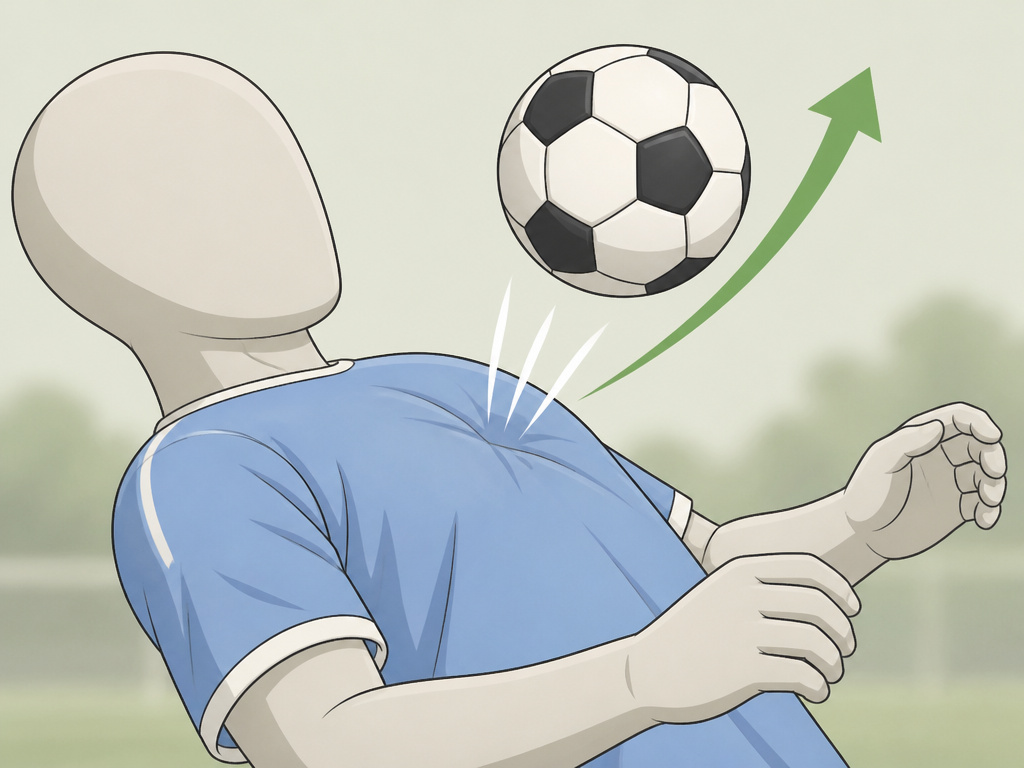
A bouncing ball can skid away. That sound is the warning. Most errors happen before the ball touches the surface.
| Problem | Likely Cause | Fix |
|---|---|---|
| Ball pops up on chest | Body leaned too far back | Use a slight give in the upper chest |
| Ball runs past thigh | Thigh was low or static | Raise the thigh early and cushion downward |
| First touch too heavy | Surface was not selected early | Plant the support foot 45-90 degrees and choose the arch |
| Control under pressure fails | No scan before the ball drops | Check space while the ball is in the air |
- Leaning back. It traps the ball upward instead of into your control.
- Waiting for the bounce. The opponent gets time.
- Watching the ball only. You miss the next pass.
- Skipping the weak foot. Defenders force you onto your strong side.
Scanning matters. Scanning the pitch while the ball is in the air tells you whether to cushion into space or protect the ball.
When the Sources Disagree: Catching, Punching, and Throw-In Targets
FIFA and Easy2Coach give different answers. That difference is useful.
The FIFA Training Centre high-ball guide says a keeper can meet the ball with strong fists, forearms, elbows and shoulders. That gives more distance on the punch. Outfield coaching sources emphasize cushioning and securing possession. The job changes with position.
A keeper near the goal may punch to clear. A defender in midfield needs to keep the ball and turn. FIFA’s Thierry Barnerat describes a high jump exercise where the goalkeeper makes three forward steps. It also works near-post, centre, and far-post zones.
For throw-in practice, Easy2Coach states a match rule: always throw the ball to the foot, because controlling it is then quicker. Other sources list chest, thigh, and foot as viable control surfaces without prescribing the foot as the universally quicker option. Soccer Coach Weekly and Easy2Coach also list chest, thigh, and foot as control surfaces. Easy2Coach recommends targeting the foot when speed is the goal, while other sources list chest, thigh, and foot as viable options.
Train chest and thigh when the ball arrives high or the defender is close. If the foot target puts you in space behind you, receiving on the turn keeps the first touch moving.
Equipment That Helps You Practice High Balls
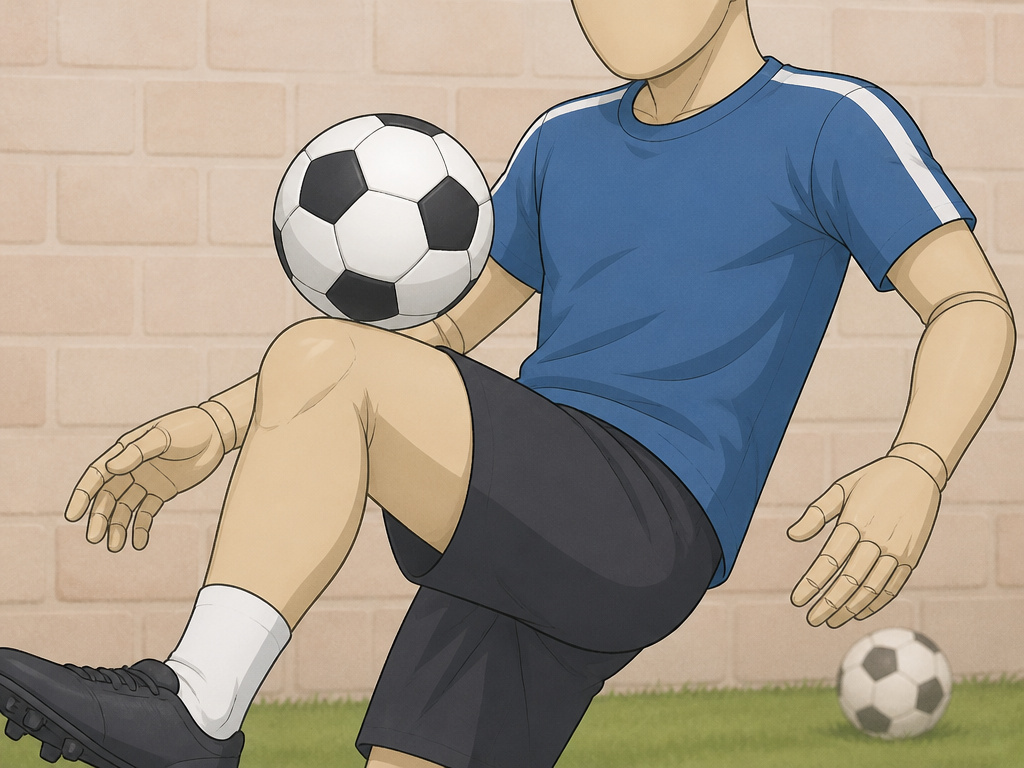
Special gear is optional. A wall, a ball, and boots are enough.
Frequently Asked Questions
What is the hardest part of controlling a high ball?
Timing. The receiver has to judge speed, path, and height while you choose what to do next. A late step makes any surface useless.
How do you take control of the ball in football?
Move early, pick a surface, and cushion the ball down. Use the chest, thigh, or inside of the foot, then make the second touch immediately after the ball touches the ground.
How do I increase my ball control?
Practice thrown balls first, then lofted balls. Add pressure only after the touch is calm. Train the weak foot too, because defenders will try to force you onto it.
Do I need special equipment to practice high balls?
No. A basic ball, boots, and a wall or partner are enough. The gear matters less than the timing.
Who has better ball control?
No name settles this. Some players control with the foot, others use the chest or thigh first. The better player is the one whose first touch solves the next problem.
The Bottom Line
If your first touch sends the ball beyond your next stride, stop and go back to thrown balls. That is the trigger. A calm thigh or inside-foot control in a short solo block will change match touches sooner than more passing drills.
Start this week with self-thrown balls to the thigh, the inside of the foot, and the chest. Keep the second touch immediate. Then add a defender only after the ball stays close.
That is the short answer to how to control a high ball in football. What high-ball control moment changed your own game?
