
How to Shield the Ball in Football: Step-by-Step
This post contains affiliate links. As an Amazon Associate, we earn from qualifying purchases.
To shield the ball in football, put your body between the defender and the ball while it stays within playing distance. Avoid holding off the opponent with your arms or body. Expect a fair charge. The Laws of the Game set the legal frame.
That frame matters because playing distance is a variable reach. IFAB defines it by foot, leg, or jump reach. A tall player and a small youth player have different legal zones. The moment the ball slips past that reach, shielding turns into impeding.
What follows: how to shield the ball in football under Law 12. You get the stance, arm limits, foul triggers, and a drill.
Key Takeaways
- Playing distance is dynamic; once the ball leaves reach, shielding becomes impeding.
- Side-on width beats a square back according to coaching advice from Scott Feltner, who says body width makes pokes harder, while the IFAB Laws do not prescribe a specific stance.
- Arms create a whistle risk; CoachUp allows arms for balance, while Ask A Soccer Referee warns that any arm extension that creates contact risks a holding foul.
- Backward pushes become fouls; displacing an opponent with the back is pushing, not shielding.
- Ten-second battles build shielding; Scott Feltner’s drill uses 20 timed 10-second reps.
How to Shield the Ball in Football Without Fouling?
Law 12 gives the legal frame. The IFAB Laws of the Game 2026/27 set that boundary. A player may shield by taking a position between an opponent and the ball. The ball must be within playing distance, and the opponent can’t be held off with arms or body.
Law 12 allows a player to take a position between an opponent and the ball. The ball must be within playing distance. The opponent must not be held off with the arms or body. If the ball remains within playing distance, an opponent may fairly charge the shielder. Contact alone does not make the action illegal.
Playing distance is the legal switch
There is no fixed radius. IFAB defines playing distance by the reach of a player’s foot, leg, or jump, and for goalkeepers by arms extended when jumping. The definition depends on physical size, so a U8 player has a smaller zone than a senior. Ask A Soccer Referee highlights this size-based definition.
Fair charge and holding
An opponent may fairly charge a shielder while the ball is within playing distance. The shielder still can’t hold the opponent off with arms or body.
A defender trying to defend without fouling must avoid excessive force. Don’t use force on the shielder’s back. A wild tackle from behind is illegal.
Contact is allowed.
What body position works when shielding the ball?
A defender reaches around your hip while the ball sits on your outside foot. The fix is simple: turn the body sideways and let width do the work.
Side-on stance
IFAB sets no stance. Coaching sources add one. CoachUp Nation says bend your knees, lower your butt, and stand firmly.
Scott Feltner adds a side-on position, with the shoulder against the defender and the body’s width between defender and ball. The defender’s shoulder is against yours, and your body’s width sits between him and the ball. A basic WJEC football coaching objective is to shield the ball from an opponent.
I used to assume older football was all long balls and no thought. Reading about old systems showed me how much planning went into shapes decades ago, including the body work that buys time.
A player who wants to defend one on one also needs to know when an attacker is shielding.
Ball placement
Keep the ball on the outside of the foot furthest from the defender. That placement uses the body as the barrier. Be ready to cut the ball in either direction.
Keep it low.
- Get in playing distance first. If you skip it, the shield is impeding from the start.
- Turn side-on before contact. A square back allows the defender to poke through your legs.
- Place the ball on the outside foot. If it sits between your feet, light pressure wins it.
- Feel the defender with your shoulder. Without that contact, you can’t spin away safely.
- Exit with a pass, cut, or dribble. Holding still past the whistle risks a foul.
Can you use your arms while shielding?
Four sources give four different answers. The Ask A Soccer Referee analysis treats any arm extension that creates contact as a holding risk.
| Source | Arms guidance | Risk | | IFAB Laws | Opponent not held off with arms or body | Holding if arms block | | Ask A Soccer Referee | Extension to prevent getting around risks holding | Foul on contact | | CoachUp Nation | Arms out for balance, no pushing | Whistle if arm pushes | | Scott Feltner | Slightly bent arm wards off defender | Contact can draw foul |
CoachUp Nation says arms out for balance as long as you’re not extending your arm to push the defender. Scott Feltner says the closest arm should be slightly bent. Use it to ward off the defender. Don’t push with an outstretched arm.
I’d take the stricter referee line in a match. A bent arm that makes contact is hard to defend.
A defender trying to mark a striker can use that arm drift as the reason to shout for holding.
Pick the safer line.
When does shielding become impeding or a foul?
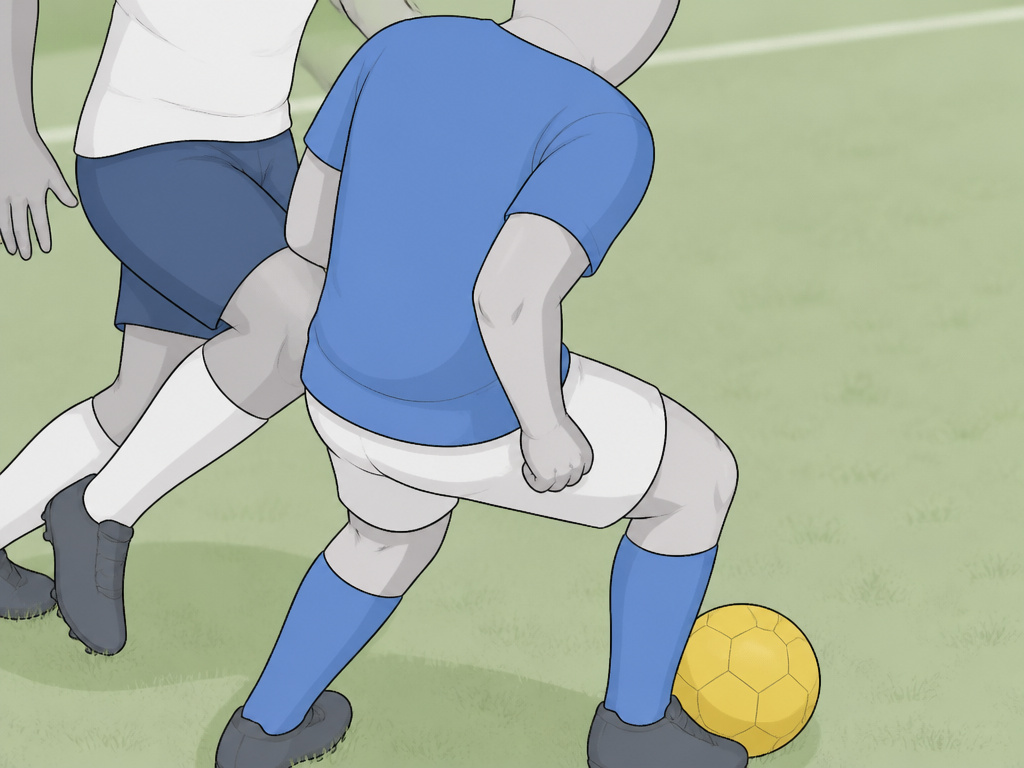
Timing decides this. A shield can start legal and become illegal in one step.
Foul triggers
- The ball moves beyond your reach. The shield becomes impeding.
- Your arm blocks the defender’s path. Contact can produce a holding foul.
- Your leg spreads sideways to stop the defender. Contact can produce a holding foul.
- Your back pushes the opponent. Displacing them produces a pushing foul.
- The opponent uses excessive force or hits your back. The shielder stays legal, and the opponent is at fault.
Easy to miss: The shield becomes impeding once the ball leaves reach. The next touch can draw a whistle.
I now factor the surface into every tactical read.
Shielding a yard or so inside the field can force a throw-in or goal kick. The same restart rules still matter. At a free kick, opponents must stay 9.15 m from the ball unless they are on their own goal line. If three defenders form a wall, attackers must stay 1 m from the wall until the ball is in play.
If the shield collapses, a teammate can intercept a pass or receive a quick touch. If the ball is knocked loose and you need to control a high ball, move it away from pressure.
| Problem | Likely cause | Fix | | Ball poked through legs | ball sat between feet | keep ball on outside foot | | Holding whistle | arm blocked defender | keep arm close, no pushing | | Impeding call | ball left reach | touch ball or pass | | Pushing foul | back drove into opponent | stand firm, don’t push |
Move the ball.
How do you practice shielding the ball?
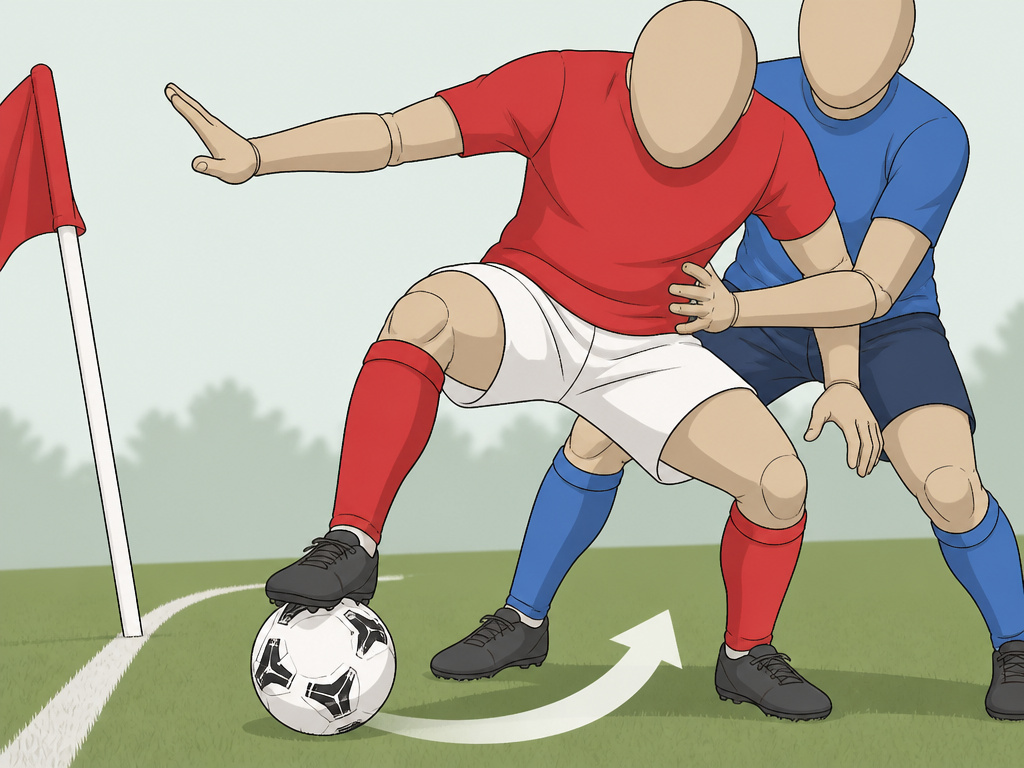
Three things happen in this order: contact, control, exit. Scott Feltner’s drill gives a clean structure.
- Run 10-second battles. The player holding the ball at the end gets a point.
- Add a cut after you feel pressure. The holder feels the defender, then cuts the ball either way.
- Play in tight spaces. A corner-flag shield tests the skill because the ball can’t drift far without leaving the field.
For practice, I reach for a Select ball; see it on Amazon. A Nike ball is fine for tight-space battles; check availability. An adidas ball works on firm ground. Check current reviews on Amazon.
Keep your head up to spot passing or dribbling opportunities. CoachUp says scanning matters as much as the stance.
Repeat it.
How to control the ball while shielding
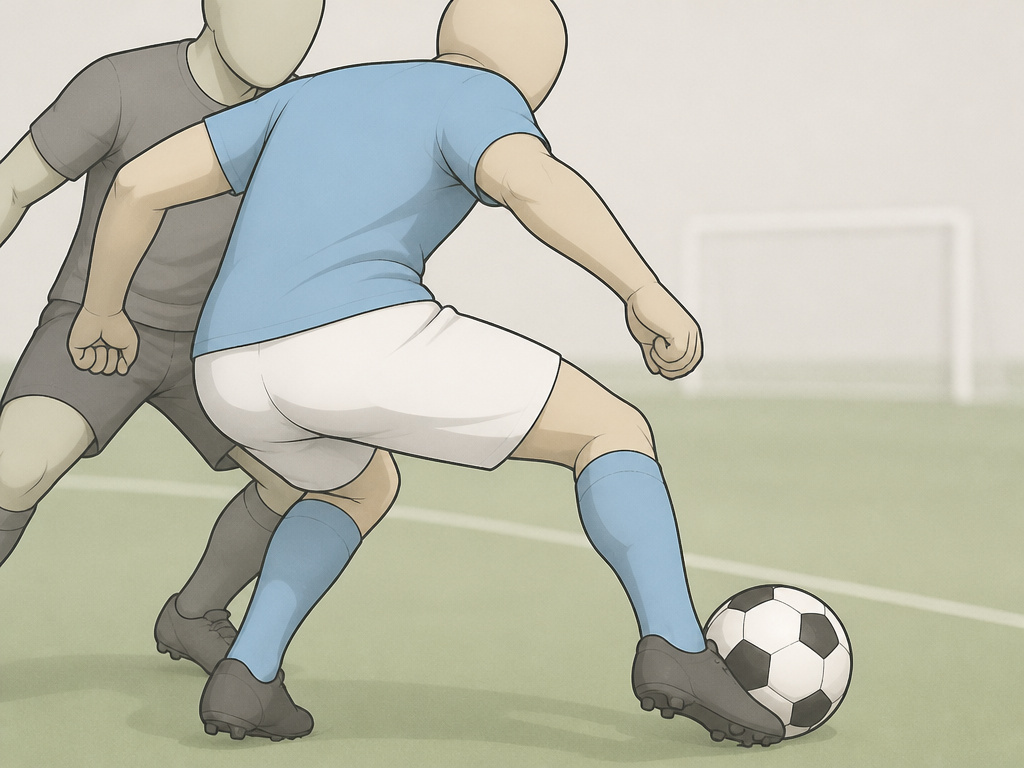
An effective shielding position is side-on, with your shoulder against the defender and your body’s width between them and the ball. Maintain a low base by bending your knees and slightly at the waist to be wider and more stable. Keep possession of the ball with the outside of the foot furthest from the defender. This technique allows you to keep the ball in your playing distance while using your body as a barrier. Keep your head up to look for passing or dribbling opportunities. Your arm closest to the defender can be slightly bent for balance, but do not extend it to push or hold the opponent, as this risks a foul.
Where on the pitch to use shielding
Shielding is a critical skill for maintaining possession under pressure, especially in tight areas. Use it when receiving a pass with a defender close behind, allowing you to secure the ball before turning or passing. It’s valuable near the touchline to protect the ball and win a favorable throw-in, or in the corner to run down the clock. In midfield, shielding can provide a crucial pause to assess options and relieve pressure. Remember, the action is only legal if the ball remains within your playing distance. If you or the ball moves beyond that reach, it becomes impeding an opponent.
Frequently Asked Questions
How do you shield the ball in football?
Place your body between the defender and the ball while the ball stays within playing distance. Keep the opponent from being held off with arms or body. Expect a fair charge.
How do you protect the ball when dribbling?
Use the same side-on shape while moving. Keep the ball on the foot away from pressure and let your body travel between defender and ball.
What are common shielding fouls?
Holding comes from an arm or leg that blocks the defender. Impeding comes when the ball leaves playing distance. Pushing comes when the shielder drives backward and displaces the opponent.
How does shielding differ from obstruction?
Shielding happens within playing distance. Obstruction happens when a player blocks an opponent without being able to play the ball. The reach rule is the line.
How do youth players adjust shielding?
Playing distance depends on physical size. A smaller player must keep the ball closer and use a lower base. The side-on stance still works if the ball stays within reach.
Before You Go
If the ball isn’t within your reach, stop shielding. That is the line between possession and a whistle.
Run 10-second battles this week. Start with the side-on stance, then add the outside-foot touch.
When you learn how to shield the ball in football, the body does the work first. The arms only support it. Call me old-fashioned, but I’d rather see a quiet shield than a flashy move.
Which player’s shielding do you watch most?
