
How to Intercept a Pass in Football: The Coach’s Playbook
This post contains affiliate links. As an Amazon Associate, we earn from qualifying purchases.
To intercept a pass in football, you must first read the passer’s eyes and the receiver’s body to anticipate the throw, then move decisively toward the ball’s flight path, attacking a level pass toward the line of scrimmage and jumping to meet a high ball at its highest point, before finishing with a secure catch or a simultaneous hook-and-swat to break up the play.
The real craft starts with a split-second decision: who do you watch? One coaching manual says watch the receiver. Another drill insists your eyes stay locked on the quarterback. That disagreement isn’t academic, it’s the difference between guessing and knowing, between a highlight-reel pick and a step late. A key part of learning how to intercept a pass in football is resolving this fundamental split.
What follows are the exact techniques pulled from official coaching texts, the structured drills used by pros, and the one critical alternative finish every defender needs when the ball is just out of reach.
Key Takeaways
- Attack the flight of the ball, don’t wait for it; stopping lets the receiver step in front.
- Focus on the passer’s eyes for the earliest cue, but also read the receiver’s hips and feet for vulnerability.
- For a high ball, time your jump to catch at its highest point; for a level pass, move toward the line of scrimmage to meet it.
- If you can’t catch it, execute the simultaneous hook-and-swat to break up the pass cleanly and avoid a foul.
- Build the instinct with structured, timed drills like the 25×10 yard channel drill with 1-minute rotations.
The Foundation: Reading the Play Before the Pass
Interceptions aren’t luck. They’re the product of reading two players at once: the passer and the intended receiver. The tricky part is that respected sources don’t fully agree on where your primary focus should be.
The US Youth Soccer coaching document, authored by Director of Coaching Education Sam Snow, is clear: Read the head and eyes of a potential receiver. In contrast, the Football Drills source mandates focusing 100% on the quarterback. Is he checking his shoulder, or is he unaware? If his hips are turned toward the passer, he’s lost sight of the field and is vulnerable. If he’s flat-footed, you can run around him. That entire framework is built on diagnosing the receiver’s readiness.
Common mistake: Watching only the ball. The ball’s flight is the last piece of information. The cues that matter happen before the passer’s arm even swings.
The theory here is that the passer’s eyes, shoulder alignment, and plant foot telegraph the target and the timing more reliably than any receiver movement when you consider how to intercept a pass in football.
So which is right? Both, situationally. In a zonal scheme where you’re covering space, the receiver’s posture tells you when to pounce. In tight man coverage, especially in American football, the quarterback’s eyes are your bible. The best defenders synthesize both: a glance at the QB to know when and where, a check on the receiver to know if he’s ready.
The Interception Sequence: Read, React, Finish
Once you’ve anticipated the pass, the sequence is a violent, decisive commitment. Greg Colby’s Football: Steps to Success breaks it into a clear physical logic.
First, you attack. As Colby writes, “the defender must attack the pass as it approaches.” Standing still is an invitation. You must move toward the ball’s path before it arrives, believing the offensive player is doing the same.
Your movement is dictated by the pass trajectory. Colby provides the definitive rule:
- If the ball is thrown high, “the defender needs to move toward the pass and might need to jump to catch the ball at its highest point.” You must time your jump to catch the ball at its highest point.
- If the ball is relatively level, “the defender must move toward the line of scrimmage until he and the ball meet.” Moving forward cuts the distance and beats a receiver who might try to step in front.
A defender facing the line of scrimmage will already have shoulders and arms facing the oncoming ball. The major difference in receiving and intercepting is in how the defender moves to the reception point. The player who gets to the ball first usually makes the reception.
. Excerpt from Football: Steps to Success by Greg Colby
The finish is where technique meets consequence. The Football Drills source details a two-stage finish:
- Interception: “Intercept the ball at its highest point.”
- Deflect & Tackle: “If the interception is not possible, deflect the ball away with the front hand and simultaneously prepare the ‘wrap-up’ (tackle approach) on the target player.”
Your hands know the job, especially for the how to intercept a pass in football question. The hand closest to the ball knocks it away; the far hand is already preparing to secure the tackle. Hesitation between these actions leads to incomplete passes or penalties.
When the Pick Isn’t There: The Clean Break-Up
You won’t get to every ball. The true test of a defender’s savvy is what happens when you’re half a step late. This is where the “Hook and Swat” technique, detailed in a Glazier Coaching Blog article via Football Toolbox, becomes essential.
The drill is simple: a receiver runs a straight line across the field with a defender trailing. A pass is thrown, and the defender, just out of reach for a catch, must break it up. The critical coaching point is absolute: “The hook and swat should occur simultaneously to avoid a pass interference call.”
Think about that. One arm hooks around the receiver’s body to restrict movement, the other swats the ball away. Do them in sequence, hook, then swat, and it’s a clear foul. Do them as one blended motion, and it’s a savvy, legal play. This is the difference between a highlight-reel interception and a highlight-reel defensive stop that never draws a flag. It’s the craft within the craft.
Body Shape and Positioning: The Unseen Advantage
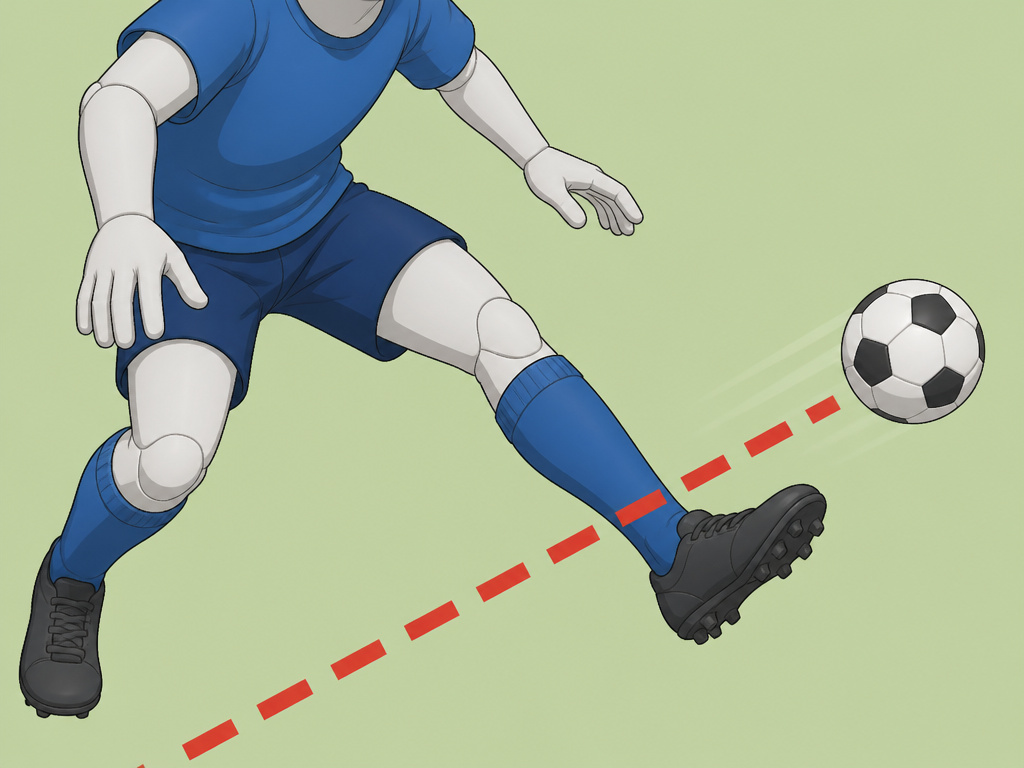
Before any pass is thrown, your body shape sets the trap. This is where the principles of one-on-one defending and jockeying pay dividends.
The US Youth Soccer notes emphasize playing “even with your mark and ball side” when applying high pressure. This slight, angled positioning does two things. It cuts off the most dangerous passing lane to your man, and it subtly invites the passer to try the riskier ball around you, the one you’re already leaning toward intercepting.
Your stance should have a low carriage, using quick footwork for sliding movement. This “low carriage,” as prescribed in the Sports Session Planner drill notes, is a key coaching point for movement. You should avoid being flat-footed like a vulnerable receiver. From here, a proper tackle is always an option, but the interception is the higher-value prize.
Structured Drills to Build the Instinct
Theory is useless without repetition. The sources provide two brilliantly structured practice formats.
The Repetition Drill (From Football: Steps to Success):
Colby advises that “players catch at least 10 passes prior to each practice as a warm-up drill.” This warm-up drill helps players practice catching and judging the ball’s flight. The focus is purely on the finish: tracking the ball, attacking its path, and securing it at the highest point.
The Channel Drill (From Sports Session Planner):
This is a high-intensity, game-like exercise.
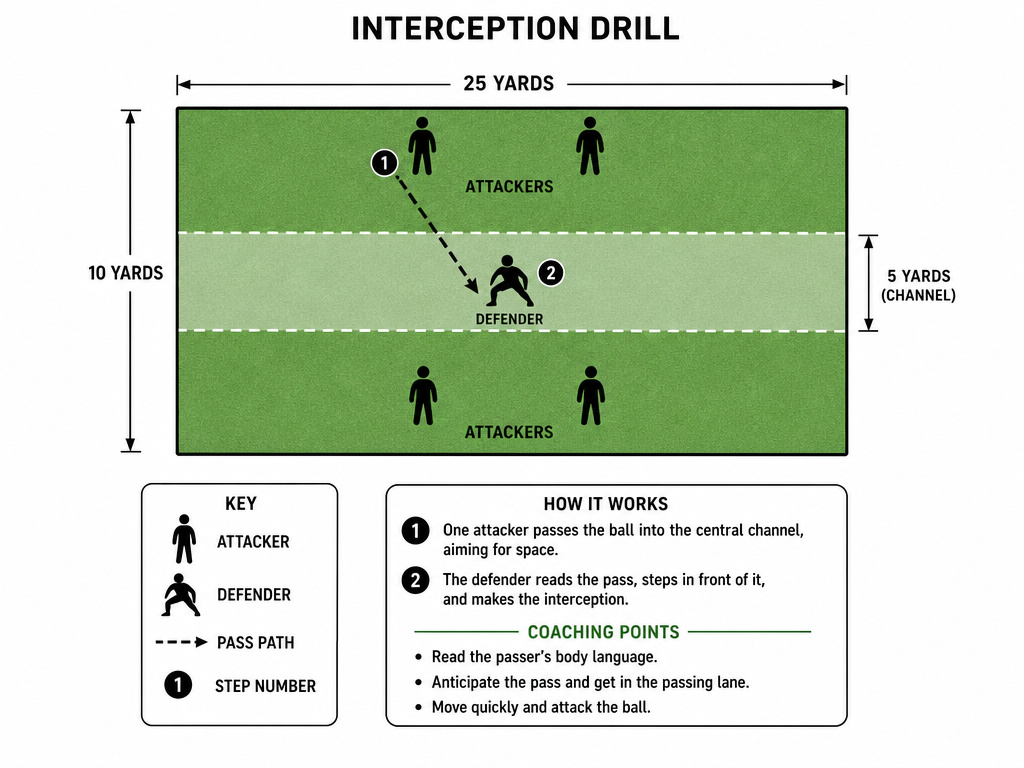
- Setup: A 25×10 yard grid with a 5-yard channel marked across the middle.
- Players: Two pairs of attackers in each end zone, one defender in the central channel.
- Procedure: A coach feeds a ball to one pair. They pass, looking for a chance to transfer it across the channel to the other pair. The defender in the channel aims to block or intercept any pass that tries to cross.
- Key Rules: Attackers must stay in the back half of their zone when passing. Players rotate in 1-minute intervals to retain intensity. If the defender intercepts, the ball goes back to the coach for a new rep.
| Drill | Primary Focus | Key Coaching Point | Progression |
|---|---|---|---|
| 10-Catch Warm-up | Ball tracking & securing | Catch at the highest point; judge flight | Increase distance/angle of passes |
| 25x10yd Channel Drill | Reading play & intercepting in transition | Low carriage & sliding movement, quick footwork | Add 2nd defender in channel, widen area to 20yds |
The progression is logical. Master the channel alone, then add a second defender. This drill directly builds the principles of team defense into an interception-specific context.
Position-Specific Interception Logic
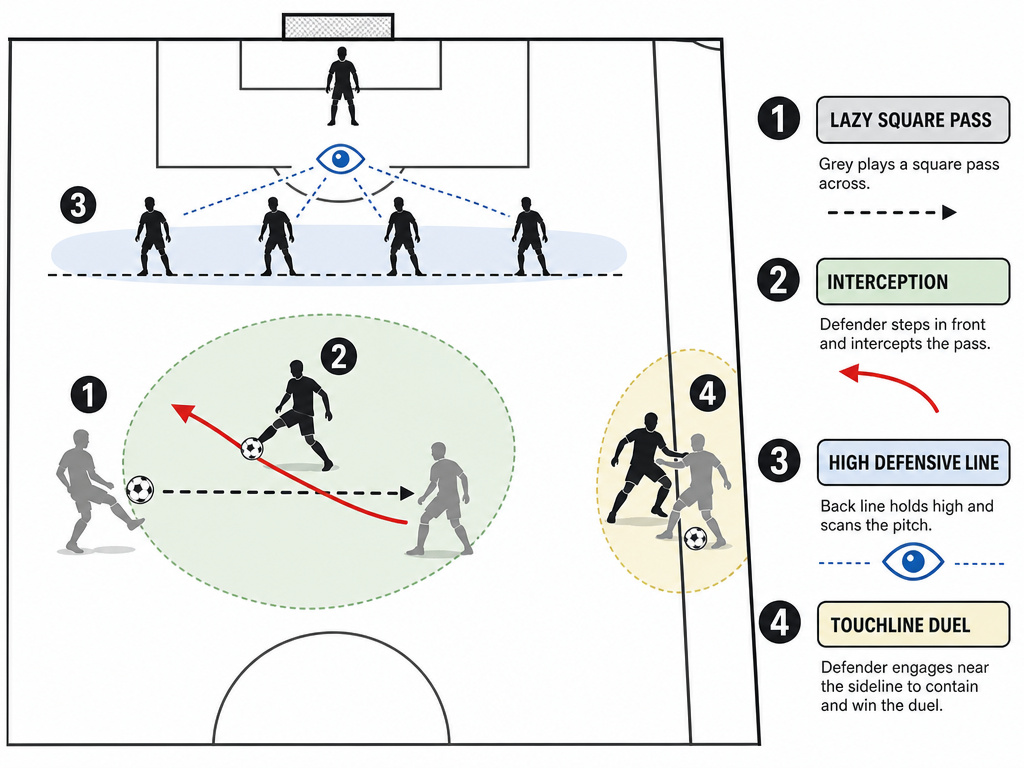
While the core techniques apply to anyone, your role on the pitch changes the opportunities.
Central Defenders & Defensive Midfielders: You’re often zonal, reading the passer from a distance. Your cue is more often the receiver’s lack of awareness, a check he never makes. Your interceptions often come from stepping in front of a lazy square pass.
Full-Backs & Wide Defenders: You’re in a constant duel. Here, the advice to play “even with your mark and ball side” is crucial. You’re often defending the line, using the touchline as an extra defender. Your interceptions might look more like clean tackles, but the anticipation is identical.
Center-Backs in a High Line: This is the ultimate risk/reward. You must watch the passer and the line. This is where scanning the pitch becomes your best friend, understanding the entire landscape before the pass is even attempted.
How to bait a quarterback into throwing an interception
Your positioning can invite a throw you plan to steal. Play even with your mark and on the ball side, which makes a passing lane look open. Read the receiver’s body posture; if his hips are turned toward the passer, he may be vulnerable. Also, watch the receiver’s feet; if he is flat-footed, you can run around him to intercept. Attack the pass as it approaches, don’t stop and wait. Break explosively toward the target at the moment of the throw to meet the ball.
Frequently Asked Questions
Can you intercept a pass in football?
Yes, in both soccer and American football. The core principle is the same: anticipate the pass, move to the ball’s path before the intended receiver, and secure possession. The core principle of anticipating the pass and moving to the ball’s path is key.
What is the best defense to stop the pass?
Disciplined defensive shape that cuts off passing lanes is the foundation. However, to actively stop passes, you need intelligent pressure. Applying pressure on the passer with designated triggers, like a pressing trigger such as a bad touch or a backwards pass, forces rushed, errant throws that are ripe for interception. Combine good team shape with individual alertness to cues.
What position catches the most interceptions?
Historically, defensive backs (cornerbacks, safeties) in American football lead statistically due to their pass-coverage role. In soccer, players who occupy central zones where many passes are attempted often have opportunities for interceptions. The position matters less than the player’s ability to read the game and the specific tactical instructions they’re given.
How do you practice interceptions alone?
Use a wall. Mark a target and practice passing the ball hard at different angles and heights, then react to your own rebound as if it’s a live pass. Work on the first touch to control it cleanly. This builds that essential skill of judging a ball’s flight.
Before You Go
The most important piece of advice is also the simplest: attack the ball. The primary source material is unanimous on this. Hesitation is the interceptor’s only real enemy.
Start with the warm-up. Commit to those ten catches before your next training session, focusing solely on meeting the ball aggressively. Then, watch one full match, any match, and for ten minutes, ignore everything except the body shape of the defenders in the moments before a pass is intercepted. You’ll see the low carriage, the angled approach, the subtle shift onto the front foot. That’s the move you’re building.
Everything else, the debate over the passer’s eyes versus the receiver’s hips, the hook-and-swat, the channel drill, is refinement. The essential first step is the decision to go and get it.
