
How to Tackle in Football: Step-by-Step
This post contains affiliate links. As an Amazon Associate, we earn from qualifying purchases.
To tackle correctly in football, break the action into ten sequential steps: assume a balanced, low stance, focus your eyes on the ball carrier’s midsection, take short power steps, drive your shoulder into the target area, wrap your arms tightly, and drive your legs through the contact to bring the ball carrier down safely. A peer-reviewed study shows that teaching these steps with positive reinforcement can improve tackling proficiency in practice.
That sequence turns a chaotic collision into a controlled, repeatable skill. Most people watch the highlight reel, the big, flying hit, and miss the mechanics that make it possible without injury. The tackle is not a single moment of impact; it’s a chain of decisions about body shape, timing, and mechanical advantage that starts three yards before contact. Understanding how to tackle in football is fundamental to this process.
What follows is the breakdown of that ten-step chain, the common mistakes that snap it, and the coaching adjustments, pulled straight from peer-reviewed studies and official curriculums on how to tackle in football, that turn a hesitant tackler into a confident one.
Key Takeaways
- A proper tackle is a ten-step sequence, not a single hit. Skipping steps like ‘wrapping the arms’ or ‘driving the legs’ leads to missed tackles and injury.
- Positive reinforcement from a coach, like a sticker for matching a previous performance, can significantly improve tackling proficiency in high school athletes, as shown in a study where one participant improved from 26% to 58% and another from 35% to 75% correct execution.
- For youth players, age-specific rules are essential. Under-8s use a Size 1 ball with no tackling permitted, while In Australian rules football (AFL), full tackling and bumping is only introduced at the Under-12 age group.
- Injury risk is drastically higher in illegal collisions. World Rugby data shows collisions are 70% more likely to cause injury than a legal tackle, and 72% of concussions happen during the tackle.
- The mental game is half the battle. Coaching should start with static, non-competitive drills (like tackler kneeling, ball carrier kneeling) to build confidence before adding movement.
What a Tackle Actually Is (And Isn’t)
The word “tackle” gets used for everything from a gentle trip to a shoulder-charging wrecking ball. We need to be specific. World Rugby, the sport’s global governing body, gives us a clean, mechanical definition: a tackle occurs when the ball carrier “is held by one or more opponents and is brought to the ground.”
That definition does two things. First, it makes bringing the player down the goal, not just hitting them. Second, it establishes “held” as a prerequisite, you have to grasp, not just collide. This is the core difference between a tackle and a collision, and the injury stats are stark. According to World Rugby’s own data, collisions are 70% more likely to result in an injury than a legal tackle. Furthermore, 72% of all concussion injuries in adult rugby are sustained in the tackle.
If the action doesn’t end with you wrapping the ball carrier and bringing them to the ground, it’s not a tackle, it’s a collision. And collisions break players.
So, the job isn’t to knock someone over. It’s to stop their progress and secure them on the ground. Everything in technique flows from that.
The 10-Step Task Analysis for a Perfect Tackle
Coaching a complex skill works best when you break it into parts. A peer-reviewed study published in the Journal of Applied Behavior Analysis did exactly that, using a 10-step task analysis based on skills from the American Football Coaches Association. They used it to measure, and dramatically improve, the tackling of two high school linebackers.
Here is that step-by-step breakdown. Think of it as a recipe. Skip a step, and the whole thing falls apart.
| Step | Action | What Happens If You Skip It |
|---|---|---|
| 1. Stance | Balanced, low base, feet shoulder-width. | Lose power and agility; attacker easily sidesteps you. |
| 2. Eye Focus | Eyes on the ball carrier’s midsection (not feet or head). | Miss subtle shifts in direction; tackle air. |
| 3. Approach | Short, controlled power steps; body under control. | Overrun the target or arrive off-balance. |
| 4. Breakdown | Lower center of gravity just before contact; knees bent. | Strike upright, losing leverage and risking head injury. |
| 5. Contact Point | Shoulder drives into target area (thighs for side tackle). | Hit with the head or chest, causing injury to yourself. |
| 6. Head Placement | Head to the side, behind or beside the ball carrier. | “Spearing” with the crown of the helmet—a catastrophic foul. |
| 7. Arm Wrap | Arms encircle the ball carrier, hands clasp tight. | Ball carrier bounces off or spins free; incomplete tackle. |
| 8. Leg Drive | Explosive drive forward with legs after contact. | Stop momentum; ball carrier drags you for extra yards. |
| 9. Lift | Use leg drive to slightly lift the ball carrier. | Disrupts their balance and footing completely. |
| 10. Finish | Drive through until ball carrier is on the ground. | Incomplete tackle; they fall forward for extra gain. |
The study found that the two linebackers routinely missed Steps 5 through 10 during baseline training. Their mean correct tackling was 35% and 26%. After intervention, where a coach withheld negative comments and gave a colorful helmet sticker for matching or exceeding their previous performance, their proficiency jumped to 75% and 58%. The steps work, but they require focused, positive repetition.
How to Coach It: Start Slow, Build Confidence
Throwing a kid into a live tackling drill because “that’s how I learned” is how fear sets in. Every major sporting body now stresses a graduated approach. You don’t bake a cake by turning the oven to max straight away; you preheat.
World Rugby’s teaching progression for a side-on tackle is a masterclass in this. It begins with “Ball carrier kneel – tackler kneel.” That’s it. No running, no fear of falling. Just the mechanics of shoulder placement, head position, and wrapping from a static position. Next is “Ball carrier stand – tackler kneel,” then finally, both standing. The AFL curriculum echoes this, advising coaches to “gradually increase the level of contact in training sessions, starting with controlled non-competitive situations.”
Where this goes sideways: Pushing a player into full-contact drills before they’ve mastered the wrap and leg drive from a kneeling position. The result is a player who resorts to just launching themselves head-first, which is a one-way ticket to the injury report.
This graduated method isn’t just for kids. I’ve seen seasoned amateur players flinch going into a tackle because they never learned the slow-motion version. Their muscle memory only knows panic. Rebuilding that memory starts with taking the speed, and the terror, out of the equation.
Age Matters: The Rules Change as Kids Grow
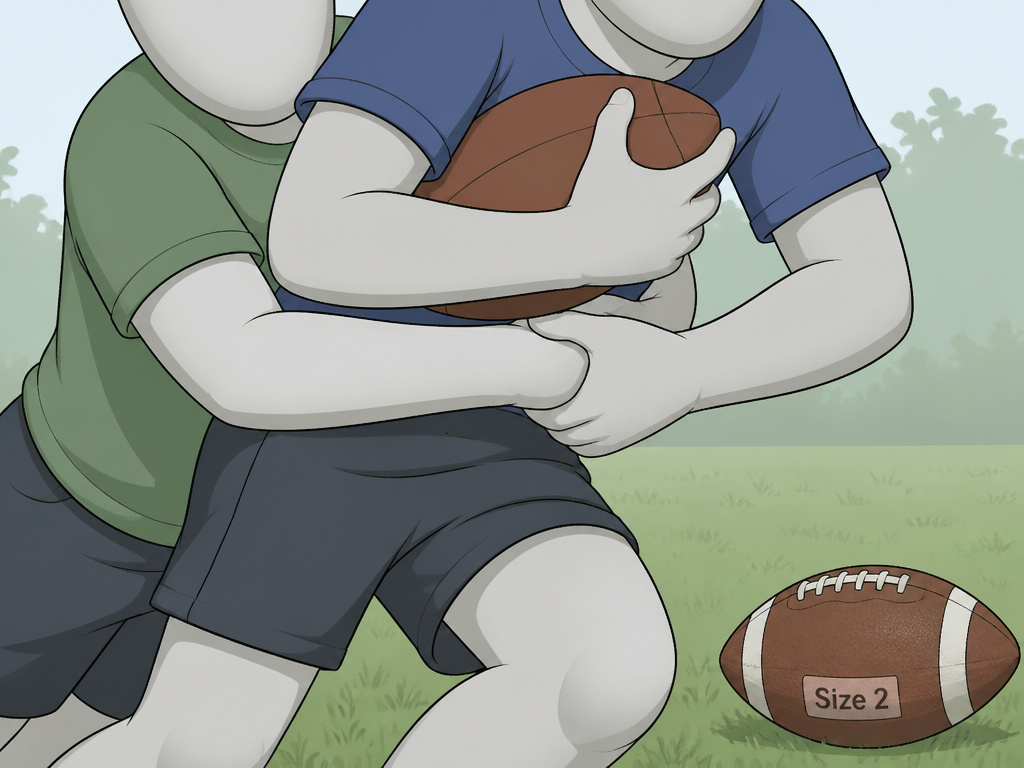
A tackle for a 17-year-old linebacker and a 9-year-old playing AFL are not the same sport. Governing bodies have hard rules for a reason. The 2024 AFL Coaching Tackle Curriculum spells it out clearly:
| Age Group | Ball Size | Bounces Allowed | Tackling Rules |
|---|---|---|---|
| Under 8 | Size 1 | No Bounce | NO TACKLING. No holding, bumping, or barging. |
| Under 9 / 10 | Size 2 | 1 Bounce | Modified tackling allowed. |
| **Under 12 | Not specified in fact sheet | 1 Bounce | Full tackling and bumping is allowed.** |
Notice the progression: no contact, then modified contact, then full contact. The “Wrap Tackle” is formally introduced at the Under 11s & Above level. This isn’t bureaucracy, it’s science. A Size 1 ball is easier for small hands, and banning tackles lets kids learn spatial awareness and basic skills without fear. Ignoring these rules because “it’s soft” misunderstands both child development and the long-term goal of keeping players in the sport.
The Other Half of the Game: Pressing and Angles
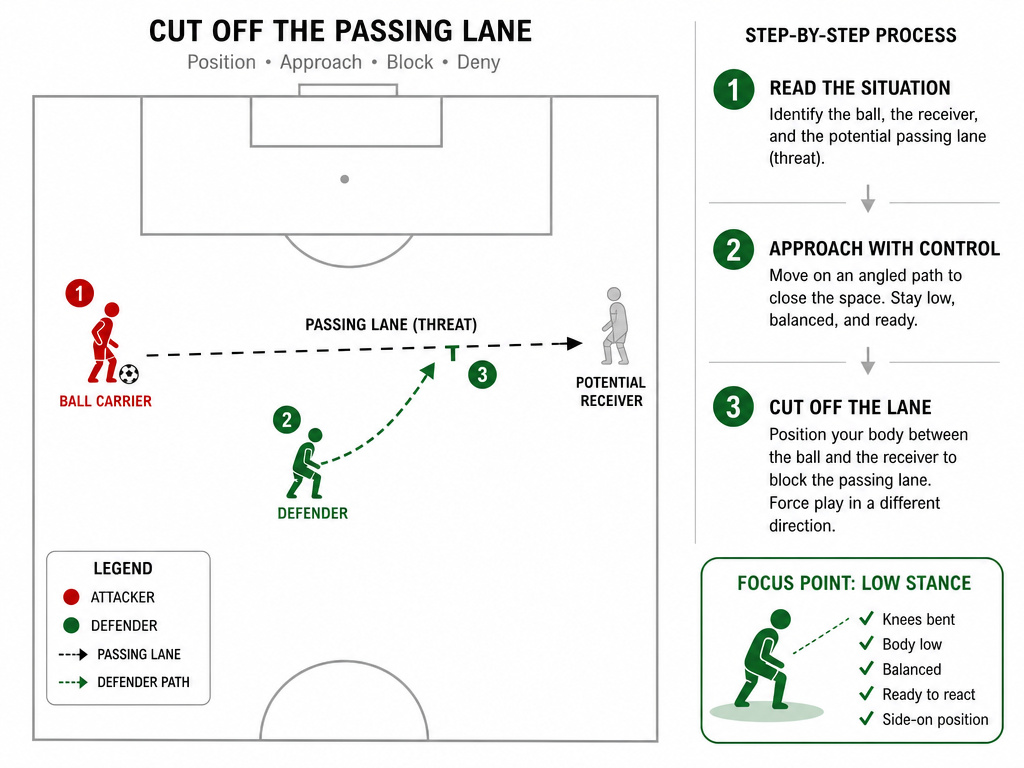
Football (soccer) resources from The FA reframe tackling entirely. In their coaching guides, the tackle is rarely the first objective. The primary goal is to “win possession” through positioning and pressure.
Their advice for pressing defenders is all about control: “decelerate when approaching someone, rather than just running at them… Slow down, be side-on, and bend the knees to stay down.” They talk about curving a run to cut off passing lanes and delaying an opponent if a tackle isn’t on. The first presser is the “disrupter,” but the second line of pressers are likely to be the ones to intercept the ball.
This connects back to the core philosophy of how to tackle in football.
Common Mistakes and How to Fix Them
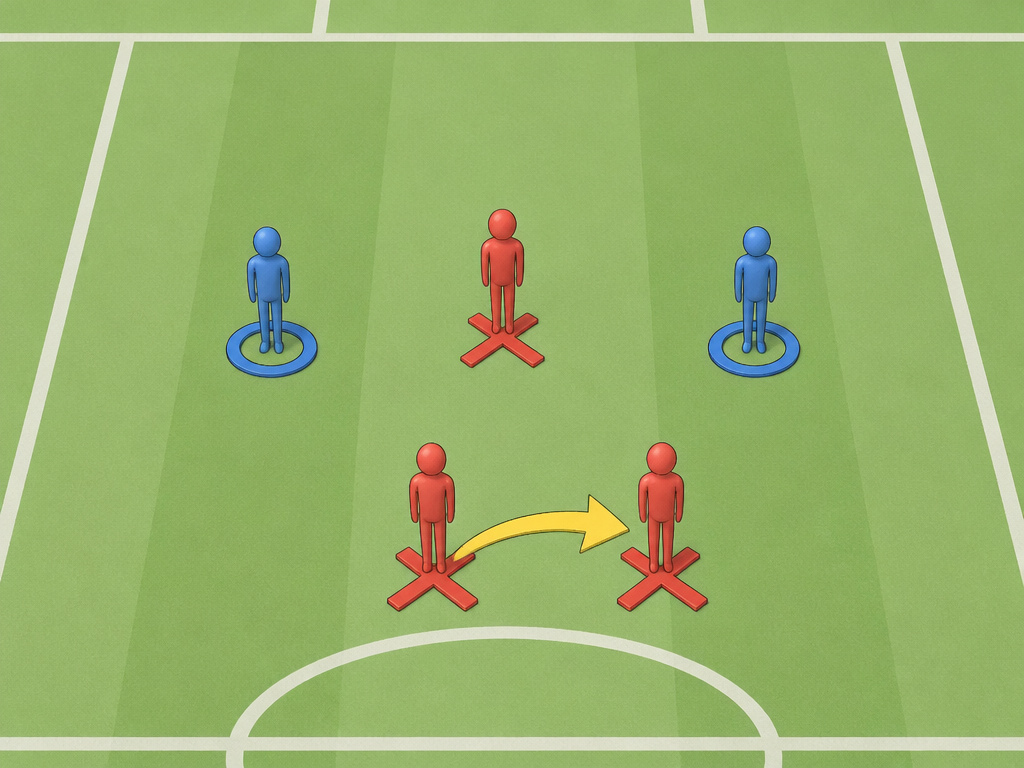
Even with the steps, things go wrong. Here are the three most common breakdowns and what to do.
- Leading with the head. This is the cardinal sin and the cause of the worst injuries. The fix is to reinforce proper technique: players must keep their head in a safe position and eyes on the ball carrier, as emphasized in the AFL fundamentals. The head goes to the side, period.
- Not wrapping. The player makes a big hit but their arms stay at their sides. The ball carrier bounces off and keeps running. The fix is to practice the wrap from the kneeling drill stage without any contact at all, just wrapping a tackling dummy or a coach holding a pad.
- Stopping the feet on contact. The tackler makes the initial hit but becomes a passive weight. The ball carrier’s leg drive wins. The fix is to emphasize and practice driving with the legs, a fundamental of tackling according to the AFL curriculum. It provides instant physical feedback.
The peer-reviewed tackling skills training research proved that focused correction on these specific points, paired with positive reinforcement, yields measurable improvement. It’s not about yelling “be tougher”; it’s about fixing one broken link in the ten-step chain.
The Mind Game: Overcoming Fear
We should be honest. Fear is the biggest obstacle to good technique, because fear makes players close their eyes, drop their head, and leap rather than step.
The graduated progression, kneeling, then standing, then walking, then jogging, is the technical answer. But there’s a tactical one, too. Teach defenders that a tackle is a last resort. Their first job is to jockey, slow the attacker, and show them into a less dangerous area or towards help. This is the essence of one-on-one defending.
When a player knows they have a backup plan (a teammate covering behind) and a primary goal (delay and channel) that isn’t “launch now,” the panic subsides. The decision to tackle becomes a choice, not a desperate reaction.
Putting It All Together: A Sample Training Session
How does this look on the pitch? Here’s a blueprint combining principles from the AFL, World Rugby, and The FA.
Warm-up (10 mins): Dynamic stretches and light jogging.
Technique Circuit (15 mins):
- Station 1 (Kneeling Wrap): Partners. Ball carrier kneels, tackler kneels. Tackler practices shoulder-to-thigh contact and full wrap. No bringing down.
- Station 2 (Standing Breakdown): Against a dummy. Player approaches, executes the “breakdown” (bending knees, getting low), makes contact, and holds the position.
- Station 3 (Leg Drive Sled): Using a heavy bag or sled. Player starts in contact position and must drive it 5 yards with explosive leg steps.
Small-Sided Game (20 mins): 4v4 in a wide area. A modified rule from The FA: a scoring system from The FA can reward a team with three points if they win possession in their defensive third and score. This rewards pressing and intercepting a pass over last-ditch tackling. Focus on the coaching point: “Can you delay them instead of diving in?”
It’s how you build a complete defender who understands that defending as a unit often means not tackling at all.
How to execute different tackle types
Different situations call for different tackles. For a front-on or ‘inside’ tackle, aim for body-on-body contact. Get chest on chest and shoulder on shoulder, moving across the front to pin the opponent’s arms at the elbow joint. For side-on or angled tackles, target and make contact with your shoulder on the ball carrier’s thighs. In open-field situations, you become an ‘outside’ tackler. Decelerate by getting low early and using short, quick steps to avoid being evaded. Your job is to corral or channel the ball carrier, cutting off their space and options. Always adjust your speed, stay agile and balanced, and time your move positively rather than diving in.
Where to aim when making contact
The target point for your tackle depends on your approach and the rules of your sport. In a legal side-on tackle, the primary target is the ball carrier’s thighs. You should aim to make shoulder contact there. For a front-on, body-on-body tackle, the target area is higher. Aim for chest-on-chest and shoulder-on-shoulder contact, specifically looking to connect across the front to pin the opponent’s arms at the elbow joint. Regardless of the target, the fundamentals remain: adopt a low, balanced position, drive with your legs, securely wrap your arms, and keep your head in a safe position with eyes on the ball carrier.
Frequently Asked Questions
What is the correct way to tackle in football?
The correct way is a ten-step sequence: low stance, eyes on midsection, controlled approach, lower your base before contact, drive your shoulder into the target (not your head), wrap your arms tightly, and drive your legs through until the ball carrier is on the ground. Practice starts slowly from kneeling positions.
What makes a tackle illegal?
Tackle is illegal if you lead with the crown of your helmet (“spearing”), make contact with the helmet first, tackle a player who is already clearly down, grab the facemask, or tackle a player who is in a defenseless position (like a quarterback in the act of throwing). These rules are for safety.
How can I be a harder player to tackle?
From the ball carrier’s perspective, being hard to tackle is about unpredictability and mechanical advantage. Use sharp changes of speed and direction, keep your legs driving through contact, and shield the ball with your body to prevent defenders from getting a clean wrap on you. Lowering your own center of gravity also makes you harder to lift and drive backwards.
How do I stop being scared of tackling?
Fear is overcome by replacing the unknown with a known process. Start with zero-contact drills where you only practice the wrapping motion. Then progress to hitting pads while a coach holds them steady. Gradually add movement and intensity as your confidence in the technique grows. Knowing your proper slide tackle technique for soccer or your wrap technique for American football gives you a plan, which displaces fear.
Before You Go
The most important number in this entire discussion isn’t about force or speed. According to that same peer-reviewed study, having an experienced coach decreases the likelihood of severe injury to players by 50%. Good coaching isn’t just about winning games; it’s about using progressions, positive reinforcement, and a focus on technique to keep players safe and developing.
So here’s your challenge: next time you watch a game, don’t just watch the big hits. Watch the three steps the tackler takes before contact. Watch their shoulder, their head, their wrap. You’ll start to see the ten-step sequence in real time, and you’ll instantly spot the tackles that are all highlight and no technique, the ones that hurt teams and players in the long run.
