
Football Positions Explained: Every Role on the Field
This post contains affiliate links. As an Amazon Associate, we earn from qualifying purchases.
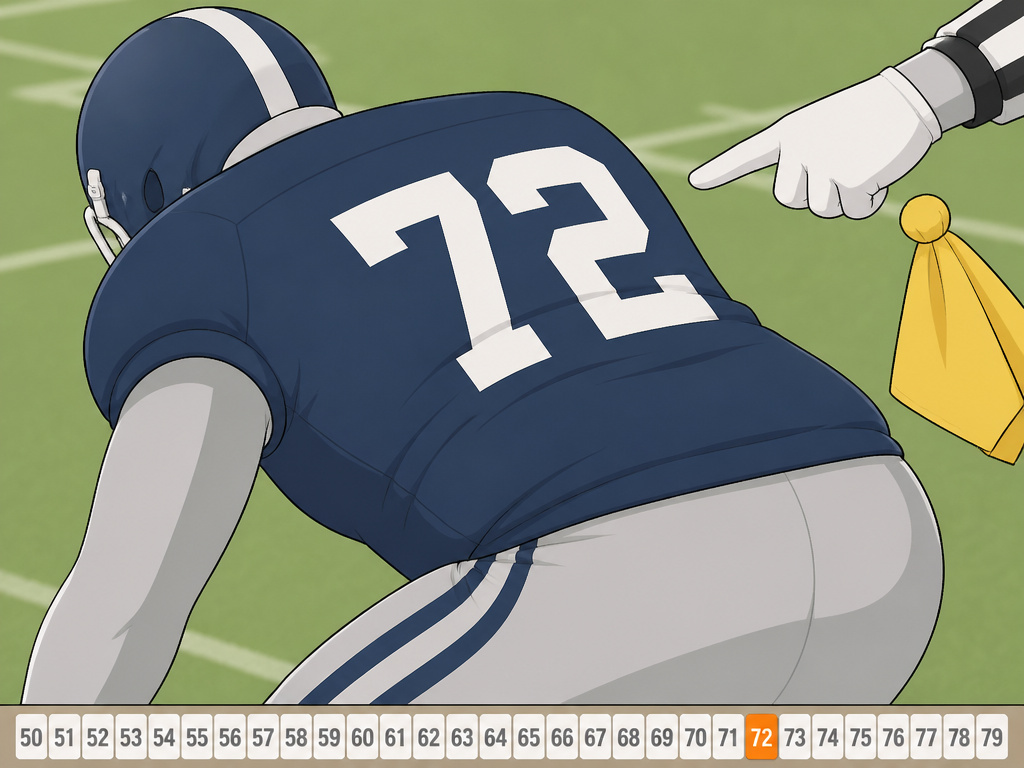
With football positions explained in plain terms, American football puts 11 players per side on the field, split into offense, defense and special teams. Linemen block and rush, while backs, receivers and defensive backs run, catch and cover. Shirt numbers carry rules too: in college, offensive players numbered 50-79 can’t go out for a pass outside kick formations.
That last clause about 50-79 is where most beginner explanations go quiet, and it explains a lot about how the field looks. Officials use the number on the shirt to tell, at a glance, who may legally run downfield for a pass. A lineman’s jersey works as a legal label as much as a name.
What follows: every unit position by position, the NFL number ranges set in 2021, what two concussion studies say about who takes the worst hits, and a short detour for anyone who meant the round-ball game.
Key Takeaways
- In the NFL, moving between an eligible and an ineligible position means a new jersey number; switching within the same group doesn’t, once a player has spent a season there.
- Two peer-reviewed studies agree that receivers and defensive backs sit near the top for concussions, but they split on tight ends and running backs.
- The Guardian Cap mandate now covers every position except QB, K and P in contact practices, and any player is allowed to wear one in games.
- An NCAA video study called special teams a high-risk event, so the kick units deserve your full attention.
- In soccer, the Laws name only the goalkeeper as a position; every other label is tactical shorthand.
Football Positions Explained: How Are 11 Players Split Up?
Each team keeps 11 players on the field, and coaches swap whole groups depending on the situation. The offense has the ball, the defense tries to stop it, and special teams take over for kicks.
American football fields 11 players per side. The offense includes a quarterback, five offensive linemen and a mix of running backs, wide receivers and tight ends. The defense answers with linemen, linebackers, cornerbacks and safeties. Special teams units take over for kicks and punts, adding kickers, punters, long snappers, holders, gunners and returners to the roster.
That rhythm of mass substitution threw me when I first sat down with the American game and the football positions explained in guides. In soccer, the same faces stay out for long spells. Here a punter stands on the sideline for long stretches, jogs on for one kick, and jogs straight back off.
Each unit even has its own coordinator on the coaching staff.
Here’s the quick chart I wish I’d had, with the abbreviations you’ll see on broadcast graphics and depth charts:
| Unit | Positions (abbreviation) | Main job |
|---|---|---|
| Offense, backfield | Quarterback (QB), running back (RB), fullback (FB) | Throw, hand off, run, block |
| Offense, line | Center (C), guards (G), tackles (T) | Snap and block |
| Offense, receivers | Wide receiver (WR), tight end (TE) | Catch passes, block on runs |
| Defense, front | Defensive tackle (DT), defensive end (DE) | Rush the passer, stop runs |
| Defense, middle | Linebackers (MLB, OLB) | Tackle, blitz, cover short |
| Defense, secondary | Cornerback (CB), free safety (FS), strong safety (SS) | Cover receivers, last line |
The chart gives you names. It won’t tell you what a player does on a given snap, and that gap causes the mistake I see most from new fans. They assume the label describes the movement. Watch a player for a few plays before you trust the name.
Offense: The Five Linemen Who Can’t Catch and the Players Who Can
Three things happen on almost every offensive snap. The center snaps the ball, the line blocks, and somebody either runs it or throws it. Everything else is detail layered on top.
Quarterback
The quarterback (QB) takes the snap, reads the defense, and either hands off or throws. He calls the play in the huddle and changes it at the line if he spots trouble. Under the 2021 NFL ranges, quarterbacks wear 1-19, sharing that block with punters and placekickers.
Honestly, it’s the one position where a bad day for one player sinks the whole unit.
Offensive Line: Center, Guards and Tackles
The center snaps the ball and calls out blocking assignments. A guard lines up on each side of him, and a tackle sits outside each guard. The left tackle protects the blind side of a right-handed passer, which is why teams prize him so highly.
Linemen come off the field with grass stains down the front of their jerseys and forearms scraped raw from turf. Their work stays invisible on television until it fails. One missed block and the quarterback is on his back before he’s finished his drop.
Running Back vs Fullback
The running back (RB) is the main ball carrier. He takes handoffs, catches short passes, and picks up blitzing defenders when he stays in to block. The fullback (FB) lines up ahead of him and clears the path, crashing into the first linebacker he finds.
So which one do you watch? On most runs, the running back. On short-yardage downs, the fullback wins, because his block decides whether the play gains a yard or loses one.
Wide Receiver vs Tight End
Wide receivers (WR) split out toward the sidelines and win with speed and route running. The tight end (TE) lines up next to a tackle, blocks on runs, and slips out for passes. He’s the hybrid of the offense.
The 2021 number rule even lists the H-back as its own entry. Is an H-back a tight end or a fullback? Coaches use the word for a player who moves between both jobs, and I’ve never found a definition every team shares.
A few things worth watching at the snap:
- The center’s hands. The play starts there.
- The tight end’s first step. If he fires out low, it’s a run; if he releases into open space, think pass.
- Two backs stacked behind the quarterback is the classic look for a power run.
- Receivers’ stances. They tell you very little.
Why Numbers 50-79 Decide Who Can Catch a Pass
In my first year writing football history, I trusted one source for a cup final score. A reader corrected me inside an hour. Since then, every result I publish gets checked against at least two sources, and jersey number ranges put that habit to work fast.
Secondary sites don’t agree on every NFL range. So I went to the summary the Giants published on April 21, 2021, the day clubs approved Kansas City’s proposal to expand number options. Here’s what it lists:
| Position | 2021 NFL number range |
|---|---|
| QB, punters, placekickers | 1-19 |
| Defensive backs | 1-49 |
| RB, FB, TE, H-back, WR | 1-49 and 80-89 |
| Offensive linemen | 50-79 |
| Defensive linemen | 50-79 and 90-99 |
| Linebackers | 1-59 and 90-99 |
The league has adjusted its table since 2021, so check the current NFL rulebook before you settle an argument with this chart. The context changes the answer, so read the rules with it in mind.
The numbers exist for the officials. With one look at a shirt, the referee knows which players may go downfield for a forward pass. A lineman drifting downfield on a pass play draws a flag, and the number is how the crew spots him without stopping the game.
The NFL also ties numbers to position changes. A player who moves between an eligible and an ineligible position must take a new number. A move within the same group, guard to tackle for instance, needs no change once he’s played at least one season at his position.
Requests for a special position not on the table go to the Commissioner. Clubs must also free up numbers to follow the rule, even if that means putting a retired number back into circulation.
Easy to miss: Preseason games allow duplicate numbers and temporary breaks from the scheme. Read positions off numbers in August and you’ll get some wrong; the rule binds every player only from the regular season onward.
College is stricter. Under the college football snap formation rule reproduced by the San Diego County Football Officials Association, offensive players numbered 50-79 are always ineligible, with exceptions only for scrimmage-kick formations. One approved ruling walks through a punt where the team lacks five linemen in that range:
- The team lines up in a kick formation without five linemen numbered 50-79. Drop the kick formation and the normal numbering rule applies in full.
- The snapper takes his position. From that moment, the players around him become numbering exceptions.
- Those exceptions are locked into their spots. If one of them shifts, the offense commits Illegal Formation when the ball is snapped.
- The ball is snapped and kicked. The foul still stood, because the shift had already happened.
The pros handle the big man catching a pass differently. In the NFL, a lineman reports to the referee as eligible; in college, he has to change his number. The tackle-eligible player rules overview on Wikipedia covers the history and the trick plays built on it.
I’d tell any new fan to stop reading linebackers by their shirts. Since 2021 a linebacker can wear a single digit like a receiver, so check where he stands before the snap and decide from there.
Defense: Where Position Names Stop Describing the Job

Defensive labels fool beginners more than offensive ones do. Defenders move freely before the snap while the offense has to settle. Meanwhile, the name in the program stays put.
Good defense reminds me of pruning a hedge. You leave most of it alone and cut only the shoots heading where you don’t want growth. A coordinator does the same with an offense: he takes away its favorite option and lives with the rest.
Defensive Line
Defensive tackles (DT) line up inside, across from the guards and center, and clog running lanes. Defensive ends (DE) set up outside the tackles and chase the quarterback off the edge. Under the 2021 ranges they wear 50-79 or 90-99.
Linebackers
Linebackers stand a few steps behind the line. The middle linebacker (MLB) calls the defensive signals and tracks the ball carrier. Outside linebackers (OLB) rush, set the edge, or drop into short coverage.
Their 2021 range runs 1-59 and 90-99. That’s why you’ll now see one wearing a receiver’s kind of number.
Common mistake: Counting every player near the line as a lineman. Outside linebackers stand up on the edge and rush, so beginners tally them as ends and lose track of who’s covering by the second quarter.
Cornerbacks
Cornerbacks (CB) cover wide receivers, either man to man or in zones. They need the speed to turn and run, plus the nerve to play alone with nobody behind them.
Free Safety vs Strong Safety
The free safety (FS) plays deep in the middle and reads the quarterback’s eyes. The strong safety (SS) lines up closer, on the side with the tight end, and makes more tackles. Picking one to watch? Follow the free safety on passing downs and the strong safety when the offense lines up to run.
Read a defender by where he stands one second before the snap. The program gives you a name; the alignment gives you the job.
Special Teams: The Kicker, the Snapper and the Ten-Man Sprint

Ten players sprinting downfield at full speed to tackle one man. That’s how the authors of an NCAA Division I video study described kick coverage, and it’s why they flagged special teams as a high-risk event during play.
I’ll admit this unit took me longest to appreciate. On a punt you hear it in order: the flat smack of the snap into the punter’s hands, the thump of the boot, then a rattle of cleats as the coverage takes off. Every role below exists to make that sequence work.
- Kicker (K): kickoffs, field goals and extra points.
- Punter (P): kicks the ball away on fourth down when the offense gives up on a first down, trading possession for field position.
- Long snapper (LS): snaps on punts and kicks. A bad snap ruins the play before anyone touches the ball carrier.
- Holder: catches the snap on field goals and spots the ball for the kicker.
- Gunners: line up wide on punts and race to the returner.
- Kick and punt returners: catch the ball and run it back, or wave for a fair catch and take the spot.
Why do punts need gunners at all? The kick and the catch sit a long way apart, with open field between them. Whoever reaches the returner first decides how far he gets, so teams put their fastest coverage players out wide where nobody blocks them at the line.
Funnily enough, the dullest-looking job here is the one coaches lose sleep over. The long snapper does one thing. Nobody learns his name until he gets it wrong.
Which Football Positions Take the Most Concussions?
PBS Frontline’s Concussion Watch data covered regular-season games for 32 NFL teams from 2012 to 2015. One piece of peer-reviewed concussion research in football used it to map concussions by position. Tight ends, running backs, wide receivers and cornerbacks showed significantly greater incidence.
The same paper grouped passing positions (WR, TE, CB, S) against running positions. Passing positions came out higher.
The authors pointed to high-speed plays and high-speed impacts between receivers and defenders. A separate NCAA Division I video study added the mechanism behind that: players in the open field generate more forceful hits and get blindsided more easily. The Frontline-data study also found away teams and losing teams had higher concussion incidence per game, an effect that held for offensive positions and not defensive ones.
The two studies don’t line up neatly:
| Question | NFL study (Frontline data, 2012-2015) | NCAA Division I video study |
|---|---|---|
| Data | 32 NFL teams, regular season | Video of one college team |
| Higher-incidence positions | TE, RB, WR, CB | DB, WR |
| Linemen | Not singled out | OL and DL lower |
| Riskiest setting | Passing positions; away and losing teams | Middle defense; special teams |
I won’t pretend these settle it. One covers a whole league, the other films a single college team. Where they overlap, on receivers and defensive backs, I’d trust the finding. Where they split, on tight ends and running backs, treat the question as open.
The NFL’s answer has been the Guardian Cap, a padded shell strapped over the helmet. It gives a training camp field a strangely puffy look, like rows of quilted mushrooms bobbing between drills. The mandate has grown like this:
- 2022: offensive linemen, defensive linemen, tight ends and linebackers wore it in practices until the second preseason game.
- 2024: defensive backs and receivers joined. The mandate covers OL, DL, LB, DB, TE, RB, FB and WR for all contact practices through the postseason.
- Quarterbacks, kickers and punters choose for themselves. Dawn Aponte of NFL Football Operations said any player is allowed to wear it in games too.
The league reported a more than 50% reduction in concussions for the mandated groups during the 2022 window. That compares against an average of 2018, 2019 and 2021, with 2020 left out. It’s the league marking its own homework, and auditing the math sits outside my lane. What I can see: one short preseason window against a multi-year average, followed by an expanded mandate for 2024, which tells you how much faith the NFL puts in its own figure.
Football Positions in Soccer: One Legal Position, Ten Jobs
Searched this hoping for strikers and full-backs instead of shoulder pads? Fair enough. Outside North America, football means the round-ball game, and its positions work on different logic.
Law 3 of the IFAB Laws of the Game names exactly one position: the goalkeeper. Any outfield player can swap into goal, provided the referee is told first and the change happens during a stoppage. Every other label is tactical shorthand that coaches invented.
(I spent my playing days in goal, so take this with the bias it deserves.) The role of the goalkeeper is the most underrated job in the sport. A keeper who sweeps up behind a high line changes where the whole team can afford to defend.
The full-back label hardly describes the job anymore. Read up on full-back responsibilities in modern football and you’ll find players who defend, overlap, tuck into midfield and build play from deep, all in one half. Wing-backs push higher still and cover a whole flank on their own.
Where this goes sideways: Mixing up the American fullback and the soccer full-back. One is a blocking back in the backfield, the other is a wide defender, and confusing them in your first conversation with either crowd gets you corrected within a minute.
Up front, different types of striker do very different work: some hold the ball up, some run in behind, some press the opposition’s defenders. The way positions fit into formations shifts every one of these roles. Traditional squad numbers by position once told you who played where; today they’re closer to personal branding.
I’d retire the classic playmaker in the hole as a fixed position, since that job has dissolved into several roles. The player I’d champion is the defensive midfielder who protects the space between the lines. When I want to know what any of them really does, I watch their clips on Wyscout and follow their runs off the ball. Opta and StatsBomb event data help, though I read those charts far better than I could ever build them.
If the vocabulary trips you up, half the confusion is just football terminology that means one thing in Manchester and another in Kansas City.
Which Position Is Hardest, Which Is Rarest, and Where Should Kids Start?
Quarterback is the hardest job on the field. He reads a whole defense, decides in a heartbeat, and takes hits while he does it. No statistic ranks difficulty, though, so this is opinion. Left tackle and cornerback both have strong cases, since both get exposed on every snap with no help.
Rarest? Long snapper, in my book. A team carries one specialist for a single task, and few young players set out to become one. Again, nobody publishes an official count. It’s a judgment call.
For a child, keep it simple: the linemen push, the quarterback throws, the backs run, the receivers catch, and the defense tries to stop all of it. That’s enough for a first game.
Don’t bother memorizing pre-2021 number charts. They’ll mislead you on every linebacker and receiver now wearing a single digit. Let young players try several spots before anyone pins them down, and when they’re ready to settle, think about how to pick your best position from what they enjoy doing most.
If you’re watching your first full game and want one player to follow, pick the middle linebacker. He’s near the ball on most plays, he reacts to everything the offense shows, and following him teaches you both sides at once.
Frequently Asked Questions
What are the 11 positions on a football field?
On offense, a quarterback, five linemen (center, two guards, two tackles) and five skill players drawn from running backs, fullbacks, tight ends and wide receivers. On defense, the mix of linemen, linebackers, cornerbacks and safeties changes with the play call. Special teams swap in kickers, punters, long snappers and returners for kicks.
What’s the hardest position in football?
Quarterback, in my view, because he reads the defense, decides fast and absorbs hits on the same play. No official measure ranks difficulty. Left tackle and cornerback are the strongest rival cases.
What is the rarest position in football?
Long snapper is a fair answer. A team keeps one specialist for a single job, and there’s no official count of how many players train for it. Treat any confident ranking with suspicion.
Do NFL players change numbers when they change positions?
Only when the move crosses between an eligible and an ineligible receiver position. A switch within the same group needs no new number, provided the player has spent at least one season at his position. Requests for a special position go to the Commissioner.
Is a fullback the same as a soccer full-back?
No. The American fullback is a blocking back who lines up behind the line, while the soccer full-back is a wide defender. The names sound alike and the jobs share nothing.
Before You Go
This week, pick one game and watch a single position for a full drive while ignoring the ball. Start with the middle linebacker or a guard. By the third series you’ll see the shape of the play before the snap, and the position names will start to mean something.
One honest limit: the number ranges here come from the 2021 NFL table and the NCAA rule text. High school football runs on its own code, and the NFL has adjusted its table since. If you coach or referee, check the current rulebook before you rely on any chart, this one included.
So here’s my question for you: in the last game you watched, which player did you follow without meaning to, and was it the one doing the real work?
