
Football Referee Fitness Test Explained
This post contains affiliate links. As an Amazon Associate, we earn from qualifying purchases.
The FIFA football referee fitness test is a two-part annual exam: Test 1 is the Repeated Sprint Ability (RSA) test, six 40-meter sprints with a 60-second walking recovery between each. Test 2 is the Interval Test, 40 repetitions of a 75-meter run followed by a 25-meter walk, totaling 4,000 meters. The exact pass/fail times depend on your gender and FIFA category.
This is about recovering fast enough to do it again and pacing a run-walk sequence for ten solid laps. The football referee fitness test explained mimics the stop-start demands of a real match, where a referee might sprint to follow a counter-attack, then immediately need the wind to get into position for the next phase.
We’ll also untangle where the official documents themselves disagree.
Key Takeaways
- The test is two parts: six 40m sprints (RSA) and a 4,000m run/walk interval test.
- Timing is category-specific: FIFA Men’s Category I referees must sprint each 40m in ≤6.0 seconds and run each 75m interval in ≤15 seconds.
- You get one free warning in the Interval Test; a second foot-fault is an automatic fail.
- Recovery between the two tests is 6 to 8 minutes maximum, and you must walk back during RSA recovery.
- Spikes are prohibited, and a qualified instructor plus medical support are mandatory for official testing.
The Two Official Tests: RSA and Interval
Forget long-distance jogging. FIFA’s test is built on two specific, repeatable actions that mirror a referee’s hardest moments in a game.
Technical Snippet: The FIFA Referee Fitness Test consists of Test 1 (Repeated Sprint Ability) and Test 2 (Interval Test). The RSA test evaluates a referee’s ability to perform six maximal 40-meter sprints with a maximum 60-second active recovery. The Interval Test assesses aerobic capacity through 40 repetitions of 75-meter runs and 25-meter walks, guided by an audio file, totaling 4,000 meters on a standard athletics track.
The RSA is the gut check. It’s not one sprint. It’s six, each starting from a line 1.5 meters before an electronic timing gate. You get up to 60 seconds after each one, but you must spend that time walking back to the start line. That walking recovery is the whole point. It simulates the brief pause after a burst to follow play, where your heart rate needs to come down fast so you’re ready to go again.
The Interval Test is the mental grind. It’s ten full laps of a 400-meter track, broken into 40 chunks. You run 75 meters, then you have to walk 25 meters, hitting a marked “walking area” before the next audio beep tells you to run again. The pace is relentless, and the walking segment is shorter than it feels. This isn’t about cruising; it’s about precise, repeatable high-intensity efforts with almost no rest, mirroring the constant repositioning during sustained attacking pressure, a key aspect of the football referee fitness test explained.
Pass/Fail Rules and Retries
The rules here are precise, and they include a small amount of grace, but not much.
For the RSA test, failing one of your six sprints triggers a seventh, immediate trial. Fail two out of those seven, and the test is over. If you trip or fall during a sprint, you get an additional single trial for that incident. Walking recovery is mandatory. Jogging back burns the energy you need for the next sprint and will ruin your times by the fourth or fifth rep.
The Interval Test is stricter on procedure. You get one warning if your foot isn’t inside the marked walking area when the beep sounds. A second miss is an immediate failure. There are no retries within the test. This rule exists because starting early or lagging behind destroys the test’s controlled conditions. It forces you to internalize the pace.
Where this goes sideways: Starting the Interval Test a half-step early. Assistant test leaders often use a flag to block the lane until the exact whistle. That early step earns a warning, and now you’re one mistake from failing the entire test.
Between tests, you have 6 to 8 minutes of rest. Use it to hydrate and walk slowly. Do not sit down. Let your legs flush the lactate from the sprints so they’re ready for the sustained work ahead.
Reference Times: What You Actually Need to Hit
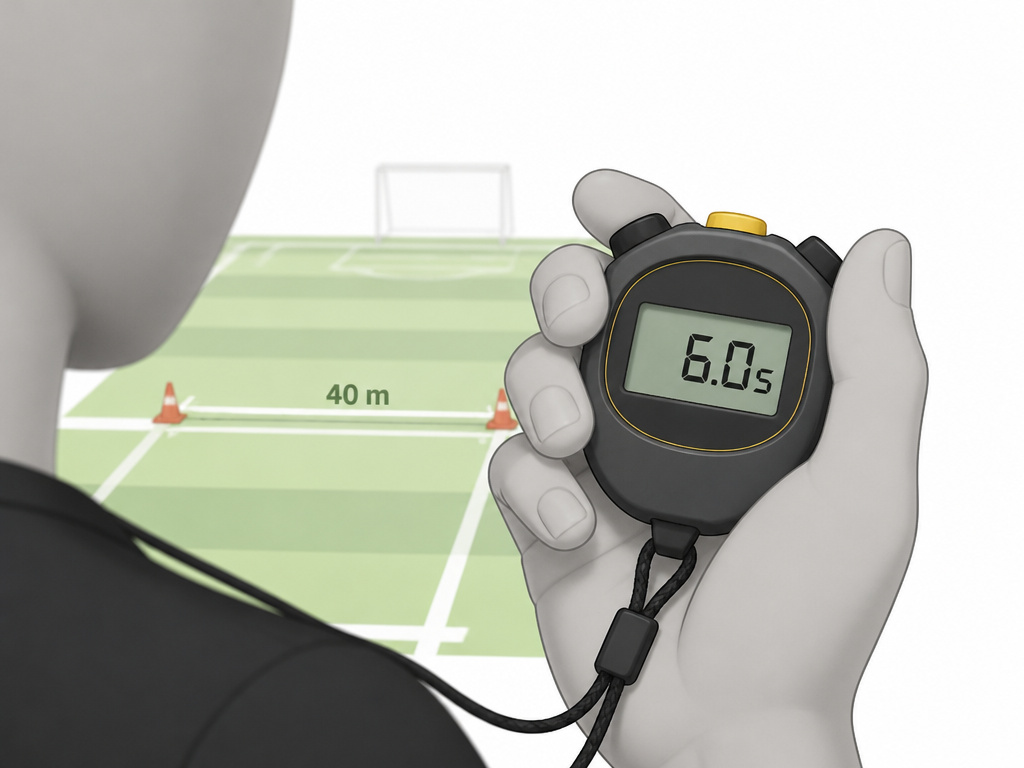
The times are ceilings, not suggestions. For the RSA, every single sprint must be under the limit.
| Category | RSA (40m) | Interval Test (75m run / 25m walk) |
|---|---|---|
| Men’s FIFA Category I | ≤ 6.0 seconds | ≤ 15 seconds / ≤ 18 seconds |
| Women’s FIFA Category I | ≤ 6.4 seconds | ≤ 17 seconds / ≤ 20 seconds |
These are the top-tier international standards. National and regional categories have slightly slower times, but the test structure is identical. The key is consistency. A 5.9-second first sprint followed by a 6.2-second fifth sprint is a fail. Your slowest sprint defines your result.
The source of these times matters. The official FIFA referee fitness test standards PDF lists a 60-second recovery. However, another FIFA document lists a 90-second recovery. Check with your local federation for the applicable standard.
Assistant Referee and Futsal Tests
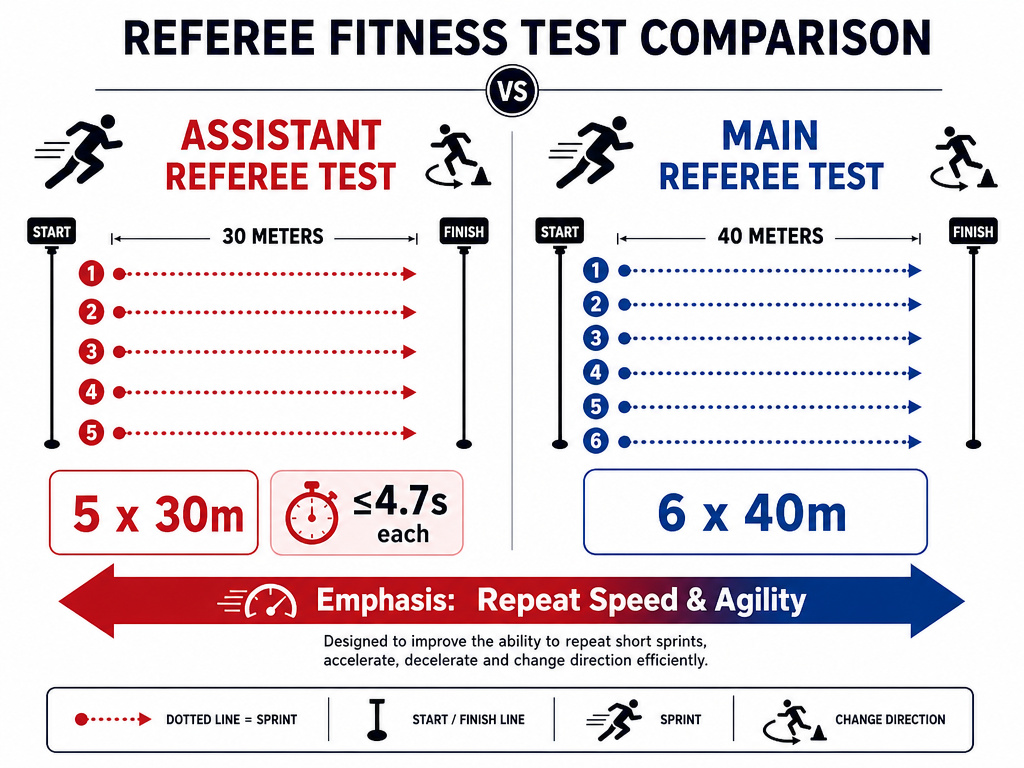
The path for an assistant referee is different. Their test focuses on shorter, sharper bursts and change-of-direction agility, reflecting their sideline role.
- CODA (Change of Direction Ability): A specific agility test.
- RSA: Often 5 x 30-meter sprints with only 30 seconds recovery.
- Interval Test: Similar structure but with different time standards.
For example, according to the Hong Kong FA, a FIFA Men’s Assistant Referee might need to run 30 meters in ≤4.7 seconds, five times in a row, whereas FIFA’s main referee standard is 6 x 40m sprints. The emphasis is on explosive repeat speed over a shorter distance. If you hold a dual assistant referee role, passing the main referee test sometimes grants an exemption from the futsal-specific test, but not always; check your local federation’s policy on referee levels.
Test Day Logistics and Common Mistakes
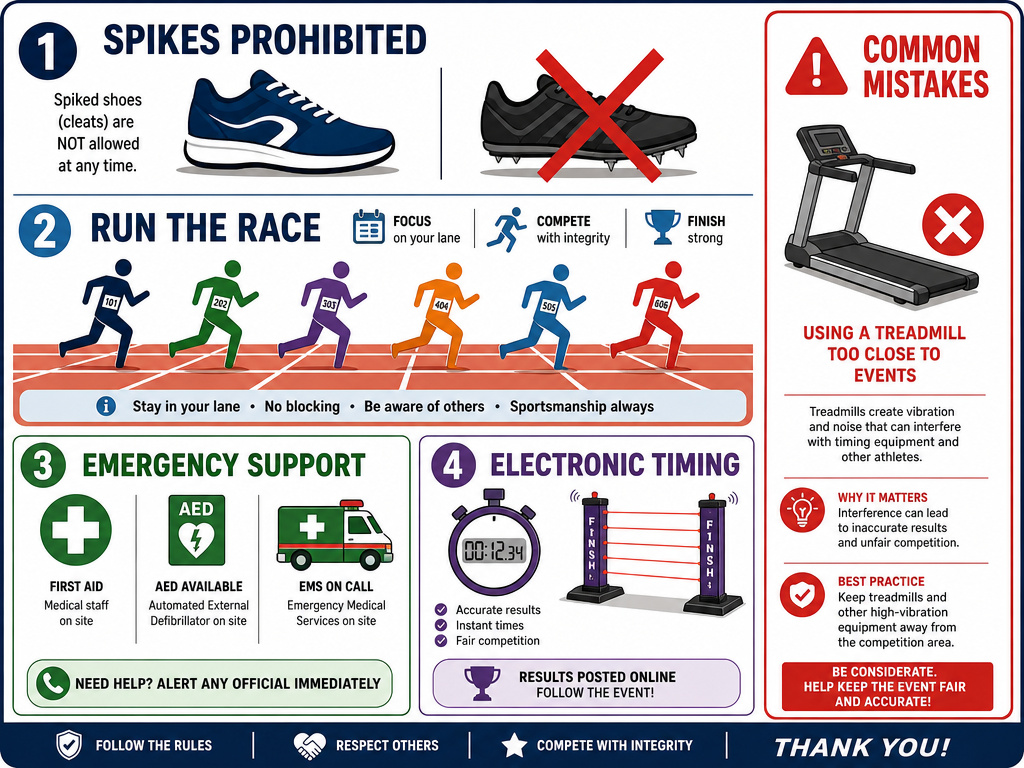
You don’t just show up and run. Official test administration has fixed rules that, if broken, can invalidate the session or put you at risk.
- Surface & Shoes: Tests are on an athletics track or football field. Athletic spikes are strictly prohibited. Wear training shoes.
- Group Size: Runs in groups of six or fewer, with up to four groups tested simultaneously.
- Medical & Supervision: A qualified physical instructor must conduct the test. A well-equipped ambulance must be present on-site. As the Florida soccer referee fitness policy underscores, having certified first aid and an AED onsite is a common safety standard, while FIFA requires a well-equipped ambulance to be present.
- Timing: Electronic gates are used for RSA. If unavailable, manual timing by experienced instructors is allowed.
Common mistake: Training exclusively on a treadmill. The treadmill helps with cadence but removes the crucial ground-force impact and self-propulsion of a real sprint. Your legs won’t be ready for the track.
The most frequent training error is doing a full-intensity interval session 1-2 days before the test. Your legs will be heavy. Ideally, allow 3+ days of lighter activity before test day to be fresh. This is a peak performance test, not a training session.
How to Train for the Test
You can’t just be fit. You need to be specifically fit for these two tasks. General football fitness builds a base, but you must specialize.
For the RSA: Train 40-meter sprints with a walking recovery, gradually increasing volume.
- Focus on the start. Practice exploding from the 1.5m line behind the gate.
- Record your times. Your sixth sprint should be close to your first, demonstrating consistent speed.
For the Interval Test:
- Use the official audio file to practice. Your local referee association may provide it.
- Don’t just aim to meet the time. Practice running the 75m faster than the required standard to build a buffer.
- Integrate interval training into your weekly schedule, but never neglect the sprint work.
A balanced weekly plan for an elite referee includes endurance running, interval sessions, sprint work, and strength/flexibility. Neglecting any one area is why referees plateau. The optional Yo-Yo test is a great monitoring tool for the intermittent endurance base the Interval Test demands.
Assistant Referee Fitness Test Differences
The fitness test for FIFA Assistant Referees differs from the main referee’s test. Their repeated sprint ability test involves five sprints over a 30-meter distance, not the six over 40 meters required for referees. The recovery time between these sprints is also shorter, with a maximum of 30 seconds allowed. The required time to complete each 30-meter sprint is faster over the shorter distance. For men’s Category I, each sprint must be under 4.7 seconds, while for women’s Category I, it must be under 5.1 seconds. This test design reflects the assistant referee’s need for explosive, repeatable speed along the touchline.
Frequently Asked Questions
What happens if I fail the fitness test?
You can retake it, but most federations enforce a mandatory waiting period. For example, some federations, such as British Columbia Soccer, enforce a mandatory waiting period between unsuccessful attempts. You typically have until the end of the calendar year to pass and maintain your referee level.
Are there different tests for different referee levels?
Yes. While the FIFA test structure is standard, the pass/fail times get faster as you move up from district to regional, provincial, and international (FIFA) levels. The test itself doesn’t change, but the stopwatch gets stricter.
Why is the walking recovery in the RSA test mandatory?
It’s an active recovery protocol. It keeps blood flowing to clear lactate without allowing full rest, precisely mimicking the partial recovery a referee gets during a match while play resets. Jogging back increases fatigue accumulation.
Can I use the Yo-Yo test instead?
The Yo-Yo Intermittent Recovery Test is an approved optional test for assessing aerobic fitness, but it does not replace the official FIFA test for annual certification. Some federations may use it for monitoring training progress.
The Bottom Line
This test is a professional benchmark. It’s not about being the fastest single-sprint athlete; it’s about being a repeatable, durable official for 90+ minutes. The 60-second RSA recovery is the modern standard, train for that, not the older 90-second guideline.
Your first step is to find the official audio file and try just two laps of the Interval Test at your target pace. The beep dictates everything. Once you can hit that pace consistently, layer in the sprint work. And remember, the best referee positioning in the world is useless if you don’t have the gas to get there.
