
Freestyle Football Explained: The Art Beyond the Game
This post contains affiliate links. As an Amazon Associate, we earn from qualifying purchases.
Freestyle football is the art of performing creative tricks with a football using any part of the body except the hands and arms, blending sport, dance, and acrobatics. It is governed by the World Freestyle Football Association (WFFA), uses a standard size 5 ball in official competitions, and its most famous global tournament is the Red Bull Street Style World Finals.
The core of the sport is about control, creativity, and performing under pressure in structured battles. This separates it completely from the 11-a-side game, even though they share the same ball. Freestyle football explained.
What follows is a walk through its 2,000-year origins, the precise rules that govern modern competitions, the iconic figures who shaped it, and a straightforward path for anyone who wants to start learning about freestyle football explained. By the end, you’ll see it as its own distinct discipline, not just fancy keepie-uppies.
Key Takeaways
- The modern sport is officially governed by the World Freestyle Football Association (WFFA), which sets competition rules including the standard size 5 ball.
- Major competitions like Red Bull Street Style use a head-to-head “battle” format where each freestyler performs three 30-second rounds to impress a judging panel.
- A consistent beginner practice of an hour a day aiming for 100 consecutive keep-ups builds the foundational ball control needed for tricks.
- The art traces its lineage not to association football, but to ancient Southeast Asian games like chinlone and sepak takraw, which have been practised for 2,000 years.
- While spectacular, freestyle is a performance art; its skills of touch and balance are complementary to, but not a direct replacement for, match-play intelligence.
The Ancient Roots of Ball Juggling
Watch the space, not just the ball. The story of freestyle football starts not on a pitch, but in royal courtyards and village squares in Southeast Asia over two thousand years ago.
Games like chinlone from Myanmar, sepak takraw, and jianzi were blending sport, dance, and communal artistry centuries ago. Chinlone, for instance, was a circle game where players kept a rattan ball in the air using their feet, knees, and heads in a flowing, cooperative rhythm. The objective was grace and continuous play, not beating an opponent.
The art of freestyle football can be traced to games of Southeast Asia such as chinlone, jianzi and sepak takraw, which have been practised for 2,000 years.
This ancient thread reappeared in Western circuses during the 1800s. Performers like Enrico Rastelli and Francis Brunn wowed audiences with jaw-dropping object manipulation, including footballs.
From Maradona’s Warm-Up to a Global Sport
The link to modern football finally clicked in the 1980s, thanks to one man: Diego Maradona. His now-legendary warm-up routines before Napoli games were a revelation. Here was the world’s best player performing intricate juggling sequences, neck stalls, and sits. But the spark was lit.
That spark was carried through the 1990s by pioneers like South Korea’s Mr. Woo. After a playing career, he dedicated himself to football as performance art. In 1989, he set a Guinness World Record by balancing a football on his head for 5 hours, 6 minutes, and 30 seconds.
The 2000s brought the final piece: structure. Then, in 2008, came the pivotal moment: the first Red Bull Street Style World Finals in São Paulo, Brazil.
| Key Tournament | Founded | Significance |
|---|---|---|
| Red Bull Street Style (RBSS) | 2008 | First major global competition; crowned Arnaud ‘Séan’ Garnier as first world champion. |
| Super Ball World Open | 2009 | First “open” world championship, encouraging all styles; based in Prague. |
| European Freestyle Football Championship | 2013 | Annual continental battle, featuring the standard 3×30 second round format. |
| African Freestyle Football Championship | 2017 | Marked the sport’s rapid growth across Africa. Despite taking competitions online in 2020, one major online event that year featured 152 competitors representing 21 countries. |
| Women’s European Freestyle Football Championship | 2019 | The first competition dedicated exclusively to women freestylers. |
What Are the Official Rules and Formats?
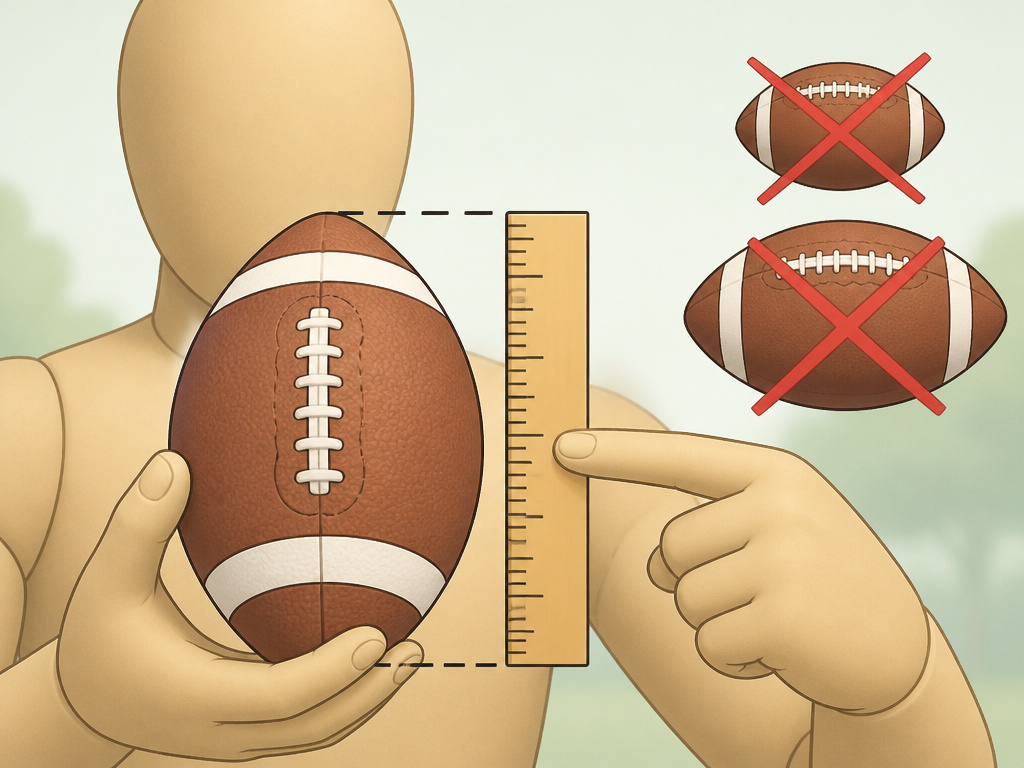
This is where it stops being informal juggling and becomes a codified sport. The World Freestyle Football Association (WFFA) is recognized as the official global governing body, while the Freestyle Football Federation (F3) has also historically published a competing rule set.
The core competitive format is the battle in freestyle football explained. Two freestylers face off, taking turns to perform. A common battle structure, used by the Freestyle Football Federation (F3) and in events like Red Bull Street Style, is for each participant to have three 30-second rounds. A panel of judges scores based on criteria like technical difficulty, originality, style, and control.
Where this goes sideways: Using a ball that’s too small or light for competition. The WFFA rules state the default is a size 5 ball, and athletes are only allowed to go down to a size 4. An undersized ball is easier to control but won’t fly right in a headwind on stage, and you’ll be marked down.
The equipment rule is specific but has a history of disagreement. The current WFFA standard is clear: size 5, with a minimum of size 4. However, the archived rules of the Freestyle Football Federation (F3) noted a tolerance of 0.5 sizes either way, which includes sizes 4.5 and 5.5.
There are fascinating edge cases, too. The WFFA rulebook has a clause for what happens if your ball rolls off the stage mid-battle: you may temporarily use your opponent’s ball until yours is recovered, but borrowing a ball from the crowd is forbidden.
The Toolkit: Major Styles and Moves
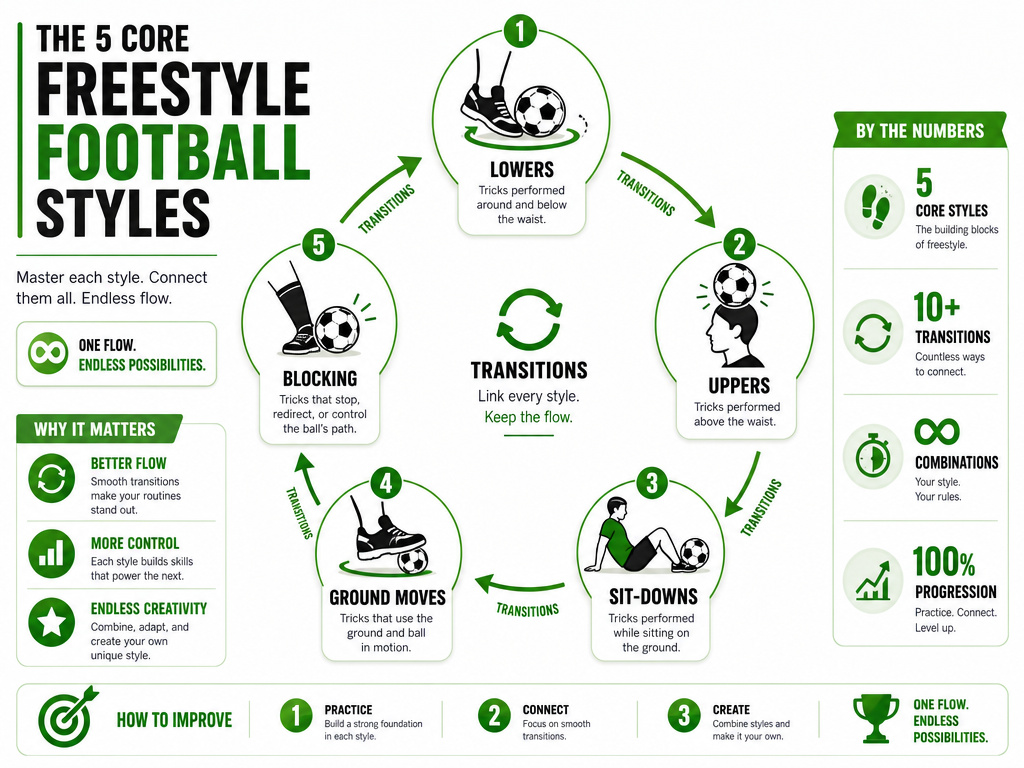
Freestyle is a collection of disciplines, each with its own flavor and physical demands.
Most tricks are categorized into a handful of core styles:
- Lowers: Tricks performed with the feet and lower legs while standing. This is the foundation, built on relentless juggling a ball practice. The “Around the World” (circling your foot around the ball mid-air) is the most famous lower move.
- Uppers: Tricks using the head, chest, and shoulders. A perfect head stall, where the ball sits motionless on your forehead, is a classic upper control move.
- Sit-downs: As it sounds, complex sequences performed from a seated position, often involving the feet and calves.
- Ground Moves (Grounds): Tricks with the ball on the ground, rolling it along the body or using the soles of the feet in creative ways. It’s the closest link to street football culture.
- Blocking: Using surfaces like the shin, knee, or back of the calf to stop and control the ball in unconventional ways.
The real magic happens in transitions, the fluid movement between these styles. A top freestyler might flow from a head stall (upper) to a seated sequence (sit-down) into a ground move, making it look like one continuous motion.
The Faces of the Game
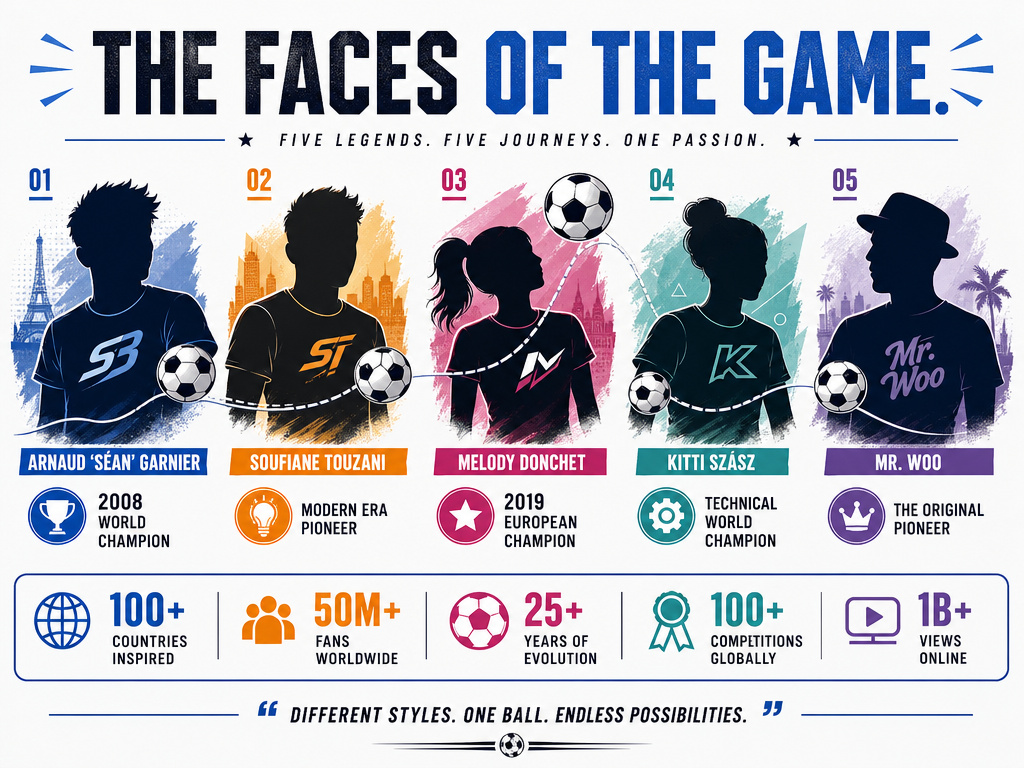
Freestyle football has built its pantheon over the last two decades, from global ambassadors to viral sensations.
- Arnaud ‘Séan’ Garnier (France): The archetype. The winner of that first Red Bull Street Style in 2008, Garnier turned a passion into a profession.
- Soufiane Touzani (Netherlands/Morocco): A foundational figure for the modern era.
- Melody Donchet (France): A dominant force in women’s freestyle and the 2019 Women’s European Champion.
- Kitti Szász (Hungary): A multiple-time world champion known for incredible technical precision and creativity,
- The Legacy of Mr. Woo (South Korea): As the pioneer, his contribution is immeasurable. He showed it was possible to make a living from the art form long before YouTube or big competitions existed.
These aren’t just ball jugglers; they are athletes and performers who have pushed the physical and creative boundaries of what can be done with a ball.
Freestyle vs. Football: What’s the Real Difference?
Here’s the part most people miss. While they share a ball, freestyle football and association football (soccer) are fundamentally different pursuits. Conflating them does a disservice to both.
| Aspect | Freestyle Football | Association Football (Soccer) |
|---|---|---|
| Primary Objective | Artistic expression, technical control, and impressing judges. | Scoring goals and preventing the opposing team from scoring. |
| Environment | Static, often on a stage or marked circle. A controlled environment. | Dynamic, across a large pitch with 21 other players, constantly reacting. |
| Key Skills | Balance, touch, creativity, choreography, performing under pressure. | Passing, shooting, tackling, positional awareness, teamwork, stamina. |
| Decision-Making | Pre-planned or improvised sequences based on personal style. | Split-second, reactive decisions based on opponents’ and teammates’ movement. |
| Physical Demand | Explosive, repetitive micro-movements; high risk of overuse injuries in joints. | Aerobic and anaerobic endurance; full-body contact; sprinting. |
A great freestyler has sublime touch and body control. These skills can complement football training, improving a player’s first touch or comfort with the ball in tight spaces. But the cognitive load of a match is something else entirely. The space-reading, tactical discipline, and teamwork required for the 11-a-side game are disciplines freestyle simply doesn’t touch. They are cousin sports, not parent and child.
Your First Steps: How to Start and Practice
Okay, you’re inspired. You’ve got a ball. What now? Ditch the idea of trying a fancy rainbow flick or step over on day one. You have to build the foundation, and that foundation is juggling.
The advice from professional guides is specific: dedicate an hour or so every day with the single goal of achieving 100 consecutive keep-ups. Not 100 sporadic touches where you chase the ball. One hundred controlled, disciplined juggles where the ball stays below your hip and you decide where it goes.
Start with your dominant foot. Then your weak foot. Then alternate. The goal isn’t to look cool; it’s to build a muscle memory so deep that you don’t have to think about the basic touch. Once that foundation is solid, and this takes weeks, not days, you can introduce your first trick.
The universal first trick is the stall (balancing the ball on your foot). From there, progress to the “Around the World.” The learning path is clear: mastery comes from thousands of repetitions of the basics, not from haphazardly attempting advanced combos. Search for local groups or online communities; the culture is overwhelmingly supportive of newcomers.
Frequently Asked Questions
Is there a difference between freestyle football and soccer freestyle?
No, they are the same thing. “Freestyle football” is the global term, while “soccer freestyle” is commonly used in North America and other regions where “football” refers to a different sport. The activity is identical.
Can you make a career from freestyle football?
Yes, but it’s a multi-stream career like many niche sports. Top freestylers earn income from competition prize money, sponsorship deals (often with sportswear brands), social media content, coaching clinics, and live performances at events and half-time shows. It requires entrepreneurial hustle alongside athletic skill.
Why aren’t top freestylers professional football players?
The skillsets overlap but are not the same. As the comparison table shows, freestyle rewards isolated technical mastery and performance, while professional football demands a broader package of athleticism, tactical intelligence, and teamwork in a chaotic, reactive environment. They are different professions.
What is the best ball for freestyle?
For official competitions, the standard is a size 5 match ball. For training, most freestylers recommend a size 5 ball with a slightly softer feel (lower PSI) for better control and easier stalls. Durability and consistent surface grip are more important than a fancy design.
How are freestyle battles judged?
Judges typically score on multiple criteria: Technical Execution (cleanliness and difficulty of tricks), Originality/Creativity (unique moves and combinations), Style/Personality (musicality, stage presence, fluidity), and Control (minimizing mistakes and drops). Different competitions may weight these categories slightly differently.
The Bottom Line
Freestyle football is a legitimate, global sport with ancient roots and a hyper-modern presence. It’s not “just juggling”, it’s a disciplined performance art with strict rules, defined styles, and a competitive circuit that crowns world champions.
If you’re a football fan, appreciate it for what it is: a breathtaking celebration of individual skill and creativity with the ball. Its value to the traditional game is in inspiring a love for pure technique. If you’re looking to start, remember the essential rule: the path to the flashy panna move begins with a single, controlled touch. Master that first, and the rest of the game opens up.
