
Street Football Explained: How to Choose
This post contains affiliate links. As an Amazon Associate, we earn from qualifying purchases.
Street football is an informal, self-organized version of association football played in urban spaces like streets, parking lots, and playgrounds. It is defined by negotiation, adaptability, and a lack of fixed rules, field markings, or officials. Players often improvise with available space and equipment, and the game serves as a critical vehicle for skill development, socialization, and community building, distinct from its structured, institutional counterpart.
That definition covers the basics of street football explained. The real story is how a game with no referees, no fixed pitch, and sometimes no proper ball manages to teach the sport’s most valuable lessons.
It’s not a lesser version of football. It’s the original laboratory. The rest of this guide walks through the unofficial rulebook, the science behind its social power, and the practical steps to find or start a game in your own neighborhood.
Key Takeaways
- The core of street football is player negotiation, covering everything from team size to game duration, as documented in peer-reviewed studies.
- Forget standard dimensions. The IFMST competition standard is a 20m x 10m pitch, while other guides suggest different sizes; informal games are played in any available space, using walls, fences, or jumpers for goalposts.
- Team sizes are fluid, with sources suggesting ranges from 4-10 players or, for previously organized matches, often seven players per side, with a mix of ages and backgrounds playing together.
- The game is a powerful tool for socialization and conflict resolution, teaching young people how to manage disagreement and violence through agreed-upon rules.
- Playing on hard surfaces like concrete requires specific footwear and a durable ball to prevent injury and maintain consistent play.
What Is Street Football? Beyond the Pitch
Street football is football returned to its roots. It’s the game you play because you want to, not because a schedule says you must. Academics call it a “negotiated social system,” which is a fancy way of saying the players make the rules as they go.
The Wikipedia entry on street football frames it as an informal variation, typically lacking formal fields, markings, or officials, and notes the use of improvised goals and balls. A study published in the SCIRP Journal observed 47 matches over more than 4,000 minutes in Gafsa, Tunisia, and found something more interesting. The players weren’t just ignoring rules; they were constantly adapting them through discussion and compromise before a ball was kicked.
This process covers the pitch (a quiet cul-de-sac), the duration (until someone’s mum calls them for tea), the equipment (that one slightly flat ball everyone owns), and the teams themselves. It’s a self-organized institution. This is why legends like Johan Cruyff, who famously said “Footballers from the street are more important than trained coaches,” emerged from this environment. The street forces decision-making under pressure with immediate feedback, there’s no coach to bail you out.
What Are the Unwritten Rules of Street Football?
The official rulebook is whatever the players agree on that day. But some conventions are almost universal, born from practicality and a shared sense of fair play.
The part nobody mentions: The owner of the ball is the de facto referee and has the final say on disputes. Their word is law, because without their ball, there is no game.
This isn’t tyranny; it’s a simple incentive structure. It keeps the game flowing. Other common negotiations, drawn from both academic observation and community lore, include:
- “Next Goal Wins”: The ultimate time-saver. When players need to leave, a close game can be decided by a single, sudden-death goal, regardless of the previous scoreline.
- Automatic Goalkeeper: Often, the least mobile or newest player is assigned to goal, a pragmatic solution everyone accepts to get the game started.
- The Fetch Rule: Whoever kicks the ball over a fence, into a bush, or onto a roof is solely responsible for retrieving it. This provides a powerful disincentive against careless, skyward clearances.
These rules are transmitted through play. They teach resource management, conflict resolution, and how to keep a collective activity going, skills that extend far beyond the touchline.
Street Football vs. Organized Football: Key Differences
Understanding street football explained means seeing where it diverges from the stadium game. It’s not a broken version of the professional sport; it’s a different game with its own priorities.
| Aspect | Organized / Institutional Football | Street Football |
|---|---|---|
| Rules & Governance | Fixed, codified by FIFA or national federations. Enforced by a referee. | Fluid, negotiated by players before and during play. The group polices itself. |
| Space & Pitch | Standardized dimensions (e.g., ~100m x 64m). Marked lines, grass turf. | Any available space (street, car park, playground). Boundaries are natural or agreed. |
| Equipment | Regulation goals, corner flags, match balls. | Improvised goals (walls, jumpers, bags). Often just a single, shared ball. |
| Team Structure | Fixed squad sizes (11v11), substitutions managed by a coach. | Fluid numbers (often 4-10 per side). Players join and leave as needed. |
| Primary Objective | Win the match within the league or cup structure. | Play, have fun, and solve the puzzle of the game within the constraints at hand. |
The street game rewards different qualities. Where organized football might value disciplined shape and following a tactical plan, street football prizes adaptability and individual ingenuity. A study in the SCIRP Journal noted that 68% of pre-arranged street matches involved players aged 16-18, while 75% of spontaneous games were organized by 11-15 year-olds. This shows the game evolves with its players, serving as a social outlet and a skill incubator at different stages of youth.
Street Football Field and Equipment: Improvisation is Key
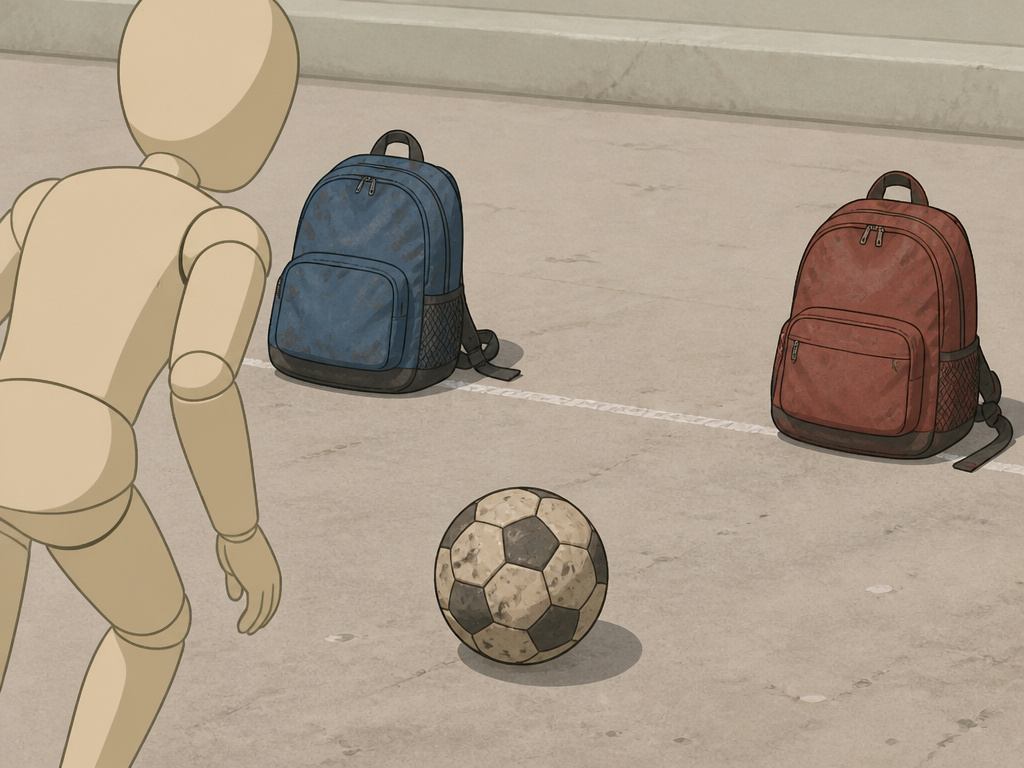
Formal organizations have tried to standardize the chaos. The International Federation of Multi Sports & Traditional Games (IFMST) publishes a technical regulation for competitive “street football” that specifies a 20-meter long by 10-meter wide pitch, with 1.5-meter radius penalty arcs and small goals (70cm high x 90cm wide).
That’s one version. The commercial blog Authority Soccer suggests a different standard for street soccer: a field 72 feet by 52 feet with much larger 4ft x 12ft goals.
Where this goes sideways: Assuming you need a perfect, marked pitch. The academic research and countless childhoods confirm the opposite: the game happens where you are. A study of Gafsa documented a match where, because the field was on a high slope making corner kicks impossible, players negotiated a rule change to take corners by hand before starting.
The equipment list is similarly minimalist:
- A Ball: It doesn’t have to be a premium match ball. A worn street football ball designed for concrete will last longer and behave more predictably on hard ground than a glossy, high-bounce model.
- Goals: Two jackets, a couple of backpacks, or a chalk line on a wall. The goal is a concept, not a product.
- Footwear: This is the one place where specificity matters. Playing on asphalt or concrete in standard football boots is a fast track to twisted ankles. Proper street football shoes with flat, grippy soles designed for hard courts are a worthwhile investment for anyone playing regularly.
- Surface: Concrete, asphalt, hard-packed dirt, or even an indoor hall. The harder surface means the ball stays lower, forcing tighter control, a key reason street players often develop excellent close dribbling.
How Street Football Builds Skills and Community
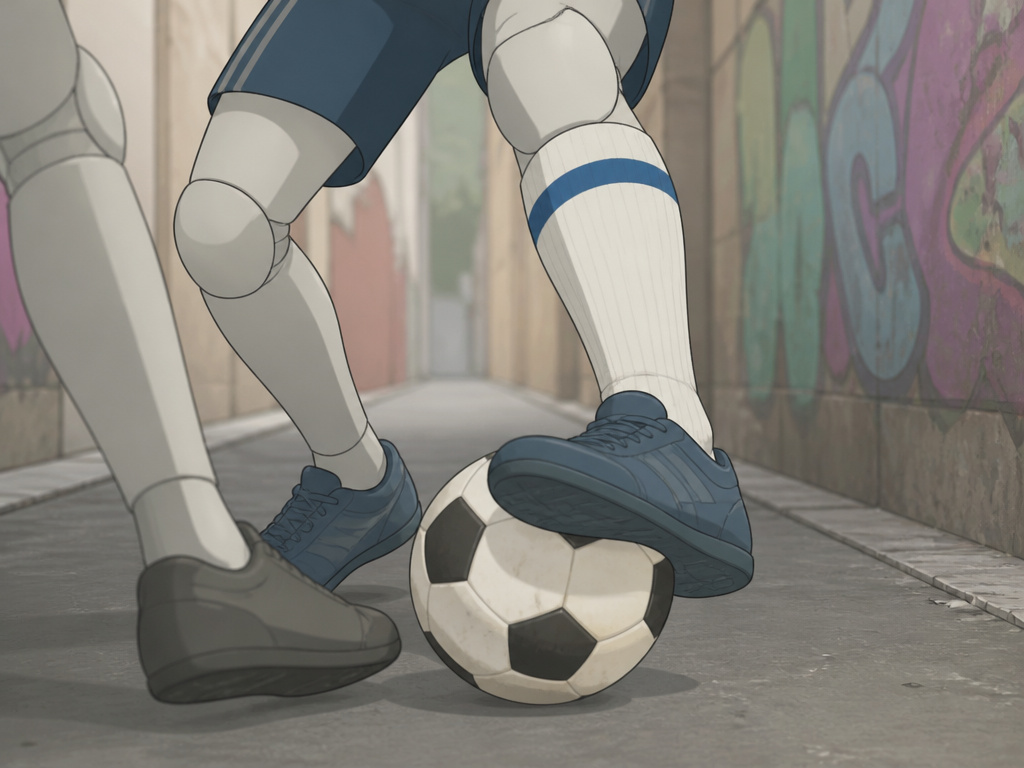
The benefits go far beyond learning a slick panna move. The constrained environment is a brutal but effective teacher.
- Tight-Space Mastery: With less room, every touch counts. You learn to shield the ball, use quick changes of direction, and play passes that are measured in inches, not yards.
- Decision Speed: There’s no time to look up, analyze, and pass. You scan as you receive, making decisions in a split-second, a skill that translates directly to the faster pace of futsal and organized 11-a-side.
- Creativity Under Pressure: When a structured passing move isn’t an option, you invent one. This is where the flair associated with freestyle football meets practical match play.
The peer-reviewed study on street football from Tunisia highlights its profound social role. Researchers observed it as a “self-organized social system” with a “strong social integration capacity.” In practice, this meant games routinely included a mix of pupils, students, the unemployed, and even youngsters with disabilities, all negotiating the terms of play together. The study concluded the activity “plays an educational role and affects positively the socialization process,” teaching participants how to manage conflict and build consensus.
Safety and Practical Tips for Playing
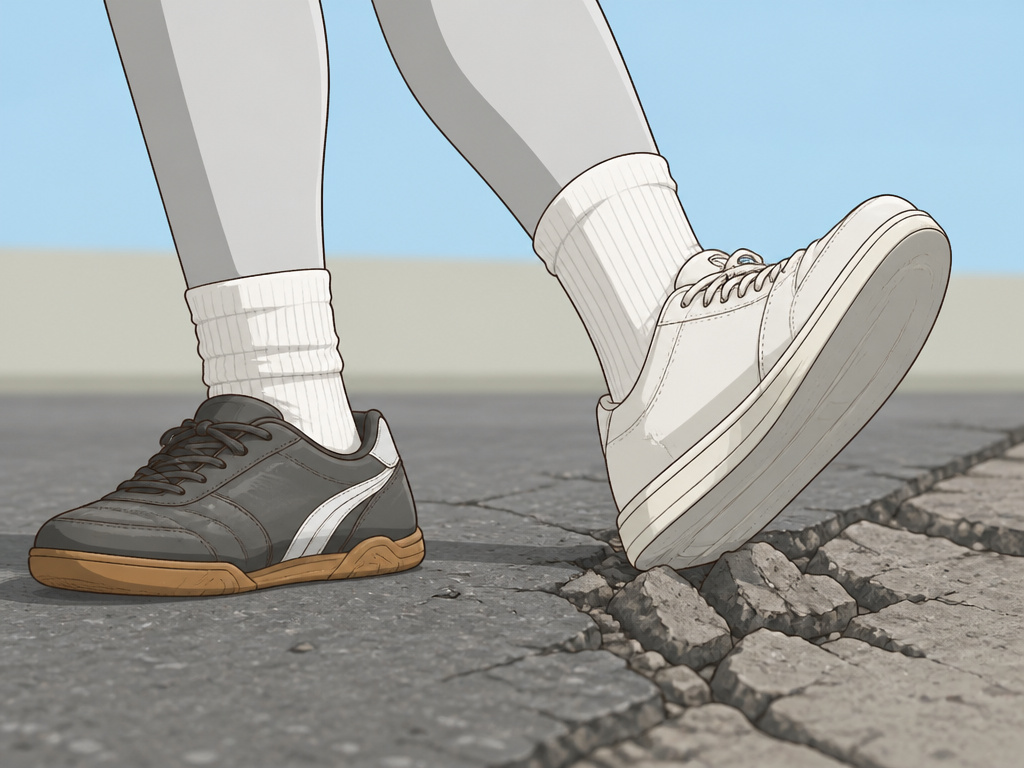
The raw, adaptive nature of street football explained comes with physical risks. Concrete doesn’t forgive a sliding tackle.
Before you start: The surface is your biggest opponent. A fall on asphalt will take skin off your knees, elbows, and palms in seconds. Ankle rolls are more common on uneven ground. Mitigate this with court-style football shoes and a mutual agreement to avoid reckless challenges.
Here’s how to play smart and keep the game going:
- Warm Up Properly: Five minutes of jogging and dynamic stretches make a huge difference in preventing muscle pulls on a cold, hard surface.
- Hydrate: Even in cooler weather, the constant movement in a confined space is dehydrating. Have water nearby.
- Set Clear Boundaries: Agree on out-of-bounds areas (e.g., “the parked cars are the line”) and what constitutes a dangerous foul before you start. This pre-game talk is the heart of the street football negotiation process.
- Know When to Stop: Light rain makes concrete treacherous. As dusk falls, visibility drops and the risk of injury spikes. Agree to reconvene another day.
- A ball designed for grass will bounce too high and wear out quickly. The right ball and shoes aren’t about luxury; they’re about sustainability and safety.
How to Organize a Street Football Game
You don’t need a permit. You need a few friends and a basic framework. Think of it as facilitating the negotiation.
- Find the Space: Scout for a flat, open area with minimal traffic and breakable objects. A school playground after hours, a quiet parking lot on a weekend, or a designated multi-use court are ideal.
- Gather Players: Start with 4-6 per side for a balance of involvement and space. Use WhatsApp groups, school gates, or just shout to neighbors. The beauty of small-sided games is their flexibility.
- The Pre-Match Meeting: This is the most important step. Gather everyone and agree on:
- Team Selection: Captains pick, random draw, or shirts vs. Skins.
- Pitch Boundaries: “From this fence to that manhole cover, the car is a post.”
- Game Duration: “First to 10 goals,” or “60 minutes then next goal wins.”
- Key Rules: Are slide tackles allowed? What’s the restart if the ball goes over the fence?
- Play and Adapt: The initial rules are a starting point. If something isn’t working (e.g., the goal is too big), pause and renegotiate. This flexibility is the core of the game.
- End and Invite Again: When time or energy runs out, acknowledge the result (or agree it was a draw) and set a loose plan for the next game. The social connection is as important as the score.
Does street football use downs and tackling?
Street football is a form of association football, not American football. It does not use downs, forward passes, or the structured tackling seen in gridiron games. The physicality is that of soccer, where players contest for the ball with tackles that aim to win possession, not to stop a player’s forward progress in a set play. The rules for contact are typically negotiated by the players themselves before starting, adapting to the space and the group. This self-organized nature means the specifics of what is a foul can vary from one game to the next, built on a foundation of mutual agreement rather than a formal rulebook.
How is scoring handled in street football?
Street football uses the scoring system of association football, not American football. Points are not called touchdowns and there are no point values for different actions. The sole objective is to score a goal by getting the ball into the opponent’s goal. Everything counts as one goal. The definition of a goal and what constitutes a valid score is often part of the pre-game negotiation among players, especially when using improvised goals like a section of wall or markers made from clothing. The final score and what it takes to win are also flexible, commonly decided by the players based on available time or reaching a certain number of goals.
Frequently Asked Questions
Is street football the same as futsal?
No, but they are close cousins. Both are small-sided, fast-paced games played on hard surfaces. The key difference is structure. Futsal has codified rules, fixed periods, and a referee. Street football has player-negotiated rules, fluid time, and self-officiating. The skills are highly transferable between the two.
What size ball is best for street football?
Size 4 or 5 ball designed for hard courts is best. Avoid high-grip, textured balls meant for grass; they wear down quickly on concrete. Look for a rubber or synthetic leather casing. The ball should have a low bounce profile to keep it controllable in tight spaces.
Can street football help me become a better player in organized leagues?
Absolutely. Many professional coaches believe it’s essential. Street football develops close control, quick decision-making, creativity, and spatial awareness in congested areas, skills that are drilled out of players in overly structured youth academies. It teaches you to solve problems on the pitch by yourself.
Are there official street football competitions?
Yes. Organizations like the IFMST and Street Soccer USA run organized tournaments with standardized rules and pitches. However, these are a formalized subset of the broader, informal street football culture. They capture the spirit but operate within a competitive framework.
What’s the difference between street football and freestyle football?
Street football is a game with opponents, goals, and loose rules, focused on match play. Freestyle football is a performance art focused on individual skill, trick mastery, and creativity, often done alone or in battles. The skills overlap, but the objectives are different.
The Bottom Line
Street football is the sport’s most authentic classroom. It trades pristine pitches for problem-solving, referees for negotiation, and rigid tactics for pure instinct. The coaching guide for street soccer and academic research both point to the same truth: the social and educational value is immense.
Forget trying to replicate a Premier League pitch. Find a flat piece of ground, agree on the rules with whoever shows up, and play. The constraints of the street, the hard ground, the weird bounce, and the makeshift goal are the teachers. Your first touch, your decision-making, and your understanding of the game as a shared, negotiated experience will be better for it.
That’s the real explanation. Everything else is just details you’ll figure out once the game starts.
