
How to Become a VAR Official: The 8-Step Pathway
This post contains affiliate links. As an Amazon Associate, we earn from qualifying purchases.
To become a VAR official, you must first become a qualified on-field referee, gain significant experience at progressively higher competitive levels, and then complete specialized VAR training and certification authorized by FIFA or your national football association. The path is controlled by the International Football Association Board (IFAB) and FIFA, and appointments at the top level are managed by bodies like England’s Professional Game Match Officials Limited (PGMOL).
The FIFA VAR handbook and IFAB protocol are the rulebooks. They define every technical role, required certification, and the exact situations where a VAR can intervene. This isn’t a side gig for a tech enthusiast; it’s a promotion within the refereeing profession, and the first step is learning how to become a VAR official.
What follows is the real sequence: a decade or more of on-field work, a specific skill shift from running the pitch to reading screens, and a final appointment that depends on a competition meeting FIFA’s implementation standards, which is the ultimate answer to how to become a VAR official. We’ll walk through the eight concrete steps, the day-to-day reality of the job, and the common hurdles that stall promising careers.
Key Takeaways
- The only entry point is as a qualified on-field referee, there is no direct VAR training course for outsiders.
- Promotion depends on performance evaluations over many seasons, moving from local leagues to national and then FIFA-listed competitions.
- Specialized VAR certification is separate from referee certification and is administered by FIFA or your national association after you reach a certain referee tier.
- Technical and communication skills are as vital as decision-making, you must master replay software, audio systems, and concise dialogue under pressure.
- Reaching the level to operate VAR in a top league requires many years of on-field experience and promotion, assuming consistent high performance and opportunity.
The 8-Step Pathway to the VAR Booth
Picture the touchline, ten minutes to go. The referee’s call is questioned. The VAR process starts. The person in that booth got there by climbing a very specific ladder. Here are the eight rungs, in order.
Step 1: Become a Certified On-Field Referee
Your local football association runs the entry-level course. This covers the Laws of the Game, positioning, match control, and fitness. You’ll start refereeing youth or amateur adult matches. This is required. Every VAR is a current or former qualified referee, the IFAB protocol is built on that foundational knowledge.
Step 2: Accumulate Years of On-Field Experience
You need miles in your legs and thousands of decisions in your book. This means weekly matches, dealing with players, coaches, and increasingly complex game situations. You’re being assessed, often informally at first, on consistency, temperament, and accuracy. The path to becoming a referee at higher levels is a long audition central to how to become a VAR official.
Step 3: Advance Through the Referee Tier System
Most countries have a pyramid. You might move from local leagues to regional competitions, then to national lower divisions. In England, you’d aim for the National List to referee EFL matches. Performance reviews and assessments at each stage decide your promotion. This is where you separate from referees who stay at the grassroots level.
Where this goes sideways: Assuming VAR is a shortcut. It’s not. It’s the peak of the refereeing profession, not an alternative to it. A referee who struggles with game management on the field will not suddenly excel in the video operation room.
Step 4: Reach a High Enough Level to Be Eligible for VAR Training
VAR isn’t for every referee. Your national association will set a threshold. Typically, you must be officiating at a national professional level or be on the FIFA international list as an on-field official. The Professional Game Match Officials Limited (PGMOL), for example, selects VARs for the Premier League from its pool of top-tier referees.
Step 5: Complete Specialized VAR Training and Certification
This is the distinct skill shift. Training covers the VAR protocol, replay technology operation, communication protocols, and the specific philosophy of “clear and obvious error.” All members of the VAR team are certified FIFA VARs and are specifically trained to operate within the VAR protocol. You learn the match-changing situations cold: goals, penalty decisions, direct red-card incidents, and mistaken identity (the four used by leagues like the Premier League), though FIFA states VAR can be used for up to five types of situations.
Step 6: Serve as an Assistant VAR (AVAR)
Your first appointment in the booth is likely as an AVAR. The assistant video assistant referee supports the lead VAR by monitoring live play, logging incidents, and operating replay feeds. It’s an apprenticeship. The IFAB protocol states the VAR is supported by at least one AVAR, though IFAB and FIFA have different stances on what happens if the AVAR cannot be replaced. It’s where you build the split-screen attention needed for the top job.
Step 7: Receive VAR Appointments in Lower-Tier Professional Matches
You won’t start in a Champions League final. You’ll be appointed as the lead VAR for lower-division professional games or cup matches. Your decisions and review times are logged and assessed. This is the final proving ground, where you demonstrate you can manage the VAR process smoothly under real pressure.
Step 8: Progress to Top-Level Competitions
With a proven track record, you join the roster for a top league like the Premier League or a FIFA competition. Your appointments are managed by the central refereeing body. Remember, permission to use VAR must be granted by FIFA to the competition organizer. Your role exists only where that standard is met.
| Progression Stage | Primary Focus | Typical Timeline | Key Hurdle |
|---|---|---|---|
| Grassroots Referee | Learning Laws, Match Control | 1-3 years | Passing initial fitness and written exams |
| Regional Panel | Consistency, Advanced Positioning | 3-6 years | Positive performance reviews for promotion |
| National List Referee | High-Pressure Game Management | 6-10 years | Reaching and maintaining elite fitness standards |
| VAR Candidate | Tech Proficiency, Protocol Adherence | 10+ years | Securing a place in limited national training slots |
What Does a VAR Official Actually Do During a Match?
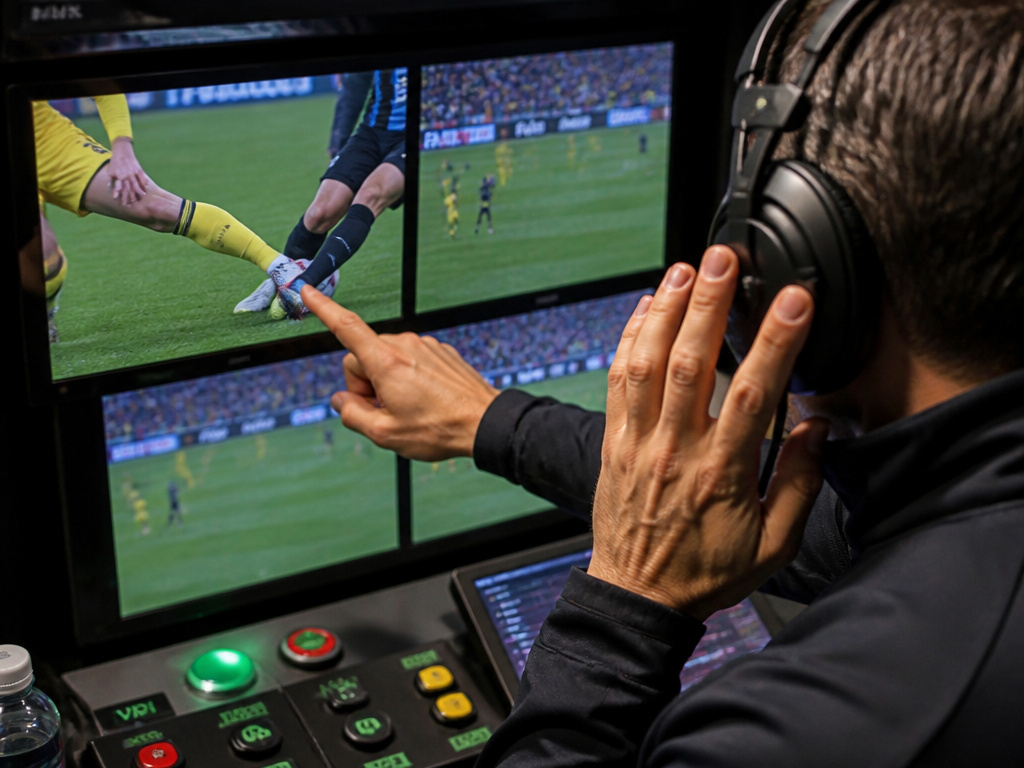
It’s less about watching a game and more about managing a flow of information. The job breaks down into three continuous modes: checking, reviewing, and communicating.
From the first whistle, you’re checking every key incident against the four reviewable categories. This happens in real-time, using the bank of screens showing every broadcast camera angle. You’re not waiting for a stoppage. You and your AVAR are talking constantly, a short, coded dialogue. “Checking possible penalty, phase started with the corner, checking attacker’s position.”
If you spot a potential clear and obvious error, you alert the referee. For factual calls (offside, ball in/out), you can relay the information directly, a “VAR-only review.” For subjective decisions (foul severity, handball intent), you recommend an “on-field review” (OFR). The referee then goes to the sideline monitor in the referee review area.
The referee signals an OFR by making the outline of a rectangle, indicating a video screen. Slow motion replays are only used to establish point of contact for physical offences and handball, while full-speed replays are shown to determine the intensity of an offence.
Your communication must be impeccably clear and calm. The headset connects you to the referee, assistant referees, and the fourth official. A mumbled phrase or hesitant tone can undermine the entire process. The pressure is silent but immense, with the outcome of the match potentially hinging on the VAR’s input.
The Specific Skills That Separate a Good Referee from a Good VAR
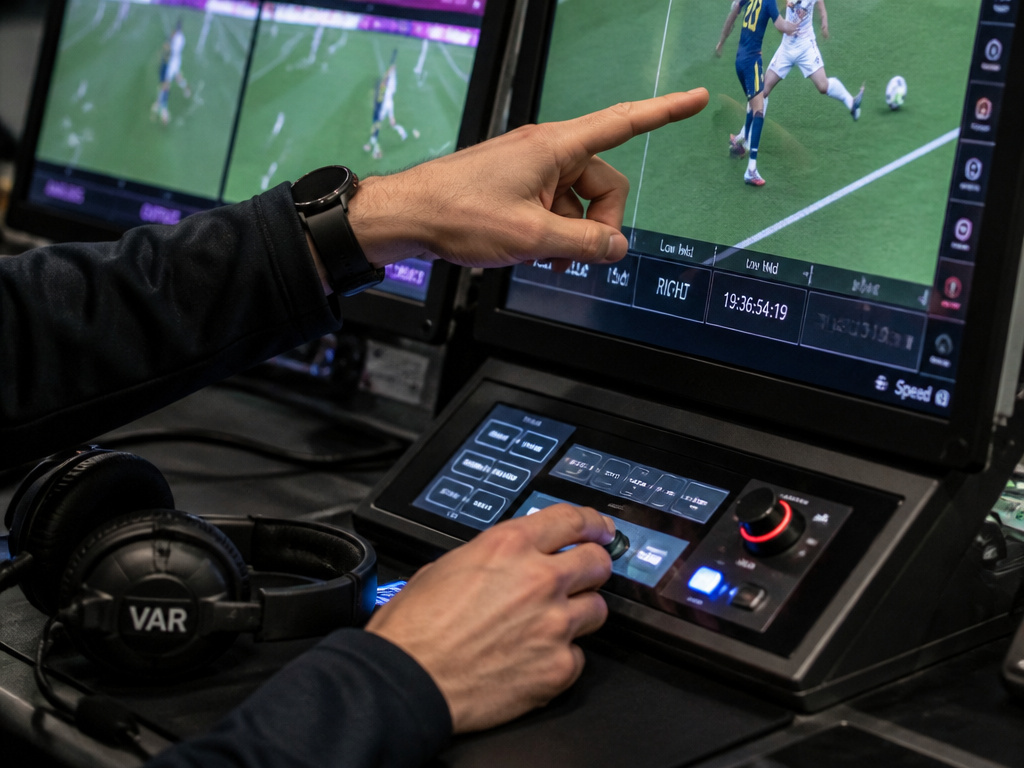
The best on-field referees have supreme fitness and man-management skills. The best VARs have a different toolkit.
Technical Operation: You must master the replay software. Can you quickly pull up the goal-line camera, sync two angles, or isolate the ultra-slow-motion shot of a foot making contact? The replay operator is there to assist, but you need to direct them with precision. A fumbled technology check burns precious seconds and erodes confidence.
Sustained Visual Concentration: It’s a shift of intense screen focus lasting the duration of the match and its immediate aftermath. You’re not following the ball’s poetic flow; you’re scanning for infractions in a crowded penalty area or tracking a defender’s shoulder line for offside. It’s forensic, not romantic. Eye strain and mental fatigue are real challenges.
Crisp, Unemotional Communication: The audio is recorded. Every word you say to the referee is dissected later. Your tone must be neutral, your instructions factual. “Referee, we have a possible offside in the attacking phase. I am checking the freeze frame now. Stand by.” No commentary, no doubt.
Decisiveness Under Time Pressure: A study found that match playing time increased significantly after VAR introduction. But the protocol pushes for speed. You’re balancing thoroughness with the game’s rhythm. The ESPN report notes stakeholders have agreed that if a review takes four minutes and the correct outcome is ultimately reached, that should always override a quicker process and an incorrect call. Your internal clock is always ticking.
Common Challenges and How to Overcome Them
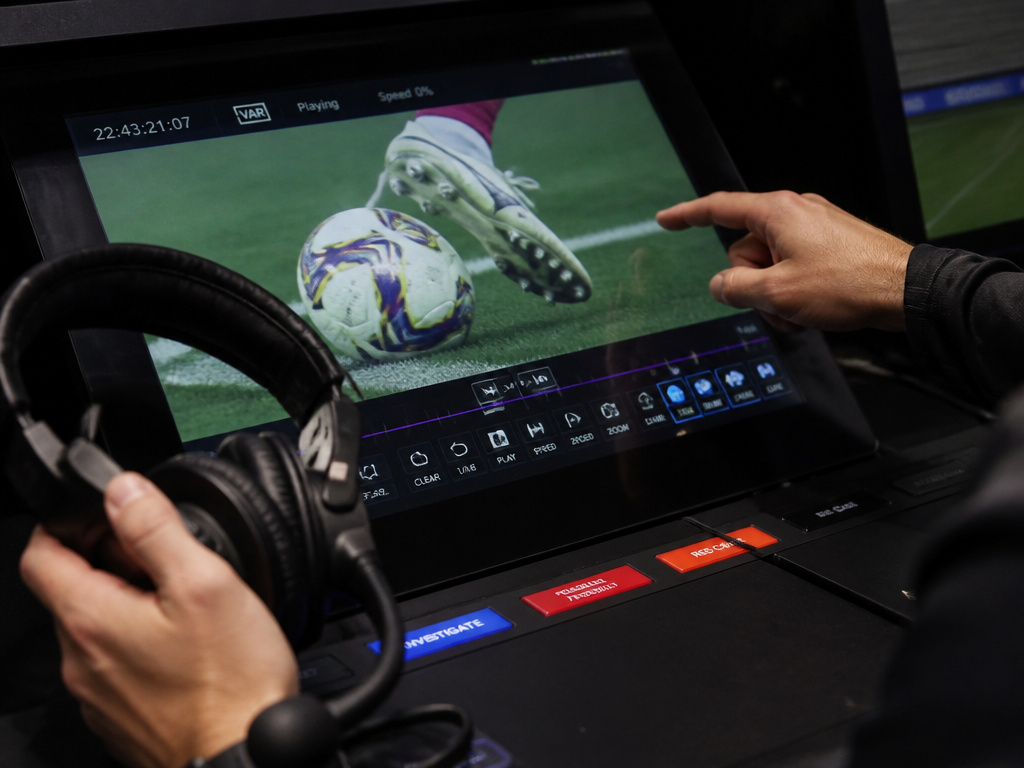
The pathway isn’t just long; it’s narrow. Here are the spots where people get stuck.
The Promotion Bottleneck: There are far more qualified referees than there are slots on national panels or FIFA lists. Advancement depends on someone above you retiring or moving on. The fix is brutal: out-perform your peers consistently, season after season. Network with referee coaches and be proactive about feedback.
The Pressure of the “Invisible” Mistake: On the field, a mistake is public and immediate. In the VAR booth, a mistake is often a failure to intervene, a missed check that only becomes a scandal in slow-motion replay after the match. The weight of that omission can be heavier than a blown call. Coping requires a rigorous, process-oriented mindset. Did you follow the protocol? If yes, you must trust it, even if the outcome is unpopular.
Technology Failures: It does happen. In a 2018 A-League Grand Final, a VAR software failure was reported. The IFAB protocol has a contingency: if a qualified replacement for the VAR or Replay Operator cannot be found, the match continues without VAR. Your job is to know the backup procedures cold and project calm if systems go down.
Managing Relationships with On-Field Colleagues: Telling a senior referee they’ve made a “clear and obvious error” is a delicate interpersonal task. It requires immense respect and tactical phrasing. The dynamic works only if the on-field team views the VOR as a support unit, not a watchdog. This trust is built in training sessions and debriefs, not during a tense match.
Easy to miss: The physical toll is different but real. You’re sedentary but mentally sprinting for 90+ minutes. The stress manifests as tension headaches or disrupted sleep after matches. Top VARs treat recovery like athletes, they manage screen time, practice eye exercises, and prioritize sleep.
Where Do Authorities Disagree? (And Why It Matters for Your Training)
Even the governing bodies have nuanced differences in their published rules. Knowing these prepares you for advanced training debates.
The first is scope. FIFA states VAR is used in relation to up to five types of situations, with the fifth being a competition option. The Premier League sticks strictly to the four match-changing situations. As a trainee, you must know your specific competition’s adopted standard.
The second is chain of command. The Premier League states that in July 2020, IFAB transferred the responsibility of VAR to FIFA, while IFAB states that permission to use VAR must be granted by FIFA to the competition organizer. Yet the IFAB protocol still states that permission to use VAR must be granted by FIFA to the competition organizer. This isn’t a conflict; it’s a division of labor. IFAB writes the Laws and protocol; FIFA manages implementation and certification. Your training will come from the implementing body. FIFA or your national association, but the test questions will be from the IFAB book.
| Aspect | IFAB Stance (Lawmaker) | FIFA / League Stance (Implementer) | Implication for Trainees |
|---|---|---|---|
| VAR Responsibility | Sets the protocol in the Laws of the Game. | Manages certification, training, and competition approval. | You are certified by FIFA/your FA, but tested on IFAB protocol. |
| AVAR Replacement | If only the AVAR cannot be replaced, the match continues without VAR unless both teams agree in writing to proceed. | The VAR is supported by at least one AVAR (FIFA). | You must know the contingency rule, though it’s rarely invoked in top leagues with deep staff. |
| Second Yellow Card Review | The VAR can only intervene when the referee shows a clearly incorrect second yellow card which results in a red card. | Leagues often simply list “direct red-card incidents” as reviewable. | This is a subtle but critical distinction. A missed second-yellow offense is not reviewable, only an incorrect one. |
What are the physical and mental fitness requirements for a VAR?
While the VAR role does not require the same level of physical endurance as on-field refereeing, it demands a different kind of stamina. The job requires maintaining intense concentration for the entire match while monitoring multiple screens. Mental fitness is paramount, as you must process complex visual information quickly, communicate clearly under pressure, and make critical judgments that can change a match’s outcome. The role also requires the resilience to handle scrutiny and the collaborative mindset to work effectively with the on-field team, the AVAR, and the replay operator as a single unit.
How does the referee promotion system lead to becoming a VAR?
The path to the VAR booth begins with a long career on the field. All VARs are current or former qualified referees who have progressed through their national federation’s grading system. This involves years of officiating matches at progressively higher levels to demonstrate expert knowledge of the laws and match management. Only after reaching a high grade can a referee be selected for specific VAR training and certification by FIFA. Appointment to actual VAR duties then depends on the competition having permission from FIFA to use the technology and a need for certified officials to fill the roles in the video operation room.
Frequently Asked Questions
How much do VAR officials get paid?
Compensation varies wildly by competition level and country. In top European leagues, VAR is a full-time professional role within the refereeing body (like PGMOL). Salaries are not publicly disclosed but are understood to be commensurate with top-tier on-field referees, often reaching six figures for those with regular appointments in the premier domestic competition. In lower leagues or other continents, it may be a match fee added to a referee’s regular income.
Is it harder to become a FIFA referee or a VAR?
They are the same path until the final fork. Becoming a FIFA-listed international referee is arguably harder, as it requires world-class fitness, language skills, and selection from a global pool. However, the specialized skill set for VAR is distinct and not all elite on-field referees transition successfully. The hardest part is reaching the elite level from which both roles are selected.
Can you become a VAR if you have a background in video technology but not refereeing?
No. The IFAB protocol is unequivocal: the VAR is a current or former qualified referee. The role requires an instinctive, millisecond understanding of the Laws and game context that only comes from years of on-field experience. A tech expert would lack the foundational decision-making framework and would not be admitted to the certification course.
What is the single most important trait for a VAR official?
Clarity of communication under extreme pressure. The correct decision is useless if you cannot convey it to the referee quickly, unambiguously, and in a way that maintains their authority. This combines technical knowledge, emotional control, and precise language.
Do VAR officials get evaluated after every match?
Yes. Every intervention, check, and communication is logged and reviewed. Performance is assessed on accuracy, speed, adherence to protocol, and communication quality. Feedback is direct and often used to determine future appointments. A pattern of slow reviews or unclear comms will see you sidelined.
Before You Go
Start from the touchline and work up. If you’re serious about this path, your next step isn’t looking for a VAR course. It’s finding your local football association’s next referee certification course. Get your whistle, pass the fitness test, and referee fifty matches. That’s the only door in.
The journey from there is a marathon of assessments and incremental promotions. The referees who make it are the ones who treat every Sunday league match as seriously as a cup final, because someone is always watching. They’re also the ones who, years later, can sit in a quiet room, block out the roar of 80,000 people, and see the game not as a story, but as a series of checkable facts. That’s the shift. That’s the job.
