
Halftime Snacks for Football Players: A Practical Guide
This post contains affiliate links. As an Amazon Associate, we earn from qualifying purchases.
Halftime snacks for football players are about fast-digesting carbohydrates, not a full meal. Aim for 30–60 grams of carbs from sources like orange slices, bananas, or sports drinks during the break to replenish muscle glycogen and maintain performance for the second half. Avoid high-fat, high-fiber, or high-protein foods that cause stomach upset.
That number, 30 to 60 grams, isn’t a guess. It’s the consensus from the Gatorade Sports Science Institute and the UEFA Expert Group on halftime snacks for football players, backed by studies showing improvements in skills like shooting and passing when players refuel at the break. The trick is hitting that target with foods that won’t sit in your gut.
What follows is a breakdown of that math, a look at what college and pro teams actually serve, and how to adjust for everything from youth flag football to a cold November night under the lights.
Key Takeaways
- Target 30–60 grams of carbohydrate during the halftime break, ideally from fast-digesting sources like fruit, pretzels, or a sports drink.
- Avoid snacks high in fat, fiber, or protein at halftime; they digest slowly and can cause cramping or sluggishness.
- For players prone to cramping, a specific protocol from GSSI suggests adding one packet of Gatorlytes to a 20oz sports drink at halftime.
- The logistics matter: choose snacks that are pre-portioned and easy to eat within the short halftime window.
The 30-60 Gram Rule (and the Math Behind It)
The halftime fueling goal for halftime snacks for football players is singular: get easy-to-digest carbohydrates into the system to top up blood glucose and spare the remaining muscle glycogen. The authoritative guidance is remarkably consistent.
The Gatorade Sports Science Institute (GSSI) states football players should aim to consume 30-60 g of carbohydrate per hour of practice or games, a principle that applies to halftime fueling. The UEFA Expert Group, publishing in the British Journal of Sports Medicine, similarly recommends consuming ~30–60g of carbohydrate after warm-up and again at halftime.
This isn’t about loading up. It’s about maintenance. A football match is a series of high-intensity sprints fueled primarily by glycogen. By halftime, those stores are partially depleted. A 30-60 gram top-up acts like a strategic pit stop, enough to improve performance but not so much it causes gastrointestinal distress.
So what does 30-60 grams actually look like? You can’t just guess.
| Snack Option | Approximate Serving for ~30g Carbs | Notes |
|---|---|---|
| Orange Slices | 2 medium oranges (segmented) | Natural sugars, plus fluid and vitamin C. |
| Banana | 1 large banana | Also provides potassium. |
| Gatorade Thirst Quencher | 16 fl oz bottle | Provides 28g carbohydrate and 160mg sodium per 16oz. |
| Pretzels | 2 oz (about a large handful) | Simple carbs and sodium; easy to eat quickly. |
| Gatorade Prime Energy Chews | 1 pouch (6 chews) | Used in a GSSI plan, one pouch provides 21g carbohydrate. |
| Applesauce Pouch | 1 standard (90g) pouch | Easy, no-mess, and quick. |
The sports drink math is particularly useful for planning. A 16oz bottle of Gatorade Thirst Quencher gets you most of the way there with 28 grams. A 32oz bottle provides 56 grams of carbohydrate. If you’re using a different drink, check the label, Gatorade is a 6% carbohydrate solution, while Powerade is 8%, meaning slightly more carbs per ounce.
Where this goes sideways: Grabbing a “healthy” granola bar or a handful of nuts. The fat and fiber in those will slow digestion to a crawl. That 30 grams of carbs might not hit your bloodstream until the final whistle, leaving you dragging through the third quarter. Stick to the simple stuff.
What to Eat (And What to Absolutely Avoid)
Halftime is not the time for culinary adventure. Your digestive system is already compromised, blood flow is directed to your muscles, not your gut. The choice of snack is a functional one.
The Green Light List:
- Fresh Fruit: Oranges, bananas, watermelon, grapes. They offer fluid, electrolytes, and fast sugars. A study of 122 athletes found 41 of them consumed fresh fruit at halftime.
- Simple Starches: Pretzels, plain rice cakes, white bread. The salt on pretzels also helps with sodium replacement.
- Sports Drinks & Gels: These are designed for this. In that same athlete survey, 89 athletes (72.95%) consumed Gatorade and 41 (33.61%) consumed Powerade at halftime.
- Applesauce or Fruit Pouches: No peeling, no mess, fast carbs.
Common mistake: Choosing a snack with protein or fat for “sustained energy.” At halftime, sustained energy is the enemy. You need immediate energy. A peanut butter sandwich will feel like a brick in your stomach for the next 45 minutes.
The Red Light List:
- Protein Bars/Granola Bars: Almost always high in fiber and fat. Save them for your post-match meal.
- Nuts and Trail Mix: High fat, high fiber. A terrible choice.
- Cheese or Yogurt: The protein and fat are recovery nutrients, not in-game fuel.
- Anything Fried or Greasy: This should be obvious, but you see it at concession stands. It will shut you down.
The “why” here is mechanical. Fats and proteins require complex, slow digestion. In a slowed gut, they sit. They can cause bloating, cramping, and nausea, the exact opposite of what you need. Your hydration strategy also relies on quick gastric emptying, which these foods hinder.
What Real Teams Actually Do
Forget theory. Look at the sideline. College and professional programs have turned halftime fueling into a clinical routine.
Texas A&M University’s football program, for example, sets out a spread that includes simple carbs like fruit and peanut butter and jelly sandwiches. They have a specific adaptation for cold weather: chicken broth becomes a team favorite as temperatures drop. It’s a warm, savory source of fluid and sodium that players will actually drink.
The logistics are precise. Their staff heads to the locker room a few minutes before halftime to lay everything out. When players come in, hydration products are pushed first, sports drinks, water, electrolyte supplements. Then they hit the food.
This mirrors the data. The halftime habits survey of collegiate and professional athletes proved they use the break: 62 athletes ate energy bars, 41 ate fresh fruit. They have the time and the resources. The question is whether their choice is optimal.
I won’t recommend energy bars for most players at halftime, too many variables with fiber and fat. But for a program that has found a specific, low-fiber bar that works for their athletes, the consistency is what matters. The worst thing you can do is try something new on game day.
The Gatorade Sports Science Institute provides a hyper-specific case study for a player prone to cramping. The protocol: add one packet of Gatorlytes (780mg sodium) to a 20 oz bottle of Gatorade Thirst Quencher at halftime. Gatorade Endurance Formula provides 310mg of sodium per 12oz, more than Thirst Quencher’s 160mg per 12oz. This is a targeted, evidence-based intervention, not guesswork.
Adapting for Age, Weather, and Logistics
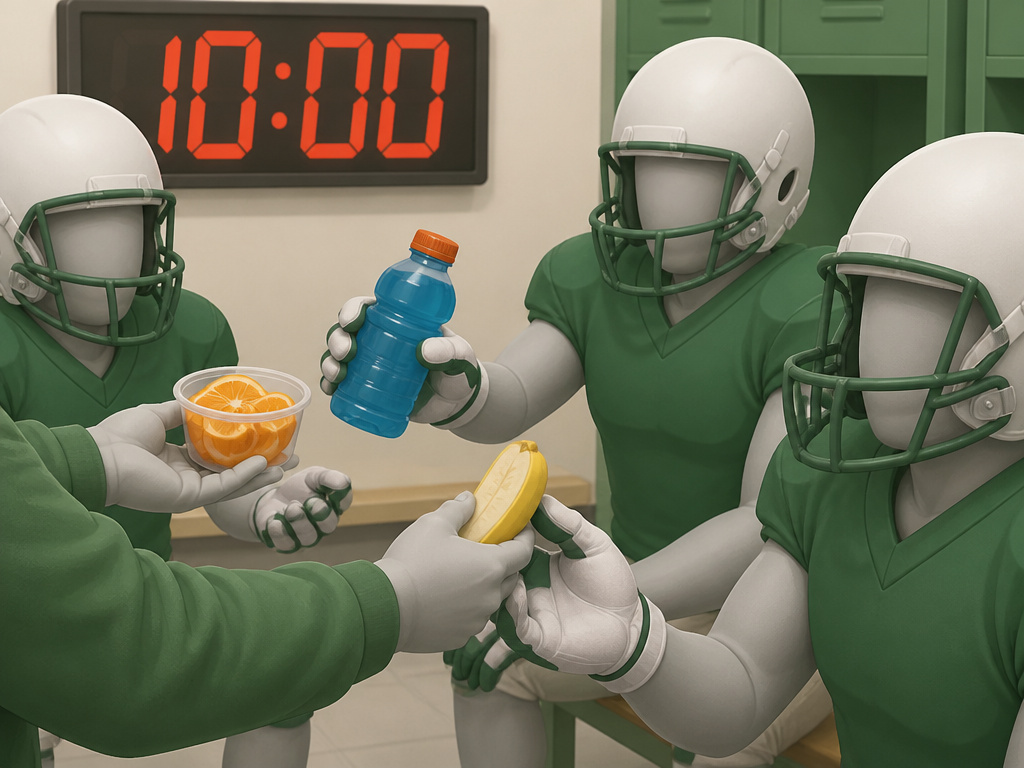
The 30-60 gram rule scales, but everything else around it needs to fit the context.
Youth vs. High School vs. Adult: A 10-year-old flag football player does not need 60 grams of carbs at halftime. A handful of orange slices and a few gulps of water is perfect. For high school players, you can start quantifying: a banana and a sports drink can help meet the 30-60 gram goal. This is where a football nutrition guide helps set daily and weekly expectations, not just halftime ones.
Heat vs. Cold: In hot weather, hydration and electrolyte replacement become the dominant concern. Your snack should be something juicy like watermelon. In the cold, as Texas A&M shows, warm fluids like broth are brilliant for compliance.
The 10-Minute Window: You don’t have 30 minutes. You have the time it takes to get to the locker room, listen to the coach, and get back. This makes prep crucial.
- Pre-portion everything. Cups of orange slices, small bags of pretzels, open drink bottles.
- Go for no-mess. Peels, sticky hands, and crumbly bars waste time.
- Assign a parent or manager. For youth teams, have one person in charge of distribution so players aren’t rummaging through a cooler.
Think of halftime as a pit stop in Formula One. The fuel, the tires, the adjustments, all are pre-planned and executed with practiced speed. Your snack strategy should be the same. This level of planning connects directly to your broader player diet plan and recovery techniques.
Addressing Cramps and Stomach Issues
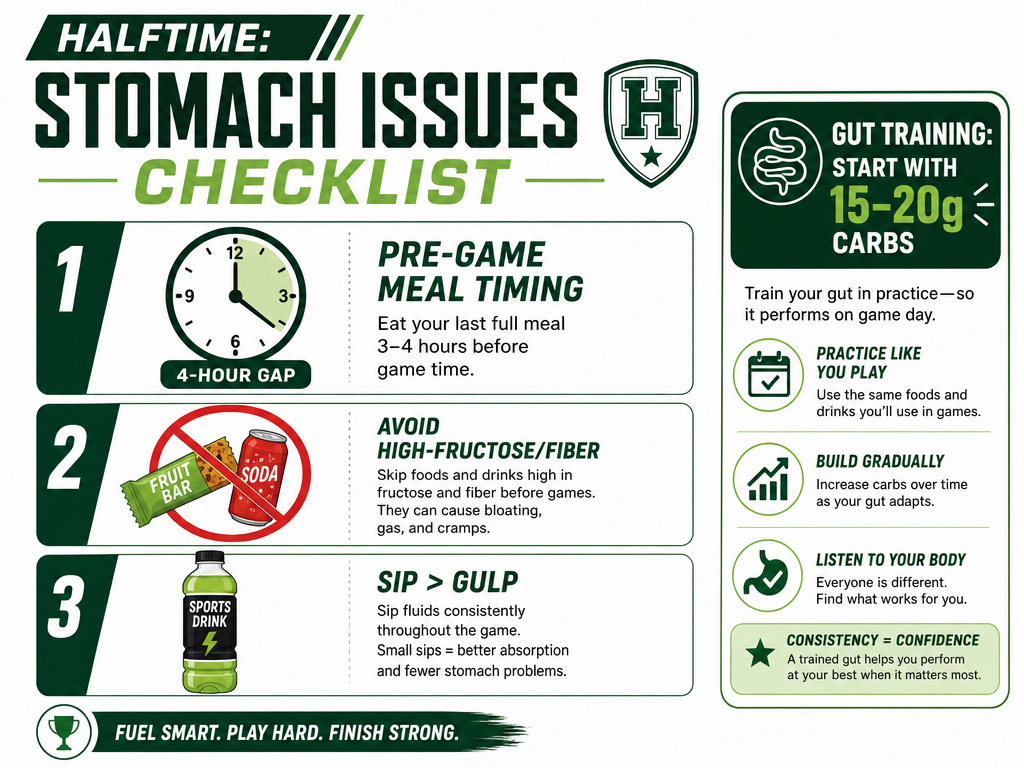
Sometimes, despite perfect choices, problems arise. The issue usually isn’t the halftime snack itself, but what came before or after.
Cramping: If a player is cramping, the halftime snack is a delivery vehicle for electrolytes, primarily sodium. The GSSI Gatorlytes protocol mentioned earlier is the gold-standard response. Dehydration is often a co-factor, so ensuring they drank according to their hydration strategies for football in the first half and during the break is step zero. Sometimes, chronic crampers need to look at their overall diet plan, specifically daily sodium intake, not just a halftime fix.
Upset Stomach: This is almost always a timing or selection error. Ask:
- Was the pre-game meal too close to kickoff? The NFL.com article cites a Bengals nutritionist recommending the main meal four hours before.
- Did they eat something high in fructose (like some fruit bars or honey) or high in fiber at halftime?
- Are they drinking a carbohydrate beverage too quickly? Sipping is better than gulping.
Easy to miss: The “gut train” principle. The GSSI document states, “It is possible to train the gut!” If a player isn’t used to consuming carbs during exercise, starting with 15-20 grams at halftime and gradually increasing over weeks can prevent issues. Don’t throw 60 grams at an untrained gut on game day.
If stomach issues persist, it’s worth reviewing the IAHSAA football fueling guide for foundational, food-first principles that might highlight a habitual error in their overall approach.
Allergy and Practical Tips for Team Parents
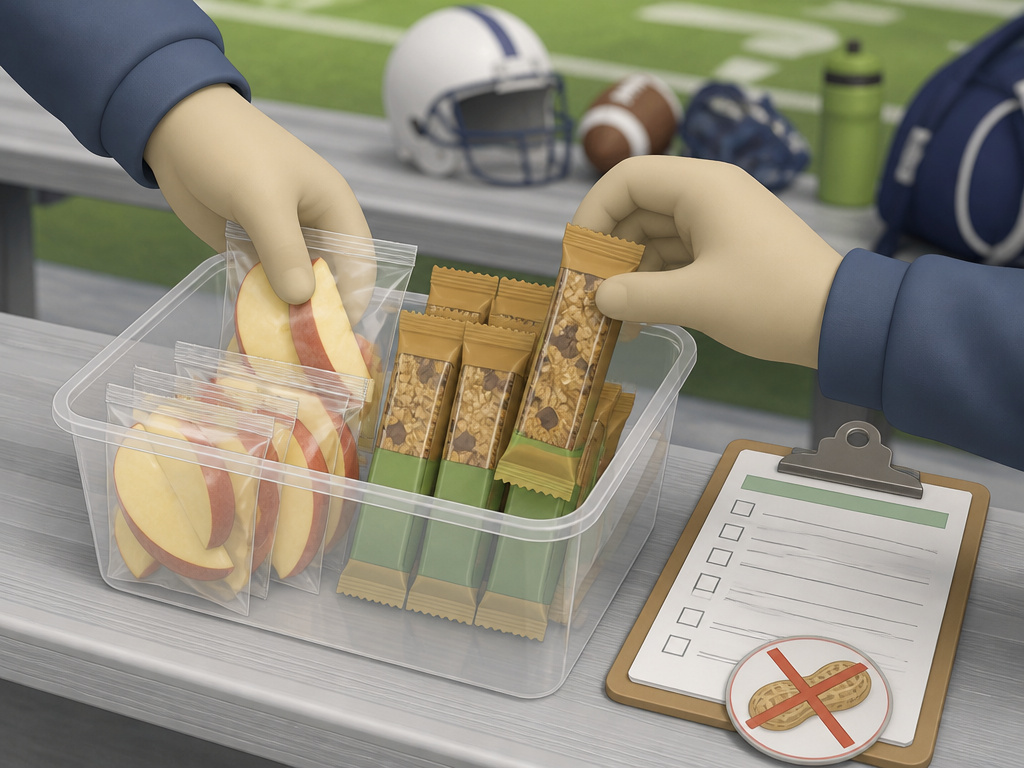
When organizing team snacks, always check for food allergies and intolerances with a confidential survey before the season starts. Common allergens like peanuts, tree nuts, and dairy are frequent ingredients in bars and snacks. For safety, avoid homemade treats with unknown ingredients and opt for pre-packaged items with clear, readable labels. Keep snacks simple and familiar, focusing on single-ingredient options like fresh fruit. Clearly label all containers with their contents. Have a designated, allergen-safe area for snacks and ensure coaches know about any player’s emergency action plan.
Frequently Asked Questions
What do football players eat at half time?
They eat fast-digesting carbohydrates like orange slices, bananas, pretzels, or energy chews. The goal is 30-60 grams of carbs to refuel without causing stomach upset. Sports drinks are also extremely common for simultaneous hydration and carb intake.
What is the best halftime snack for football players?
The “best” snack is one that reliably gets you 30-60 grams of carbs, is easy to eat quickly, and doesn’t upset your stomach. For most, this is a combination: a 16oz Gatorade (28g carbs) and a banana (30g carbs) is a proven, portable option that covers fluid and carbs.
Do NFL players eat snacks at halftime?
Yes. NFL team nutritionists and strength staff set out specific halftime spreads. These include fruit, peanut butter and jelly sandwiches, sports drinks, and sometimes broth in cold weather. They follow the same physiological principles, just with more precision and resources.
What should you avoid eating at halftime?
Avoid anything high in fat, fiber, or protein. This includes granola bars, nuts, cheese, yogurt, and anything greasy. These foods digest slowly and can lead to cramping, bloating, and a feeling of heaviness that kills second-half performance.
How much should a youth player eat at halftime?
Scale it down. A youth player doesn’t need to hit the 30-gram minimum. Focus on one simple, digestible item like a small handful of orange slices or a few pretzels, alongside water. The priority is establishing the habit of refueling, not hitting a specific gram target.
The Bottom Line
Halftime fueling is a simple equation executed under pressure. 30 to 60 grams of simple carbs, minimal fat and fiber, paired with fluid. The complexity is in the logistics, pre-portioned, no-mess, practiced.
The one adjustment I’d make to the standard advice: if you’re a player who struggles with stomach issues, ignore the upper end of that range. Start with 20 grams. A 12oz Gatorade has 21 grams. See how you feel. You can always add a few pretzels next game. Better to be slightly under-fueled than sidelined by gut cramps.
Everything else, the sports drinks, the fruit, the avoidance of protein bars, is just detail in service of that core rule. Get the carbs in, keep the gut happy, and get back out there. The second half is waiting.
