
How to Take a Penalty in Football: Step-by-Step
This post contains affiliate links. As an Amazon Associate, we earn from qualifying purchases.
To take a penalty in football, place the ball on the penalty mark, pick a spot in the goal, and strike it cleanly with your instep. The official rules require the ball to be stationary on the 12-yard spot, the goalkeeper to have at least part of one foot touching, in line with, or behind the goal line when the ball is kicked, and all other players to be at least 9.15 m (10 yds) from the penalty mark. Success hinges on a consistent run-up, committed strike, and blocking out the noise.
That 12-yard distance isn’t just a number. It’s a psychological space, a stage where the kicker and goalkeeper have a brief, intense duel within the larger game. The pressure is immense, but the process is mechanical, and understanding how to take a penalty in football is key.
What follows is a breakdown of the official procedure, the technique that converts pressure into a goal, the mental tricks that trip players up, and the advanced moves that are actually legal. We’ll walk through it all, from the Laws of the Game to the grass-stained reality of a how to take a penalty in football.
Key Takeaways
- The ball must be stationary on the penalty mark, 12 yards out, and the goalkeeper must have at least one foot on the line when you kick.
- For power and accuracy, use your instep (laces) and follow through toward your target, keeping your head down.
- Commit to your choice of where to shoot; hesitation or a last-second glance gives the goalkeeper the advantage.
- If the goalkeeper saves by moving off the line early and prevents a goal, the kick is retaken.
- In a shootout, the order of takers matters as much as the kicks; put your most composed player fifth.
The Official Procedure: Where to Stand and What to Do
The referee points to the spot. Now what? The initial moments are governed by a strict checklist, and getting it wrong can cost you the kick before you even take it.
The penalty mark is 12 yards (11 metres) from the goal line. All players except the kicker and goalkeeper must be at least 9.15 m (10 yds) from the penalty mark, outside the penalty area and behind the ball. The ball must be stationary, with part of it touching or overhanging the centre of the mark.
Here is the part most people miss. You can place the ball so it overhangs the centre of the spot. That small allowance helps you place the ball exactly on a patch of grass, avoiding any difficulty. The goalkeeper, meanwhile, can jump up and down on the line, they can move their arms and body. They just can’t come off the line before the ball is kicked., and they can’t do anything the referee deems “unfair” or disrespectful, like delaying the kick.
The run-up is yours. You can take as many steps as you like, from any angle. But once you complete your run-up, you cannot feint to kick the ball. That’s an offence that gets you a yellow card and gives the other team an indirect free kick.
| Step | Kicker’s Duty | Goalkeeper’s Duty | Everyone Else |
|---|---|---|---|
| Placement | Ball stationary on/overhanging the spot. | On goal line between posts. | Outside penalty area, behind the ball. |
| Signal | Wait for referee’s whistle. | Cannot unfairly distract or delay. | Must remain in position. |
| The Kick | Must kick ball forward. | At least one foot on/in line with goal line. | Cannot enter area until ball is in play. |
| After the Kick | Cannot touch ball again until it touches another player. | Can attempt save; if save is made early, kick may be retaken. | Can play rebound. |
The “ball is in play when it is kicked and clearly moves.” That’s the trigger. Once it is kicked and clearly moves, the goalkeeper can leave the line and other players can charge in. This is why you see attackers sometimes tap the ball sideways for a teammate, it’s a legal, if risky, maneuver known as the “tap penalty” under penalty kick rules, provided the initial touch is forward.
Technique and Aim: It’s Not Just About Power
You see players blast it. You see them dink it. What actually works?
Your foot is a tool. For a penalty, the instep, the laces, is the default. It gives you the best blend of power and accuracy. The inside of the foot offers more control but less pace, making the save easier if the keeper guesses right. Plant your non-kicking foot beside the ball, point it toward your target, and keep your head down over the ball. Look at the ball, not the goalkeeper. The moment you look up to see where you’re shooting, your body opens up and you lean back, skying it over the bar.
Where to aim? The corners. The bottom corners, specifically. A ball struck low and hard into the side-netting is unsaveable if placed well. High shots look great but have a larger margin for error, over the bar is a miss, into the stanchion is a goal.
This is where practice for how to take a penalty in football diverges from the training ground. Don’t just take 20 penalties in a row. Simulate the fatigue and the isolation. Your technique for shooting accurately must be automatic, because your brain will be occupied with everything else.
The Mind Game: Handling Pressure and Goalkeeper Tactics
The goalkeeper isn’t just trying to save it. They’re trying to get inside your head. They’ll point to one corner, talk to you, dance on the line. It’s all legal gamesmanship.
Your only job is to commit. Decide where you are putting the ball before you place it on the spot. Do not change your mind. The classic mistake is to see the keeper shift and try to adjust mid-run-up. That’s when you scuff it straight at them. Have a routine: a deep breath, a set number of steps back, a glance at your spot. Repeat it every time, in training and in a game. This ritual boxes out the noise.
What if the keeper saves it by coming off the line early? The rule is clear. If the goalkeeper prevents a goal by moving early, the kick is retaken. This is a crucial bit of knowledge about goalkeeper encroachment most kickers don’t have in the moment. They’re so focused on the miss that they don’t appeal. The referee might not call it unless the offence is blatant or someone points it out. Know your rights.
Where this goes sideways: Changing your target after starting the run-up. Your body has already calibrated the power and angle for the original spot; a last-second switch almost always ends with a weak, central shot the keeper eats up.
This mental battle is magnified tenfold in a shootout. Your handling pressure strategy needs to be personal. Some players look at the ground. Some stare down the keeper. Find what works for you and stick to it religiously.
Rules, Offences, and What Happens Next
You’ve taken the kick. Now the referee’s whistle blows. Why? The list of infringements is long, but they boil down to who broke the rule and what the outcome was.
The most common mess is encroachment, players entering the penalty area before the ball is kicked. The modern law is all about impact. If there is encroachment but no impact, a goal is awarded if the ball enters the goal. If a team-mate of the goalkeeper encroaches and the ball does not enter the goal, the kick is retaken. If only the defending player(s) encroach and have impact, a goal is awarded if the ball enters the goal. It’s a scenario covered by the rules for retaking penalties that causes endless arguments.
The goalkeeper’s line rule is stricter. When the ball is kicked, the keeper must have at least part of one foot touching, in line with, or behind, the goal line. Not both feet, one foot. If they save it by coming off the line, the kick is retaken. If they’re off their line and the ball goes in, the goal is awarded. If the goalkeeper offends and the ball misses the goal or rebounds from the crossbar/goalpost, the kick is only retaken if the goalkeeper’s offence clearly impacted on the kicker. The first such offence in a game gets the keeper a warning; a second offence gets a yellow card.
| Kicker feints after run-up | Indirect free kick + yellow card. | Indirect free kick + yellow card. | | Ball kicked backwards | Indirect free kick to defenders. | Indirect free kick to defenders. |
Other quirks: the kicker cannot play the ball twice. If the ball rebounds off the keeper or the post and comes back to the kicker, they cannot touch it until another player has. If the ball rebounds from the goalkeeper, the kicker can play the ball again and score a goal. If the ball rebounds from the crossbar or goalposts, the kicker must not play the ball again until it has touched another player. If the kicker touches the ball a second time deliberately before it touches another player, an indirect free kick is awarded to the defending team. And yes, you can change the kicker if a penalty has to be retaken, a small but vital bit of gamesmanship.
Advanced Tactics and Historical Twists
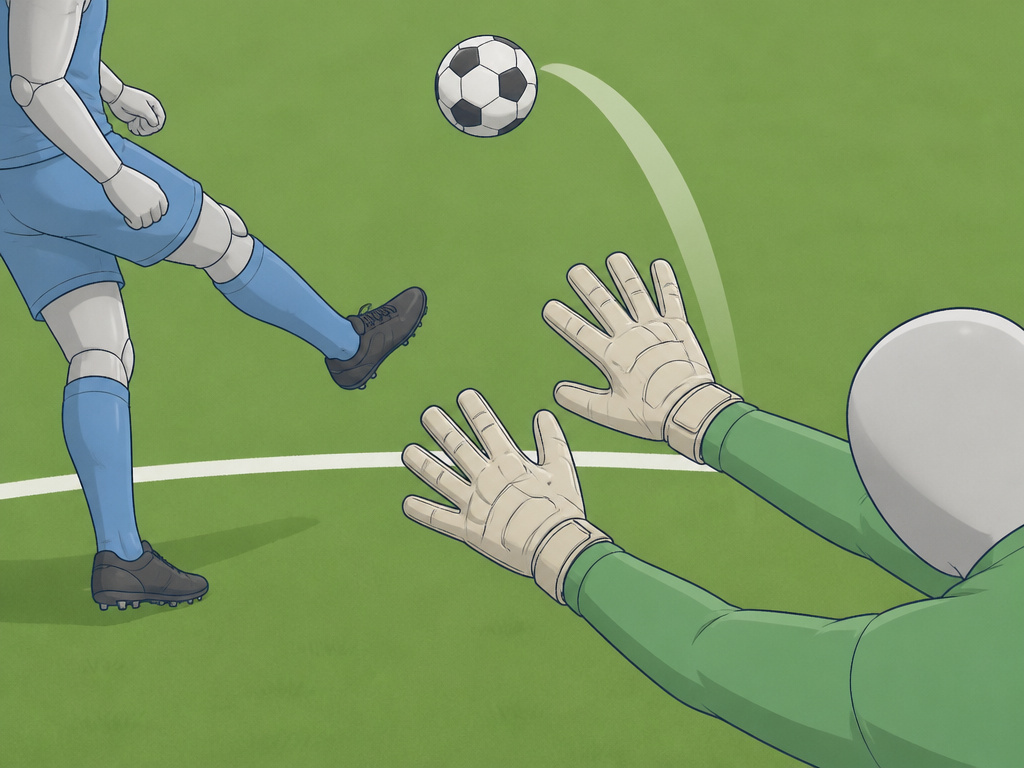
Once you have the basics down, the penalty becomes a canvas. The most famous advanced technique is the Panenka, the delicate chip down the middle as the goalkeeper dives. It’s high-risk, high-reward, and requires utter confidence. Miss, and you look a fool. Score, and you’re immortal.
The “tap penalty” is another legal option. The kicker pushes the ball forward a yard or so for a teammate to run onto and score. It’s legal because the ball is kicked forward. It relies on the element of surprise and is almost never seen outside of pre-planned set pieces.
Then there’s the question of when a penalty is taken. The law states that “additional time is allowed for a penalty kick to be taken and completed at the end of each half.” This means if a penalty is awarded after the 90 minutes are up, the half only ends once the penalty sequence is totally over, after any rebound, scramble, or clearance. This logic, based on penalty shootout rules, extends the drama in the most cruel way possible.
Call me old-fashioned, but I think the sheer number of rules around retakes shows how football has tried to legislate fairness into a moment that is inherently unfair. The balance between kicker and keeper is delicate, and the official penalty kick procedure documented by the IFAB is the referee’s attempt to hold that balance steady.
Frequently Asked Questions
Can you pass a penalty kick?
Yes. The law only states the ball must be kicked forward. A light tap sideways or forward for a teammate to run onto is legal, as long as the kicker does not touch the ball again before another player does. This is the “tap penalty.”
What happens if the goalkeeper moves off the line before the ball is kicked?
It depends on the outcome. If the ball goes in, the goal is awarded. If the goalkeeper saves it, the penalty is retaken. If the ball misses the goal, it is only retaken if the referee decides the goalkeeper’s early movement clearly impacted the kicker.
Can you change your penalty taker?
Once a player is identified to the referee, they must take the kick. However, if the kick has to be retaken (for example, for goalkeeper encroachment), the attacking team may choose a different player to take the retaken kick.
What is the ‘Panenka’ penalty?
Panenka is a chipped penalty shot down the center of the goal, executed when the goalkeeper is likely to dive early. It is named after Czechoslovakian player Antonín Panenka, who used it to win the 1976 European Championship final.
Before You Go
The penalty is a test of nerve disguised as a test of skill. The technique you can practice; the composure you have to find in the moment. Remember the essential rule: decide where you are putting the ball, and commit to that decision with your whole run-up. Everything else, the keeper’s antics, the crowd’s roar, the weight of the occasion, is just background noise.
If you remember one rule, let it be the goalkeeper’s foot on the line rule. Knowing a save might not count can be the difference between walking back dejected and preparing for a second chance. Now, go place that ball on the spot.
