
How to Handle Pressure in Penalty Shootouts: Step-by-Step
This post contains affiliate links. As an Amazon Associate, we earn from qualifying purchases.
Handling pressure in a penalty shootout is about replacing chaos with a plan. The science shows psychology is a key factor, though sources differ on the primary influence: the BASES Expert Statement says psychological components are most influential and skill is less related, while a 2024 analysis by Krumer & Lechner attributes lower conversion rates to worse shooter performance. The edge comes from three specific, research-backed actions: using the three-minute pre-shootout huddle for decisive leadership, not deliberation; understanding the crushing weight of a “negative valence” kick; and having a rote physical routine that leaves no room for second-guessing during the walk-up.
The game is brutal at its core. We’ve all seen the player who stares at the ground, takes a rushed run-up, and skies it. For years, pundits called that a failure of “bottle.” The explanation is simpler. That player had no script for the moment their brain went blank. Pressure isn’t an enemy to be fought with sheer will. It’s a vacuum that rushes in when your plan runs out. A key part of how to handle pressure in penalty shootouts is having that script.
What follows is the anti-vacuum kit. We’ll walk through the critical pre-shootout window almost every team wastes, break down the specific kick that statistically dooms you, and give you a repeatable physical routine for the walk-up you can practice in your sleep.
Key Takeaways
- Use the three-minute huddle for issuing a clear, pre-decided order, not asking for volunteers. In the 2022 World Cup, the five teams with the shortest communication time all won their shootout.
- Recognise a “negative valence” shot, where a miss means instant loss. Players facing these kicks perform worse and often show “avoidance behavior” like looking away from the keeper. Your strategy must change.
- Develop a repeatable physical routine for the walk from the centre circle. This isn’t about visualisation; it’s about giving your body a job so your mind doesn’t invent one.
- If you’re a coach, be the primary communicator. In 2022, all five winning shootout teams were led by their head coach in the huddle; three of the five losers had delegated the task.
- Forget the myth of the first-kick advantage. Modern analysis of over 1,700 shootouts shows only 49% are won by the team shooting first, it’s a coin flip, so don’t waste mental energy on it.
The 3-Minute Huddle: Where Games Are Won Before a Kick Is Taken
Extra time ends. The whistle blows. You have roughly three minutes, the time it takes a kettle to boil, before the first player steps up. This is not a time for inspiration. It’s for transmission.
Geir Jordet’s analysis of the 2022 World Cup is brutally clear. The five teams who spent the shortest time in that huddle communicating logistics and plans all won their shootout. The teams that fumbled, asked for volunteers, or deliberated? They lost. Time in that huddle is a proxy for preparation. A short, sharp briefing means you’ve done the work. A long, confused one means you’re doing it now, in front of 80,000 people and a player whose heart is thumping through their shirt.
The team huddle is a leadership test, not a therapy session. Research observing the 2022 World Cup found that all five penalty shootouts were won by the team whose head coach was the primary communicator in the three-minute window before kicks. Delegating this moment to an assistant or a player correlated with losing.
So what do you say? You give the order. Literally. You name the first five takers, in sequence. You remind them of the one tactical point you’ve drilled all week: pick your spot early and don’t change it. You tell the goalkeeper the same thing every time: pick a side and commit. Then you shut up. The confidence you’re trying to instill doesn’t come from a pep talk. It comes from the relief of not having to make another decision.
Where this goes sideways: A coach asking “Who wants to take one?” in the huddle. You’re not building democracy; you’re managing a crisis. Decisiveness is the only currency that spends in those three minutes.
Psychology Isn’t a Feeling, It’s a Mechanism: “Negative Valence” and Avoidance
Most advice tells you to “stay positive.” That’s useless. The science gives you a specific enemy to target: the negative valence shot.
This isn’t jargon. It’s the classification from the BASES expert statement on penalties. A positive valence shot is one where scoring wins the game instantly. A negative valence shot is where missing means losing instantly. The pressure isn’t the same. It’s geometrically worse.
Players facing negative valence kicks perform significantly worse. Why? They exhibit avoidance behavior. They look away from the goalkeeper. They rush their preparation, trying to speed through the awful waiting period. Their brain isn’t trying to score; it’s trying to escape the moment of potential failure. That’s what “choking” looks like under a microscope, not a lack of skill, but a motivated retreat from a threatening situation.
| Shot Type | Psychological Trigger | Common Behavior | Likely Outcome |
|---|---|---|---|
| Positive Valence | Score to win. Opportunity for glory. | Focused, deliberate routine. Eye contact with target. | Higher conversion rate. Controlled execution. |
| Negative Valence | Miss to lose. Threat of blame. | Avoidance (looks away, rushes). Tense, shortened steps. | Lower conversion rate. Erratic, panicked execution. |
If you’re stepping up knowing your miss ends it, your entire mental framework must shift. Your routine isn’t about scoring anymore. It’s about overriding the avoidance impulse. Your cue word isn’t “top corner.” It’s “process.” You are not taking a penalty to win; you are walking twelve yards, planting your foot, and striking a ball, because that is the next step in the sequence. You shrink the universe down to the mechanics.
The Walk-Up: A 7-Step Process for the Shooter
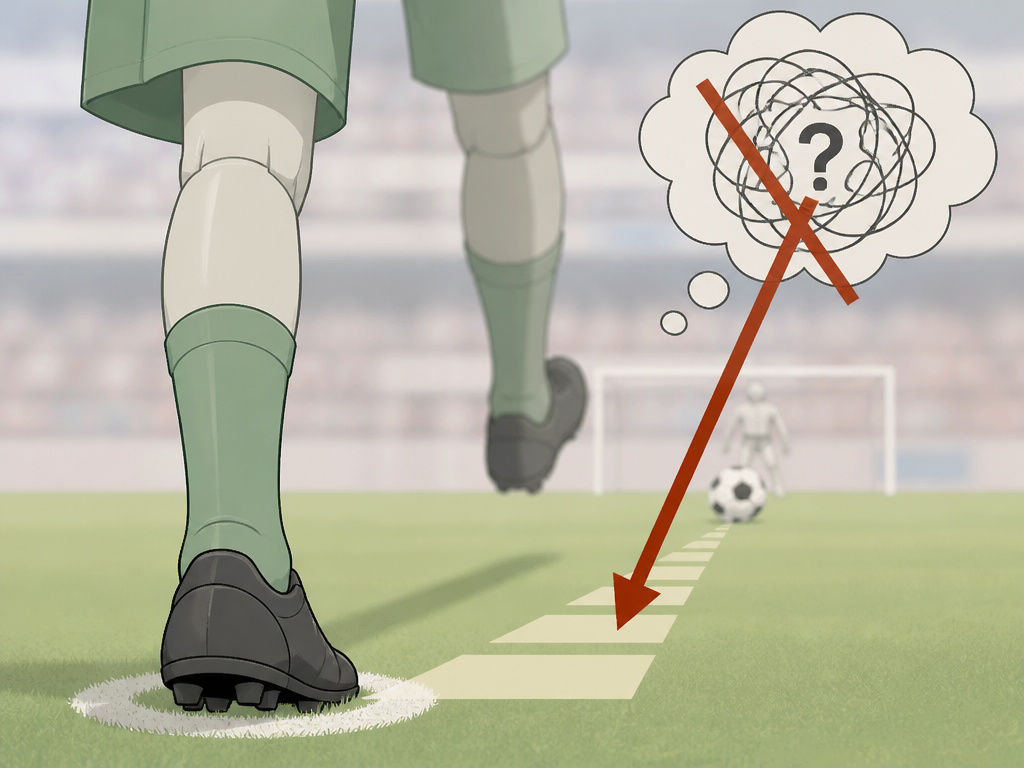
Forget picking a spot. You should have done that on the bench. The walk from the centre circle is where players unravel. Your mind, desperate for a task, will start offering terrible suggestions. Is the keeper guessing left? What if I slip? You need a physical script that plays out the same way every single time.
Skipping any of these steps leaves a gap. In that gap, doubt moves in. A flawless penalty technique is worthless if your mind hijacks the process before you strike the ball. This routine is the firewall.
The Goalkeeper’s Calculus: Pressure is Your Ally
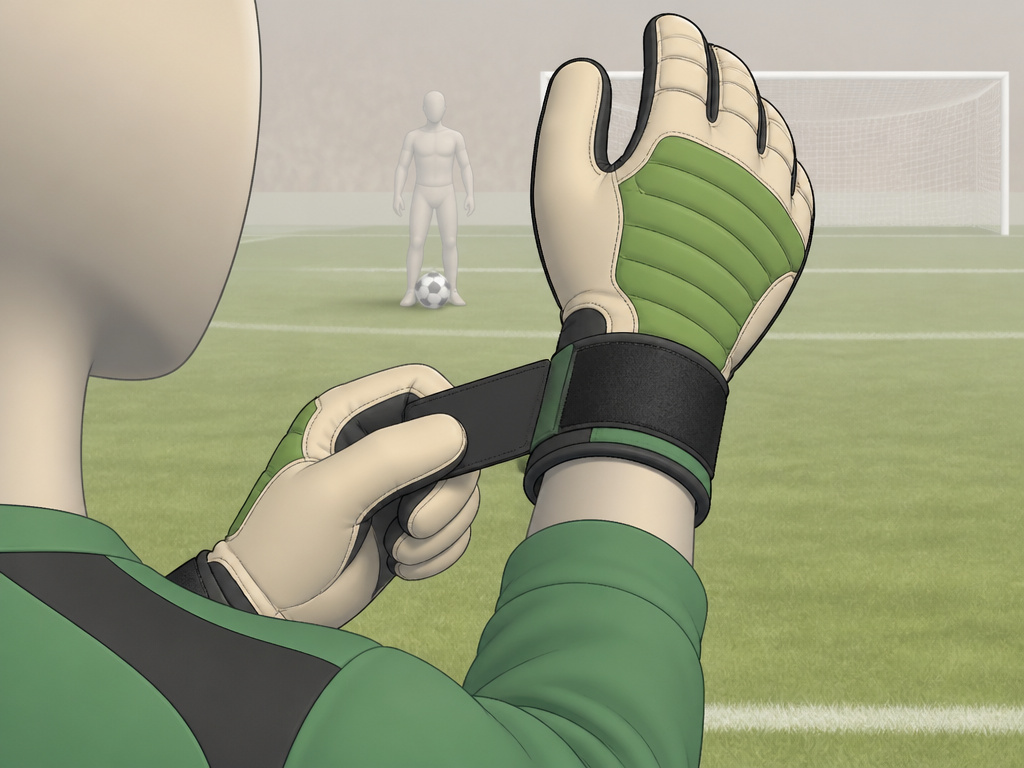
For the shooter, pressure is a threat. For the goalkeeper, it’s a statistical gift. They’re not saving more; the takers are missing more. Your job is to amplify that.
Your pressure toolkit is different:
- Delay Tactics: Take your time. Re-tie your laces. Adjust your gloves. You are not time-wasting; you are extending the shooter’s period of existential dread. Every second they stand there alone is a second their brain can betray them.
- The Stare: This is controversial, but the data on avoidance behavior supports it. A steady, calm gaze at the shooter, not a wild, aggressive one, can encourage them to look away. If they break eye contact, you’ve won a small victory.
- Commitment Over Guessing: The worst thing you can do is flinch or take a half-step early. It gives the shooter a target. Pick a side based on your pre-game analysis or pure instinct, and commit with your whole body. A full-stretch save that misses looks infinitely better than a hesitant stumble that concedes.
Your mental recovery is also simpler. You are expected to concede. Any save is a monumental bonus. This psychological framing is a luxury the shooter doesn’t have. Your routine should be about solidity: planting your feet, setting your stance, and being an immutable object in their path. The best techniques for saving a penalty are worthless if you’re consumed by the fear of not saving it. Embrace the odds.
Debunking the Myths: What Actually Doesn’t Matter
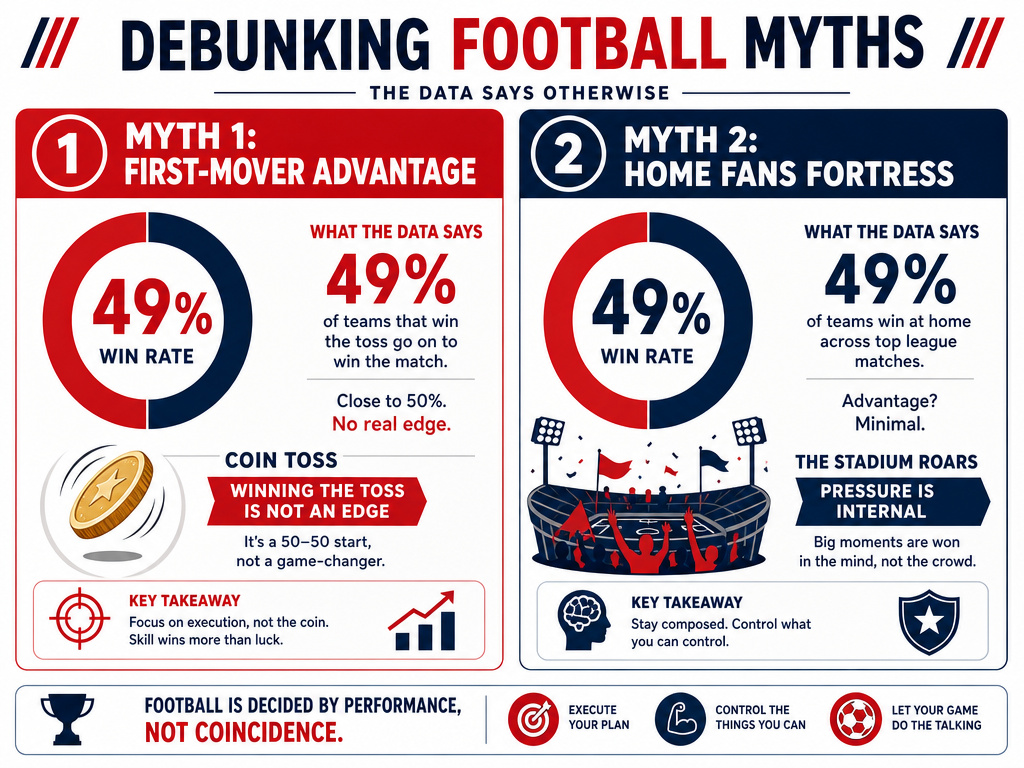
We cling to narratives to make chaos feel orderly. We can dismiss two of them.
Myth 1: The First-Mover Advantage.
Old research, from over 15 years ago, shouted about a huge advantage. It shaped a generation of captains who always chose to shoot first. The newer, bigger dataset tells the truth. Analysis of more than 1,700 shootouts finds that only 49% are won by the team who started first. That’s not an advantage. That’s the definition of a 50/50 coin flip. Winning the toss doesn’t win the shootout. Don’t let a debunked stat become a psychological burden if you lose the toss.
Myth 2: Home Fans Create a Penalty Fortress.
You’d think 60,000 people roaring behind the goal would intimidate the taker. The numbers say otherwise. One study of over 1,000 shootouts showed 49% were won by the home team. Again, no meaningful edge. The pressure is internal, not atmospheric. A silent stadium can feel just as heavy.
Understanding these myths is practical. It frees up mental bandwidth. You stop worrying about the coin toss or which end you’re shooting into. You pour all that focus into the only things you control: your plan, your routine, your next kick.
Handling the Aftermath: The Kick After the Kick
You’ve scored. Or you’ve missed. The game continues, or it ends. Your job isn’t over.
If you scored, your celebration is not for you. It’s for your team. It transfers confidence. Don’t just turn away. A fist pump, a roar to your teammates, it’s tactical optimism.
If you missed, you have a brief window before the guilt sets in. Use it.
- Do not apologise. Not yet. A public apology in the centre circle makes the failure about you, not the team. It forces teammates into the role of comforters when they need to be focused on their own task.
- Go directly to your goalkeeper. Put an arm around them. Your job now is to support the next person in the firing line. This redirects your energy outwardly and constructively.
- Process it later. There will be a time for analysis, for mental recovery, for understanding what went wrong. That time is in the dressing room, not on the pitch. On the pitch, you are still a teammate.
The ability to bounce back isn’t an innate trait. It’s a series of actions you take to prevent a single moment from defining you. Do the actions, and the resilience follows.
How Pressure Changes Penalty Success Rates
Research shows the psychological weight of the moment directly impacts performance. The perceived importance of a kick, which is a clear indicator of stress, has a negative relationship with its outcome. This is seen most starkly in decisive kicks. Shots where a miss instantly leads to a loss, known as negative valence shots, result in worse performance than shots where a goal instantly wins the game. Lower conversion rates in shootouts are attributed to worse shooter performance under this pressure, not better goalkeeping. The data confirms that pressure changes outcomes, making mental management the key variable.
Mental Strategies for Penalty Kicks
The core psychological strategy for how to handle pressure in penalty shootouts is to reduce the overwhelming perceived importance of the kick. This involves controlling your focus to avoid avoidance behavior, which is defined as looking away from the goalkeeper or rushing your preparation. Instead, develop a consistent pre-shot routine to anchor your attention. Use cue words or self-talk that frame the task in positive, process-oriented terms. Focus on your technique and your chosen spot, not the consequences. This controlled approach counters the avoidance motivation that explains why professionals can choke, keeping your mind on the execution your skill already knows.
Managing Physical Anxiety Before a Penalty
Your body will react to the pressure of how to handle pressure in penalty shootouts; a thumping heart and altered breathing are normal signals. The goal is not to eliminate them but to manage them so they don’t disrupt your skill. Use the walk from the halfway line as a deliberate routine to regain control. Focus on steady, deep breaths to counter shallow anxiety breathing and help lower your heart rate. This physical regulation is a direct input to your mental state. By consciously managing your breathing and posture, you send a signal of control back to your brain, creating a calmer foundation from which to execute your trained shot.
Frequently Asked Questions
How do athletes deal with pressure?
They don’t “deal with it” in a general sense. They bypass it through specific, pre-rehearsed protocols. Pressure thrives on uncertainty. Athletes eliminate uncertainty by having a plan for every physical action (like a walk-up routine) and a cognitive rule for every mental trap (like recognising a negative valence kick). They convert an abstract feeling into a concrete checklist.
How to be calm under pressure in football?
Calm is the byproduct of control, not the goal. You don’t try to be calm. You execute your routine. Focus on the sequence of behaviors: place the ball, three steps back, one to the side, look at the ball, exhale, go. Your nervous system will follow where your body leads. Deep breathing works because it’s a physical action that dictates a physiological state, not because you’re “thinking calm.”
What is the best penalty kick strategy?
The best strategy is the one you’ve decided upon 24 hours ago. It’s two-fold: First, pick your spot based on your strongest finish, not the keeper’s weakness. Second, never, ever change your mind after you start your walk-up. The technique for taking a penalty is secondary to the decision-making protocol. Indecision is the primary cause of failure.
Do shootout rules favour anyone?
The current rules of a shootout, the alternating ABAB order, are statistically fair, offering no real advantage to shooting first. However, the rules create the psychological dynamic of “negative valence” kicks. The fairness is in the aggregate outcome; the psychological burden is unevenly distributed kick-by-kick. Knowing this asymmetry is part of your strategic preparation.
The Bottom Line
Pressure in a penalty shootout isn’t something you overcome. It’s something you outmanoeuvre with paperwork. You win it in the three-minute huddle with a typed list of names. You defang it by knowing that the fifth kick for your team is a different psychological beast than the first. You silence it with a walk-up routine so boringly repetitive that doubt can’t find a way in.
The next time you see a player miss, don’t blame their nerve. Look for whether the coach delegated the huddle or the taker rushed his placement. Did the coach delegate the huddle? Did the taker rush his placement? That’s where the game was lost. The beautiful, brutal truth is this: the penalty shootout isn’t a lottery. It’s an audit. And you can study for an audit.
