
How to Increase Speed for Football: Step-by-Step
This post contains affiliate links. As an Amazon Associate, we earn from qualifying purchases.
To increase speed for football, you need to target three distinct qualities: maximum acceleration (your first 10-15 yards), maximum velocity (your top-end speed), and repeated sprint ability. Evidence shows that focusing on these with a mixed-method approach, combining strength, plyometrics, and resisted or assisted sprinting, delivers better results than just running laps or doing generic drills.
The hard number that changes the whole conversation is the 85% and 95% speed threshold. A protective effect against injury, and the physiological adaptation you want, requires players to hit sprints exceeding 85% and 95% of their individual maximal speed. If your training never touches that intensity, you’re not training speed. You’re training something else. A core principle of how to increase speed for football is ensuring players reach these critical thresholds.
What follows breaks the game down into the three speed zones that matter, the drills that hit them, and a weekly schedule that stitches it all together without burning you out, forming a complete answer to how to increase speed for football. We’ll also clear up the biggest point of confusion: why running more doesn’t make you faster, and what to do instead.
Key Takeaways
- Build football speed by targeting three distinct phases: first-step acceleration (0-10m), maximum velocity (top speed), and repeated sprint ability.
- For true adaptation, sprints must exceed 85% and 95% of your personal max speed, measure this via GPS or timing gates.
- The most effective training combines methods: strength training, plyometrics, and acceleration-specific drills, not just running.
- A 10-week block periodization program improved maximal velocity by 7.30 ± 6.63%, outperforming other approaches.
- Track everything. Use a simple stopwatch or a GPS unit like STATSports to measure your 10m, 20m, and 40m times, improvement is your only real metric.
Speed Isn’t Just Running
Watch any football match closely. The game isn’t played at a steady jog. It’s a series of violent, short explosions, a burst to close down an attacker, a five-yard dash onto a through ball, a recovery sprint after you’ve been beaten. Your body has to be ready for that specific demand.
That’s the academic way of saying running alone isn’t the answer to how to increase speed for football. You need to build the engine (strength), the explosive starter motor (plyometrics), and then practice the skill of sprinting itself under different conditions.
Common mistake: Running endless laps to “build a base” for speed. Long, slow distance does nothing for your 10-yard burst. It trains a different energy system entirely. You’ll arrive fit, but slow.
This is where I see most amateur teams go wrong in pre-season. They grind out mile after mile, then wonder why they’re getting roasted for pace in the first game. The sharpness never arrives because it was never trained.
The Three Speed Targets: Acceleration, Top Speed & Repeated Sprints
Break football speed into these three buckets, and your training suddenly makes sense. You can’t train them all the same way. A drill that’s great for building top-end speed might do very little for your explosive first step.
Here’s the breakdown:
| Speed Quality | What It Is | Football Scenario | Key Training Focus |
|---|---|---|---|
| Acceleration | 0-15 meters. The ability to go from still to full power in minimal time. | Beating a defender off the mark, closing down space, reacting to a loose ball. | Low heel recovery, powerful forward lean, driving through the ground. Strength training is crucial here. |
| Maximum Velocity | Your absolute top speed, usually reached between 30-50 meters. | A winger hitting the touchline in space, a striker chasing a long ball over the top. | Upright posture, high knee lift, rapid stride turnover. |
| Repeated Sprint Ability (RSA) | The capacity to perform multiple near-maximal sprints with short recovery. | Making overlapping runs all game, pressing high for 90 minutes, recovering defensively. | Interval training that mimics game work:rest ratios (e.g., 5-second sprint, 25-second walk). |
Most of the game is played in the acceleration and repeated sprint zones. Pure top-speed moments are rarer, but they’re often the ones that decide matches. Your program needs to touch on all three, but you can weight it towards what your position demands.
Why Drills That Start Too Fast Actually Hurt You
This is a subtle but critical point. A study in Scientific Reports looked at drills like a “15m Bounding Run + 30m Sprint”, where you start already moving at about 55% of your max speed. They found this “flying start” can actually decrease an athlete’s capacity for peak acceleration. You’ve skipped the hardest part: generating force from a dead stop.
If all your speed work is flying starts, you’re never practicing the explosive first three steps. For a center-back who needs to react and shut down a channel, that’s the most important part of the race. Always include drills that begin from a static, football-ready position: sideways-on, back to goal, or from a jump.
Drills That Actually Translate to the Pitch
Forget high knees and butt kicks on the spot. You need drills that teach your body to apply force into the ground powerfully and efficiently. These are the ones with evidence behind them.
For Max Acceleration (0-15m)
The goal here is to overcome inertia. You need strength.
- Resisted Sled Sprints: Hook yourself to a sled with a moderate weight (one that slows you down but doesn’t ruin your form). Sprint for 10-15 yards. The resistance forces you to drive harder with each step, building the specific strength for explosive starts. Do 5-6 reps with full recovery.
- Falling Starts: Stand tall, then let yourself fall forward until you must sprint to catch yourself. This teaches you to get into a forward lean instantly, the key to a fast first step. It’s brutally honest. If you’re slow off the mark, you’ll faceplant.
- Incline Sprints: Find a slight hill. The grade increases the resistance, again forcing more power production. Keep the distance short (10-15m) and the intensity max.
Where this goes sideways: Loading the sled too heavy. If your sprint technique collapses into a slow, strained shuffle, the weight is too much. You’re now training strength, not speed. The sled should challenge you but allow you to move with intent.
For Building Top-End Speed
This is about teaching your body to be relaxed at high velocity.
- Flying 30s: Use a 20-30 meter build-up zone to accelerate to exceed 95% of your max speed, then hold that pace for 30 meters. The focus is on maintaining form: tall posture, quick arm action, driving the knees up. The agility ladder isn’t for this, save it for footwork.
- Assisted Sprints: Using a tow rope or a slight downhill, practice sprinting at speeds slightly faster than you can achieve on your own. This trains your nervous system to fire at a higher rate. It feels strange, then exhilarating.
- Technique Sprints: Over 40-60 meters, consciously focus on one cue per rep. “Drive elbows back.” “Lift knees.” “Push the ground away.” This isn’t about fitness; it’s about reprogramming motor patterns.
A 2025 study of young American football players found that a 10-week block periodization program improved maximal velocity by 7.30 ± 6.63%. The group using undulating periodization improved by 4.54 ± 4.10%. How you structure your training matters as much as the drills.
For Repeated Sprint Ability (RSA)
This is where your fitness training meets speed. It’s grim but essential.
- Shuttle Runs: Set up two cones 20 meters apart. Sprint from one to the other and back. That’s one rep. Rest for 30 seconds. Repeat 6-8 times. It’s simple and it hurts in exactly the way the last ten minutes of a match hurt.
- Variable Recovery Sprints: Sprint 30 meters. Your recovery is the walk back to the start. The catch? The walk back gets shorter each round (start with 45 seconds, drop to 30, then to 20). It simulates the cumulative fatigue of a half.
- Small-Sided Games: A 4v4 on a small pitch is one of the best RSA tools there is. The decision-making takes your mind off the pain, and the chaotic, multi-directional nature of the game is more specific than any linear drill.
A Sample Weekly Schedule for Football Speed
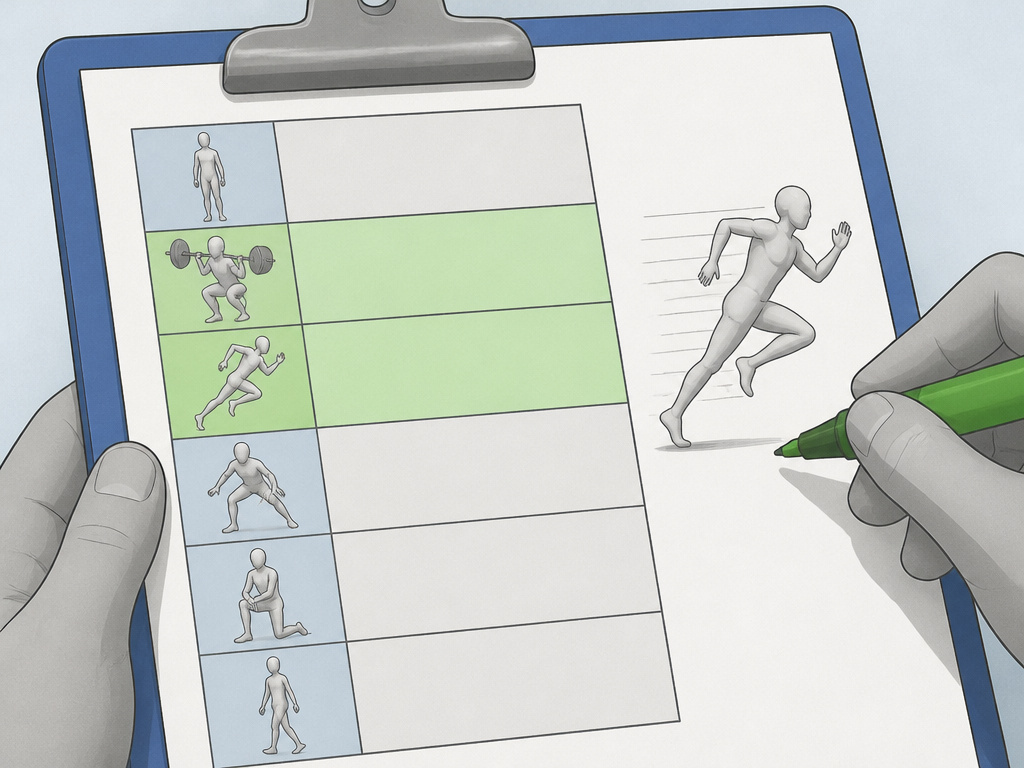
This is where most guides stop. They give you a list of drills but no plan. Here’s how to structure a week during pre-season or an in-season maintenance phase. It assumes you have team training and a match.
| Day | Session Focus | Key Activities | Rationale |
|---|---|---|---|
| Monday | Recovery & Active Regeneration | Light swim, bike, or mobility session. Focus on sore muscles. | After a weekend match, the priority is healing. No high-intensity work. |
| Tuesday | Strength & Power | Heavy lower body lifts (squats, deadlifts), followed by plyometric exercises like box jumps. | Build the muscular foundation for speed. Strength precedes everything. |
| Wednesday | Maximum Velocity & Technique | Flying 30s, assisted sprints, technique work. Low volume, high intensity, full recovery between reps. | Train the nervous system when you’re fresh. This is a quality session, not a conditioning one. |
| Thursday | Team Training (Tactical) | Coach-led session. Likely includes technical drills and tactical shape. | Speed work is integrated into drills and small-sided games. |
| Friday | Active Rest & Activation | Dynamic stretching, light agility drills, priming for the match. | Prepare the body for game day without causing fatigue. |
| Saturday | Match Day | The game itself. | Your most specific speed and repeated sprint workout. |
| Sunday | Complete Rest | Off. | Essential for adaptation and growth. |
The part nobody mentions: You cannot max out every one of these sessions. If you go all-out in the gym on Tuesday, your max velocity session on Wednesday will be garbage. The plan requires restraint. Some days you lift heavy, some days you move fast, and some days you just recover. Trying to do it all at once is how you plateau or get hurt.
Measuring Progress: What Gets Measured Gets Managed
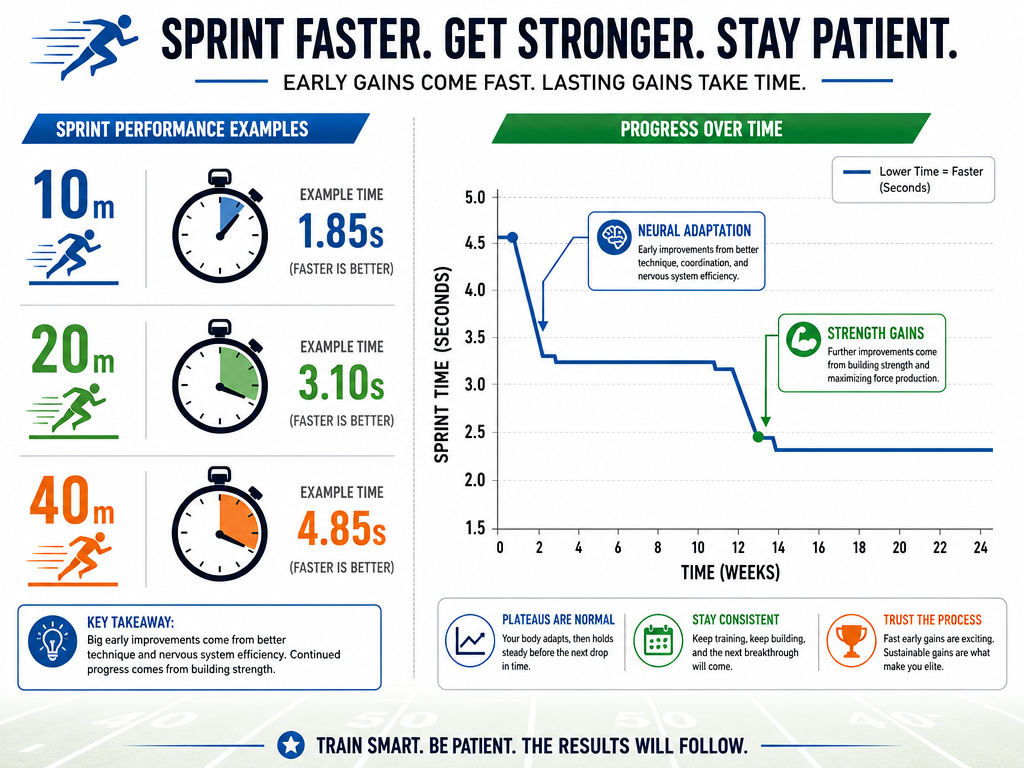
“I feel faster” isn’t a metric. You need cold, hard times.
Start with a simple baseline test: a 10m sprint (for acceleration), a 20m sprint (for a blend), and a 40m sprint (where you approach top speed). Use a stopwatch and a friend, or invest in a set of cheap timing gates. Re-test every 4-6 weeks.
Look for two things:
- Improved Times: Are you covering 10m in fewer hundredths of a second?
- Improved Consistency: Are your times across 6 repeated sprints staying more stable? (This measures your RSA).
If you have access to GPS data, you can get even more granular. The study in Scientific Reports used GPS to show that a 40m Linear Sprint drill resulted in a mean distance covered >95% max speed of 2.42 ± 4.82 m. That’s the level of detail that tells you exactly what a drill is doing. For most of us, the stopwatch is enough.
Worth knowing before you start: Your 40-yard dash time won’t improve in a straight line. Expect a jump in the first 3-4 weeks as your nervous system learns (neural adaptation), then a plateau. The next jump comes weeks later as your muscles physically grow stronger. Don’t panic at the plateau.
Change of Direction and Agility Drills
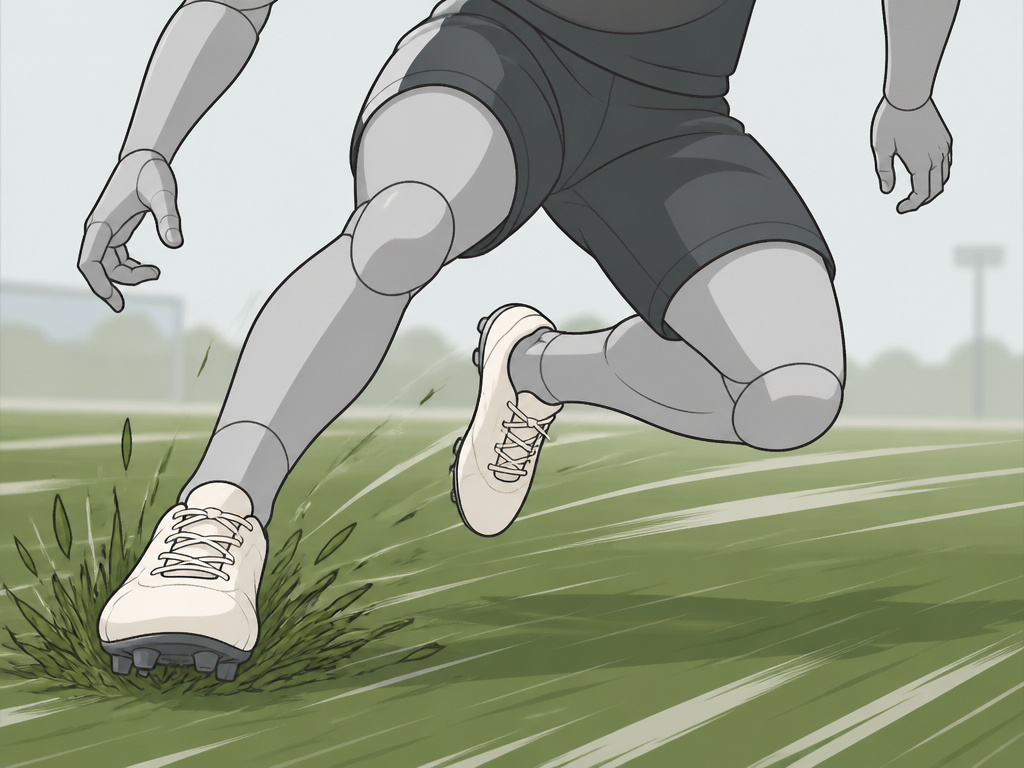
Football speed is useless if you can’t redirect it. Effective change-of-direction training goes beyond simple ladder footwork. A structured program of running technique training, even with just one dedicated session per week, has been shown to lead to significant improvements in change-of-direction speed for youth footballers. The key is to train deceleration and re-acceleration under control. While a 2020 systematic review found no significant effect for primary or sport-only training on short-distance sprint performance, a separate study on youth footballers found an 8-week program of running technique training (a primary method) led to improvements in linear speed. Your drills should mimic the sharp cuts and reactive turns you make in a game, training your body to handle those forces efficiently.
Stride Rate and Stride Length Mechanics
Improving your mechanics is about optimizing two factors: how fast your legs turn over and how much ground you cover with each step. A focused block of running technique training can lead to measurable gains in linear speed. To work on this, you need to know your baseline. Your peak speed should be determined from sprint tests or competition data via GPS; match-derived speeds provide a more conservative reference point for your true maximum. Drills that emphasize powerful hip extension and a quick, piston-like leg recovery can help. Remember, the effectiveness of any technical work can be moderated by factors like your age, playing standard, and the phase of the season, so tailor the focus accordingly.
Frequently Asked Questions
How can I improve my football speed if I’m not naturally fast?
Natural talent sets a ceiling, but almost everyone can raise their floor significantly. Focus on your acceleration, it’s the most trainable aspect of speed. Strength training to build power in your glutes and quads, combined with perfecting your first-step technique, will make you quicker off the mark, regardless of your genetics. Acceleration often beats pure top speed in football anyway.
Is 22 mph fast for a football player?
Yes, that’s elite. 22 mph (about 35.4 km/h) is world-class territory. Focus on your own progress, not hitting an arbitrary number. Improving from 16 to 18 mph is a massive gain that will change your game.
Is 20 too late to start training for football speed?
Absolutely not. While peak speed potential might be highest in the late teens, you can make significant improvements well into your 20s and even 30s. The principles are the same: build strength, practice the skill of sprinting, and develop your repeat sprint capacity. You might not become an Olympic sprinter, but you can become the fastest version of yourself, which is all that matters on the pitch.
How do I gain speed without putting on too much bulk?
This is a common fear. Speed is about power-to-weight ratio. Focus on strength, not bodybuilding. Train with heavy weights for low reps (3-5) to build neural drive and pure strength without excessive muscle hypertrophy. Pair this with your sprint work. The goal is to get stronger at the same weight, not necessarily to get bigger.
Should my training differ by position?
It should be emphasized differently. A winger needs more maximum velocity work, longer sprints to stretch the defense. A central midfielder’s program should be heavy on repeated sprint ability and change-of-direction to cover ground constantly. A forward’s focus is all about explosive acceleration in tight spaces. Use the core principles but tweak the volume and drill selection to suit your role. Our guide on position-specific fitness dives deeper.
The Bottom Line
Increasing your football speed isn’t a mystery. It’s a simple, brutal process of identifying your weak points (acceleration, top speed, or repeatability), attacking them with the right mix of strength, plyometrics, and sprint work, and tracking your progress obsessively.
Skip the long runs. They don’t help. Instead, make sure every sprint in training touches that 85-95% of max speed threshold, that’s the stimulus your body needs to adapt. And remember, the best warm-up is a dynamic one that prepares you for that intensity, not a jog around the pitch.
Start this week. Test your 10 and 20 meter times. Then pick one acceleration drill and one repeated sprint drill from above, and add them to your training twice a week for a month. Re-test. The numbers won’t lie.
