
How Much Do Football Referees Earn?
This post contains affiliate links. As an Amazon Associate, we earn from qualifying purchases.
Premier League Select Group 1 referees are paid on a sliding scale from £73,191 to £147,258 in base salary, plus a £1,116 match fee. For the 20 officials in this group, the average total annual compensation is around £180,000. In contrast, La Liga referees have a fixed £124,256 salary and a higher £4,205 match fee, while MLS referees just secured a new collective bargaining agreement with base pay rising to $85,150 for probationary officials in 2024.
The numbers are specific, but they tell only half the story. The real picture of a referee’s earnings is a mosaic of base salary, per-game fees, performance bonuses, and international appointments. It’s a pay structure designed to reward experience and manage a high-pressure, physically demanding job where every decision is dissected in slow motion. A common question is how much do football referees earn.
What follows is a league-by-league breakdown of the how much do football referees earn landscape, from the Premier League’s sliding scale to Serie A’s role-based match fees and the recent landmark deal for MLS officials. We’ll also look at how UEFA competitions change the math, and the financial realities for officials in the lower leagues.
Key Takeaways
- Premier League SG1 referees earn a base salary between £73,191 and £147,258, plus a £1,116 match fee and potential performance bonuses.
- La Liga referees have the highest fixed salary in Europe at £124,256, supplemented by a £4,205 match fee and £21,929 for image rights.
- Under a new CBA, MLS referee base pay will rise over 60% by 2030, with probationary officials starting at $85,150 in 2024.
- UEFA Champions League matches pay referees €6,000–€7,500, with the final worth €10,000, significantly boosting annual income for elite officials.
- Below the top flight, pay drops sharply; development group referees in England’s League One and Two earn around £30,000 and are often part-time.
Premier League Referee Pay: Salary, Match Fees & Total Compensation
The Professional Game Match Officials Limited (PGMOL) employs all elite referees in England. For the 20 officials in Select Group 1 (SG1), pay isn’t a single figure. It’s a layered system.
Premier League SG1 referees are compensated via a three-tier base salary (£73,191, £105,257, or £147,258) set by experience, a £1,116 match fee, and potential performance bonuses reviewed by an independent Key Match Incidents Panel. Premier League SG1 assistant referees average £110,000 annually.
The base salary places you on a ladder. A newly promoted official starts on the lower rung (£73,191), while a seasoned veteran like Michael Oliver or Anthony Taylor operates at the top (£147,258). On top of that, each match you officiate adds £1,116 to your yearly total. Work as the Video Assistant Referee (VAR) for a game, and the fee is £837.
This is where the “average” figure of £180,000 comes from, as reported by the BBC. It’s a blend of the mid-to-upper base salary and a season’s worth of match fees. However, PGMOL chief Howard Webb has also presented a figure of £240,000 as the average total cost per SG1 referee to the organization. This higher number includes employer National Insurance, all match fees, and performance bonuses. Officials later clarified that a salary of £180,000 is “more commonplace” for the referees themselves.
The system is designed for full-time professionals. These 20 individuals are the only referees in England who don’t need another job. Their week is built around preparation, fitness, video review, and travel.
Championship, League One & League Two: The Steep Drop-Off
Move down a division and the financial model shifts. The 22 Select Group 2 referees, who mainly officiate the Championship, earn a total compensation package of around £120,000 per year. Their assistant referees take home about £110,000.
Below that, the picture changes dramatically. The National Group, which covers League One and League Two, is largely part-time. According to a 2019 report, these referees did not receive a base salary and were paid £450 per game, with assistants getting £250. Sources disagree on compensation for Leagues One and Two: talkSPORT reports development group officials are paid around £30,000, while a 2019 Athletic report states the National Group did not receive a base salary and were paid £450 per game. The discrepancy likely reflects a move toward a small annual retainer for some, but the reality remains: refereeing in the third and fourth tiers is not a primary career for most.
How Major European Leagues Compare: La Liga, Serie A & The Bundesliga
The Premier League may have the global broadcast revenue, but it doesn’t pay the highest fixed referee salary. That title goes to Spain.
La Liga referees operate on a simpler, more lucrative model. They receive a fixed annual salary of £124,256, a match fee of £4,205, and an additional £21,929 per year for image rights (for wearing the Wurth Group logo on their kits). A La Liga VAR official earns £2,102 per game. This structure, established when Spanish referees went fully professional in 2020, gives them the highest guaranteed base pay in Europe.
In Italy’s Serie A, the system is a hybrid of fixed and variable pay, detailed meticulously in reports from Italian media. The per-match fees are rigid and role-specific:
| Role in Serie A | Fee Per Match |
|---|---|
| Referee | €4,000 |
| Assistant Referee | €1,400 |
| VAR Official | €1,700 |
| AVAR Official | €800 |
| Fourth Official | €500 |
On top of these match fees, referees receive an annual fixed amount from the Italian Football Federation (FIGC). This isn’t uniform. An international referee gets a base of €90,000. A referee with more than 50 Serie A matches receives €60,000, and those with fewer than 50 matches get €30,000. This means a seasoned international referee’s earnings combine the fixed annual amount and per-match fees.
Common mistake: Comparing only the per-game fees. The fixed annual components in Serie A and La Liga are what separate full-time professional earnings from higher per-game rates elsewhere.
The MLS Model: A New CBA & The Push for Professional Pay
The landscape in North America changed fundamentally in March 2024. Major League Soccer referees, locked out at the start of the season, ratified a new collective bargaining agreement (CBA) that runs through 2030. The deal, detailed in a report by The Athletic, represents a massive step toward professionalization.
The previous pay scale was low, especially for assistants. The new agreement guarantees significant, scheduled raises:
- Probationary referees (less than two years’ experience) saw base pay jump from ~$50,000 in 2023 to $85,150 in 2024. It will rise to over $110,000 by 2030.
- Senior referees with 200 matches of experience moved from ~$108,000 to $142,150 in 2024, heading to $182,470 by 2030.
- Assistant referees received the largest percentage raises. A full-time assistant with 100 matches experience went from a $19,696 base in 2023 to $37,150 in 2024, set to reach $49,684 by 2030.
Furthermore, the match fee for referees and assistants is now $1,500. For the first time, officials are guaranteed a minimum of 15 match fees per season, providing a safety net against injury. This CBA is a clear attempt by PRO (the Professional Referees Organization) to create a sustainable, full-time career path for North American officials, moving away from the semi-professional model that dominates lower leagues globally.
How UEFA & International Games Boost Pay
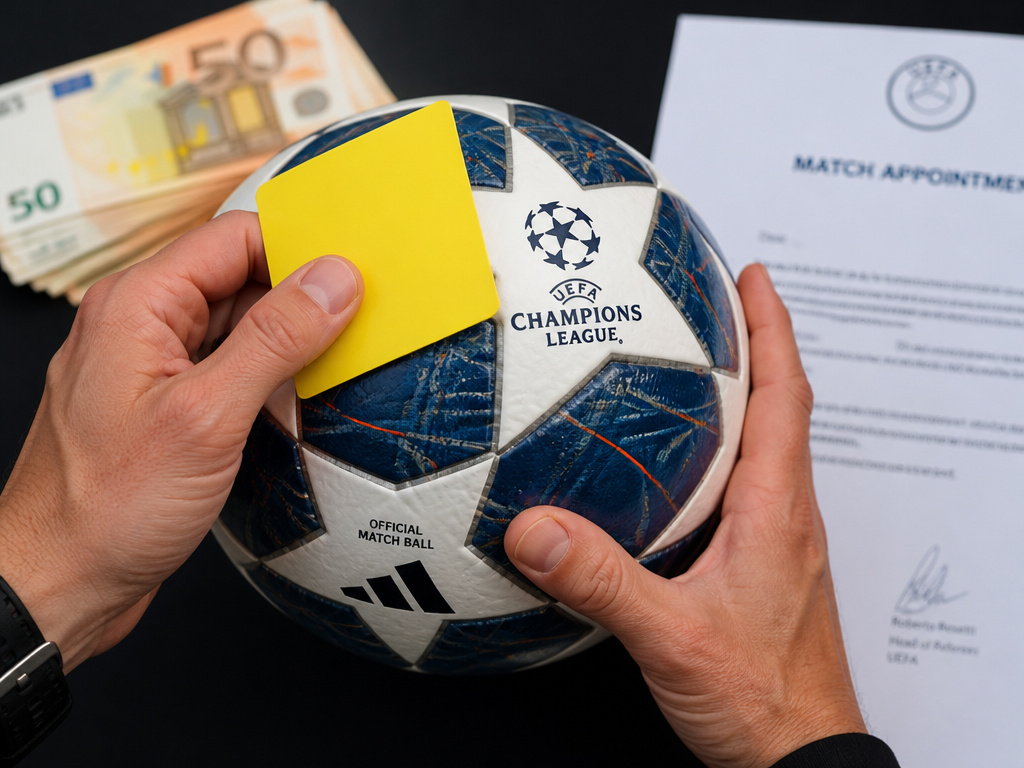
For the elite referees at the top of their domestic trees, the real financial upgrades come from European and international appointments. A domestic match fee is one thing; a UEFA payment is another.
UEFA has its own fee structure for club competitions:
- Champions League matches (excluding the final) pay referees between €6,000 and €7,500.
- Officiating the Champions League final is worth €10,000.
- Europa League fees range from €5,500 (round of 32) to €7,500 for the final.
These appointments are reserved for officials on the UEFA Elite list, like England’s Michael Oliver and Anthony Taylor. Taking charge of 5-6 Champions League group stage games in a season can add €30,000-€45,000 to an official’s income before considering the knockout stages. It’s a substantial bonus that separates the absolute top tier from their domestic peers.
International matches, including FIFA World Cup fixtures, can also supplement a referee’s income. This external income is why the very top referees can earn significantly more than the reported domestic averages.
The Reality for Semi-Professional & Lower-League Referees
The glamorous six-figure salaries only apply to a tiny fraction of referees worldwide. The vast majority operate in a semi-professional or amateur capacity.
Portugal’s Primeira Liga is a prime example. Its referees are semi-professional, required to prepare three days a week around another job. They earn an estimated €1,500 per match, leading to an annual salary around €30,000. This is a side hustle with serious commitment, not a primary career.
In England, as covered, the referee pathway below the Championship involves minimal financial reward. Reaching the top takes many years, and for most of that time, referees earn small match fees for grassroots, amateur, and lower-league games. They balance this with other employment, family life, and intense physical training to pass the annual referee fitness test. The pay increases significantly once a referee breaks into the full-time Select Groups, which for most, never happens.
Factors That Influence a Referee’s Earnings

Why does one referee earn £150,000 and another £450 a game? A few key factors decide it.
Experience & Category: This is the biggest driver. The PGMOL sliding scale and Serie A’s fixed annual bonuses are direct rewards for years of service and achieving a high category (like UEFA Elite).
League & Competition: The wealth of the league dictates the pot. The Premier League’s TV money funds the PGMOL. MLS’s new CBA reflects the league’s growth. A less wealthy league, like Portugal’s, cannot support full-time professionals.
Role: The head referee always earns more than their assistants. The emergence of VAR has created a new, well-paid specialization. In Serie A, a VAR official (€1,700) earns more than an assistant referee (€1,400) for a match.
Performance: While not a massive part of income, performance bonuses exist. The Premier League’s Key Match Incidents Panel reviews decisions, and bonuses can be awarded based on accuracy.
Frequently Asked Questions
Who is the highest-paid football referee?
No single referee’s contract is public, so the highest-paid individual is not known. This includes referees like England’s Anthony Taylor and Michael Oliver, or Spain’s top officials. Their income can combine domestic and international match fees.
Are Premier League referees full-time?
Yes, the 20 referees in Select Group 1 are full-time, salaried employees of the PGMOL. However, referees in League One, League Two, and most leagues below the top flight globally are part-time or semi-professional.
How much do assistant referees and VAR officials get paid?
Pay is always less than the head referee. In the Premier League, SG1 assistant referees average £110,000 annually. The VAR fee is £837 per game (vs. £1,116 for the referee). In Serie A, the difference is codified: assistants get €1,400, the VAR gets €1,700, and the AVAR gets €800 per match.
Does a referee get paid more for a cup final or a derby?
Not in domestic football. The sourced data for Serie A indicates the match fee for the referee is a fixed €4,000 per game. The same principle is understood to apply in other leagues. The only exceptions are distinct competitions with their own fee structures, like the UEFA Champions League final.
How does someone start a career in refereeing and work up to these salaries?
You start at the bottom. The process to become a football referee begins with a local course and qualification. You officiate youth and amateur games. Progress is based on assessments and promotions through the referee tiers, from local leagues to regional, then national levels. Reaching the professional Select Groups requires exceptional talent, fitness, and mental fortitude over many years. Separate pathways exist for those wanting to specialize as an assistant referee or eventually a VAR official.
The Bottom Line
Refereeing at the highest level is a well-paid profession, but the financial ladder is exceptionally steep. A Premier League referee’s £180,000 average represents the pinnacle of a pyramid where the vast majority of officials earn a fraction of that, often while holding down another job.
The numbers also highlight a tension. While fans see controversial calls, the leagues are investing heavily in referee training, technology like VAR, and now, in MLS’s case, competitive salaries to foster a professional class of officials. The goal is accuracy and consistency under immense pressure. Whether the current pay scales from the Premier League’s sliding scale to MLS’s new CBA achieve that is a debate that will rage on the pitch and in the stands every weekend. For anyone starting the referee pathway, know that the journey is long, the scrutiny is intense, and the financial reward only comes at the very end of a very tough road.
