
Advantage Rule in Football Explained
This post contains affiliate links. As an Amazon Associate, we earn from qualifying purchases.
The advantage rule in football works like this: the referee lets play continue after a foul when the non-offending team benefits. If no benefit arrives within “a few seconds” (IFAB’s wording), the referee penalises the original offence. Cards still follow at the next stoppage.
The phrase “a few seconds” carries most of the weight here. IFAB gives no stopwatch figure, so the referee judges each passage of play on its own. That judgement decides whether the fouled team gets a chance or a free kick, and it explains most of the arguments you hear in the stands.
What follows: the Law 5.3 wording, three different timing guides, how cards work after advantage, four matches where it got messy, and a few corners of the rule that rarely get mentioned.
Key Takeaways
- Advantage covers bad restarts too, not only fouls. Law 5.3 says so in plain words.
- A caution or sending-off earned under advantage is shown when the ball is next out of play. The one exception is a DOGSO foul followed by a goal, which carries no sanction under current Law 12.
- Serious foul play, violent conduct and a second cautionable offence get no advantage unless a goal chance is clear.
- IFAB says “a few seconds”. The USSF guide says 2-3 seconds. Only one of those is Law text.
- Older explainers disagree with current Law 12 on the DOGSO card. Trust the Law text, not the old blog post.
Advantage Rule in Football Explained: What Law 5.3 Actually Says
Law 5.3 hands the referee a single test in the advantage rule in football explained here: will the non-offending team benefit if play carries on? If yes, the whistle stays quiet.
Advantage lets the referee delay a whistle for a foul when the non-offending team benefits from play continuing. Law 5.3 covers offences and incorrectly taken restarts alike. If the anticipated advantage does not arrive at that time or within a few seconds, the referee penalises the offence or orders a retake.
The IFAB text of Law 5 says the referee “allows play to continue when an offence occurs, or a restart is incorrectly taken and the ball is in play, and the non-offending opposing team will benefit from the advantage.” Read it twice. Nothing in it mentions a goal chance. The test is benefit, full stop.
If you’re newer to the basic football rules, advantage is one of the few where the referee’s silence is the decision. (From the muddy-pitch end of the game, a late whistle always feels personal.)
Fouls, Bad Restarts and the Word “Offence”
Advantage isn’t a foul-only tool. A restart taken wrongly, with the ball in play, falls under the same wording. The same Law 5 text gives a kick-off example: a Team B player enters the opponents’ half early, and the kick goes straight into the opponents’ goal. The referee plays advantage and awards the goal.
Few explainers mention that. Most stop at “fouls”.
The Signal Is Only the Announcement
MLSsoccer.com draws a line that I find useful. Applying advantage is the referee’s decision. Calling “Play on!” and swinging the arms upward is only the announcement of it.
I’d argue the decision is the skill and the signal is the theatre. The crowd sees the announcement. The judgement happened a second earlier, and nobody applauds that.
Sometimes play moves so fast that the conditions for advantage pass before the arms go up. MLSsoccer.com says advantage still counts as applied if that was the referee’s decision. Our guide to referee hand signals covers what each gesture looks like.
NISOA, the body for US college referees, tells its members to call out and signal clearly. Otherwise the fouled player may think nobody noticed.
How Long Is a Few Seconds Before the Whistle Comes Back?
Three bodies give three answers, and only one of them is Law text. IFAB says “a few seconds”. The USSF’s “Advice to Referees” (Advice 5.6) sets 2-3 seconds, which is a federation rule of thumb. NISOA says a brief pause is fine, and calling the foul after a few seconds is acceptable.
| Source | What it says | Status |
|---|---|---|
| IFAB Law 5.3 | “A few seconds” | Law text |
| USSF Advice 5.6 | 2-3 seconds | Federation guide |
| MLSsoccer.com | Roughly 2-3 seconds | Cites USSF guide |
| NISOA (Jan 2012) | Brief pause fine; a few seconds OK | Referee advice |
Count it out loud next time: one, two, three. It feels longer than it sounds on paper, and the stadium noise changes shape the moment the whistle finally goes.
Longer waits cause trouble. NISOA warns that a delay beyond a few seconds can upset players who expect quicker punishment. That’s not a legal limit, just a mood the referee has to read.
Honestly, I can’t give you a harder number than that. The Law doesn’t.
From Foul to Play On: The Five-Step Sequence
A midfielder gets clipped just as he releases a pass, and the ball runs to a team-mate in space. The referee has about one breath to decide. Here’s the order a referee works through:
- The offence happens. The referee reads the next moment of play. Whistling here ends any chance of a benefit for the fouled side.
- Judge who gains. Advantage is a team concept, per MLSsoccer.com: the fouled player or any team-mate can enjoy it. Watching only the fouled player misses the runner who got the pass.
- Call “play on” and signal. Skip this and players assume the foul was ignored, which NISOA says leaves the fouled side feeling unseen.
- Wait out the few seconds. Cut it short and the attack never gets its chance. Drag it out and players grow impatient.
- Pull back or let go. If the benefit never comes, the referee penalises the offence or orders the retake. If it holds, any card waits for the next stoppage.
Why does the team concept matter? Because a foul can free a team-mate even while the fouled player ends up on the grass. Judging benefit only on the victim would kill attacks that were actually working.
Where this goes sideways: A whistle from the crowd. In one IFAB example the attacking team stops because a spectator blew a whistle during the advantage. The anticipated benefit never arrived because of outside interference, so the referee awards the original direct free kick from the position of the foul.
Do Cards Still Come After Advantage?
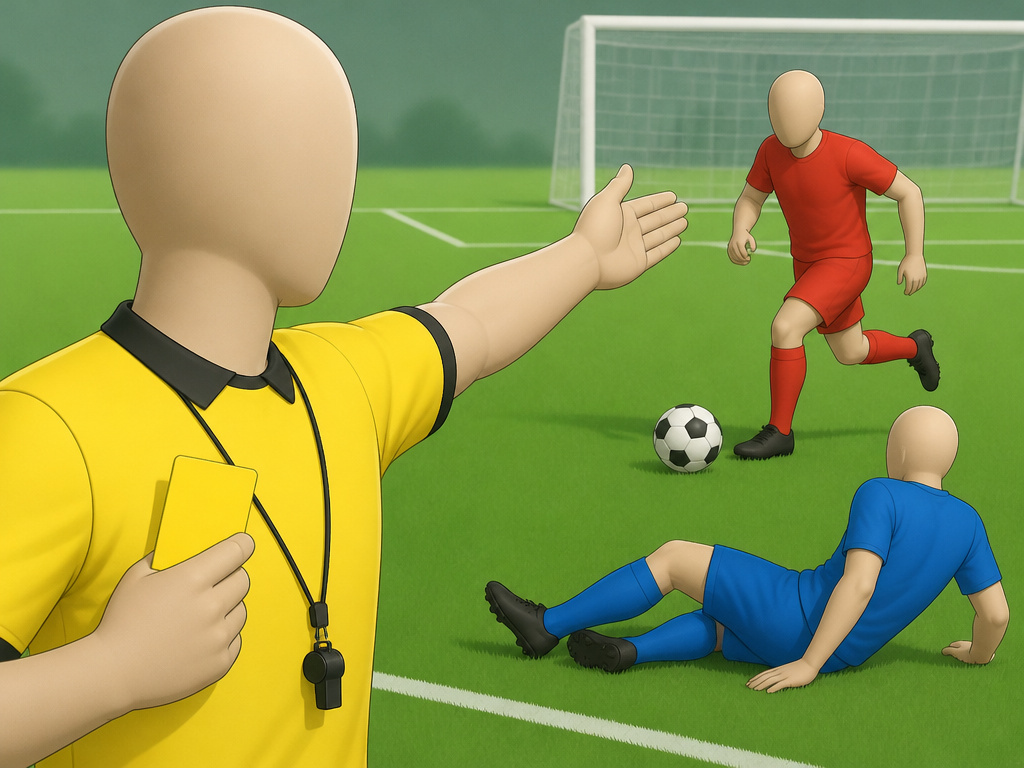
Yes, and they wait. If the referee plays advantage for an offence that would have drawn a caution or sending-off, the card comes when the ball is next out of play, per IFAB Law 12.
Advantage postpones the card to the next stoppage. The one exception in Law 12: a DOGSO foul followed by a goal for the fouled side carries no sanction.
DOGSO means denying an obvious goal-scoring opportunity. SPA means stopping a promising attack. Here’s how Law 12 and its FAQ handle the common cases:
| Situation | Advantage? | Card outcome |
|---|---|---|
| Reckless challenge stops promising attack | Played | Yellow at next stoppage, for the reckless challenge |
| Foul stops promising attack, nothing worse | Played | No caution |
| DOGSO foul, advantage holds, no goal | Played | Yellow, unsporting behaviour |
| DOGSO foul, goal scored from advantage | Played | No sanction |
| Serious foul play or violent conduct | Not applied unless clear goal chance | Red at next stoppage |
| DOGSO foul, advantage fails | Play stopped | Red (MLSsoccer.com account) |
Why does the goal wipe out the sanction? MLSsoccer.com’s explainer, which looks like an earlier version of the Law, says the defender is cautioned if the fouled side scores. The Law now goes one step further and applies no sanction at all.
Notice one more trap. A player who gets a yellow under advantage and then commits a second cautionable offence gets the second yellow and a red. The exception: if the first offence was interfering with or stopping a promising attack, which earns no caution.
IFAB’s own FAQ gives a case. A defender tackles recklessly, the referee plays on, and the attacker gets up and runs. The defender chases, pulls the shirt, and stops the promising attack. The referee stops play, awards a direct free kick from the shirt-pulling position, and shows two yellows, then a red.
Serious foul play and violent conduct sit apart. Law 12 says advantage should not be applied there unless a goal chance is clear. If the player plays the ball or challenges an opponent in the meantime, the referee stops play, sends the player off, and restarts with an indirect free kick unless something worse happened.
The DOGSO Card Depends on Which Explainer You Read
I only repeat a neat football story after checking it twice, because I once passed on a too-tidy tale that turned out embellished. So when three explainers gave me three answers on the same DOGSO card, I went to the Law text. Here’s who says what:
- Current IFAB Law 12: no disciplinary sanction when the non-offending team scores as a result of the advantage on a DOGSO offence. If no goal comes, the offender is cautioned for unsporting behaviour.
- MLSsoccer.com’s explainer: if the fouled side scores, the defender is cautioned for a tactical foul, not sent off.
- Keith Hackett, as paraphrased by Empire of the Kop: the red should be reduced to a yellow after a goal.
- NISOA (January 2012, US college referees): misconduct must not be left unpunished whether or not advantage was realised.
The MLS and Hackett positions look like an earlier version of the Law. I couldn’t confirm the year the “no sanction” wording arrived, so check archived Laws editions if it matters to you. Present them as a timeline, not one rule.
Skip this if: You only want the current answer. Law 12 is clear: DOGSO plus goal means no card. The old yellow-card explainers still float around, and they’ll mislead you for as long as you keep quoting them.
Four Matches Where Advantage Got Messy
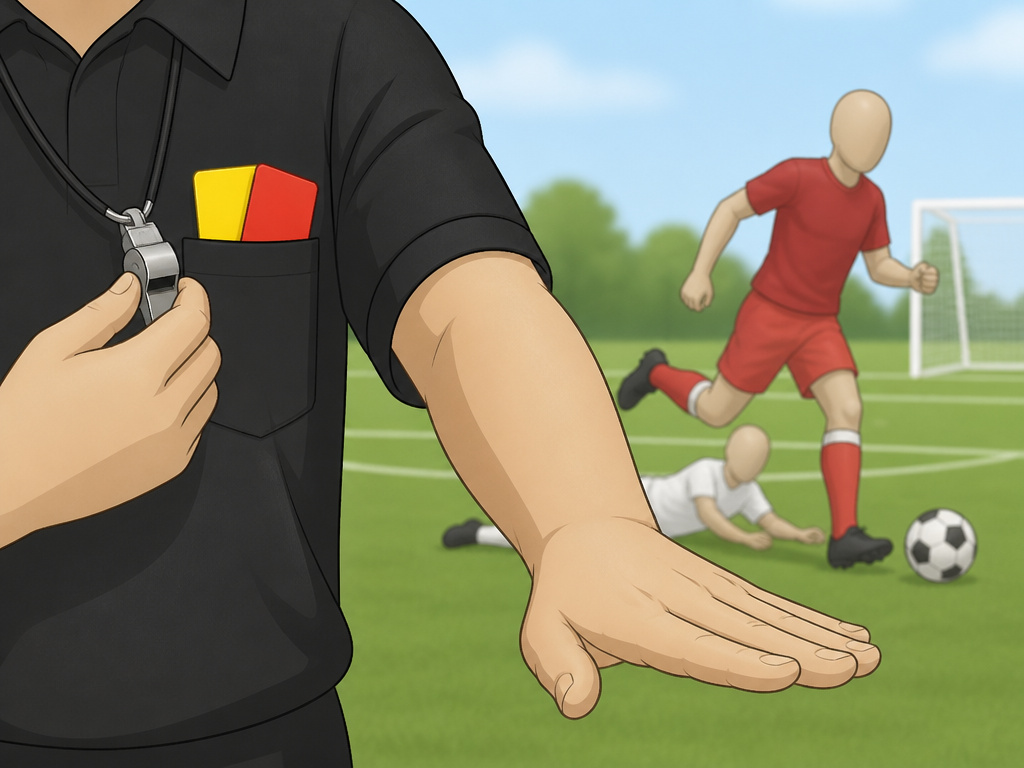
Real matches show where the line sits better than any wording does. These four come from the sources I could check.
Arsenal v Barcelona: A Whistle One Beat Too Early
Jens Lehmann fouled Samuel Eto’o at the 18th minute. The referee whistled, and a moment later Ludovic Giuly struck the ball into the net. The goal was cancelled and Lehmann was sent off. MLSsoccer.com says that, had the advantage developed, Lehmann would have been cautioned instead.
Chivas v Revolution: Advantage That Died
Carlos Llamosa fouled Taylor Twellman at the 39th minute. The referee judged the advantage lost several seconds later, stopped play for the original foul, and cautioned Llamosa. MLSsoccer.com notes that had it been judged a denied goal chance, the correct action was a sending-off.
Man City v Tottenham, 3 December 2023: The Late Whistle
Simon Hooper waved play on after Emerson Royal fouled Erling Haaland, then whistled once Jack Grealish was through. The ESPN report on Man City-Tottenham refereeing error quotes PGMOL chief Howard Webb calling it “an officiating mistake.”
Liverpool v Man City, 8 February 2026: When the Attack Fouls Back
Cherki’s goal for Man City was disallowed for Haaland’s foul. Dominik Szoboszlai was sent off for the earlier DOGSO after a VAR review. Keith Hackett argued the issue is “whether advantage was applied”, and the reports I read didn’t say whether it had actually been signalled.
I work from notebooks and eyes, not data. I can’t tell you how often referees play advantage or how often they get it right. I found no study that measures either.
Beyond Fouls: Bad Restarts and the Offside Catch
Three situations show advantage working outside the usual shirt-pull:
- Early kick-off entry. The kick goes into the opponents’ goal and the referee awards it.
- Goalkeeper encroachment at a penalty. The keeper saves with both feet in front of the line, the ball rebounds to an attacker who scores. The goal stands, the kick isn’t retaken, and there is no card.
- Foul before an offside offence. No advantage applies. The foul is penalised.
That last one trips up plenty of fans. A winger plays a pass to a team-mate in an offside position and is fouled straight after. The team-mate waits, receives the ball a few seconds later and runs at goal. IFAB’s answer: the referee stops play and awards a direct free kick, because the foul came first.
Why can’t the referee wait? The attacking team couldn’t benefit, since their team-mate was offside. If both happen at the same moment, the foul wins because it is the more serious offence.
Easy to miss: The order of events decides it. If the foul comes before the offside touch, even a few seconds before, the referee has to give the direct free kick. Waiting means the attack gets nothing at all.
Our offside rule piece covers when that offside offence actually starts counting. (I’m biased: a back line stepping up together as a unit is my favourite thing in football, and it only works because the foul-or-offside order is settled.)
Why Fans Argue About Advantage, and What Players Should Do
Ever shouted at a referee for “ignoring” a foul, then watched the attack score? That’s advantage working. The shout comes first, the vindication second.
The sharper complaint is the opposite: the attack fizzles, and the free kick comes late. NISOA lists the human side. Advantage means unfair play goes unpunished for a moment, and a player fouled several times in a match might retaliate or dissent. It also suggests using advantage carefully in lopsided games.
Do the sources back the claim that advantage rewards players who go down? They don’t say. I’d treat that argument as opinion.
For players, the Law 5.3 wording gives the practical bit. Keep playing until the whistle. The crowd-whistle case shows the referee can pull play back if the benefit is wiped out by outside interference.
One more thing, since people ask. I found no source on whether a foul is logged in statistics or in bet settlement when advantage is played, so check the data provider’s or bookmaker’s own rules.
Does it matter where on the pitch the referee plays advantage?
The Laws don’t carve the pitch into zones. The test is still benefit, so a fouled team can enjoy advantage anywhere. Still, location changes how much risk the referee is taking. Higher-level guidance says gaining possession anywhere on the field can be enough, and that makes the middle and attacking areas the natural home for it. A team that keeps the ball and moves forward has gained something real, and if it fizzles out, the original free kick is still there to go back to.
Near your own goal it gets harder. A fouled defender who keeps the ball may simply be handed a worse situation than a free kick would have been. The same goes for any play that is dangerous or rough, because player safety comes first. Whatever the area, the referee only has a few seconds to decide, and if nothing comes of it, play is brought back for the original foul.
What happens when a foul starts outside the box and continues inside?
Law 12 covers one case directly. If a defender starts holding an attacker outside the penalty area and keeps holding inside it, the referee must award a penalty kick. The offence is treated as continuing, so where it ends matters more than where it began.
Advantage adds a wrinkle. If the referee waves play on and the attacking side does not benefit within a few seconds, play comes back for the original offence. Where a single incident covers more than one offence at the same time, the more serious one is punished. The fact sheet has nothing specific on a foul that starts inside the area and carries on outside, so the safest reading is to apply the same principles: find the offence, judge whether the advantage truly arrived, and restart based on what was penalised. If you are unsure how a particular incident would be called, the match officials’ position and view of the contact will decide it.
Frequently Asked Questions
What is the rule for advantage in football?
The referee allows play to continue when a foul or incorrectly taken restart occurs and the non-offending team will benefit. If the expected benefit does not arrive within a few seconds, the referee penalises the offence or orders a retake. The rule sits in Law 5.3.
Is it a foul if advantage is played?
The offence still happened, and the referee has acknowledged it by signalling play on. If advantage fails, the referee goes back and gives the original free kick. If it works, any card is shown at the next stoppage.
Can the referee call a foul back after saying play on?
Yes. IFAB’s Law 5.3 says the referee penalises the offence if the anticipated advantage doesn’t ensue at that time or within a few seconds. NISOA notes that older versions of the NCAA rule barred this, but it has since been revised.
Does VAR change advantage decisions?
It can affect the outcome. In the February 2026 Liverpool v Man City match, a goal was disallowed for Haaland’s foul and Szoboszlai was sent off for the earlier DOGSO after review. The reports I read didn’t say whether advantage had been signalled.
Does advantage apply to anything besides fouls?
Yes. Law 5.3 also covers incorrectly taken restarts. IFAB’s example is a kick-off where an opponent entered the other half early and the kick went straight into the goal. The referee played advantage and awarded the goal.
Before You Go
The advantage rule in football comes down to one judgement: did the fouled team gain? Everything else, the card, the signal, the late whistle, follows from that.
Here’s a first step for this week. Next match, count out loud after every “play on”. If the whistle lands inside three, it fits the USSF guide. If it takes much longer, you’re watching the kind of delay NISOA says frustrates players.
One honest limit. The Law gives no number, so a long wait isn’t automatically wrong. Treat 2-3 seconds as a guide, not a ruling.
So when the referee swings the arms up and the attack dies, was the call wrong, or was the benefit never really there?
