
Superclasico History Explained: A Philosophical Divide
This post contains affiliate links. As an Amazon Associate, we earn from qualifying purchases.
*The Superclásico is the legendary football rivalry between Buenos Aires clubs Boca Juniors and River Plate, a conflict born from shared geography and split by a decisive social divide.* Its history is defined by a first official match in 1913, the tragic 1968 Puerta 12 disaster that killed 71 fans, and a modern era where Boca leads the all-time head-to-head record 92 wins to 87 as of 2025.
That social split, the “Millonarios” versus the “People’s Club”, is the spine of the story, but it’s not the whole body. The rivalry’s intensity comes from how that story plays out in specific moments: a record transfer in 1932, River Plate’s first relegation, and a Copa Libertadores final moved to Madrid. This superclasico history explained, those are the fixtures that hold the structure together.
What follows is the full timeline. We’ll start with the muddy pitches of La Boca, track River’s move north, and walk through the matches and tragedies that built the myth. By the end, you’ll see why this isn’t just another football derby, it’s a national event that stops a country.
Key Takeaways
- The rivalry’s foundational class narrative stems from River Plate’s 1925 move from the working-class docklands to the affluent suburb of Núñez, creating the “Millonarios” vs. “Xeneizes” divide.
- The first official match was a 2–1 River Plate win on August 24, 1913, but historian Diego Estévez records an earlier, unofficial Boca victory in 1908.
- The Puerta 12 tragedy in 1968, which killed 71 fans, remains Argentine football’s worst disaster, with conflicting accounts about its cause still debated today.
- Boca Juniors holds a narrow edge in the all-time head-to-head, with 92 wins to River’s 87 (as of a 2025 BBC tally), despite River’s greater number of domestic league titles (38 to 35).
- The rivalry’s global reputation was cemented in the 21st century by epic Copa Libertadores clashes, including a 2018 final second leg controversially moved to Madrid’s Santiago Bernabéu Stadium.
Origins and Geography: One Neighborhood, Two Destinies
Both clubs were born in the same cramped, bustling world. The working-class port district of La Boca, with its brightly painted corrugated metal houses and immigrant communities, was the cradle. River Plate formed there in 1901. Boca Juniors followed in 1905, just a few streets away.
The early tension was pure proximity. When two clubs share the same pubs, streets, and limited pool of local talent, every match feels like a neighborhood bragging-rights war. The first recorded clash between them wasn’t even an official league game. Historian Diego Estévez, in his book ‘320 superclásicos’, documents a friendly in 1908 at Boca’s field at Dársena Sud, which Boca won 2–1.
The schism came in 1925. River Plate left La Boca, moving first to the more well-to-do Recoleta and then settling in the affluent northern suburb of Núñez. Their new home, the giant Estadio Monumental, stood in stark contrast to Boca’s decision to stay and expand their iconic, tightly-packed La Bombonera in the old neighborhood. That physical move created the rivalry’s enduring narrative framework: the upwardly-mobile “Millonarios” versus the rooted, working-class “Xeneizes.”
Where this goes sideways: Assuming the class divide is absolute. Both clubs have supporters from all social strata across Argentina today, but the symbolic identity. River as the aristocratic club of finesse, Boca as the gritty people’s club of passion, was cemented by that relocation and continues to drive the insult culture between fans.
The First Matches: Official vs Unofficial History
You have two starting points. The one that counts in the record books, and the one that lives in fan lore.
The Argentine Football Association (AFA) recognizes August 24, 1913, as the first official Superclásico. It was played at the neutral Estadio Racing Club in Avellaneda. About 7,000 fans watched River Plate win 2–1. A contemporary match report in La Nación newspaper noted the fierce tackling and a key injury to Boca’s Juan Garibaldi. This is the date and result you’ll find in the official history of football in South America.
But the story doesn’t start there for many hinchas. The 1908 friendly, which Boca won, is treated as the true, organic beginning, a neighborhood scrap before the bureaucrats got involved. This duality is perfect for the rivalry. River fans point to the official ledger. Boca fans cling to the earlier, grittier victory. It sets the tone for a century of debating what really counts.
| Match | Date | Location | Result | Significance |
|---|---|---|---|---|
| First Unofficial Friendly | 1908 | Boca’s field at Dársena Sud | Boca Juniors 2–1 River Plate | Recorded by historian Diego Estévez; part of fan folklore. |
| First Official AFA Match | August 24, 1913 | Estadio Racing Club, Avellaneda | River Plate 2–1 Boca Juniors | Recognized by the Argentine FA; attended by 7,000. |
The “Millonarios” nickname didn’t come from the move alone. It was sealed by money. In 1932, River Plate shattered the Argentine transfer record by paying 35,000 pesos for striker Bernabé Ferreyra, a fee that stood for 20 years. For Boca fans, this was ultimate proof: their rivals had bought their way out of the neighborhood and into high society.
Stadiums and Symbols: La Bombonera vs El Monumental
The clubs’ homes are physical manifestations of their identities. La Bombonera (The Chocolate Box) is a vertical, three-tiered cauldron in the heart of La Boca. Its steep stands loom directly over the pitch, amplifying noise and creating a famously intimidating atmosphere. The stadium literally shakes during big matches. It’s a visceral, cramped, and overwhelming experience, a perfect metaphor for Boca’s self-image.
Across the city, River Plate’s Estadio Monumental (officially Mas Monumental) is a sprawling, bowl-shaped colosseum in the leafy Núñez district. After its most recent expansion, its capacity is often cited as 85,000, one of the largest in South America. It’s grand, modern, and imposing. Where La Bombonera feels like a pressure cooker, El Monumental feels like an arena.
This contrast extends to fan philosophy. River fans often speak of the “Three Gs”: Gustar (to play well), Ganar (to win), and Golear (to score lots). It’s a demand for aesthetic dominance. The popular Boca motto, “transpira la camiseta” (sweat for the shirt), needs no explanation. It’s about effort, passion, and winning at all costs.
The insult culture is brutally creative. Boca fans call River “Gallinas” (chickens), mocking a perceived lack of nerve dating back to a choked 1966 Copa Libertadores final lead. River fans retort with “Bosteros” (manure handlers), a reference to a brick factory that once used horse dung behind La Bombonera. These aren’t just nicknames; they are verbal grenades tossed back and forth for generations.
The Puerta 12 Tragedy: A Nation’s Trauma
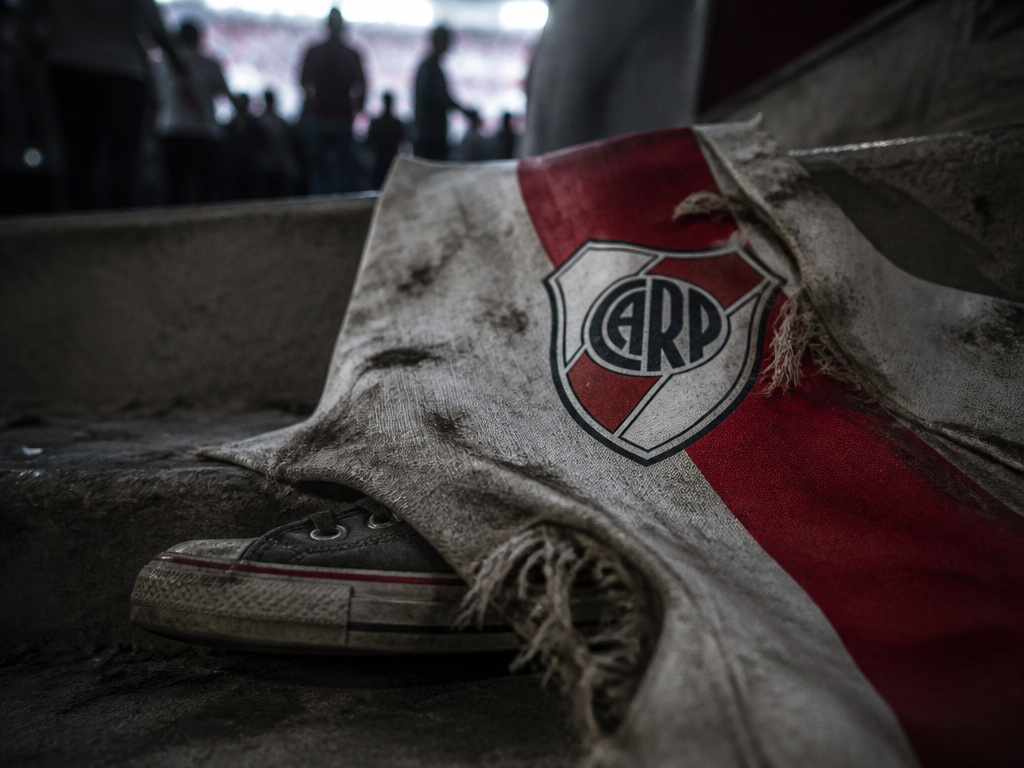
The rivalry’s darkest chapter is not about a match result. On June 23, 1968, after a 0–0 draw at El Monumental, 71 fans, mostly teenagers and young adults, were killed in a horrific crush at Gate 12. Many more were injured. It remains the worst disaster in Argentine football history.
What caused the panic is still contested, a raw wound in the rivalry’s history. Some accounts, including those noted on the Wikipedia Superclásico overview, claim Boca Juniors fans in the upper tier threw burning River flags, causing a stampede among their own supporters in the tier below. Other eyewitness accounts, like those cited by the Football Heritage blog, claim federal police outside the exit began assaulting departing fans, causing a sudden, fatal retreat. Other eyewitnesses, like those cited by the Football Heritage blog, claim federal police outside the exit began assaulting departing fans, causing a sudden, fatal retreat back into the stairway.
The aftermath was a silence that spoke volumes. Gate 12 was renamed, first to K and L, then to M. The clubs said little for decades. River Plate finally installed a memorial plaque at the site in 2008. In 2018, fifty years on, Boca Juniors asked their fans for “forgiveness for forgetting” the victims. The tragedy is a grim reminder of the human cost when fierce passion, poor infrastructure, and heavy-handed policing collide. It’s a part of the fixture’s soul that neither side can claim, and both must bear.
I’ve read the conflicting reports for years. The official inquiry was inconclusive. The truth is, we’ll probably never know the exact trigger. But the outcome, 71 lives, average age 19, is a fact that hangs over every Superclásico since. It’s the moment the rivalry outgrew mere sport.
Defining Matches and Modern Eras

The superclasico history explained is told through its landmark fixtures. These are the matches that shifted narratives, broke records, or spilled into chaos.
- The Biggest Wins: Boca’s 6–0 win over River on December 23, 1928, is the derby’s largest margin of victory. The biggest away win is also Boca’s: a 5–1 demolition at El Monumental in 1982.
- The Highest Scoring: On October 15, 1972, River Plate came back from 4–2 down to win a breathtaking 5–4 encounter, the highest-scoring Superclásico ever.
- The Abandoned Clásicos: Violence isn’t new. In 1931, a match was abandoned after just 31 minutes due to mass fighting between players and fans. In 2015, a Copa Libertadores tie was halted at half-time after River players were attacked with pepper spray by Boca fans, leading to Boca’s disqualification.
The modern era has been defined by continental drama. The two clubs have met repeatedly in the Copa Libertadores, South America’s premier club competition. Boca dominated these clashes in the early 2000s, a key part of their “golden age” where they won the tournament multiple times between 2000 and 2003. River gained revenge later, most famously in the 2018 Copa Libertadores Final.
That 2018 final escalated the rivalry to unprecedented global attention. After the first leg at La Bombonera, the second leg at El Monumental was postponed when River fans attacked the Boca team bus. CONMEBOL’s controversial solution was to move the decisive leg to neutral territory: the Santiago Bernabéu Stadium in Madrid, Spain. River won the match in extra time. A domestic Argentine rivalry was decided on a European stage, a surreal capstone to its international fame.
| Era | Key Match / Event | Outcome / Significance |
|---|---|---|
| Foundational (Pre-1940) | 1932 signing of Bernabé Ferreyra | River pays a record 35,000 pesos, cementing “Los Millonarios” nickname. |
| Mid-Century Tragedy | June 23, 1968 – Puerta 12 | 71 fans die in a crush; Argentine football’s worst disaster. |
| Boca’s Continental Dominance | 2000 & 2004 Copa Libertadores | Boca eliminates River en route to winning the title in 2000, 2001, 2003. |
| River’s Relegation | June 2011 | River relegated to second division for the first time; fans riot and burn parts of El Monumental. |
| The Global Final | 2018 Copa Libertadores Final | Second leg moved to Madrid after bus attack; River wins 3–1 in extra time for their fourth title. |
Iconic Players and Philosophical Divide
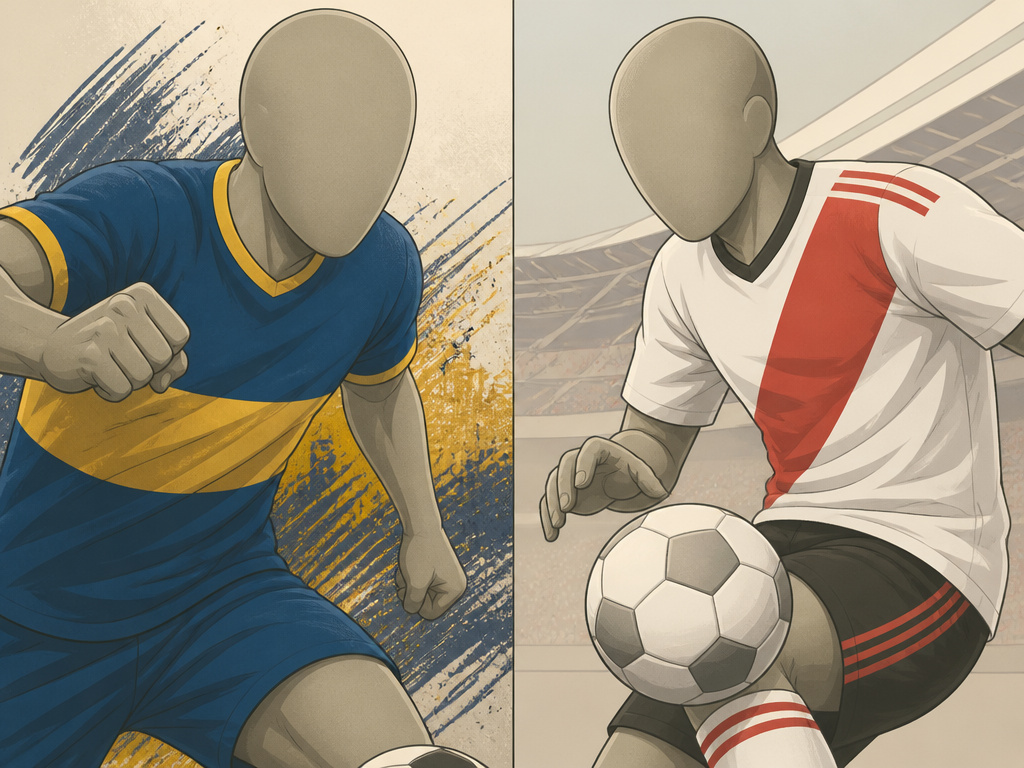
The rivalry is personified by its legends, who often embody their club’s supposed ethos. For Boca, Diego Maradona is the patron saint, the ultimate street footballer whose genius was mixed with a defiant, rebellious edge. Juan Román Riquelme, the languid playmaker who controlled games with his mind, and Carlos Tevez, the relentless, bulldozing forward, also fit the mold of players who “sweat the shirt.”
River Plate’s pantheon leans toward elegance and refinement. Alfredo Di Stéfano, perhaps the most complete forward of all time, started his career at River. Enzo Francescoli, “The Prince,” was a midfielder of sublime grace. More recently, players like Pablo Aimar and Andrés D’Alessandra have carried the flag for technical artistry.
This perceived stylistic split, a key part of the superclasico history explained, is a constant talking point. It’s reinforced by media narratives and fan perceptions, even if the reality on the pitch is often more nuanced. When a Boca team wins with a last-minute, scrappy goal, it’s proof of their spirit. When River wins with a fluid, passing move, it’s confirmation of their philosophy. The players become characters in this never-ending story.
Fan Culture, Barras Bravas, and Global Impact
The atmosphere inside the stadiums during a Superclásico is legendary. This is the product of a deep, all-consuming fan culture.
But there’s a dark undercurrent: the Barras Bravas. These are organized, gang-like fan groups that hold significant power over ticketing, merchandising, and even club decisions at some Argentine clubs. They provide the core of the vocal support and intimidating atmosphere but are also intrinsically linked to violence, organized crime, and coercion. Their role adds a layer of menace and complexity that separates the Superclásico from more sanitized European rivalries like El Clásico.
The fixture’s global reputation was solidified when The Observer named it the number one sporting event to attend before you die, claiming it made “the Old Firm look like a primary school kick-about.” It’s a fixture that genuinely “stops the country,” with an estimated 80% of Argentines supporting one of the two clubs. The rivalry’s blend of raw passion, historical depth, and occasional danger creates a spectacle unmatched in world football, a point emphasized in the BBC analysis of the derby.
How to get Superclásico tickets and stay safe
Attending a Superclásico is a major challenge for visitors. Tickets are extremely difficult to obtain, as the vast majority are allocated to the clubs’ members. Public sales are rare and sell out instantly. For your safety, if you are not a local fan with deep knowledge of the supporter culture, it is strongly advised to watch the match at a designated public viewing area or a local bar. The rivalry’s intensity means stadium environments can be volatile, and navigating the crowds requires specific local knowledge. Always follow the guidance of local authorities and trusted residents on match day.
Frequently Asked Questions
Why is it called the Superclásico?
The term “Superclásico” (Super Derby) was coined by Argentine journalist Hugo Sofovich in the 1970s. It distinguishes this fixture from other Argentine clásicos, recognizing that Boca vs River is the biggest, most important derby in the country due to the size, success, and national reach of the two clubs.
Who has won more Superclásicos?
As of a 2025 tally by BBC Sport, Boca Juniors holds a narrow lead in the all-time head-to-head record, with 92 wins to River Plate’s 87. There have been over 80 draws. However, for domestic league titles, River leads with 38 to Boca’s 35.
What was the first Superclásico ever played?
The first official match recognized by the Argentine Football Association was on August 24, 1913, a 2–1 River Plate win. However, historian Diego Estévez records an earlier, unofficial friendly in 1908 that Boca Juniors won 2–1. You can find the specific details of the 1913 match in the historic first Superclásico fixture record.
Why do Boca and River hate each other?
The hatred stems from a combination of intense local proximity in their early years and a subsequent social divide. After both being founded in the working-class La Boca district, River Plate’s move to an affluent northern suburb in 1925 created a narrative of the wealthy “Millonarios” versus the working-class “Xeneizes” who stayed behind. This class-based identity, reinforced by decades of sporting rivalry, is the core of the animosity.
Has a Superclásico ever been played outside Argentina?
Yes, most famously the second leg of the 2018 Copa Libertadores Final was moved to the Santiago Bernabéu Stadium in Madrid, Spain, after an attack on the Boca team bus in Buenos Aires. River Plate won that match 3–1 in extra time to claim the continental title.
The Bottom Line
The Superclásico is more than two football teams playing each other. It’s a 116-year-old social drama played out on grass, a story about neighborhood, class, identity, and pride. You can trace it from the muddy pitches of La Boca to a stadium in Madrid, through tragedy and triumph.
The numbers tell one story: 92 wins, 87 wins, 71 lives lost, 35,000 pesos. But the feeling tells another. It’s the shake of La Bombonera, the insult of “Gallina,” the silence after Puerta 12, and the sheer weight of history every time the teams walk out. Understanding it means understanding that in Argentina, football is never just a game. It’s a reflection of everything else.
