
El Clasico History Explained: More Than Just 90 Minutes
This post contains affiliate links. As an Amazon Associate, we earn from qualifying purchases.
El Clásico, the match between FC Barcelona and Real Madrid, is a rivalry defined by a near-perfect balance on the pitch and a deep political-cultural divide off it. The first match was played on 13 May 1902 in the Copa de la Coronación, with Barcelona winning 3–1. As of May 2026, the all-time head-to-head record across 264 official matches is deadlocked at 106 wins apiece, with 52 draws.
That deadlock is the single most telling statistic. It means the story isn’t about one side dominating the other for a century. It’s about two giants pulling a nation’s identity in opposite directions, with the football pitch as the battleground. The scoreline is always a verdict on more than just ninety minutes of play, which is why the El Clasico history explained is so compelling.
What follows is the story of how a football match became a global phenomenon. We’ll trace it from a friendly in 1902, through the dark politics of the 20th century, to the era of Messi and Ronaldo that beamed it into billions of homes. By the end, you’ll see why a draw isn’t just a result—it’s a perfectly balanced reflection of a divided history, which is the core of any El Clasico history explained.
Key Takeaways
- The first-ever match was on 13 May 1902 in the Copa de la Coronación, a 3–1 win for Barcelona.
- The rivalry’s political charge solidified after the 11–1 result in 1943, a match that cast Real Madrid as the team of Franco’s dictatorship and Barcelona as its symbolic victim.
- The term “El Clásico” only entered common Spanish usage around the mid-2000s; before that, it was called “El Derbi” or simply “Madrid-Barca.”
- The all-time competitive record is a perfect stalemate: 106 wins for Barcelona, 106 for Real Madrid, and 52 draws across 264 matches.
- While Real Madrid leads in European trophies (15 to 5), Barcelona holds the edge in domestic cups (32 Copa del Rey titles to 20), illustrating their different historical paths to greatness.
The First Match and Early Years (1902-1929)
Football was a fledgling sport in Spain when Barcelona and Madrid (they wouldn’t be granted the “Real” title until 1920) first met. That game, on 13 May 1902, was part of the Copa de la Coronación, a tournament to celebrate the coronation of King Alfonso XIII. Barcelona won 3–1.
The first official La Liga match between the clubs was played nearly three decades later, on 17 February 1929. Barcelona won that one too, 2–1.
For the first few decades, this was a regional sporting contest, not a national obsession. The teams played infrequently, usually in the Copa del Rey. The fixture lacked the bitter, identity-driven edge it would later acquire. That began to change with the first real flashpoint in 1916, a fiery Copa del Rey semi-final tie that spilled over into crowd trouble and accusations of bias. It was a preview of the hostility to come.
Political Foundations: Civil War and the Franco Era
To understand why this fixture means more than any other, you have to look at 20th-century Spanish history, a central pillar in any El Clasico history explained. The rivalry intensified during the Spanish Civil War and the subsequent dictatorship of General Francisco Franco. Barcelona, located in Catalonia, became a symbol of regional identity and resistance to centralist rule from Madrid. Real Madrid, based in the capital, was often perceived as the regime’s favoured club.
The darkest moment came during the Spanish Civil War, when Josep Sunyol, president of Barcelona, was arrested and executed without trial by Franco’s troops. The club’s motto, “Més que un club” (More than a club), frames Barcelona as a defender of Catalan culture.
This political symbolism was cemented on the pitch by a single, infamous result.
The Match That Forged a Myth: Real Madrid 11–1 Barcelona (1943)
In the second leg of a Copa del Rey semi-final on 19 June 1943, Real Madrid beat Barcelona 11–1. The first leg had finished 3–0 to Barcelona, and the sheer scale of the reversal has long been viewed with suspicion. Contemporary accounts describe a hostile environment for the Barcelona players, with their bus pelted with stones and the crowd at Chamartín stadium whipping itself into a nationalist frenzy.
Where this goes sideways: Isolating the 11–1 result from its context. It wasn’t just a bad day; it was the game where Madrid became identified as the team of the dictatorship and Barcelona as its victims, a narrative that persists today.
Fernando Argila, Barcelona’s reserve goalkeeper that day, later said, “There was no rivalry. Not, at least, until that game.” Historians like Sid Lowe argue this match did more than any other to embed the political narrative into the fixture’s DNA. For decades after, Barcelona’s struggle against Madrid was framed as Catalonia’s struggle against the Spanish state.
| Trophy Comparison (1931-1973) | Real Madrid | FC Barcelona |
|---|---|---|
| La Liga Titles | 14 | 8 |
| Copa del Rey Titles | 6 | 9 |
| European Cups | 6 | 0 |
| Other European Trophies | 2 (Latin Cup) | 3 (Fairs Cup) |
This table shows Real Madrid’s domestic and European dominance during the mid-century, a period that deepened Barcelona’s sense of sporting and political injustice.
The Battle for Legends: Di Stéfano and the Rise of Superclubs
The post-war era saw the rivalry shift from pure politics to a battle for sporting supremacy, often fought in the transfer market. The most contentious case was Alfredo Di Stéfano. Both clubs claimed to have signed the Argentine superstar in 1953. After intense political and footballing interference, Di Stéfano ended up at Real Madrid.
His arrival transformed them. Alongside Ferenc Puskás and Francisco Gento, Di Stéfano led Real Madrid to five consecutive European Cups, becoming the club’s first global icon. Barcelona, meanwhile, built around the brilliant Hungarian László Kubala. This era established the template: Madrid as the kings of Europe, Barcelona as the proud, sometimes thwarted, domestic force.
The Modern Era: Messi, Ronaldo & Global Stardom
The turn of the 21st century saw the rivalry become a global media spectacle. The quality of football soared under visionary coaches like Pep Guardiola, and the arrival of the world’s two best players at opposing clubs created a decade of unprecedented drama.
From 2009 to 2018, Lionel Messi and Cristiano Ronaldo scored 38 El Clásico goals between them. Their personal duel, played out in two of the most dominant club sides ever seen, attracted a global audience of hundreds of millions. This was the era when “El Clásico” truly became a worldwide brand, a must-watch event that transcended football.
The statistics highlight the enduring, almost eerie, balance between the clubs.
| All-Time Head-to-Head (as of May 2026) | Matches | Real Madrid Wins | Barcelona Wins | Draws |
|---|---|---|---|---|
| All Competitions | 264 | 106 | 106 | 52 |
| La Liga | 192 | 80 | 78 | 35 |
| Copa del Rey | 38 | 13 | 17 | 8 |
| UEFA Champions League | 8 | 3 | 2 | 3 |
I used to think the “clásico” name was ancient. Turns out, it only became the mainstream term in Spain around the mid-2000s, borrowed from South America. Before that, fans and papers just called it “El Derbi.” The global TV age needed a grander title.
Other sources sometimes cite different totals, such as 255 matches. This discrepancy usually hinges on whether certain early friendlies or defunct cup competitions are counted. The 264-match figure from sources like Wikipedia and FC Barcelona’s official records is commonly cited, though other sources sometimes cite different totals (e.g., 255 matches).
Iconic Matches and Lasting Legacies
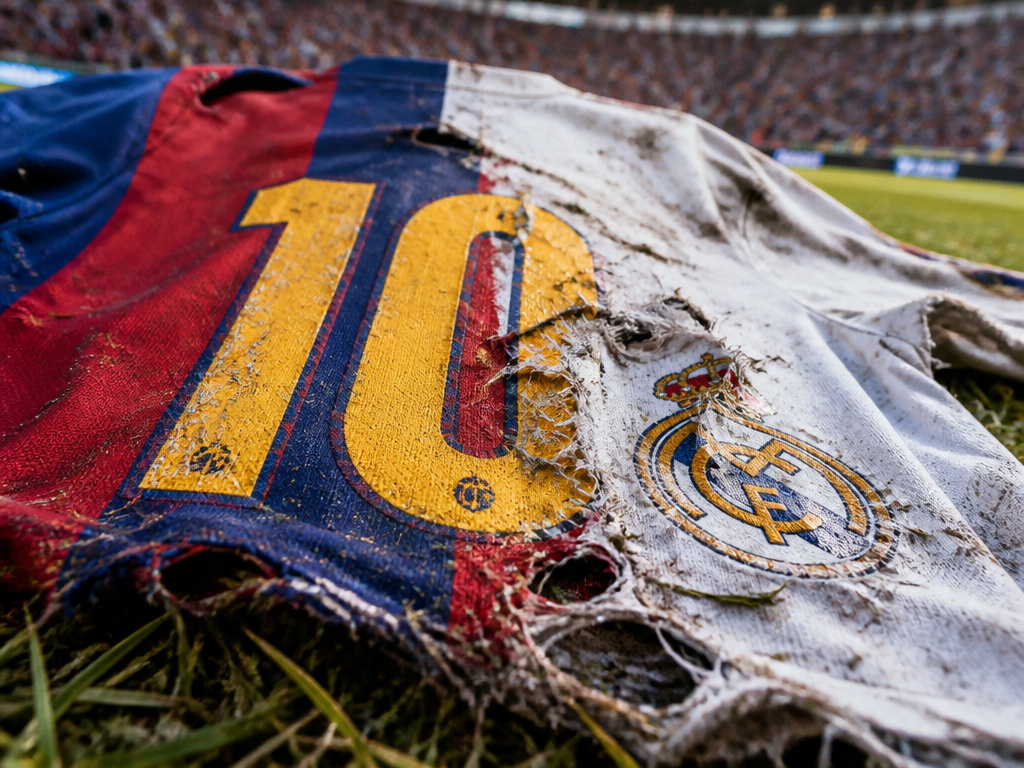
Beyond the statistics, the rivalry is built on iconic moments that live in fan memory. Barcelona’s two famous 5–0 victories—”La Manita” in 1974 with Johan Cruyff as a player, and again in 1994 with him as coach—are celebrated as perfect performances. Real Madrid’s significant wins, like their 6–2 victory in 2009, hold similar weight for Madridistas.
These matches matter because they are the chapters in a longer story. They’re not just wins and losses; they’re psychological landmarks. A 5–0 win for Barcelona is a statement of philosophical superiority. A last-minute winner for Madrid is a dagger of defiance.
The rivalry is one of football’s most intense conflicts. Yet, few blend sport, politics, and global celebrity quite like El Clásico.
The Rivalry Today: More Than Just 90 Minutes

Today, the political tensions are less overt but never absent. Catalan independence flags still fly at the Camp Nou, and the match remains a potent symbol. However, the rivalry has expanded into new dimensions: a commercial battle between two of the world’s richest clubs, a war of narratives on social media, and a relentless competition for global fan engagement.
The fixture is a global media spectacle. It’s a prime example of how modern football fan culture is shaped by global broadcasting and digital communities. The passion is still local, but the audience is planetary.
Common mistake: Reducing El Clásico to just Messi vs. Ronaldo. Their era was a glittering chapter, but the rivalry’s roots are a century older and its engine is a fundamental clash of identities that will outlast any individual player.
Both clubs continue to define success differently. Barcelona, with 32 Copa del Rey titles, holds the edge in domestic cups. This difference in DNA is what makes the fixture so compelling—it’s a clash of two distinct visions of what a football club should be.
How did the El Clasico rivalry evolve over the years?
The rivalry’s modern intensity has deep political roots. It intensified during the Spanish Civil War and the Franco dictatorship, with a key moment being the 1943 Copa del Rey match. That 11-1 result for Real Madrid is often cited as the game that first cemented the political symbolism, identifying Madrid with the regime and Barcelona as its victims. A Barcelona player from that match later said the true rivalry began there. The competition evolved through distinct eras, like Real Madrid’s domestic and European dominance between 1931 and 1973, contrasted with Barcelona’s famous 5-0 victories in 1974 and 1994. The term ‘El Clasico’ itself only entered common usage around the mid-2000s, before which it was often called ‘El Derbi’.
What were the most controversial transfers in El Clasico history?
The transfer of Alfredo Di Stéfano in 1953 is a foundational controversy that altered the rivalry’s balance. Until the early 1950s, Real Madrid had won only two league titles since the competition began. Di Stéfano’s arrival at Madrid marked the start of their golden era. He became a defining figure in the fixture, scoring 18 Clasico goals. Di Stéfano’s arrival at Madrid in 1953 marked the start of their golden era.
Frequently Asked Questions
What does “El Clásico” mean?
It translates from Spanish to “The Classic.” The term was adopted into mainstream use around the mid-2000s to describe the fixture between Barcelona and Real Madrid, reflecting its status as the definitive, must-watch game in Spanish football.
Who has won more El Clásico matches?
As of 2026, the all-time record in official competitive matches is perfectly even: 106 wins for Barcelona, 106 for Real Madrid, and 52 draws. In La Liga specifically, Real Madrid holds a slight edge with 80 wins to Barcelona’s 78.
Why are Barcelona and Real Madrid such big rivals?
The rivalry is a mix of intense sporting competition and deep political history. It represents the historical tension between Catalonia (Barcelona) and the central Spanish government in Madrid, a divide that was exacerbated during the Franco dictatorship. This “more than a club” identity for Barcelona pits it against the establishment symbol often associated with Real Madrid.
What was the first El Clásico ever played?
The first match was on 13 May 1902, in the Copa de la Coronación tournament. Barcelona won the game 3–1. The first official league match was on 17 February 1929, which Barcelona also won, 2–1.
Who is the top scorer in El Clásico history?
Lionel Messi is the all-time top scorer in the fixture with 26 goals for Barcelona. He is followed by Alfredo Di Stéfano and Cristiano Ronaldo, who both scored 18 goals for Real Madrid.
The Bottom Line
El Clásico is a rivalry that refuses to be simple. It’s a 106–106 scoreline that somehow explains a country’s fractured history. It’s a football match that you can’t fully understand unless you also talk about war, dictatorship, and regional identity.
The next time you watch one, listen for more than the crowd roar. Listen for the weight of history in every tackle, the echo of politics in every celebration. That’s what makes it the world’s greatest football match. It’s not just a game. It’s the story of Spain, played out over 90 minutes, twice a year, for more than a century. And the book still isn’t closed.
