
How to Slide Tackle in Football: Step-by-Step
This post contains affiliate links. As an Amazon Associate, we earn from qualifying purchases.
To slide tackle legally in football, you must execute a challenge that a referee judges as safe. The rule is not “ball first, no foul.” It is “tackles an opponent” in a careless, reckless, or excessively forceful manner. Coaching American Soccer states that making contact with the ball first is necessary for a proper slide tackle, while Referee.com emphasizes that getting the ball does not eliminate the possibility of a foul. Success hinges on timing, body shape, and playing surface.
That distinction between ‘ball first’ and a fair tackle is where most confusion lives. A defender who lunges in, gets the ball, but then wipes out the opponent is still committing a foul. This is a key principle when learning how to slide tackle in football. The referee’s whistle looks at the whole action.
What follows walks you through the law as written, the step-by-step technique that keeps it safe, and the drills that build the muscle memory for how to slide tackle in football. By the end, you’ll know when to attempt it, how to execute it cleanly, and what to do the second you’re back on your feet.
Key Takeaways
- A slide tackle is a last-resort defensive tool. Staying on your feet with good body shape and jockeying is always preferable.
- Contacting the ball first is necessary but not sufficient for a legal tackle. The referee judges the entire challenge for safety.
- Youth leagues often restrict slide tackling until around age 14, even though the Laws of the Game permit it.
- Practice on a wet pitch or long grass to reduce friction and skin abrasion. Defenders who slide often should wear slide pants.
- Sources offer different advice: Holliston Soccer Club advises to ‘hook the ball, don’t poke it away,’ while Coaching American Soccer describes both the ‘clearance’ and ‘hook’ as distinct, valid techniques.
The Slide Tackle Rule: Contact Order Isn’t Everything
The common shout of “I got the ball, ref!” is a plea, not a legal argument. Until 2008, the FIFA Laws explicitly defined a foul as a tackle “making contact with the opponent before touching the ball.” That clause was removed. The current Law 12, as maintained by the International Football Association Board (IFAB), now simply states that a player commits a foul if they “tackle an opponent” in a manner that is careless, reckless, or uses excessive force. A tackle that “endangers the safety of an opponent” is serious foul play, warranting a red card.
This shift places the judgment squarely on the referee’s perception of safety when evaluating a how to slide tackle in football, not a binary check of who was touched first. The U.S. Soccer Federation reinforces this, stating a slide tackle is legal if performed safely, and a tackle endangering safety is a red card offense “regardless of contact or direction.”
Making contact with the ball first does not eliminate the possibility of a foul. A defender who clears the ball cleanly but follows through with a raised leg into an opponent’s Achilles tendon has committed a foul, and likely a cardable offense.
This is the core non-commodity insight most guides gloss over. The law cares about consequence, not just sequence.
Where Sources Disagree: The ‘Ball First’ Doctrine
- Coaching American Soccer states that to execute a proper slide tackle, the tackler “must make contact with the ball first” and that incidental contact after is usually not a foul.
- Referee.com counters that “getting the ball does not eliminate the possibility of a foul,” and that “wiping out the opponent even after contacting the ball first is a foul.”
The practical takeaway? You must aim for the ball first, but your body’s momentum and position after that touch decide the whistle. A clean tackle wins the ball and allows the attacker to stumble over your foot. A reckless one wins the ball and then takes the player out.
When (and When Not) to Go to Ground
The sliding tackle is, by definition, a last-ditch effort. The BBC Sport Academy called it exactly that. You are surrendering your footing and any chance of immediate recovery if you miss. Therefore, your decision matrix should be brutal.
Use a slide tackle when:
- An attacker is about to break through on goal and you are the final defender.
- You are shepherding an attacker toward the touchline and can use the line as an extra defender.
- The attacker takes a heavy touch, popping the ball a few feet in front of them.
- You are covering for a teammate’s defensive error and need to stop a cross or shot.
Never use a slide tackle when:
- You are the last defender centrally and a miss means a certain goal (unless a clearance is your only option).
- The attacker is facing you, balanced, and in control of the ball. This turns a manageable one-on-one defending situation into a gamble.
- You are frustrated or retaliating. That’s a straight red waiting to happen.
- Local youth rules prohibit it. Coaching American Soccer notes these restrictions often apply until around age 14.
The Holliston Soccer Club guide puts it bluntly: a slide tackle is almost always required to make up for a defensive mistake. Don’t let the ability to slide become an excuse for poor positioning. Good defending without fouling starts much earlier.
Step-by-Step: Executing a Proper Slide Tackle
Forget the highlight-reel, two-footed lunge. A safe, effective slide tackle is a controlled, one-legged technique. We’ll break it down using the phased coaching method from the Holliston Soccer Club and Coaching American Soccer.
The Approach and Timing
Footy4kids advises not to slide-tackle from behind, while the U.S. Soccer Federation states there is nothing illegal about a slide tackle by itself, no matter the direction. Time your launch so you will be horizontal as your foot reaches the ball. If you arrive too early, you’ll slide past it. Too late, and you’ll crash into the attacker.
Common mistake: Jumping into the air before sliding. The Holliston guide warns this makes you land harder and bounce, killing your momentum and control. Push off from your foot into the slide.
The Slide and Contact
As you leave your feet, you are sliding on the hip of your tackling leg. Tuck your lower leg underneath you, bending the knee to about 90 degrees. Keep your cleats down. Your extended tackling leg sweeps forward.
What most people get wrong: Leading with the studs or a straight leg. This is how you break an opponent’s leg and earn an instant red. Your foot should be turned sideways, ankle locked, to ‘hook’ the ball.
Your objective decides the finish. A ‘hook’ tackle uses the inside of your foot to pull the ball back toward you. A ‘clearance’ uses a firm instep to blast it away into touch. The hook is for winning possession; the clearance is for pure danger elimination.
The Recovery
The tackle isn’t over when you win the ball. You are now on the ground. Roll toward your stomach as you make contact, using the momentum to help you spring back up. Get to your feet as fast as possible. The attacker you just dispossessed is likely still nearby, and your team now has the ball. Hesitation squanders the advantage you just earned.
| Phase | Critical Action | Risk If Skipped |
|---|---|---|
| Approach | Angle from the side, time the heavy touch. | A straight-line chase from behind appears reckless and often is reckless. |
| Launch | Push into the slide; don’t jump. | You lose momentum, land awkwardly, and risk injury. |
| Contact | Cleats down, foot sideways, aim to hook the ball. | Raised studs or a straight leg is a certain foul and potential serious injury. |
| Recovery | Roll to stomach, get up immediately. | You leave your team shorthanded and waste the turnover. |
Training Drills: From Cone to Opponent
You cannot learn this skill in a game. The risk is too high. Isolate the components first.
The ‘Cone Phase’ Drill (Holliston Soccer Club)
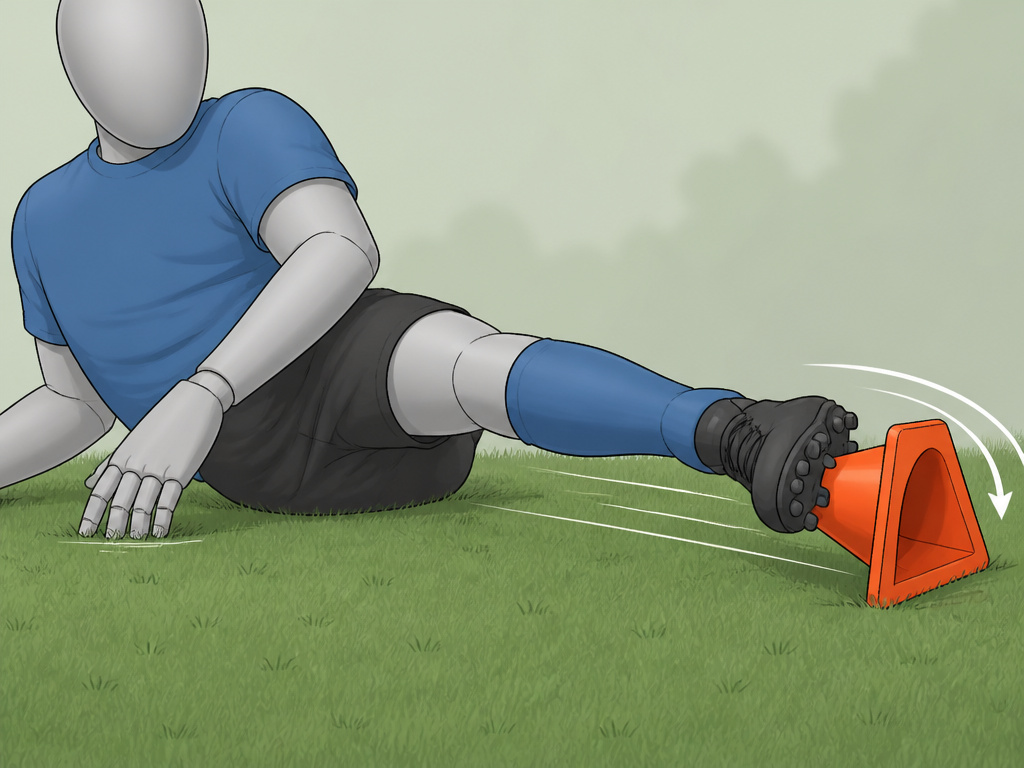
Place a cone several yards away. Run a few steps and slide, aiming to hook the cone and pull it back toward your starting point. This teaches the ‘hook’ motion and controlled contact. Coaching points: slide on the hip nearest the cone, be horizontal as your foot reaches it, roll as you make contact, and get up facing the way you came.
The ‘Ball Phase’ Drill
Repeat the above with a stationary ball. Once comfortable, work with a partner. The dribbler moves slowly and predictably, deliberately pushing the ball slightly ahead to allow a clean tackle. This is cooperative training—the attacker is not trying to evade. The goal is building technique and confidence in a controlled environment.
Integrating into Play
Only after mastering the previous phases should you allow slide tackles in small-sided games or rondos. The context is still semi-controlled. Finally, permit them in full scrimmages with the understanding that safety and clean technique are the primary objectives, not winning the drill.
Defending Immediately After a Successful Tackle
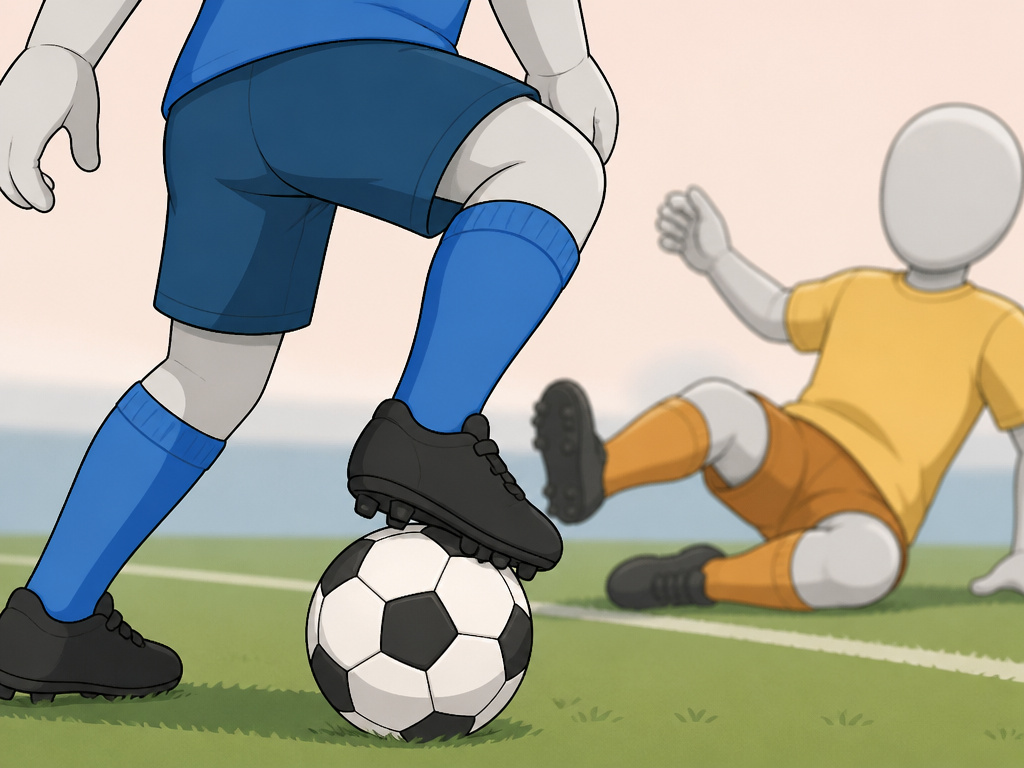
You won the ball. Now what? Your immediate next action is what separates a good defender from a great one.
If you executed a ‘clearance,’ your job is done. The ball is in row Z, and your team has time to regroup. If you executed a ‘hook’ and won possession, you are now the attacker. Your first touch after regaining your feet should be a pass or a controlled dribble away from pressure. Do not dally. The opponent you just tackled is likely off-balance or on the ground.
This links directly to the concept of defensive transitions. A slide tackle is a high-risk, high-reward turnover tool. Converting that turnover into a controlled possession for your team justifies the risk. Failing to do so means you risked a card and gave up your position for nothing.
Safety and Injury Prevention
Slide tackling is a contact sport within a contact sport. You must protect yourself and your opponent.
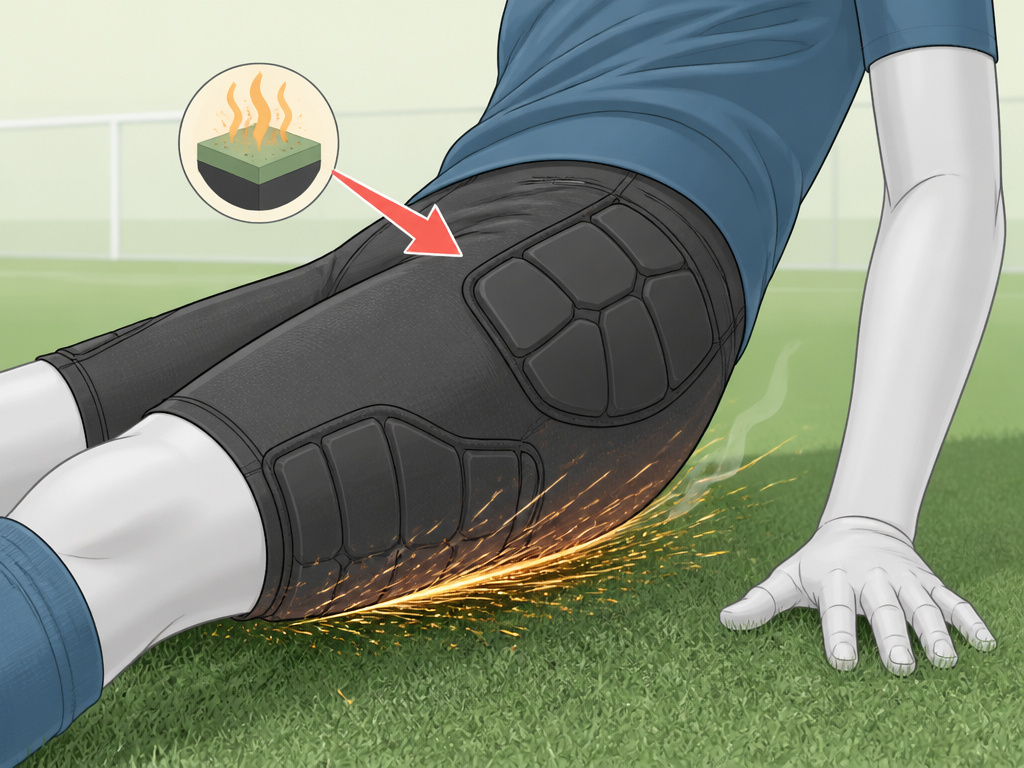
For the tackler: Artificial turf is brutal. It generates friction heat that can cause severe ‘turf burn’ abrasions on your hip and thigh. The Coaching American Soccer guide explicitly recommends slide pants for defenders who use the technique often. A wet pitch or long grass is far preferable for practice.
For the dribbler: Attackers must also be taught how to defend themselves. The ‘Avoidance Move’—a quick hop or lift of the leg—can prevent a nasty impact if a tackle is mistimed. Respect for an opponent’s safety is essential; a tackler should abort a misjudged challenge if they see it will cause injury.
This mindset is part of a broader culture of safety in football. The game is physical, but it’s not combat.
The Referee’s Perspective: What Gets You Carded
Understanding how you are judged is the final layer of mastery. The U.S. Soccer Federation states referees must weigh the “temperature of the game, the age/skill of the players, and the attitude of the players.” A challenge that is a yellow card in a professional derby might be a straight red in an under-12 rec game.
The U.S. Soccer Federation states there is nothing illegal about a slide tackle by itself, no matter the direction, while Referee.com notes that tackles from the rear should be regarded with suspicion and draw close inspection.
Red Card Offenses (Serious Foul Play):
- Any tackle that endangers the safety of an opponent (FIFA Law 12).
- Excessive force, even if the ball is won cleanly.
- Studs-up challenges, especially making contact with the Achilles area.
Yellow Card Offenses (Reckless Play):
- A careless, overly aggressive tackle that still wins the ball.
- Repeatedly attempting risky slide tackles after a warning.
A clean slide tackle, even if it comes from behind, is legal if it is safe. The opponent may fall over your leg afterwards; that is not a foul unless you used excessive force or tripped them intentionally after the play. The nuance is everything.
Frequently Asked Questions
Is slide tackling illegal in football?
No, slide tackling is not illegal. It is a legal technique governed by FIFA Law 12. It becomes a foul only if executed in a careless, reckless, or excessively forceful manner that endangers an opponent’s safety.
How do you slide tackle without getting turf burn?
To minimize turf burn, practice on wet grass or long grass surfaces which reduce friction. Always wear slide pants—compression shorts with padded panels on the hips and thighs. These are essential for frequent use, especially on artificial turf.
Can you slide tackle in American football (NFL)?
No, the term ‘football’ here refers to association football (soccer). Slide tackling, as described here, is specific to soccer. In American football, a ‘tackle’ is a fundamentally different technique involving grabbing and bringing a ball-carrier to the ground, and sliding is not a part of the defensive method.
What age can you start slide tackling?
Under the universal Laws of the Game, there is no age restriction. However, Coaching American Soccer notes that “local rules” often restrict slide tackling in youth leagues until around age 14. Always check your specific league’s regulations. The Holliston Soccer Club recommends teaching the technique between ages 12 and 16.
Before You Go
The sliding tackle is a tool, not a signature. Its successful execution is a punctuation mark on a defensive sequence that should have begun with better positioning. The defender celebrated is often the one who never had to lunge.
One rule to hold onto: if your attempt is more about making a statement than stopping a threat, keep your feet. The beautiful game rewards patience over panic every time. Next match, watch the defenders who win the ball cleanly and immediately look to pass. That’s the skill the slide tackle serves, not the other way around.
