
How to Do a Nutmeg in Football: 3 Scenarios
This post contains affiliate links. As an Amazon Associate, we earn from qualifying purchases.
How to do a nutmeg in football means tapping the ball between an opponent’s legs, then recovering it. Sikana’s coaching video says to sprint 2 or 3 metres after the flick. Jobs In Football adds that the ball needs enough power to pass through, but not enough for another player to take.
The recovery is the part that turns a cute touch into a completed move. Sikana treats the flick and the sprint as one action. The trick alone leaves you chasing the ball. That changes how you practice: ball speed, body angle, and the next two steps all matter.
What follows: three sourced scenarios, the defender-stance disagreement, ball-speed checks, drills, and the game situations where the move is a bad idea.
Key Takeaways
- Recover immediately after the ball goes through, because Sikana pairs the flick with a sprint of 2 or 3 metres.
- Match ball speed to space: enough power to pass through, not enough for another player to take, per Jobs In Football.
- Read the stance gap: Jobs In Football says square-on legs make a larger visible gap, while side-on legs reduce it.
- Skip it under pressure: adequate space behind the defender and no other opponent pressure are prerequisites, per Jobs In Football.
- Panna is the street cousin: the Dutch-originated game centres on nutmegs, per Wikipedia.
How to Do a Nutmeg in Football: Three Match Scenarios
Sikana’s coaching video breaks the move into three match situations. Each one has a different cue.
A nutmeg in association football is a skill move where the ball travels between an opponent’s legs and returns to the attacker. Sikana describes three match scenarios: tackle, beside, and recovery sprint. Jobs In Football adds that the ball needs enough power to pass through, but not enough to be intercepted.
The first time I tried Sikana’s tackle scenario, I gave the ball two small kicks, but the second went too hard. Another player took it on the far side. I now check the space behind the defender before I commit.
The tackle scenario
Sikana says to give the ball two small kicks, with the second going between the opponent’s legs. Too soft, and the defender blocks it. Too hard, and another player takes it.
- Give the ball two small kicks. Skip this, and the defender reads a single hard touch.
- Send the second kick between the legs. A weak touch dies in front of the defender.
- Sprint 2 or 3 metres. No sprint, and the move becomes a giveaway.
You feel the ball give a short, soft thump through the gap when the touch is right.
The beside-you scenario
Sikana says that when an opponent is beside you, use the outside of your foot to slip the ball between their legs. Jobs In Football says a side-on stance makes the gap smaller. Read them as options.
The one-touch knock
Jobs In Football says the move is as simple as a one-touch knock between the opponent’s legs. Sikana still adds the recovery sprint of 2 or 3 metres. A knock without that sprint is only half a nutmeg.
The fake-shot and panna variants
Soccer Wizdom says the fake-shot nutmeg is highly effective near the opponent’s box. In street or futsal soccer, nutmegs are called pannas. Some street tutorials mention a sole-of-foot nutmeg linked to Neymar. The main coaching cues still focus on the inside touch or outside-foot slip.
I rate the body-feint and shoulder drop more than flashy flicks. The move itself is timing and recovery.
Which defender stance opens the gap?
Jobs In Football and Sikana do not give the same answer, so you need to read them as two coaching cues.
Jobs In Football says a square-on stance creates a larger visible gap. It says a side-on stance creates a smaller gap. Sikana treats a ready defender as a tackle scenario and also gives a beside-you cue.
The same scanning habits that help you beat a defender also reveal the gap. I see players stare at the ball. Scanning the pitch before the touch tells you whether the defender is square-on or side-on.
Soccer Wizdom says to watch the defender’s eyes. They reveal intentions.
| Defender cue | Sikana | Jobs In Football |
|---|---|---|
| Ready on toes, knees bent | Tackle scenario: two small kicks | Keep knees bent and stay on toes |
| Defender beside attacker | Outside of foot slips the ball | Side-on stance makes a smaller gap |
| Stance width | No width cue given | Feet a ball’s width apart |
The disagreement matters. Sikana gives an attacker cue. Jobs In Football gives a defender cue. You need both.
I won’t judge a nutmeg by the clip. If the attacker doesn’t sprint 2 or 3 metres after the flick, the move is just a giveaway.
Why does the follow-up sprint matter?
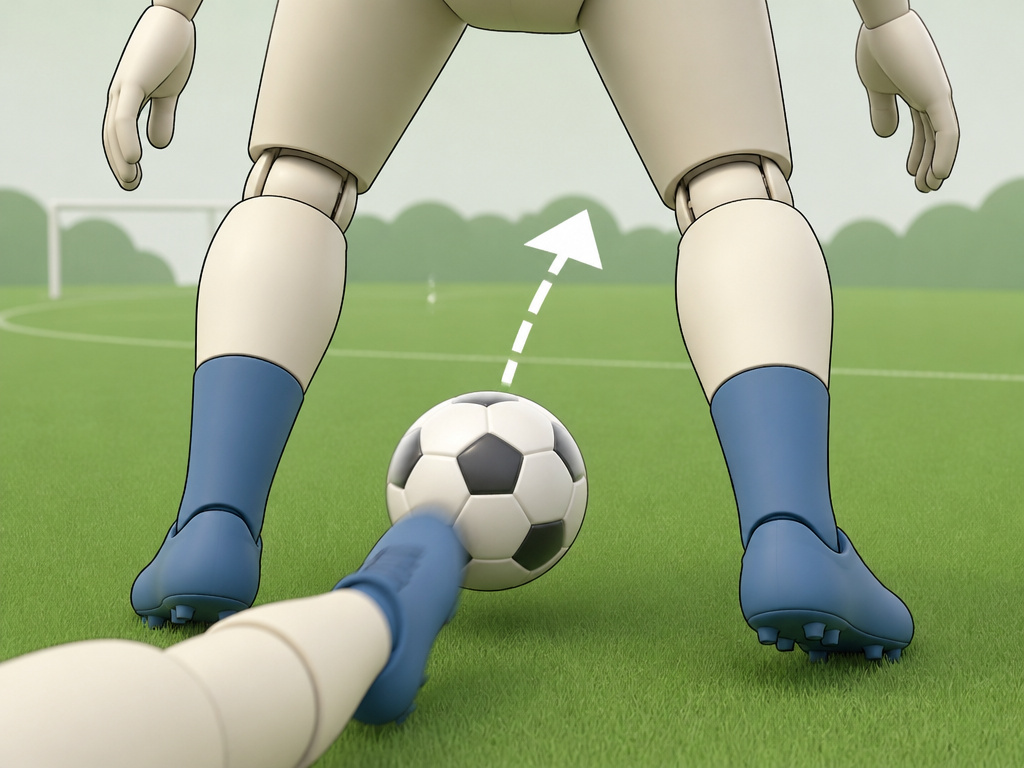
The ball leaving your foot is only half the move.
Sikana says to sprint 2 or 3 metres after flicking the ball between the legs. Jobs In Football says the attacker must receive it on the other side. Without that recovery, the nutmeg becomes a pass to the defender’s teammate.
I used to watch the ball instead of the space behind the defender. Jobs In Football says adequate space behind the defender is a prerequisite, so now I look up first.
Close control is the base: if you can’t dribble a football while watching the gap, the move becomes a gamble.
I reach for my boots and a ball for grass practice; the gear doesn’t fix a late sprint.
Think of the sprint as salt in a recipe. You barely notice it when it’s right, but the whole move falls flat without it.
The sprint is the finish.
What drills build timing and ball speed?
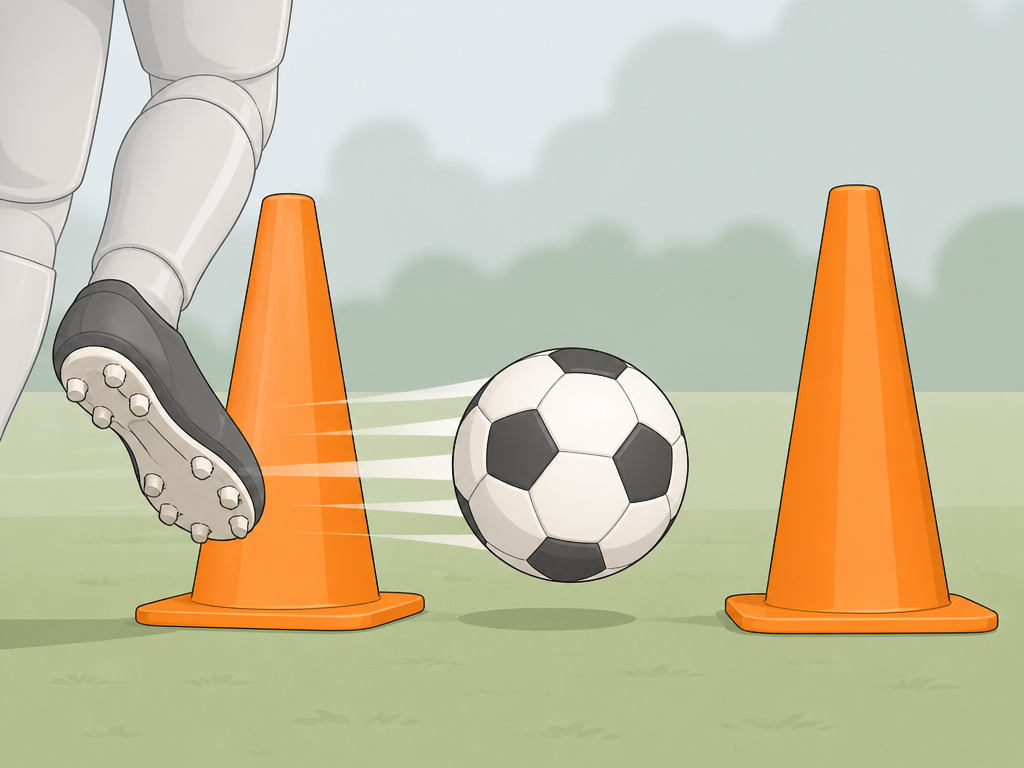
Soccer Wizdom gives three drills, and all three fix the same weakness: a touch that’s too soft or too hard.
- Cone Gate Nutmeg Drill: place two cones about a shoulder-width apart, then push the ball through the gate from different distances.
- 1v1 Nutmeg Drill: have a partner act as the defender and time the move from body position.
- Reaction Nutmeg Drill: let a partner close in randomly, then choose the nutmeg or a straight touch.
If you skip the cone gate, your ball speed stays loose and the defender blocks the gap.
A cone gate sounds clean when the ball passes without clipping the cones. A clipped cone means your touch was too wide.
Short bursts of agility help you win the 2 or 3 metres after the ball goes through.
For hard-court practice, I reach for a futsal ball. That’s my preference.
When should you not attempt a nutmeg?
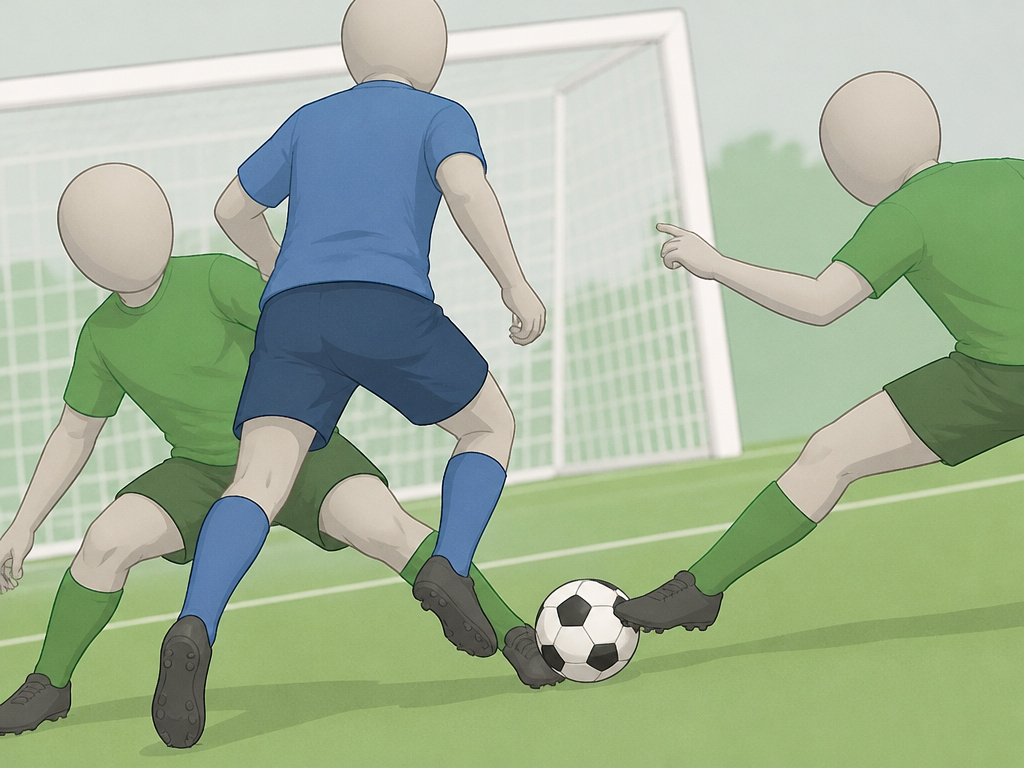
A risky touch near your own goal can start a counterattack before you recover.
Soccer Wizdom says to use nutmegs strategically when you’re confident it won’t expose your team to a counterattack. Jobs In Football says adequate space behind the defender and no pressure from other opponents are prerequisites.
When you learn how to do a nutmeg in football, check the exit before the style.
Where this goes sideways: If you try a nutmeg with cover nearby, the ball can be taken and a counterattack starts before you recover.
| Problem | Likely cause | Fix |
|---|---|---|
| Ball reaches another player | Touch was too hard | Use enough power to pass through, not enough to outrun you |
| Defender blocks the gap | Wrong angle or tight stance | Use the outside foot when the opponent is beside you |
| Team loses possession | Space behind is closed | Skip the move when cover is nearby |
Jobs In Football also warns that defenders will cotton on and keep their legs tight together. Repeating the same move against an adapted defender fails fast.
Defensive stance: how to avoid being nutmegged
Jobs In Football says a defender’s stance should have feet a ball’s width apart, with one foot in front of the other. It says knees should stay bent and the defender should remain on the toes.
A step-over can bait a lunge, but it doesn’t solve the cover problem. A drag-back can pull a reaching defender off balance, yet the nutmeg still needs a clear exit.
I’d rather pass than force a meg in my own half.
Why is it called a nutmeg?
No single origin story has settled the name, and the coaching cues disagree on how broad the move is.
The Wikipedia entry on the nutmeg records that the move is used in soccer, field hockey, ice hockey, and basketball. It defines the action broadly: kick, roll, dribble, throw, or push the ball or puck between an opponent’s legs.
The Athletic’s football nutmeg history and culture explainer, published on December 18, 2022, lists several competing theories. It says one origin relates to the exportation of nutmeg between North America and England in the 1800s.
Origin theories
Peter Seddon’s account says wooden replicas were mixed into nutmeg sacks, making being nutmegged imply a tricked victim. The Cockney rhyming-slang theory says ‘nutmeg’ comes from Cockney rhyming slang, where ‘nutmeg’ means leg.
Sources disagree on the definition: The Athletic describes the move as a player simply kicking the ball through an opponent’s legs, while Wikipedia defines it more broadly as to kick, roll, dribble, throw, or push the ball or puck between an opponent’s legs.
Famous players and street games
- Riquelme and Ronaldinho: Wikipedia names them as notable practitioners.
- Ronaldo, Robinho, Neymar, and Messi: these are also listed practitioners.
- Suarez and Hazard: Wikipedia names them, and Suarez has the Liverpool Mermaid saying.
Soccer Wizdom says Suarez pulled off a memorable nutmeg against David Luiz during the 2014 World Cup. Jobs In Football says the street game Panna originated in the Netherlands. Wikipedia calls the Dutch game Panna Knock-Out.
Wikipedia says the move enables a player to get behind a defender. Soccer Wizdom says an executed meg positions the player advantageously to continue play or create a scoring opportunity.
I keep both origin stories because neither is proven. I care more about the recovery than the spice.
Why Use a Nutmeg in Football
A successful nutmeg gets you past a defender instantly. It’s a direct route through their legs that can break a tackle and create space. After flicking the ball through, you sprint past them to claim it on the other side. This move is also a psychological tool. Pulling one off can embarrass an opponent and boost your team’s confidence. Players like Ronaldo, Ronaldinho, and Luis Suárez have used it to great effect. However, use it strategically. Only attempt it when there is adequate space behind the defender and no pressure from other opponents, so you don’t risk losing possession in a dangerous area.
Frequently Asked Questions
How do you practice the basic touch?
Use the cone gate drill from Soccer Wizdom. Place two cones about a shoulder-width apart and push the ball through the gate. Start close, then add distance once the touch stays under control.
Why do defenders keep their legs tight together?
Jobs In Football says defenders cotton on after repeated attempts. Keeping the legs tight removes the gap the attacker needs. A second attempt against the same defender fails unless the attacker changes the setup.
Is a panna the same thing as a nutmeg?
Wikipedia says panna comes from a Surinamese term borrowed into Dutch slang. Jobs In Football says the street game Panna centres on the nutmeg. In casual use, panna means a nutmeg in street or futsal play.
Can a nutmeg be used outside soccer?
Wikipedia lists field hockey, ice hockey, and basketball as sports that use the move. The same idea applies: get the ball or puck between an opponent’s legs and continue the action.
How do you know when not to try a nutmeg?
Check the space behind the defender first. Jobs In Football says adequate space and no pressure from other opponents are prerequisites. If cover is nearby, pass or take a safer touch.
Before You Go
If you want one answer, practice the flick and the sprint as a single action. Sikana’s 2 or 3 metre recovery is the line between a showy touch and a completed move.
When you learn how to do a nutmeg in football, the real skill is deciding whether the exit exists. That’s a scanning habit. The highlight reel is only the end.
I’d skip it in your own half even if the gap looks open. Near the final third, a fake shot or one-touch knock can work when Jobs In Football’s spacing rules hold.
Think of the sprint as the seasoning after the flick. Without it, the move tastes flat. Which defender gave you your best meg, or did you finally get one against your brother?
