
How to Dribble a Football: Step-by-Step
This post contains affiliate links. As an Amazon Associate, we earn from qualifying purchases.
Learning how to dribble a football starts with small, controlled touches on both feet. Add turns, pace changes, and scanning while moving. The FA says dribbling changes with space, pressure, and markers, so practice unopposed touches and opposed 1v1 games together.
Those small touches decide the next defender’s position. A heavy touch hands the ball away before the scan happens. A soft touch keeps the player in the play.
What follows: basic foot contact, named drills, age-aware game rules, and the tactical moments where a dribble helps or hurts.
Key Takeaways
- Use both feet from the first touch, because defenders can force a weak side.
- Add opposed play after unopposed touches, because the FA says players need both.
- Change pace, not just speed, because dribbling changes with space, pressure, and markers.
- Let 6-8 year-olds get many touches through 1v1 and 2v2 work.
What does dribbling a football actually mean?
The FA treats dribbling as a changing skill. It changes with space, pressure, and defenders. Players need to feel comfortable dribbling in any area of the pitch.
The FA’s What is dribbling in football calls comfortable dribbling in any area the coach’s role. I like this definition because it keeps dribbling tied to game situations.
Dribbling a football means moving the ball while keeping control through space, pressure, and repeated contact. The FA links dribbling to context: run into open space, turn in tight areas, and use multiple touches to hide, move, and reveal the ball near a marker. Game-based practice builds toolkit and confidence.
The FA’s Top tips for dribbling in football uses the STEP principle: Space, Task, Equipment, People. It asks players to scan like meerkats. A head down hides options. A head up finds them.
Dribbling uses controlled touches. Kicking sends the ball away.
| Situation | Better dribbling choice | Why it works |
|---|---|---|
| Open space | Run into space | FA says technique changes with context |
| Tight area | Turn | FA says turn in tight areas |
| Close marker | Hide, move, reveal the ball | FA says multiple touches |
The FA also lists the four corners: physical, technical, psychological, and social. For young players, that work starts with a love of the ball. Coaching American Soccer adds a simple introductory goal. Get players moving the ball with any part of their feet.
How to Dribble a Football Step by Step
Start with a ball, a flat patch, and patience. I like starting slow. Coaching American Soccer says start by walking, then add a quicker pace over time.
- Begin with walking touches. If you skip this, the first fast touch will roll away.
- Use the sole to stop. Coaching American Soccer teaches dribble-stop with the sole of the foot, a term it uses with young children, though it notes the ‘ball’ of the foot is the preferred location. Skipping it leaves no safe stop.
- Isolate each foot surface. Practice inside, outside, and instep work on both feet. If you only use one side, defenders can force you onto a weak side.
- Add turns and pulls. Stop, turn, and pull the ball back with the sole. Skipping turns makes tight areas feel locked.
- Scan while moving. The FA cue is “like meerkats.” If you watch the ball, you miss open space.
Build control with named drills
Coaching American Soccer’s instructional dribbling manual lists simple games. Make An Airplane teaches balance: one leg, sole on ball, arms out. Dribble Snake follows a leader inside a square. Circle-and-Go makes a circle around one cone, then dribbles to the next.
These drills keep one player on one ball. That matters for young players who need many touches.
Add cones and gates after stops
Once stops feel stable, move to close control work in a small square. Then add cone drills for turns and gates.
If you own a football boot, use it for slow touches. (yes, even with cones). The boot matters less than the touch.
Finish with game speed
Use ball mastery exercises to keep touches frequent. If you want to improve agility, use small steps and quick direction changes. Coaching American Soccer also gives a challenge. Dribble slowly, then dribble fast into an open area.
Which drills build real match control?
Ever wonder why a steady dribbler slows down first? The FA says dribbling changes with context. A player may run into space, turn in tight areas, or use multiple touches near a marker. Match control needs all three.
For U8 matchday 5v5, training should include 1v1, 1v2, and 2v2 scenarios. That point is contact volume.
A line of cones teaches touches. Hesitation, a marker’s angle, and the fear of losing the ball need a defender.
Add a defender. Keep the ball close enough to react.
When basics feel steady, try dribbling past an opponent in a 1v1. The FA’s passing and moving session restricts tackling so defenders can only mark and intercept. That gives attackers more success when turning and dribbling.
| Symptom | Likely cause | Fix |
|---|---|---|
| Ball rolls away | Touch too heavy | Use a smaller touch |
| Can’t beat marker | Always moves forward | Try going backwards |
| Head down | Watching the ball | Scan like meerkats |
Coaching American Soccer notes Coerver Coaching terms. “Turtle” dribbling is slow and methodical. “Cheetah” dribbling is fast speed dribbling. The order matters.
Slow control first. Fast pressure later.
The FA’s effective dribbling session uses a 4v4 game split into thirds. Goals count double if a player dribbles into the final third and scores. The FA says session plans are templates.
Pitch sizes are suggestions. Adapt to players, numbers, and space. The FA plans do not set a fixed touch count. Use what fits your group.
Easy to miss: Do not make every dribble go forward. FA notes going backwards can create space in behind, especially when players are asked to turn to play forwards. A forced forward touch can give the ball away in the next pass.
How do you dribble under pressure?
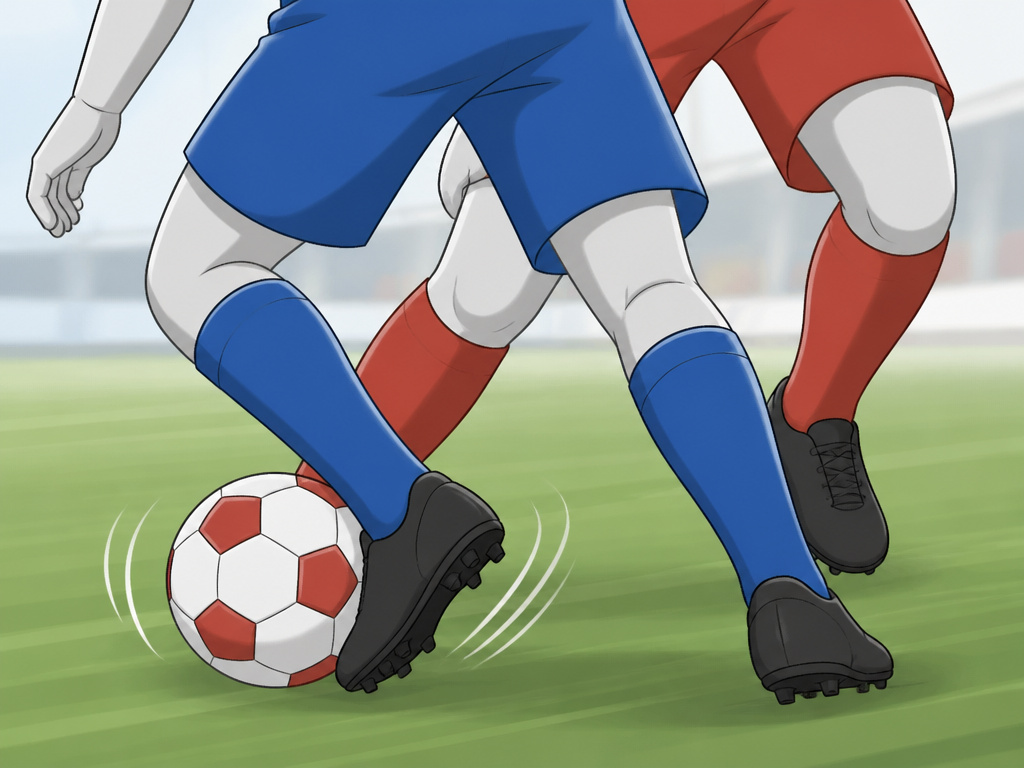
A close marker changes the touch. The FA says players should hide, move, and reveal the ball when closely marked. That sounds simple. The timing is hard.
A heavy touch under pressure gives the ball away. A soft touch buys time.
I would rather see a shoulder drop than a flashy move. It depends on the defender.
I would rather see a player use a simple turn and a scan than chase a flashy move. The FA point about comfort in any area matters more than social media clips.
Practice shielding the ball with a body between marker and ball. A simple drag-back is one option.
Keep the touch small. Keep the head up. Keep the next option open.
For 12-16s, the FA session on passing and moving develops dribble and finish. This approach allows wingers to move inside while other players move wide. If a player with the ball dribbles into the wide zone and passes to a teammate, they get two points if that teammate scores. That rule rewards dribbling that creates a pass.
When a Dribble Should Become a Pass
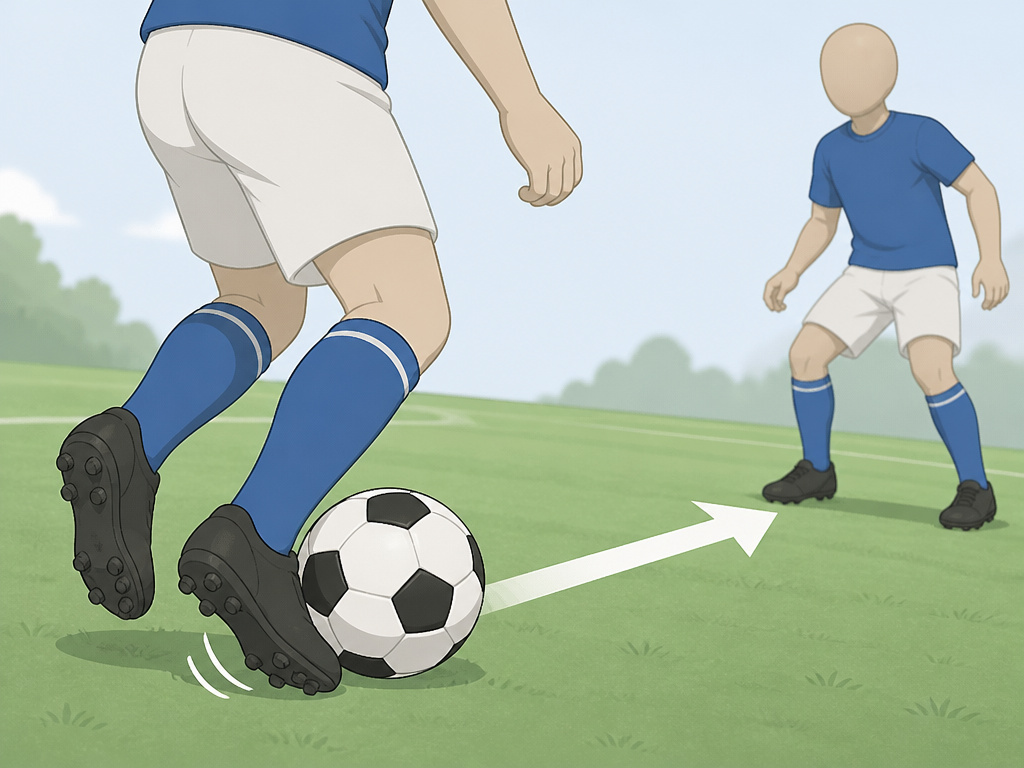
Sometimes the best dribble moves backward. The FA says going backwards can create space in behind, especially when players are asked to turn to play forwards. That edge case matters. Backward can create space.
The question of how to dribble a football is really a question of touches. OM Academy’s football dribbling curriculum asks: Can you dribble with control? Can you dribble with both feet?
It also asks: How can you get past opponent? Can get away from marker? Can you dribble around marker?
OM Academy also lists instep and laces among football keywords. These questions turn dribbling into a decision.
- Dribble when space opens.
- Dribble when a marker is flat-footed.
- Pass when holding the ball draws defenders and leaves a teammate free.
The FA says holding onto the ball longer can draw players in and leave more space for teammates. That is a tactical reason to dribble. It is also a reason to pass.
Do not force a dribble into a packed area. A touch into traffic can give the ball away in the next pass.
The FA’s time limit on wide areas is a reminder. Speed without space creates panic.
Step-by-step instructions for beginners
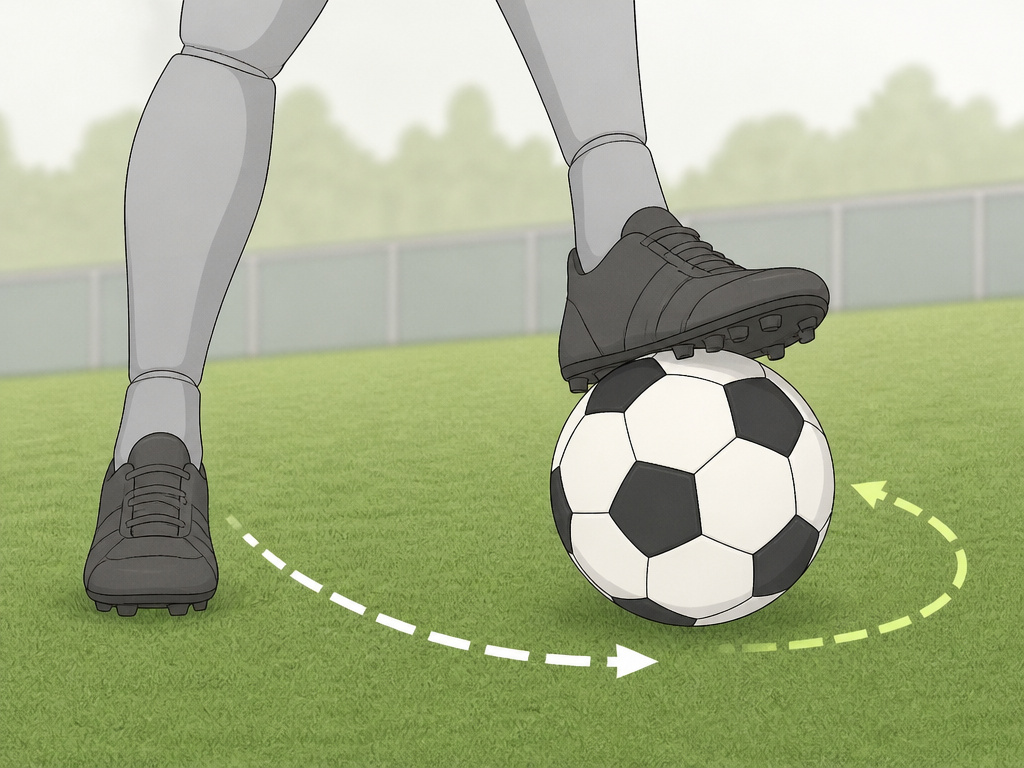
Begin by getting comfortable moving the ball with any part of your foot. Start walking while dribbling, using small touches to keep the ball close. Practice stopping the ball by placing the sole of your foot on top of it. As you move, try to keep your head up to scan the space like a meerkat, observing your options. Explore changing direction by dribbling in a square, making left and right turns. Introduce simple turns: stop the ball with your sole, pull it back, and dribble the other way. The key is to test these skills in both open space and against passive defenders to build confidence.
Frequently Asked Questions
How do you dribble a football step by step?
Start with walking touches and sole stops. Add inside, outside, and instep work on both feet. Then add turns, scanning, and a marker.
What is the hardest skill in football?
Football has many hard skills. The FA says dribbling is hard because each situation changes. Space, pressure, and defenders all shift the choice.
How can you be a better dribbler in football?
Increase ball contact. The FA says young players need many touches through 1v1 and 2v2 work. Add opposed practice after unopposed touches.
What are the best dribbling techniques for football?
Use the inside, outside, instep, and sole of both feet. Add turns, pace changes, and shielding. The FA says technique changes with open space, tight areas, and close markers.
Before You Go
When you learn how to dribble a football, start with control. If a touch sends the ball past a cone, stop the speed. Go back to slow dribbling until the ball stays within a stride.
I would rather watch a player scan, turn, and pass than chase a highlight. The FA’s advice to build comfort in any area of the pitch points to the same habit.
What is the first dribbling drill you will try this week?
