
What Is a Brace and Hat Trick in Football?
This post contains affiliate links. As an Amazon Associate, we earn from qualifying purchases.
In football, a brace is two goals by one player in a match, and a hat trick is three. Goals in the 90 minutes plus extra time count. Penalty shootout goals do not.
That shootout exclusion is where most arguments start. A player can walk off with a big night on the scoresheet, yet the official tally only reads what happened before the shootout. The same kind of fuss follows own goals, disputed credits and the word “hat trick” itself, which turns out to be older than football, and it even leaves people asking what is a brace and hat trick in football.
What follows covers what counts, where the names come from, the famous 1930 dispute over who scored the first World Cup hat trick, and the records that change depending on how you measure them.
Key Takeaways
- A brace is two goals by one player in a single match; a hat trick is three goals.
- Goals in extra time count, but penalty shootout kicks are excluded from the tally.
- A “perfect” hat trick needs one right-foot, one left-foot and one header in the same match.
- Sources disagree on where “hat trick” began: stage magic in 1840 or cricket in 1858.
- The first World Cup hat trick belongs to Bert Patenaude, though FIFA only said so in 2006.
What Counts Toward a Brace or a Hat Trick?
The goal count belongs to one player in one match. That is the whole definition, and the Wikipedia article on football hat-tricks states it the same way.
A brace is two goals by one player in one association football match, while a hat trick is three. Goals scored in the regulation 90 minutes and in extra time count toward both totals. Goals in a penalty shootout are excluded from the tally. Penalties scored in normal or extra time still count.
I like that the answer to what is a brace and hat trick in football is so plain. You don’t need a rulebook diagram to follow it, which is rare in football.
Easy to miss: A shootout kick never counts toward a hat trick. A player who scores twice in open play and then converts in the shootout still finishes the match with a brace.
The goals also don’t have to come in a neat run. Research notes from football sites say a brace can arrive in either half and the goals need not be consecutive. One stricter German and Austrian usage, the “lupenreiner Hattrick” (flawless hat trick), asks for three goals in a row in one half, with no half-time break and nobody else scoring in between. Under that meaning, plenty of English-style hat tricks wouldn’t qualify.
How Do a Brace, a Hat Trick and a Perfect Hat Trick Compare?
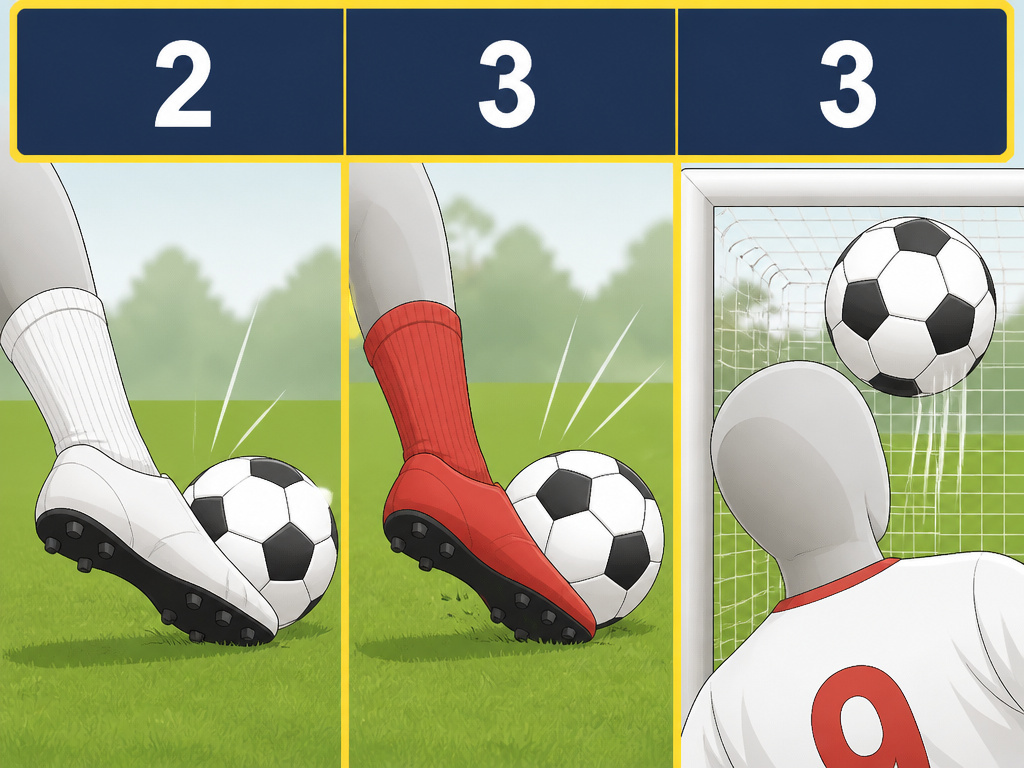
Here is the quick version of what is a brace and hat trick in football, side by side.
| Term | Goals by one player | What makes it special |
|---|---|---|
| Brace | 2 | Two goals in one match |
| Hat trick | 3 | Three goals in one match |
| Perfect hat trick | 3 | Right foot, left foot and header |
| Four or more goals | 4+ | No sourced standard name here |
That last row is deliberate. Nicknames for four, five and six goals float around fan chat, but none of my sources gives a settled term, so I won’t pretend one exists. A brace, two goals in one match, is the starter. A hat trick is the full meal. Beyond that, the menu gets murky.
The perfect hat trick is the fun one. It asks a striker to beat a goalkeeper three different ways, which is hard to plan and easy to enjoy. The striker role is built around exactly this sort of output, and a classic poacher lives for the six-yard-box tap-in that turns two into three.
Why Is It Called a Hat Trick?
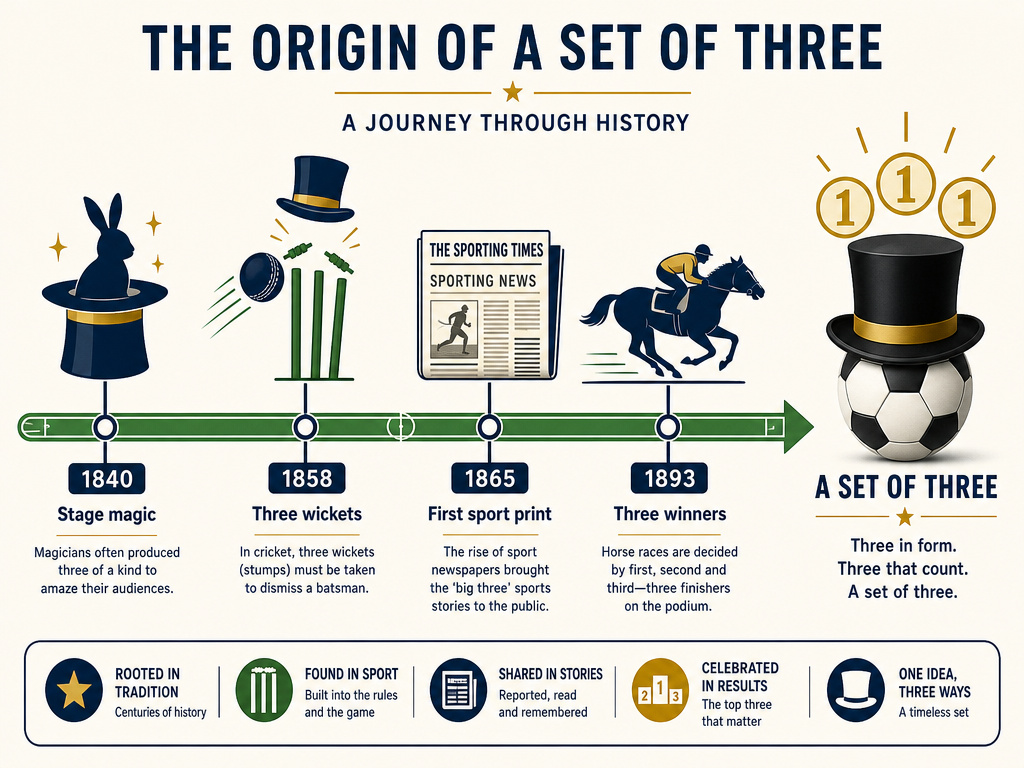
Eighteen years separate the first printed “hat trick” from the cricket match everyone credits. The origin of the hat trick phrase is better documented than most football trivia, and the newspapers that Word Origins quotes tell a tidy story.
- 26 February 1840: The Boston Morning Post uses “the hat trick” for a stage magician’s conjuring act.
- 6 to 9 September 1858: At Hyde Park, Sheffield, H. H. Stephenson takes three wickets with three successive balls, and his side gives him a new hat. Bell’s Life in London reports it on 12 September.
- 23 June 1865: The Chelmsford Chronicle prints “the hat trick” for sport for the first time.
- 14 September 1893: The London Evening News uses it for a jockey riding three winners in as many mounts.
So the usual line, “the term started in cricket in 1858”, is only part of it. Wikipedia gives 1858 as the first use. Word Origins says his team presented it and that the phrase was already circulating in stage magic. I trust the dated newspapers more here. The cricket story explains how sport picked up the phrase, not where the words came from.
It always comes back to the basics: a set of three. Word Origins notes that what you have to do varies by sport, but it’s always three of something.
Where Does the Word Brace Come From?
Brace is the murkier word. Secondary sources I found disagree on the root, with some pointing to Old English and others to Anglo-French or Old French, with a sense of “pair of arms”. One dictionary entry says it was first used of dogs, then of game animals in general.
I haven’t checked any of that against the Oxford English Dictionary, so treat it as unconfirmed. What every source agrees on is the meaning: a pair. For football, that’s enough.
Who Scored the First World Cup Hat Trick?
Montevideo, 17 July 1930. Bert Patenaude scored in the 69th minute. That finished the United States’ 3-0 win over Paraguay, according to U.S. Soccer.
The trouble was the second goal. Bart McGhee had scored in the 23rd minute, and a second came just before halftime that FIFA reports of the time credited to Tom Florie. The same source notes other reports called it an own goal. On that count the game was a brace, not a hat trick.
Meanwhile, Guillermo Stabile scored three in Argentina’s 6-3 win over Mexico on 19 July 1930. For decades he was the name in the books, and Guinness World Records says he held the credit until 2006.
What the Evidence Said
RSSSF’s World Cup hat-trick history lays out why Patenaude’s claim was strong:
- The US manager’s report: Wilfred Cummings recorded all three goals as Patenaude’s.
- Argentine press: La Prensa’s game report included diagrams of how the goals were scored.
- Brazilian press: O Estadio do Sao Paulo also credited him with all three.
- Arnie Oliver, Billy Gonsalves and Jim Brown, who were on the squad or in the match, all said the same.
How the Record Changed
FIFA officially acknowledged the hat trick on 10 November 2006, after research indicated that the goal credited to Florie belonged to Patenaude. Patenaude was 20 in 1930, and it took some 76 years to be recognised. The sources disagree on the second goal’s credit, with some books naming Florie and others recording an own goal. Where they agree is the outcome: three goals, one man.
I find this the best story in football’s record books. Players and journalists spent decades saying one thing while the official record said another, and the record lost. I don’t take any “official” number as final now without asking who checked it.
Patenaude kept scoring too. U.S. Soccer reports a brace in a 4-3 loss to Brazil in Rio, giving him six goals in four internationals. He later scored five for the New York Yankees in a 6-2 National Challenge Cup final first-leg win over the Chicago Bricklayers, with a hat trick by halftime in front of 12,000 fans.
Which Hat Trick Records Depend on How You Measure Them?
Sadio Mane’s 2 minutes 56 seconds at Southampton against Aston Villa is the fastest Premier League hat trick, per Sky Sports. It beat Robbie Fowler’s previous record by 97 seconds.
Yet it is not the fastest in English football. James Hayter scored one in 2 minutes 20 seconds for Bournemouth against Wrexham in 2004, which is 30 seconds quicker than Mane. Different records, different yardsticks.
| Record | Holder | Detail |
|---|---|---|
| First World Cup hat trick | Bert Patenaude | USA v Paraguay, 17 July 1930 |
| Fastest Premier League hat trick | Sadio Mane | 2 min 56 sec |
| Fastest in English football | James Hayter | 2 min 20 sec, 2004 |
| Fastest perfect hat trick from kick-off (Premier League) | Cole Palmer | 29 minutes, 15 April 2024 |
| Youngest hat trick scorer | Ntinos Pontikas | 14 years 198 days, 1996 |
Palmer’s mark beat Tommy Johnson’s 38 minutes from 1995, which had stood for almost 30 years, and Chelsea won 6-0 against Everton. Guinness says Mane’s was the fastest from kick-off outright: he completed it in the opening 16 minutes. Nine players have scored Premier League hat tricks in under 15 minutes, according to Sky Sports.
Pele holds the youngest World Cup mark, aged 17 in 1958. Wikipedia lists the fastest hat trick in any match as Alex Torr’s 70 seconds in a Sunday league game in 2013, beating Tommy Ross’s 90 seconds from 1964. Neither claim has been checked against Guinness, so I’d call them unverified.
Hat tricks add three to a season total, which is why they matter in top-scorer races like the Golden Boot award. Career totals are a separate pile of numbers, collected in most goals in football history. I’ll admit I lean on what I watch rather than the data, so I won’t pretend to rank braces by volume. No official register of braces turned up in what I read.
Do Other Sports Use Hat Trick the Same Way?
Mostly they borrow the idea of three and change the unit:
- Rugby union and rugby league: three or more tries is a hat trick, and two tries is often called a brace.
- Gaelic football: the count can be goals or points.
- American and Canadian football: the term is only occasionally used, usually for flourish in writing, for three touchdowns.
- Cricket and horse racing: three wickets in three balls, or three winners from three rides.
The match ball tradition travels too. Wikipedia says it’s common to award the ball to a hat-trick scorer in rugby, as with association football. More such football terms are worth knowing if “brace” was new to you.
What Are the Grey Areas?
Own goals and the odd names are where sources go quiet. None of my sources says how own goals count toward a brace or hat trick in general. The 1930 case shows an own-goal ruling can change who gets credit after the match. Beyond that, I won’t guess.
The same goes for a “golden hat trick” or a hat trick of assists. I found no source defining them, so I’d check the competition’s own rules before arguing with a mate in the pub.
Skip the hunt for the one true name for six goals. It isn’t worth it.
Who has the most braces and hat tricks in football?
My sources don’t give a settled all-time leader, so I won’t crown one. The honest answer depends on what you count. Club games only, or internationals too? One league, one tournament, or every match a player ever played? Each choice can change who sits on top.
Braces are even slipperier. Almost nobody keeps an official running tally of two-goal games, so any list you see online is usually a fan-built count. Treat it as a rough guide.
If you want a trustworthy answer, check the record-keeping body for the exact competition you care about. League sites, Guinness World Records and the stats archive RSSSF are good places to start. Look at how they handle extra time, since goals there count toward a hat trick while shootout goals do not. Also check whether friendlies and youth games are included. Once the rules are clear, the leaderboard usually sorts itself out.
Frequently Asked Questions
Why is scoring twice called a brace?
Brace means a pair. The root is unclear, because secondary sources variously cite Old English and Old French, and I haven’t checked the Oxford English Dictionary. The meaning of two is not in doubt.
Does a penalty shootout goal count toward a hat trick?
No. Goals in the 90 minutes plus extra time count, including penalties scored then, but shootout kicks are excluded from the tally.
What is a perfect hat trick?
It is three goals in one match: one with the right foot, one with the left foot and one header. Cole Palmer holds Guinness’s Premier League record for the fastest from kick-off, at 29 minutes.
What are four, five or six goals called in football?
My sources give no standard name for these totals, so I won’t invent one. Fans use informal nicknames, but nothing here confirms them.
Who has the highest brace in football?
I found no official register of braces in the sources I read, so I can’t name a record holder. Hat tricks are better documented, and records like Mane’s 2 minutes 56 seconds are easy to check.
The Bottom Line
Next time a striker scores his second goal, count what has to happen: one more in 90 minutes or extra time, not a shootout. That’s the whole test, and it settles most pub arguments before the third pint.
The concession is that every record above depends on its yardstick. Mane, Hayter and Palmer are all fastest at something, and Patenaude’s story proves official numbers get revised. Before you quote one, check who measured it.
That is where the story really lives.
