
Shin Guard Sizing Guide: How to Measure and Choose
This post contains affiliate links. As an Amazon Associate, we earn from qualifying purchases.
Finding the right shin guard size is a three-part job: match the player’s height to the manufacturer’s chart, verify the shin circumference fits the guard’s width, and confirm the guard carries the official NOCSAE or EN 13061 certification mark on its label. For most players following brands like Nike or Adidas, height is the primary guide; however, some brands like Ennui Protection size based on shin circumference.
That height-based rule works for the majority. The complication comes from players with muscular calves, those between sizes, or anyone using a brand like Ennui Protection that sizes by circumference. The official standards don’t settle on one method: NOCSAE mandates the label state the height of the tallest intended wearer, while EN 13061 requires a range of player body heights. For clarity, always consult a shin guard sizing guide.
What follows is how to navigate that loop: a step-by-step measuring method, a breakdown of what the labels and certifications actually require, and the real-world choices to make when the standard chart doesn’t have an answer for your build.
Key Takeaways
- Start with the player’s barefoot height, as this is the primary factor for many brands’ size charts, though some brands like Ennui Protection use shin circumference.
- Measure your shin circumference if you have muscular calves or are looking at sport-specific brands; a guard sized for 12.5–14.5 inches fits S/M, while 15–17 inches fits L/XL.
- A proper shin guard must be permanently marked with its size, including the height in inches of the tallest wearer, and have a permanent NOCSAE or EN certification mark on the exterior top third.
- Replacement timelines conflict, one manual says replace after 3 years, another says 1-2 seasons; inspect for compression and damage annually as your real guide.
- For kids, size for the shin, not for growth; an oversized guard gaps at the ankle and knee, leaving the tibia exposed to a direct impact.
How Do You Measure for Shin Guards?
Grab a soft measuring tape. You need two numbers, and the first one is essential.
First, get the player’s exact barefoot height. Stand against a wall, mark the top of the head, and measure straight down. This number plugs directly into every major brand’s size chart. For many brands, height is the primary sizing factor because shin length correlates with overall height, but other brands use shin circumference.
Second, measure the circumference of the shin muscle. Find the widest part of the calf, usually about halfway between the knee and ankle. Wrap the tape snugly, but don’t compress the muscle. Write this number down.
The part nobody mentions: If your calf circumference measurement puts you at the top end of a size range (like 17 inches for an L/XL), go up a size if the guard feels tight when you flex your foot. A guard that’s too narrow can ride up or pinch, which players will subtly adjust mid-game, moving it out of position.
Now, take those two numbers to the brand’s shin guard sizing guide. Many major brands will ask for height only. Some, like Ennui Protection, will ask for circumference only. Your job is to find the overlap. If you’re 5’9″ with a 16-inch calf, a standard “Large” guard based on height should still accommodate your width. If it doesn’t, you’ve identified a brand whose cut runs narrow, time to look at another model.
The Official Labels and What They Mean
The label on the guard isn’t just marketing. For a shin guard to be legal for play in leagues that follow NOCSAE (U.S.) or EN 13061 (Europe) standards, its primary protective component must be permanently marked with specific information. You can check this without removing the guard from its sleeve.
According to the NOCSAE ND090-06m25 standard document, each guard must show:
- The manufacturer’s name or logo.
- The model designation.
- The size, which for NOCSAE must include the height in inches of the tallest intended wearer, and for EN 13061 is a range of player body heights.
- The month and year of manufacture.
- A permanent, exact replica of the NOCSAE certification mark on the exterior top third.
The European EN 13061:2009 standard is similar but phrases the size as a “range of body height of players.” This is the critical paper trail. When a standard like NOCSAE ND090-06m25 says the size must be “accessible to the referee for inspection without removal,” it means the information is part of the product’s verified identity. If that label is missing or illegible, the guard hasn’t passed the formal impact and retention tests required by the official soccer shin guard standard.
Here’s a quick reference for what you’re looking for on the guard itself:
| Label Element | NOCSAE ND090-06m25 Requirement | Why It Matters |
|---|---|---|
| Size Marking | Must include height (in inches) of tallest intended wearer. | Ensures the guard’s protective coverage area is appropriate for the player’s leg length. |
| Certification Mark | Permanent NOCSAE mark on exterior top third. | Visual proof the guard model passed standardized impact tests (mean peak g ≤ 200). |
| Manufacture Date | Month and year must be shown. | Lets you track the guard’s age against recommended replacement intervals. |
When the Standard Chart Doesn’t Fit: Wide Calves and Between Sizes

The standard height chart assumes average proportions. If you’ve ever ordered a “Large” based on your height only to find the guard straps won’t meet around your calf, you’ve hit this wall. The chart didn’t fail; it just doesn’t account for every build.
For players with wider calves, you have two proven paths. First, look for shin guard styles specifically designed with a wider cut or more flexible side wings. Some traditional ankle guard designs offer more wrap-around material than slim slip-in models. Second, use your circumference measurement as the primary guide and treat height as a secondary check. If your calf says “L/XL” but your height says “Medium,” prioritize the circumference and then verify the guard’s length still covers your shin bone adequately.
Where this goes sideways: Choosing a longer guard to get more width. A guard that’s too long will dig into your kneecap when you bend your leg, forcing you to wear it lower and leaving the top of your shin unprotected. Width and length are separate problems; solve them separately.
If you’re squarely between sizes, say, a 5’7″ player where charts split between Medium and Large, the safer choice is usually the smaller size. A slightly shorter guard that stays firmly in place offers better protection than a longer one that slides down. This is where trying on different types of shin guards becomes invaluable, as the cut and strap system can make one brand’s Medium fit like another’s Large.
How Should Shin Guards Actually Fit?
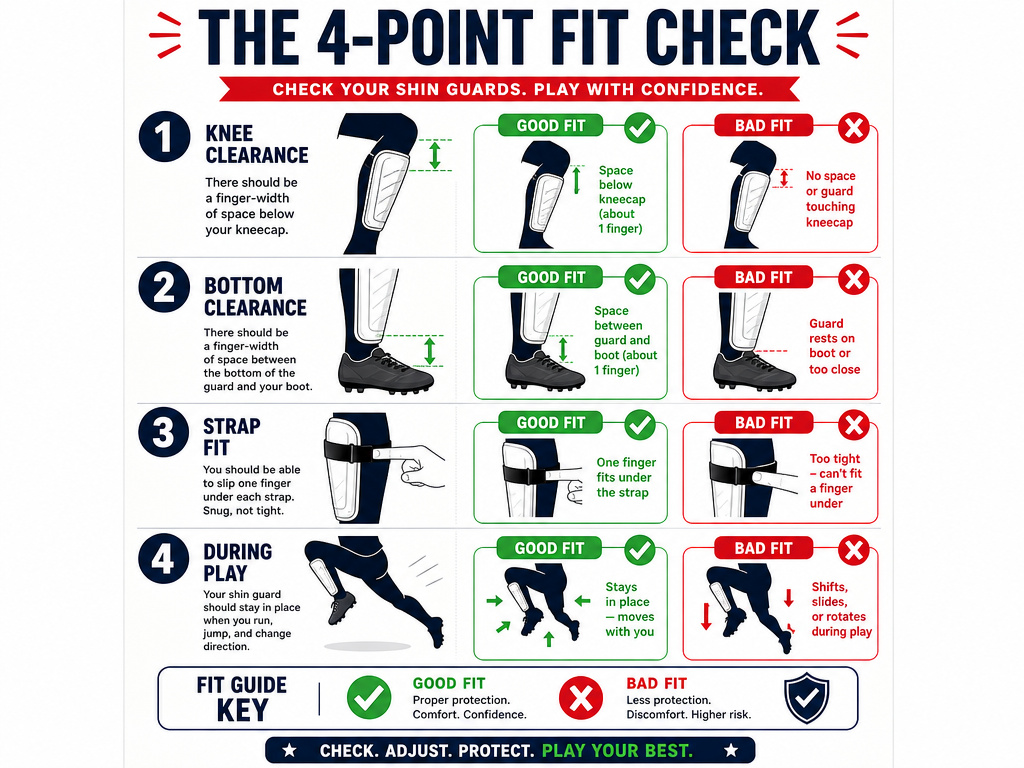
A proper shin guard fit is snug, stable, and covering. When you’re standing straight, the top of the guard should sit below the bottom of your kneecap. The bottom should end above the top of your football boot, protecting the ankle without restricting movement.
The guard should not spin around your leg or slide down when you run. You shouldn’t need to constantly adjust it. The feeling is one of security, not constriction. If the straps are cutting in or leaving deep red marks after a short wear, the guard is too narrow.
This is the core of how they should fit: coverage without compromise. A guard that’s too small leaves gaps. A guard that’s too big becomes a liability that moves exactly when you need it to stay put.
The 4-Point Fit Check:
- Knee Coverage: Bend your knee to a 90-degree angle. The guard should not press into or cup under your kneecap.
- Ankle Clearance: Point your toe. The bottom edge of the guard should not catch on the top of your boot.
- Strap Tension: The straps should be snug but allow you to slip a finger underneath without struggle.
- Stability Test: Jump in place or shake your leg vigorously. The guard should not significantly shift its position.
Sizing for Youth vs. Adult Players
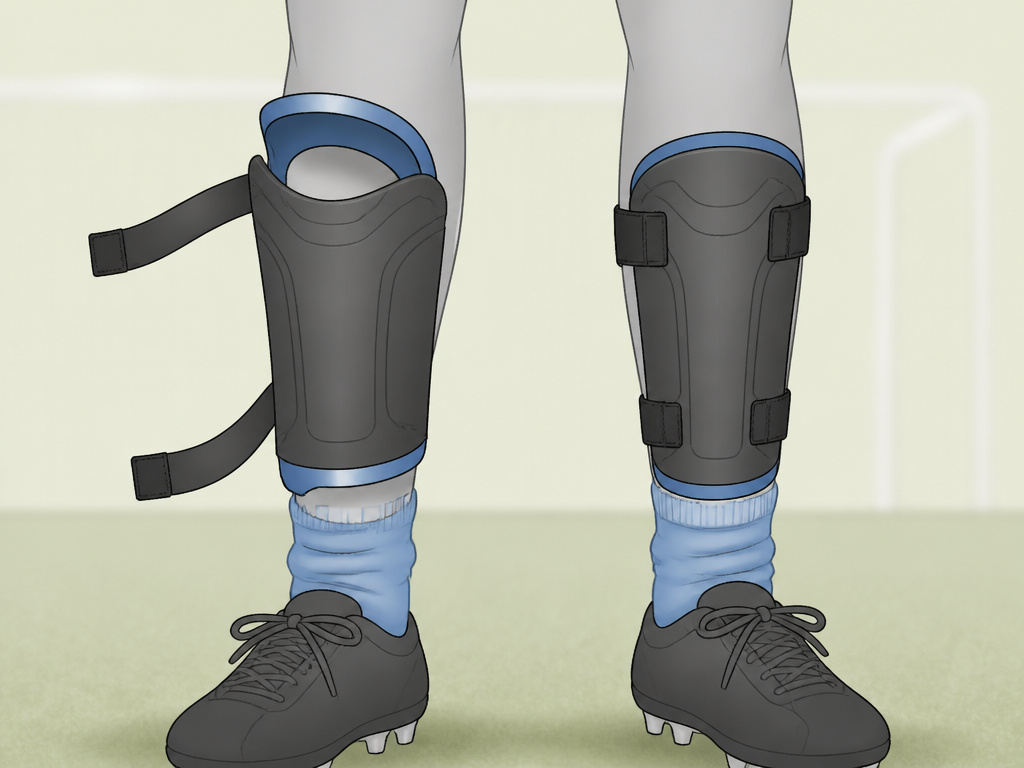
The biggest mistake in youth sizing is buying for growth. A parent thinks, “He’ll grow into it by next season,” and buys a guard two sizes too big. The result is a guard that swims on the child’s leg, gapping at the top and bottom, held on by loose straps. In a challenge, that guard can slide completely out of position, offering zero protection.
For kids, size for the shin they have now. A guard that fits perfectly today is safe. A guard that’s too big is dangerous. Children grow quickly, so expect to reassess fit regularly. Look for youth shin guards with adjustable or elastic straps that can accommodate slight growth through a season.
The transition to adult sizes isn’t about age; it’s about height and build. A tall, slender 14-year-old might need an adult Small, while a shorter, stockier 16-year-old might still fit a youth Large. Always use the tape measure, not the birthday.
How Long Do Shin Guards Last? The Replacement Debate
Here the sources give two different answers, and you need to know both. The Intersport user manual states definitively: “Shin guards must be replaced even without visible damage after 3 years.” Meanwhile, the Soccer.com guide advises: “Most high-quality shin guards remain effective for one to two seasons of regular play.”
Who’s right? They both are, from different angles. The 3-year rule is a conservative, time-based shelf life, likely accounting for the gradual degradation of foam and plastics. The 1-2 season rule is a usage-based guideline. A player training four times a week and playing every weekend will compress the foam and stress the straps far faster than a casual Sunday league player.
Your real guide is inspection. At the start of each season, check for:
- Visible cracks or deep creases in the hard plastic shell.
- Permanent compression in the soft padding, does it spring back when you press it?
- Worn-out or brittle straps and Velcro that no longer holds firmly.
- A noticeable flattening of the guard’s protective curve.
When in doubt after two hard seasons, replace them. The cost of new shin guards for adults is trivial compared to the cost of a fractured tibia.
Shin guard size chart (height/length to size mapping)
A shin guard’s size is directly tied to the wearer’s height. According to standards, each guard must be permanently marked with its size, which includes the height of the tallest wearer for which that size is intended. This means a size chart will map specific player heights to guard sizes. Height is the primary factor for sizing because it correlates directly with shin length. When you look at a product, its size marking in a shin guard sizing guide should tell you the range of player body heights it is designed to fit. Use your exact barefoot height to find your place on the manufacturer’s chart.
Tools needed for measuring
You only need simple tools to get an accurate measurement for shin guards. The most important tool is a standard tape measure. Use it to take the player’s exact barefoot height by measuring from the floor to a mark on a wall. For a more precise fit, some sizing methods also require measuring the circumference of the shin muscle. This involves wrapping the tape measure around the widest part of the calf. No specialized equipment is necessary; a flexible cloth or plastic measuring tape works perfectly for both of these key measurements.
Sizing tips for different playing levels
The right fit changes with the intensity of play. For younger or recreational players, focus on a comfortable, secure fit that doesn’t slip during movement. The guard should cover from just below the knee to above the ankle without restricting motion. For competitive and advanced levels, prioritize a precise fit that aligns with official sizing standards. Guards at this level must have their size information accessible for inspection without removal. Regardless of level, ensure the guard stays in place under force, as standards test for minimal displacement after a retention force is applied.
Frequently Asked Questions
What if my height and calf measurement point to different sizes?
Trust the circumference if you have muscular calves and the height-based guard feels constricting. Your priority is a guard that stays in place. A guard that is the correct width but slightly shorter is safer than one that is the correct length but too narrow and constantly shifting. Try on both sizes if possible.
Do I need ankle protection?
For younger players and beginners, ankle protection is a wise addition. It guards against stray kicks and accidental steps. For most advanced adult players, ankle protection can feel restrictive and is often omitted in professional slip-in vs ankle guards. The choice depends on your position, level of play, and personal preference for mobility.
Are there shin guards for soccer that also fit for hockey?
Rarely, and you shouldn’t rely on it. Soccer shin guards (following NOCSAE ND090 or EN 13061) are tested for blunt impact and stud resistance from football boots. Ice hockey shin guards (following HECC or CSA standards) are taller, bulkier, and designed for puck impacts and skate blades. The sizing systems are also completely different. Use sport-specific gear.
How tight should the shin guard straps be?
Tight enough that the guard doesn’t move when you sprint or change direction, but loose enough that you don’t feel a tourniquet-like pressure or see your skin bulge over the strap edges. After adjusting, make a fist and flex your calf muscle. The guard should stay put. For a full guide on securing your shin guards, check our step-by-step tutorial.
Can I wash my shin guards?
Never wash the hard plastic shell with soap or submerge it. Per the Intersport manual, this can degrade materials. Wipe the shell with a damp cloth. The fabric sleeve can usually be hand-washed in cool water and air-dried. Never use a dryer, bleach, or abrasive cleaners.
The Bottom Line
Start with the tape measure, height first, then calf. Use those numbers to navigate the brand’s chart, but let the feel of the guard on your leg have the final say. Ignore the label at your own risk; a missing NOCSAE or EN mark means the guard hasn’t been held to the impact standard your league likely requires.
When you find a pair that fits, really fits, you stop thinking about them. They become part of your leg. That’s the goal: protection so comfortable it lets you forget about it and just play. And if you’re ever unsure between two sizes, remember the rule that applies to almost all gear: snug and secure beats loose and roomy every single time.
