
How Should Shin Guards Fit: The 6-Point Fit Test
This post contains affiliate links. As an Amazon Associate, we earn from qualifying purchases.
A shin guard that fits correctly should cover the front of your shin from just above the upper bend of your ankle to a few inches below your knee. It must be held securely in place by a tight-fitting stocking or sleeve, with the straps fastened firmly enough to prevent slipping but never so tight that they impede blood circulation. The official EN 13061:2009 standard defines proper size as a range of body heights, not shin length, and requires that the guard does not hinder typical playing movements like running, jumping, or flexing the foot.
Protection is essential in this game. You can have the best touch and vision, but a mistimed tackle on an exposed shinbone can end your match and sideline you for weeks. Most articles tell you shin guards should be snug and cover your shin, but the key question is how should shin guards fit. That’s true, but it’s not the whole story.
What follows is the breakdown that official standards and manufacturer manuals actually use. This guide explains the two different sizing methods, the strap tightness that varies by brand, and the six checks you can do at home to confirm your gear fits properly.
Key Takeaways
- Official sizing is based on player height, not shin length, per the EN 13061:2009 standard. For example, a HUDORA size M fits a player 140–160 cm tall.
- The “snug but not tight” rule has a physical limit: straps should be tightened sufficiently to prevent slipping during a tackle, but the HUDORA manual warns they must never be tightened to impede blood circulation.
- Maximum lifespan is not a suggestion: with correct maintenance, the HUDORA manual states a shin guard’s maximum life is 7 years from the production date.
- A perfect fit requires a full-coverage stocking: the Diadora leaflet is clear that for a perfect fit and to prevent slipping, a fully fitting stocking must be worn which completely covers the shin guard.
- Movement is the final test: if you cannot run, jump, or fully flex your foot without the guard binding or the straps digging in, the size or style is wrong.
Where Sources Disagree on Shin Guard Fit
You would think something as basic as “how long should my shin guard be” would have one answer. It doesn’t. The two main methods for shin guard sizing come from different places with different goals.
The European Standard EN 13061:2009, which products sold in the EU must meet, is clear: “Shin guards for association football players shall be marked with their size. The size marking shall be the range of body height of players that the shin guard is designed to fit.” A HUDORA size M is for a player 140–160 cm tall. That’s it. It’s about certifying a product for a population range.
Common mistake: Buying a guard based only on a generic age chart. The Coaching American Soccer source notes there is no standardization among sizes between manufacturers. A “Medium” from one brand could be a “Large” from another.
Then you have the practical, on-the-pitch method. Coaching American Soccer advises measuring your shin “from one inch above the ankle to one inch below the base of the knee. This results in the maximum length of a possible shin guard.” Coaching American Soccer suggests a Small is roughly 6.75″ (corresponding approximately to ages 6–13), a Medium is roughly 7.25″ (ages 14–20), and a Large is roughly 7.75″ (age 21+).
Sources disagree on the best method for how should shin guards fit: the EN 13061:2009 Standard defines size based on a range of body heights for certification, while Coaching American Soccer advises measuring shin length for personal comfort and to ensure the guard isn’t too long. Always use the manufacturer’s specific size chart if they provide one.
The 6-Point Fit Test (How to Check It Yourself)
Forget vague feelings of “comfort.” You need a repeatable checklist for how should shin guards fit. Before you buy or before every season, run through these six points. The first three are about positioning, the last three are about security and movement.
- Ankle Clearance. The bottom edge of the guard should sit just above the upper bend of your ankle. If it rests on the ankle bone itself, it will dig in every time you point your toe. The Diadora leaflet states shin guards offer protection for the front of the shin between the knee and the ankle, both excluded.
- Knee Clearance. The top edge must be a few inches below the bottom of your kneecap. A guard that rides up into the soft area under the knee will limit flexion and become a painful liability. You should be able to do a full squat without the plastic pressing into the back of your knee.
- Side-to-Side Coverage. The guard’s width should cover the central ridge of your shinbone with a little overlap on the sides. You shouldn’t feel the hard bone exposed at the edges.
- The Tug Test. With the guard in place under a snug sock or sleeve, give your leg a firm shake and mimic a kicking motion. The guard should not slide down your shin or rotate around your leg. The EN 13061 standard requires the restraint system to limit displacement to less than 15 mm or less than 15% of the linear dimension of the test area when tested.
- The Strap Check. Fasten all straps or Velcro bands. They should be tight enough to contribute to the tug test above. Now, run your finger under the strap. If you can’t easily slip a finger underneath, or if the strap leaves a deep, red imprint on your skin after a minute, it’s too tight. The HUDORA manual’s warning is stark: fastenings should never be tightened to impede blood circulation.
- The Movement Drill. This is the standard’s ergonomics test. Jog on the spot, jump, and flex your foot up and down vigorously. The guard must not “hinder” these movements. If you feel binding, pinching, or any restriction, the fit is wrong.
The transmitted force from blunt impact tests on three shin guards shall not exceed 2.0 kN in the central or lateral test areas. A guard that shifts on impact concentrates force on a smaller area, increasing the risk that this threshold is exceeded.
Strap Tightness: “Tight” vs. “Too Tight”
This is the most common fit error I see on youth pitches. A parent or coach yanks the Velcro straps until they can’t pull them any tighter, thinking that’s “secure.” It’s a recipe for cramps and lost circulation.
The sources here directly disagree, which is telling. The Diadora leaflet instructs you to fasten “the Velcro band tightly around the leg.” Conversely, the HUDORA manual warns the fastenings should “never be tightened to the extent that blood circulation is impeded.” The ENNUI manual splits the difference: “Protectors must fit snugly against the body, but not be too tight.”
Here’s how to resolve it. “Tightly” means sufficient to pass the Tug Test above, no slippage during play. “Too tight” is defined by a timeline and a sensation. If your calf or foot starts to feel tingly, numb, or “asleep” within 10 minutes of wearing the guard, the straps are a problem. Loosen them immediately.
For younger players who can’t articulate this well, check their leg for a deep, continuous red line or dent where the strap was after you take the guard off. That’s your visual cue to ease up next time.
How Fit Changes with Shin Guard Type
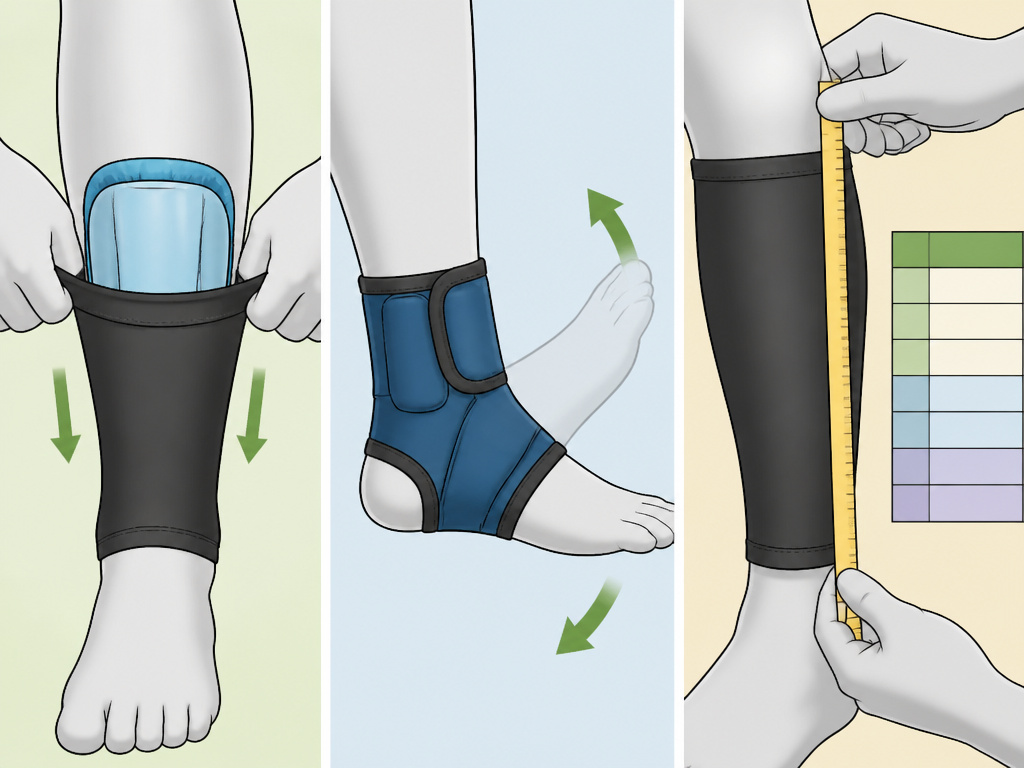
The fit principles are constant, but the execution changes with the types of shin guards you choose. The main styles, slip-in, ankle, and sleeve, each hold themselves in place differently.
| Type | How It Secures Fit | Key Fit Consideration |
|---|---|---|
| Slip-In | Slides into a pocket on a tight-fitting sleeve or long sock. | The sleeve must be tight enough to compress the guard against your shin. A loose sleeve makes even a perfectly sized guard useless. |
| Ankle Guard | Integrated sleeve or straps that cover the ankle. | The ankle portion must not restrict your ankle’s range of motion. Flex your foot up and down. Any binding means it’s too small or poorly designed. |
| Sleeve Guard | A full compression sleeve with padding sewn in. | Sizing is absolutely critical. You’re buying a garment. Follow the brand’s specific sizing chart or fitting instructions. |
The slip-in vs ankle shin guards debate often comes down to player preference, but the fit requirement doesn’t waiver. An ankle guard that’s too small is worse than a slip-in guard that’s slightly large, because it directly impedes movement.
Where this goes sideways: Using a shin guard designed for football in another sport. The HUDORA manual explicitly states its guards are “specifically designed for the demands of playing football; if using them for other sports, the necessary protective effect may not be achieved.”
The Role of Socks and Sleeves
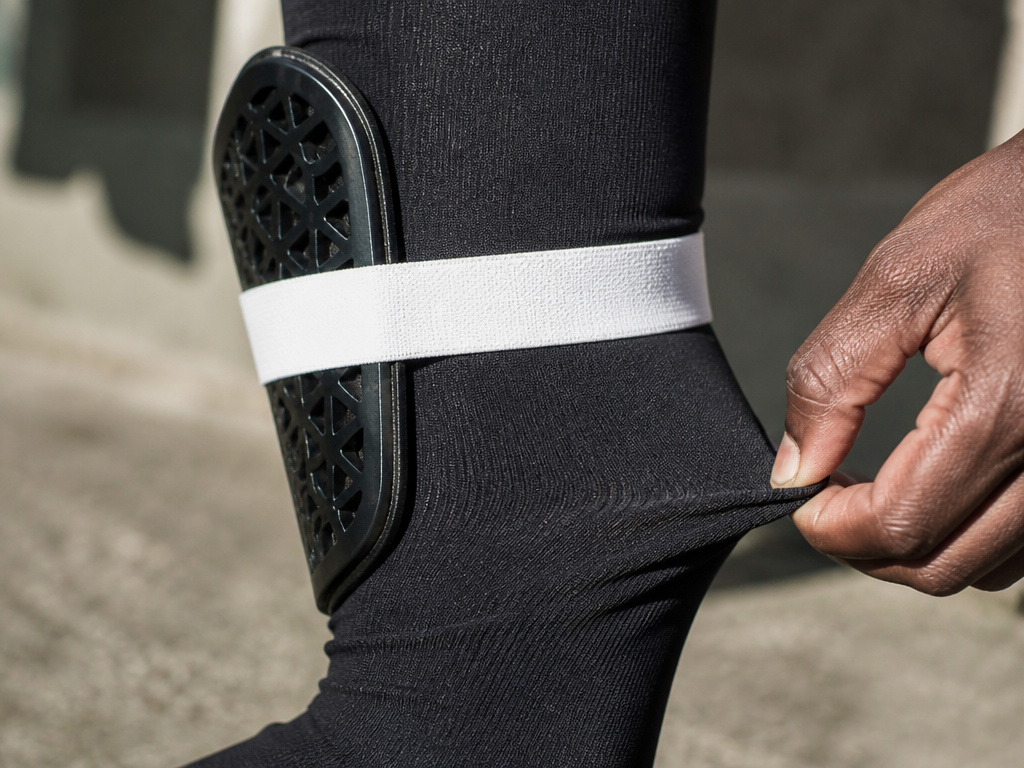
You cannot talk about fit without talking about what goes over the guard. The Diadora leaflet couldn’t be clearer: “For a perfect fit and to prevent slipping, a fully fitting stocking must be worn which completely covers the shin guard.”
This isn’t a suggestion. A baggy sock creates a layer of loose material between the guard and your straps, allowing the guard to swim around. The guard must be in direct contact with the stocking, which is itself tight against your leg. That sandwich, leg, stocking, guard, strap, is what keeps everything locked in.
Some players use a thin, tight sleeve under their regular sock. Others use long football socks with a built-in guard pocket. Either works, as long as the final result passes the Tug Test. If you’re using tape over the socks, remember Law 4: it must be the same color as the sock.
Lifespan and When to Replace

Fit isn’t just about today. Materials degrade. The HUDORA manual provides a rare, specific number: “With correct maintenance and storage, the maximum life of the shin guard is 7 years after the production date.” That’s a ceiling, not a guarantee.
More importantly, the manual warns that “changing environmental conditions, e.g. Temperature, can significantly reduce the performance.” Leaving guards in a hot car boot or a freezing garage breaks down the plastics and foams faster. Inspect them before each season. Look for:
- Cracks or deep scratches in the hard outer shell.
- Compressed or crumbling foam padding on the inside.
- Worn-out Velcro that no longer holds firmly.
- Frayed or stretched elastic straps.
Any of these means the guard can no longer perform to the NOCSAE shin guard performance standard it was built to meet. It’s time for a new pair. The protection is in the materials, and when they’re gone, the guard is just a plastic shell.
Before You Go
Here’s the one rule most guides skip: if you have to choose between a guard that’s slightly too big and one that’s slightly too small, go smaller, as long as it still covers the required zone. A guard that’s too long will actively hinder your knee and ankle, which violates the core ergonomics requirement of the standard. A guard that’s a half-inch shorter but sits securely in the right place is safer.
The best shin guards are the ones you forget you’re wearing because they fit so well. That feeling isn’t luck. It’s the result of matching a certified product to your body and securing it properly. Measure against the brand’s chart, do the six-point test, and listen to what your body says during movement. Your shins will thank you after the first hard tackle.
How to Measure for Size
You can measure your shin to find the maximum length for a shin guard. Use a flexible tape to measure from one inch above the bony part of your ankle to one inch below the base of your knee. This measurement gives you the longest guard that should fit your leg. The size of the shin guard chosen must be suitable to perform its function without hampering the movement of the athlete (articulations of the knee and ankle), as noted by Diadora. Remember, there is no standardization of sizes between different manufacturers, so always check the specific brand’s size chart or fitting instructions before purchasing.
Kids/Youth Specific Sizing & Fit
For children and youth, shin guards are often sized by the player’s height range, as indicated by standards. A proper fit is crucial for safety and mobility. The guard should fit snugly against the leg but not be so tight that it impedes blood circulation. It must be correctly positioned to cover the shin from just above the ankle to below the knee, without hindering typical playing movements like running and jumping. To prevent slipping, use a fully fitting stocking that completely covers the shin guard, and tighten any straps or fastenings sufficiently to keep the guard secure during activity.
NOCSAE Safety Certification
Shin guards bearing the NOCSAE certification meet specific safety performance standards. This certification requires that for the guard to perform as intended, the manufacturer’s fitting instructions must be followed precisely. A properly certified and fitted guard is designed to stay in place during impact, transmit force effectively, and not hinder the athlete’s movement. The fit should be secure to prevent dangerous displacement, but the fastenings should never be tightened to the point of cutting off circulation or causing discomfort, ensuring both protection and the ability to play.
Frequently Asked Questions
How do you know if shin guards fit?
You know they fit when they pass the 6-Point Fit Test: they cover from above the ankle to below the knee without slipping during movement, the straps are snug but don’t cut off circulation, and you can run, jump, and flex your foot without any restriction or pain.
What size shin guards for a 5’7″ player?
Player who is 5’7″ (approximately 170 cm) should check the specific height range marked on the shin guard, as required by standards like EN 13061. For example, HUDORA’s size L is for a user height of 160–180 cm. However, you must verify using the specific brand’s size chart and confirm the length against your shin.
Are shin guards supposed to cover the whole shin?
No. Shin guards are designed to cover the front of the shin bone between the knee and the ankle, but not those joints themselves. The Diadora leaflet specifies the protection is for the front of the shin “between the knee (excluded) and the ankle (excluded).”
Can shin guards be too big?
Yes, and it’s a safety issue. A guard that is too long can dig into the back of your knee when you bend it, limiting movement and causing pain. The TSG manual warns users to “avoid choosing too big a protector because it can result in a dangerous riding condition.” The same logic applies to football.
