
Metatarsal Fracture in Football Recovery: What Data Says
This post contains affiliate links. As an Amazon Associate, we earn from qualifying purchases.
A metatarsal fracture in football, especially of the 5th bone (Jones fracture), requires surgical fixation for athletes. Studies report various average return-to-play times after surgery, including a median of 72 days (10.2 weeks) for UEFA players with metatarsal fractures, 9.5 weeks in a Polish league study, and 12.04 weeks in a Mexican league study. Conservative treatment carries a 30% refracture risk and up to a 50% non-union rate, while surgery significantly reduces refracture risk, with studies reporting rates as low as a single case, 3%, or 5%.
That 10-12 week window is the average from studies tracking professional players in Poland, Mexico, and across UEFA leagues. The gap between “pain-free” and “game-ready” is where careers get saved or sidelined, and managing a metatarsal fracture in football recovery requires respecting this timeline. Rushing back before 8 weeks leads to a 24% rate of delayed radiological union, a visible fracture line that can spook anyone looking at an X-ray.
What follows is the data-driven map: the surgical numbers that beat conservative care, the three-phase rehab protocol used in pro setups, the specific football movements that load the healing bone, and the mental shift needed to navigate a recovery measured in months, not weeks.
Key Takeaways
- In sports medicine, the preferred treatment method for fractures of the 5th metatarsal bone is surgical anastomosis, as it results in shorter healing time, faster recovery, and better clinical outcomes compared to conservative treatment.
- Studies report varying average return-to-play times after surgery, such as 9.5 weeks in a Polish league study, 10.2 weeks in a UEFA study, 10.5 weeks in a SpringerMedicine study, and 12.04 weeks in a Mexican league study.
- Rehab is non-linear and phase-based. Postoperative non-weight-bearing periods vary by protocol, such as 2 weeks in a Mexican league study and 3 weeks in a cast in a BMJ study, before progressing to controlled loading.
- Refracture is a real threat. About 30% of players with past conservative treatment experience a refracture, while post-surgery rates drop to 3% or lower in most studies.
- Performance can return fully. Studies of UEFA and Mexican league players show 95% can return to their pre-injury performance level with a structured protocol.
Surgical vs. Conservative Treatment: What the Data Says
The sports medicine team makes the first and most critical decision, and the evidence from the last decade is unequivocal. In sports medicine, the preferred treatment method for almost all 5th metatarsal fractures is surgical anastomosis. That’s the clinical term for internal fixation, usually with a screw.
The Fifth Metatarsal Bone Fracture in Athletes study states: “Surgical treatment results in a lower no-growth rate, shorter healing time, faster recovery and better clinical outcomes compared to conservative treatment.”
The data clarifies what “better outcomes” means. A study of Polish league players provided a stark comparison. About 30% of the study group who underwent conservative treatment in the past experienced a refracture. After surgical treatment, only one refracture was reported in the cohort. The problem of the bone not healing at all, non-union, ranges from 11 to 50% with conservative care. The Polish study showed 19% nonunion after conservative treatment and 0% after surgery.
For a collegiate athlete, the season-long implications are clear. Research on NCAA Division I athletes notes that postoperative recovery after intramedullary screw fixation for a Jones fracture may last for approximately 3 months, and an athlete who sustains such a fracture in-season is unlikely to return to play that same season. Surgery isn’t just about fixing the break; it’s about creating a stable environment where healing is the most predictable path forward, which is why it’s the baseline for the metatarsal fracture in football recovery process.
| Treatment Type | Average Return to Play | Refracture Rate | Non-Union Rate | Best For |
|---|---|---|---|---|
| Surgical (Intramedullary Screw) | 9.5 – 12 weeks | 3% or lower | ~0% | Athletes, active players, faster predictable recovery. |
| Conservative (Boot/Cast, NWB) | Longer than surgical (specific average RTP not provided) | ~30% | 11% – 50% | Non-athletes, low-demand individuals, avulsion fractures. |
The 3-Phase Roadmap from Surgery to the Pitch
Recovery consists of three distinct phases, each with a clear goal and a hard stop if you try to skip ahead. The timeline below comes from a published postoperative management protocol for professional players.
Phase 1: Protection & Immobilization (Weeks 0-6)
This is the essential foundation. Postoperative non-weight-bearing periods vary: the Mexican league study protocol specified non-weight-bearing immobilization in a walker boot for 2 weeks, while the BMJ Open Sport & Exercise Medicine study used 3 weeks in a non-weight-bearing cast and 3 weeks in a partial weight-bearing boot. The common thread is zero football load. The bone needs stillness to start bridging the gap. This is pure healing time, and the only job is managing swelling and maintaining general fitness elsewhere.
Phase 2: Controlled Loading & Rebuilding (Weeks 6-12)
Here, the bone is challenged progressively. Between 6 and 10 weeks after surgery, the protocol authorizes elliptical training and jogging. The intensity is decided by the physio based on pain response, not the player’s eagerness. After 6 weeks, all players in the BMJ study progressed to full-weight-bearing. This phase builds the muscular and cardiovascular base without the twisting, cutting, or impact of football.
Phase 3: Football Reintegration (Weeks 10-12+)
The final gate. Between 10 and 12 weeks after surgery, patients joined their team for regular training. The criteria for this step were specific: pain relief at the affected zone, adequate physical function, and complete trabecular bridging across the fracture site on radiographs. Notice “pain relief” comes first. Playing through a dull ache here is a one-way ticket back to Phase 1.
Why Rushing Back Before 8 Weeks is a Gamble
Everyone wants to beat the timeline. The data shows what that gamble costs. A key finding from the SpringerMedicine study of 37 professional footballers is critical: Return to play at 8 weeks or less resulted in a 24% rate of delayed radiological union at 3 months.
Where this goes sideways: Pushing to return at 8 weeks because you feel fine. The study found that if players return at 8 weeks or less, a persistent fracture line may be expected in up to a quarter of patients.
This “delayed union” looks scary on an X-ray, a clear line where the bone should be solid. The crucial nuance from the SpringerMedicine study is that this radiological finding, if the player is asymptomatic, does not mean they must stop playing. It didn’t increase the ultimate risk of non-union in that study (which stayed at 3% overall). But it does introduce doubt, extra monitoring, and mental stress. For every player and manager seeing that line, it becomes a question mark over every sprint and tackle. Another study bluntly noted that players who returned to the game after less than 8 weeks after the injury did not reach full bone union on radiological imaging.
The mental game here is brutal. You feel ready. The bone isn’t. Trusting the longer timeline is the core of the metatarsal fracture in football recovery process and how you avoid becoming a cautionary statistic.
The Biomechanics of Coming Back: It’s Not Just Running
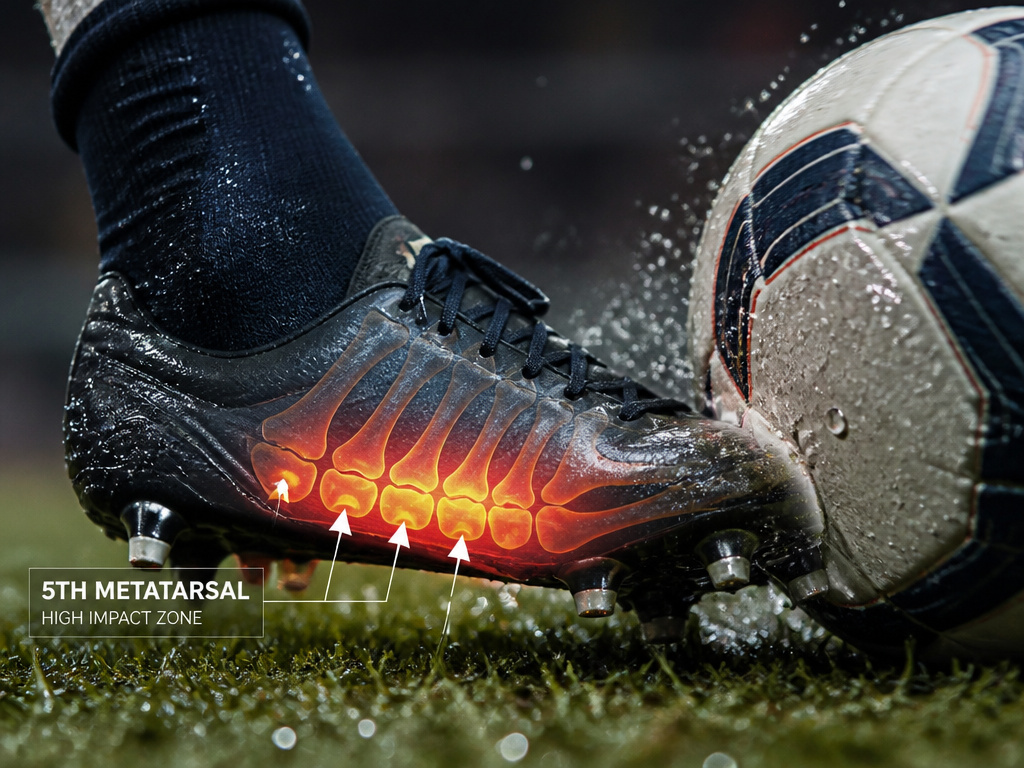
You’re cleared for training. The bone is solid on the scan. This is where the most overlooked part of recovery happens: your movement pattern has changed. A fascinating on-field analysis in the BMJ Open Sport & Exercise Medicine study measured players after they had returned.
The researchers found that elite male football players who have returned to play after a fifth metatarsal stress fracture display significantly higher maximum plantar force at the lateral forefoot and lateral toes compared with healthy matched control players during two football movements: the kick and the curved run. The difference was very large.
Think about that. When taking a set-piece or making a curved run with the ball, the healed foot slams into the ground with more force on the outer edge, the exact region of the fracture. This isn’t a flaw; it’s likely a subconscious protective adaptation or a shift in technique. The implication for rehab is massive. Straight-line running alone won’t re-prepare the bone for football. Your strength training for football and physio work must include controlled, progressive exposure to these specific high-load movements. It’s the only way to convince the bone it’s safe to handle the real game again.
What Does “Successful Recovery” Actually Look Like?
Healing the bone is the minimum requirement. The real goal is returning to your previous level. Here, the data is encouraging but sets clear benchmarks.
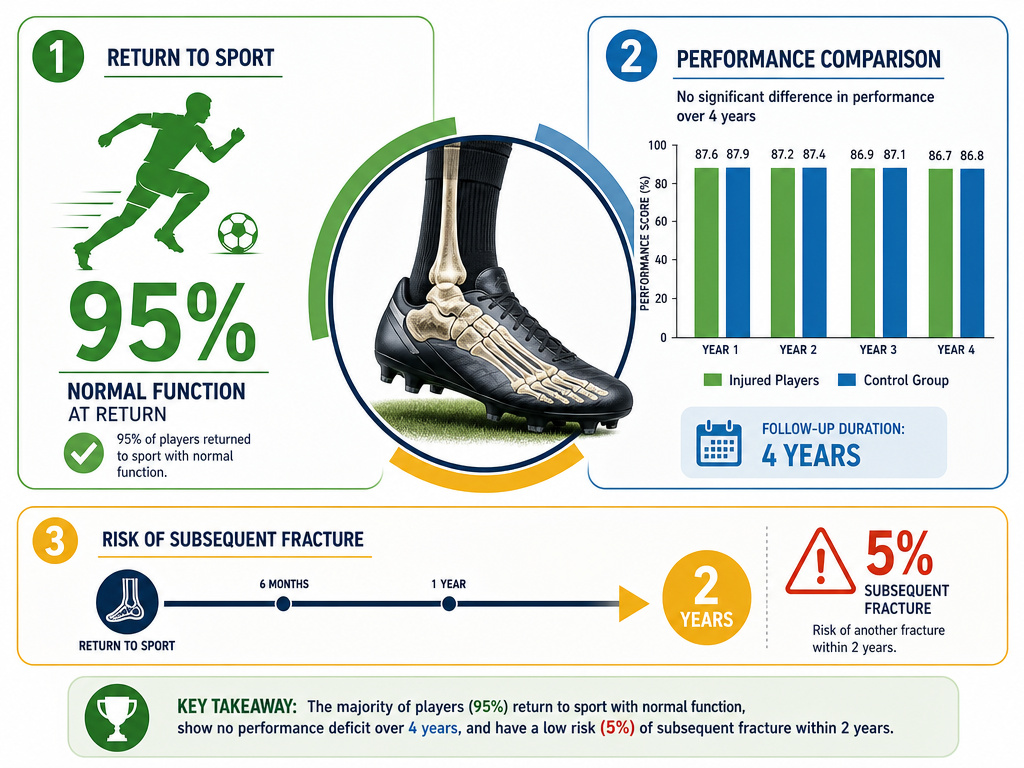
Functional Scores: In the Mexican league study, players achieved an average FAAM-Sp Sport Subscale Score of 91.45 postoperatively. This self-reported measure of high-level function indicates “normal or close to normal function” was observed in 21 of 22 players (95%) at their safe return time.
Performance Data: The large UEFA player performance study is perhaps the most reassuring. It found that 80% of elite UEFA soccer players with foot fractures returned to play at the same level of competition. Of those, 90% returned within 1 season. Crucially, the study concluded that injured athletes demonstrated similar performance to controls during the four years after injury. The game wasn’t gone.
Long-Term Outlook: The same UEFA study provides a sobering but important perspective: nine players (5%) sustained a subsequent foot fracture at a median of 2 years after the primary injury. Age was a factor too; athletes older than 30 years were associated with a reduced rate of RTP after a foot fracture. Recovery involves managing load and monitoring for years, integrating smart recovery techniques into your permanent routine.
The Mental and Nutritional Game
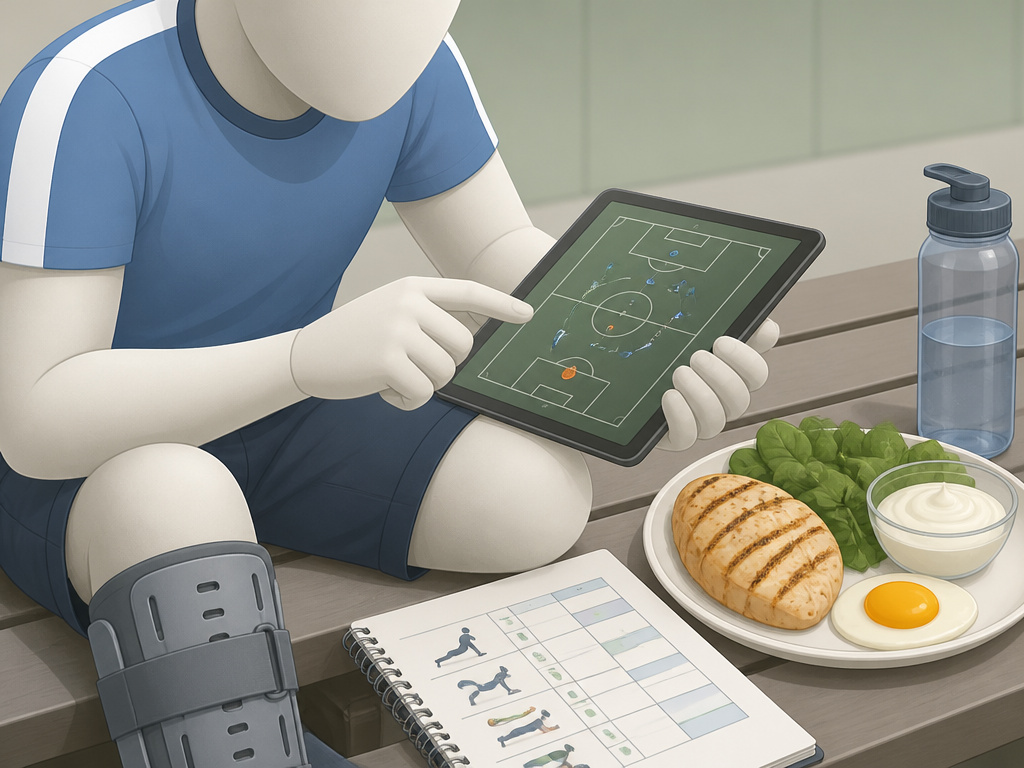
The hardest part of a 3-month recovery is the stagnation. Watching your team train, missing matches, feeling isolated. The frustration and mental aspect of slow healing is the gap most clinical guides miss.
Structure is your antidote. Own your rehab schedule like it’s a training session. Set micro-goals: “This week, I will master walking in the boot without a limp.” Use the time for film study, tactical understanding, or upper-body work. This mental shift, from injured player to dedicated rehab athlete, is critical.
Nutrition is the other silent partner. While specific supplements aren’t magic bullets, ensuring your body has the raw materials to build bone is critical. Ample protein, calcium, Vitamin D, and Vitamin K are foundational. Think of your diet as the support crew for the healing process, a core part of your overall injury prevention and post-match nutrition strategy. Don’t overlook hydration and overall energy intake; your body is running a major construction project.
What are the types of metatarsal fractures?
Metatarsal fractures in football are broadly categorized as acute or stress fractures. An acute fracture results from a single traumatic event, like a direct impact or severe twist. A stress fracture is a hairline crack from repetitive overloading, often with a history of preceding pain. The fifth metatarsal, the bone on the outer foot, is especially vulnerable. A Jones fracture is a specific acute fracture at the base of the fifth metatarsal where blood supply is poorer, making it prone to healing complications. This type is notorious in sports; an in-season Jones fracture often means the player will not return that same season.
Frequently Asked Questions
How soon can I walk after a metatarsal fracture?
It depends entirely on the treatment. After surgical fixation, you’ll be non-weight-bearing (using crutches) for 2-3 weeks in a boot or cast. Gradual, partial weight-bearing begins as per the specific postoperative protocol, with full weight-bearing typically achieved by around 6 weeks post-op in some studies. Never start walking without your surgeon or physiotherapist’s explicit go-ahead.
Can I play football after a metatarsal fracture?
Yes, the vast majority of players can return. The data shows 80% of elite UEFA players returned to the same level, with 95% of Mexican league players achieving a safe return at their pre-injury performance level by 12 weeks post-surgery. The key is following a structured, phased rehabilitation protocol, not rushing.
What is the fastest way to heal a metatarsal fracture?
For an athlete, the fastest and most reliable path is surgical fixation with an intramedullary screw, followed by strict adherence to a progressive rehab protocol. There are no shortcuts that bypass biology. Ensuring optimal nutrition (protein, calcium, Vitamin D) and absolutely avoiding premature load are the only ways to support the body’s natural healing speed.
How serious is a metatarsal fracture?
For a football player, it’s a significant injury requiring 3-5 months of careful management. The seriousness lies in the high risk of complications like non-union (the bone not healing) and refracture if managed incorrectly. With proper surgical treatment and disciplined rehab, the long-term outlook is very good, but it demands respect for the timeline.
What are the signs of healing versus a problem?
Normal healing involves gradually decreasing pain and swelling, with no pain at rest. A concerning sign is pain that persists or worsens when you begin to weight-bear, or a sudden, sharp return of pain. Any new swelling, redness, or warmth at the site after the initial inflammatory phase has settled should prompt a check-in with your medical team. The final sign of healing is radiological union, a solid bone bridge on X-ray.
Before You Go
One rule the data makes clear: if your surgeon and physio set a 12-week return, treat week 10 as the earliest possible date, not the target. The difference between a healed bone and a football-ready bone is about 4 weeks of sport-specific loading. Refractures can occur, particularly if return to play is premature or load is not managed appropriately.
Your first game back, watch your footwork on curved runs and planted kicks. That’s where the peer-reviewed sports medicine article says the load spikes. Feel it, acknowledge it, and trust that with each session, the movement will feel less foreign. The final phase of recovery happens on the pitch, in real time, long after the medical clearance is signed.
