
How to Store a Football Shirt Collection: Step-by-Step
This post contains affiliate links. As an Amazon Associate, we earn from qualifying purchases.
Store a football shirt collection by keeping shirts clean, dry, and dark, and by choosing between folding or hanging based on your space and the shirt’s age. Fold with acid-free tissue to protect prints; if hanging, use wide, padded hangers to avoid creases, but note that Football Shirts Jack advises against long-term hanging as it can stretch necklines and shoulders. Never use sealed plastic long-term, and keep everything away from direct sunlight and heat above 40°C.
The reality of the game is this. We spend all this time finding the perfect shirt, the one that tells a story, and then we shove it in a drawer or hang it on a wire hanger and wonder why it looks tired years later. A collection isn’t just a pile of fabric; it’s a timeline.
What follows is a walk through the two main storage camps, the specific enemies that ruin shirts (with real temperature thresholds), and the gear that actually helps with the how to store a football shirt collection question. This isn’t about turning your spare room into a museum. It’s about making sure your 1998 France away shirt doesn’t end up looking like a faded tea towel.
Key Takeaways
- Fold for the long haul, hang for rotation. Long-term hanging stretches necklines on cotton-blend shirts, but thick hangers keep modern polyester shirts ready to wear without creasing sponsors.
- Heat is the silent killer. The adhesives on sponsors and badges begin to soften above 40°C and can bubble and crack above 60°C — a hot car boot or a tumble dryer does this in one go.
- Plastic is a trap. Sealed plastic bags or bins trap moisture and lead to mildew and yellowing; use breathable garment bags instead. The Football Shirt Collective suggests ‘plastic zippable wallets’ can be used if silica gel is added, but Mystery Jersey King advises avoiding sealed plastic for long-term storage.
- Moths target the old stuff. Vintage cotton shirts are at real risk; modern synthetics are mostly safe. A clean shirt is the best defence, with cedar blocks as a helpful deterrent.
- Document everything. Keep a simple list or take photos of each shirt, front and back. It makes insurance claims and future sales straightforward, and you’ll know what you actually own.
The Four Things That Will Ruin Your Shirts
Light, damp, heat, and gravity. They work slowly, and by the time you notice, the damage is usually permanent.
Sunlight and strong artificial light fade colours. Reds and yellows go first. I framed my first shirt against a sunny wall and over time the white had gone a creamy yellow on one side. The line between the faded side and the protected side is shockingly sharp. UV-filtering glass and an interior wall fixed it for the next ones.
Where this goes sideways: Storing shirts in a damp garage or attic. Fluctuating humidity encourages mould, which can set in on a shirt stored even slightly damp. The musty smell never fully leaves the fabric.
Damp itself is a separate beast. A sealed plastic bag might seem protective, but it traps any ambient moisture against the shirt. That environment is a petri dish for mildew. The fix is airflow. A breathable cotton storage bag or a plastic zippable wallet left partly unsealed (with a silica gel packet tossed in) works far better.
Then there’s heat. This isn’t about comfort; it’s about chemistry. The vinyl and adhesives holding on your sponsor and badge are plastics. According to Football Shirts Jack, heat softens them at about 40°C. By 60°C — easily reached in a tumble dryer or a car left in the sun — they can lift, bubble, and crack. Once that happens, they don’t lie flat again.
Hanging vs. Folding: The Core Disagreement
This is where the how to store a football shirt collection debate sees collectors and guides genuinely split. There isn’t one universal rule, because the best method depends on the shirt’s material, age, and how often you want to wear it.
The “folding” camp, led by sources like Football Shirts Jack, argues that long-term hanging stretches necklines and shoulders under the shirt’s own weight, especially on older cotton-blend kits. Gravity is a constant, subtle force. Their advice is to fold and stack shirts loosely in a drawer or box, printed front out, so nothing presses into the decoration.
The “hanging” side, which includes the Football Shirt Collective, counters that hanging on thick hangers avoids creased sponsors and numbers, while Football Shirts Jack advises against long-term hanging due to stretching. For a collection you regularly wear and rotate, pulling a shirt off a hanger is easier than digging through a stack. It also prevents sharp folds right through a delicate heat-pressed badge.
So who’s right? Both are, for different scenarios.
| Storage Method | Best For | The Specific Risk If You Get It Wrong |
|---|---|---|
| Folding (with tissue) | Long-term archival storage, large collections, vintage/delicate shirts. | A sharp crease pressed through a badge or sponsor for months can crack the print permanently. |
| Hanging (padded) | Active, wearable collections, modern polyester shirts, limited space. | Thin wire hangers leave permanent “bump” deformities in the shoulders and stretch the neckline over seasons. |
| Framing | Single, high-value display pieces you will not wear. | UV light fading through standard glass, or condensation inside the frame from a damp wall. |
For most mixed collections, a hybrid approach works. Frame the real treasures, hang the modern shirts you wear, and fold the older, more delicate ones away with care.
How to Fold a Shirt Without Wrecking the Badge
Folding isn’t just crumpling it into a ball. The goal is to avoid pressure points on the printed areas.
- Lay the shirt flat, face down on a clean surface.
- Fold the sleeves straight back, so the side seams are aligned with the shirt’s body.
- Fold the shirt vertically into thirds, like a letter, ensuring the crest and sponsor land on an outer panel, not in the fold. For a vintage mesh jersey, use the ‘file fold’ method: fold sleeves in, then fold in thirds like a letter to reduce stress on the old fabric.
- Place a sheet of acid-free tissue paper over the front print before stacking another shirt on top. This stops prints from sticking to each other over time.
Store shirts in shallow stacks rather than one tall pile. The weight at the bottom of a tall stack presses prints into the shirt below, leaving a ghost impression.
How to Hang a Shirt Without Stretching It
If you hang, the hanger is everything. Forget the free wire one from the dry cleaner.
- Use a wide, padded hanger. The padding distributes the shirt’s weight across the whole shoulder seam, not two narrow points.
- Button up the shirt. This supports the placket and stops the shirt from sagging forward.
- Keep the wardrobe relatively full. This sounds odd, but shirts packed loosely together support each other and reduce dust settling.
I learned the shoulder-stretch lesson the hard way. Hanging a couple of older cotton-blend shirts for years left the necks loose and the shoulders oddly pointed. Now, those live in a box.
The Step-By-Step Storage Process
Before any shirt goes into storage, it needs prep. Skipping this is how you store problems for the future.
Step 1: Wash It (Properly)
Never store a dirty shirt. Invisible body oils and sweat residues attract moths and cause yellowing over years. Follow our guide on washing football shirts: cool water, gentle liquid detergent (powder can abrade prints), inside out, and absolutely no fabric softener. Air dry it completely.
Step 2: Choose Your Vessel
Where you put the shirt matters as much as how you put it there.
- For folding: Use a sturdy plastic storage box (like those from Iris or Sterilite with UV inhibitors) or a dedicated drawer. Line it with acid-free tissue. Some sources, like The Real Sports Store, advise avoiding cardboard boxes as they can trap moisture and degrade over time.
- For hanging: A wardrobe in a stable, interior room is ideal. Consider breathable garment bags for an extra layer of dust protection.
- Never use sealed plastic bags or bins for long-term storage, as sources like Mystery Jersey King and The Real Sports Store warn they trap moisture.
Step 3: Protect Against Pests and Climate
Moths are far more interested in older cotton and natural-fibre shirts than modern synthetic ones. Prioritise protecting your vintage pieces.
- The best defence is a clean shirt.
- Cedar blocks or lavender sachets in the storage area can help as a deterrent, but they are not a substitute for cleanliness.
- Aim for a cool, dry, and dark environment. An interior closet is better than a garage or attic.
Step 4: Document Your Collection
This is the step almost every guide misses, but it’s critical if your collection has value.
- Document your collection. Memorabilia Match Worn advises storing digital copies of invoices, certificates, and product-page photography.
- Take a quick photo of each shirt, front and back, against a neutral background. Store these digitally.
- This log is invaluable for insurance purposes and makes selling or trading a straightforward process.
Special Cases: Vintage, Autographed, and Match-Worn Shirts
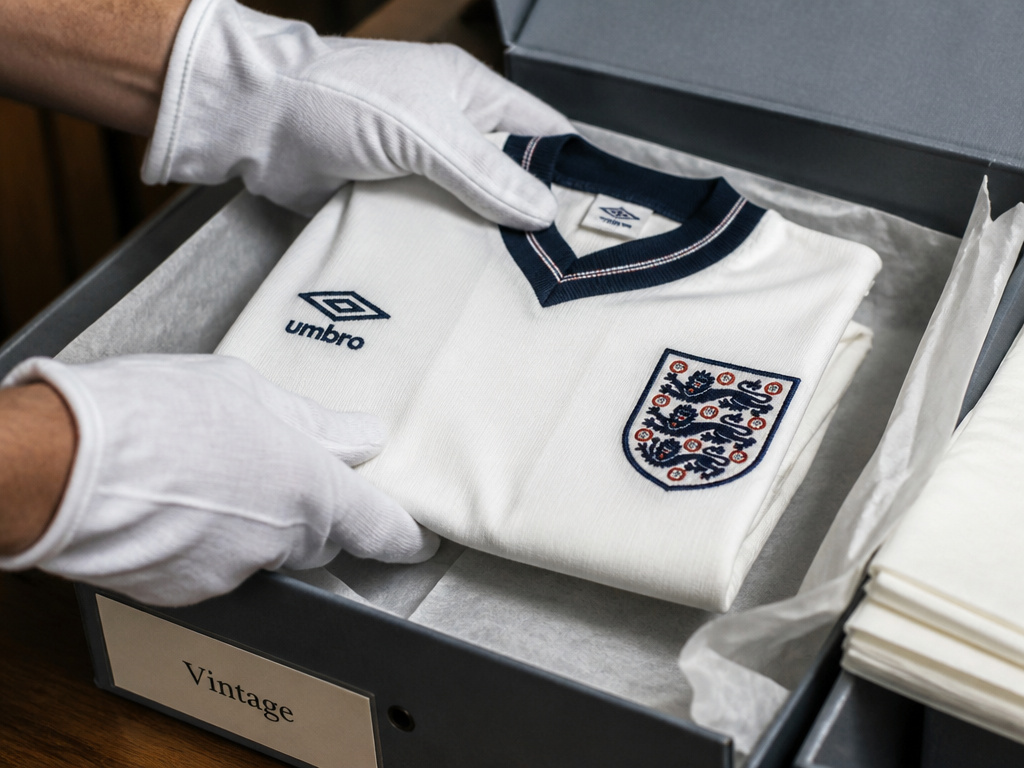
Not all shirts are created equal. Some need white-glove treatment.
Vintage & Delicate Shirts (Pre-2000s)
These often have older screen-printing, embroidery, or fragile mesh fabric. They are also more likely to contain cotton, making them moth targets.
- For vintage shirts, many sources recommend folding to prevent stretching, though some collectors may hang them on thick hangers.
- Use the file-fold method and plenty of acid-free tissue.
- Consider a dedicated storage box for your vintage pieces, separate from your modern kits.
Autographed Shirts
The signature is the value. Handle the shirt with clean, cotton gloves to avoid transferring skin oils onto the fabric or ink.
- Store flat, never hanging. Gravity can stress the signature over time, causing micro-cracking in the ink.
- Use a UV-protected archival box with acid-free tissue. Never let the glass of a frame touch the signature directly.
Match-Worn Shirts
These are historical artefacts. The advice from Memorabilia Match Worn is clear: preserve the match evidence (grass stains, sweat marks) as part of the story.
- Do not wash it. Store it exactly as received.
- Use archival framing with UV-filtering glass or an archival box.
- Keep the certificate of authenticity (COA) and any paperwork in a separate, sealed sleeve, but alongside the shirt.
Restoration and Damage Control
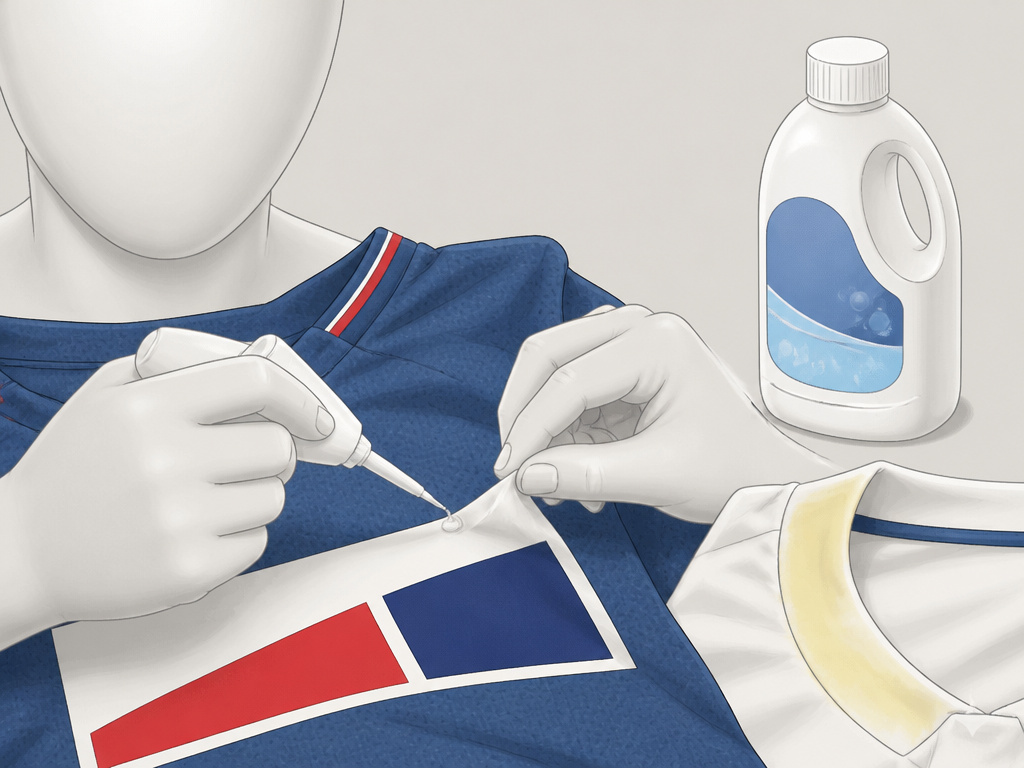
Sometimes, despite your best efforts, a shirt needs help. Here’s what you can safely tackle.
Yellowing Armpits or Collars
This is usually old deodorant or sweat residue, not dirt.
- Do not use chlorine bleach. It turns vintage polyester a permanent, dull yellow.
- The safe method is a long soak in cool water with an oxygen-based whitener (like OxiClean). Rinse thoroughly and air dry.
A Lifting Sponsor or Badge
If the heat-pressed vinyl is starting to peel at the edges, the adhesive has failed.
- Do not iron it back down. You will likely melt or further distort it.
- For a valuable shirt, consult a professional textile conservator. For a wearable shirt, a tiny dot of fabric glue under the edge can sometimes secure it, but test on an inside seam first.
Musty Smell from Damp Storage
If you discover a shirt that smells of mildew, act fast.
- Air it out thoroughly in a well-ventilated, dry area for a day or two.
- If the smell persists, a gentle wash may help, but know that this might reduce the value of a match-worn piece.
Frequently Asked Questions
Is it better to hang or fold football shirts?
It depends on the shirt and your goals. Fold vintage, delicate, or long-term storage shirts to prevent shoulder stretch. Hang modern polyester shirts you wear regularly on wide, padded hangers to keep them ready and avoid creases.
How do I stop my football shirts from going yellow?
Yellowing is often caused by body oils, deodorant, or sunlight. Always wash shirts before storage, avoid chlorine bleach, and keep them in a dark place. For existing yellowing, soak in cool water with an oxygen-based whitener.
Can I store football shirts in plastic bags?
Avoid sealed plastic bags for long-term storage. They trap moisture, leading to mildew and yellowing. If you need a plastic barrier, use plastic zippable wallets and leave them partly unsealed, adding a silica gel packet to absorb moisture.
How do I protect my shirts from moths?
Moths target natural fibres like cotton. Keep all shirts clean before storage, as moths are attracted to organic residues. For vintage collections, use cedar blocks or lavender sachets in the storage area as a deterrent, and check shirts periodically.
What is the best way to display a football shirt collection?
For a single prized shirt, framing a shirt with UV-filtering glass and placing it on an interior wall is excellent. For many shirts, a combination of careful folding in clear archival boxes and hanging on matching padded hangers in a dedicated closet creates a neat, accessible display.
The Bottom Line
A football shirt collection is a record of your fandom. The best storage system is the one you’ll actually use that also respects the fabric. For most collectors, that means a split decision: the modern stuff lives on hangers, the vintage treasures get folded away with care, and the one that started it all belongs in a frame.
Start with the shirts you care about most. Wash them with oxygen-based whitener if needed, store them in a dark place, and fold them instead of hanging. The rest is just details. And if you’ve got a story about a shirt you saved (or one you lost), that’s the kind of history worth keeping.
