
How to Wash Football Shirts: The 5-Step Routine
This post contains affiliate links. As an Amazon Associate, we earn from qualifying purchases.
*Wash a football shirt by turning it inside out, using a cold wash (as Nike recommends) or a maximum of 30°C wash (as Borussia Dortmund and others recommend) with a mild detergent, and air-drying it flat or on a hanger.* Never use fabric softener or chlorine bleach, and always treat stains like grass or mud before washing. The specific care label inside your shirt is the final authority, overriding any general advice.
That label is the one piece of the puzzle most people skip. It’s not a suggestion. It’s the manufacturer’s contract with you about how the materials and prints will behave. Ignoring it is how you end up with a sponsor logo that’s cracked or a shirt that feels like sandpaper, which is why knowing how to wash football shirts correctly is essential.
What follows is a breakdown of why those rules exist, pulled straight from the official guides on how to wash football shirts that kit makers and professional laundries actually use. We’ll cover the non-negotiable steps, the surprising places where brands disagree, and the one drying mistake I’ve seen ruin more shirts than anything else.
Key Takeaways
- Always turn the shirt inside out before washing, this single step protects prints and numbers from abrasion.
- Use a cold or 30°C synthetic wash with a mild detergent (pH <10 if possible) and never add fabric softener.
- Air-dry flat or on a hanger away from direct sun.
- Pre-treat grass and mud stains immediately with cold water and a dab of detergent; never use stain remover directly on printed areas.
Why Football Shirts Need a Special Routine
A football shirt isn’t just a t-shirt with a badge. It’s a technical garment. The fabric is a lightweight, woven polyester designed to wick sweat. The crest, sponsor logos, and player names are heat-transferred or screen-printed plastics, not dyed thread. Treat it like your everyday cotton tee, and you’ll degrade both.
The core conflict in the how to wash football shirts question is between cleaning performance and preservation. Grass stains demand attention, but heat and harsh chemicals destroy prints. The official guides from Nike, club retailers like Borussia Dortmund, and kit manufacturers like Pendle Sportswear all navigate this same tension. They agree on the destination, a clean, intact shirt, but sometimes map different routes to get there.
Your job is to follow the map provided with your specific kit. All the information here describes the landmarks on that map.
Decoding Your Shirt’s Care Label
Before you touch the washing machine, find the label. It’s usually stitched inside along the side seam. This isn’t generic advice; it’s the legal care instruction for your exact garment.
The symbols can seem cryptic, but they’re a universal language. The washing tub icon with a number inside is your maximum temperature. A tub with a hand means hand wash only. The triangle with a cross through it is the universal “no bleach” sign.
The ISO/GINETEX care symbol system, interpreted by retailers like Net World Sports, uses dots inside the wash tub to denote temperature: one dot for 30°C, two for 40°C, three for 50°C, and four for 60°C. Most football kits will show one dot.
The iron symbol is critical. A dot inside the iron indicates a low heat setting, but if there’s a cross over it, do not iron. Similarly, a circle inside a square is for tumble drying; a cross over that circle means air dry only. These aren’t suggestions. Ironing a printed area on even a low setting can melt the plastic layer, leaving a shiny, wrinkled scar.
If your label says “wash at 30°C,” that’s not a starting point for negotiation. It’s the ceiling.
The 5-Step Washing Routine (From Pre-Wash to Dry)
This is the sequence that extends a shirt’s life from one season to five. It blends the universal rules with the nuances from the official guides.
1. The Critical Pre-Wash
For a brand-new shirt, the first wash is a setup, not a cleaning. Official sources have different first-wash procedures: Nike mandates washing twice before wear, while Pendle Sportswear advises washing new items separately to remove excess dye.
- Nike’s TEAM guide instructs a pre-wash, followed by washing twice with detergent before the garment is ever worn. This sets colours and removes any manufacturing residues.
- Pendle Sportswear advises washing new items separately on their first run to flush out excess dye that could bleed.
The common thread is isolation. Wash a new, dark shirt alone first. That bright red stripe won’t migrate onto a white sleeve.
2. Stain Treatment: The Grass-Stain Standoff
Grass and mud are the two most common opponents. The consensus is to act fast. Rinse the stain with cold water as soon as you can, hot water sets the chlorophyll and protein in grass, making it permanent.
Here’s where official sources disagree on the next move. The Borussia Dortmund guide says to gently treat the stain with a little liquid detergent before washing. Pendle Sportswear agrees on pre-treating but adds a crucial warning: do not use stain remover on printed areas, and do not add in-wash stain remover to the machine. Conversely, Nike’s guide doesn’t mention targeted stain removers at all; it simply says if stains remain after washing, wash again before drying.
My take? Follow the detergent pre-treat method. It’s the safest for the prints. When giants disagree, your care label is the tie-breaker. For deep stains, our guide to removing grass stains from a football kit walks through more advanced techniques.
3. Machine Setup: Temperature, Detergent, and Cycle
Now, prepare the shirt and the machine.
- Turn it inside out. Every single guide. Nike, BVB, Pendle, DFB, lists this step first. It protects the prints from rubbing against the drum or other clothes.
- Fasten any hook-and-loop tapes (like on goalie jerseys or some training tops) to prevent them from snagging and pulling threads.
- Wash with similar colours. Whites with whites, darks with darks. This prevents colour transfer, which is especially important for those crisp white sleeves and collars.
For the wash cycle itself, the guidance converges:
- Temperature: Cold water (Nike) or a maximum of 30°C (BVB, DFB, Pendle). This is the sweet spot that cleans effectively without compromising colours or print adhesives.
- Detergent: Use a mild liquid detergent. Nike specifies a pH of less than 10, or a detergent made for uniforms and performance fabrics. Never use fabric softener. All sources prohibit it. It coats the fibres, wrecking their moisture-wicking ability and weakening the adhesive for prints.
- Cycle: Select a gentle or synthetic cycle. This uses a slower agitation speed. Do not overload the machine; the garments need room to move freely.
4. The Drying Decision: Air vs. Machine
This is the stage where mistakes are irreversible. The professional laundry for the German national team dries kits at 45 to 50°C in controlled industrial dryers.
Where this goes sideways: Tumble drying a football shirt can damage prints and adhesives.
The safest home advice for preserving prints is to air dry. Lay the shirt flat on a clean towel or hang it on a plastic or padded hanger (wire hangers can leave shoulder bumps). Never dry in direct sunlight. If your care label explicitly permits tumble drying, use only a no-heat or cool setting.
5. Post-Wash Inspection and Storage
Before you put it away, do a final check. Are the stains gone? If not, do not dry it. Drying sets stains permanently. Rewash it, perhaps with a different pre-treatment. Nike’s guide is adamant on this point.
Once completely dry, store it properly. For long-term preservation of a collection, proper shirt storage in a cool, dark place is key.
What the Pros Do: The DFB Laundry Protocol
How does a national team care for hundreds of kits covered in grass, sweat, and dirt? The German Football Association’s (DFB) laundry partner, Bardusch, offers a masterclass in scale and precision.
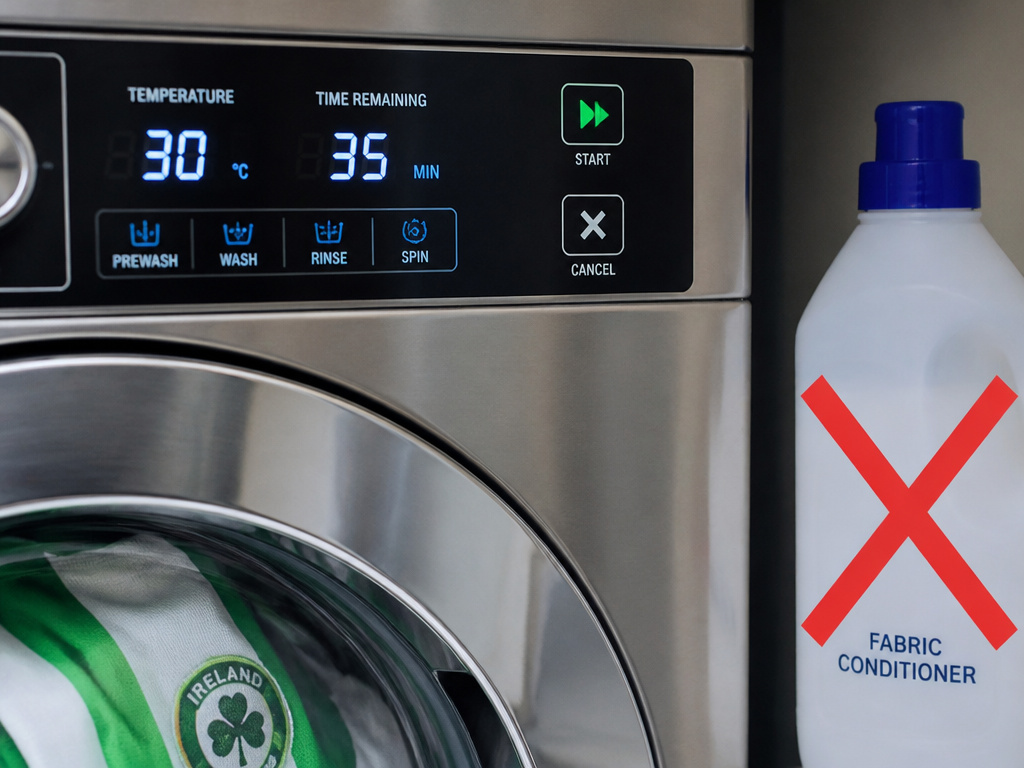
Their process for World Cup shirts is a locked-down operation. Every kit is sorted by colour and soiling. Stains are pre-treated. Then, the wash: a 35-minute cycle at 30°C, strictly without fabric conditioner. They note that conditioner is strictly not to be used.
The one exception? Socks. For stubborn grass stains, they’ll use temperatures up to 60°C. This highlights a key principle: different garments have different tolerances. After washing, everything is gently dried at 45 to 50°C in professional dryers before being returned to the DFB.
The fan advice from Bardusch’s manager mirrors our routine: wash inside out on gentle at 30°C, no conditioner, and dry on a hanger out of direct sunlight. They just do it for two tonnes of laundry at a time.
Navigating Conflicts and Special Cases
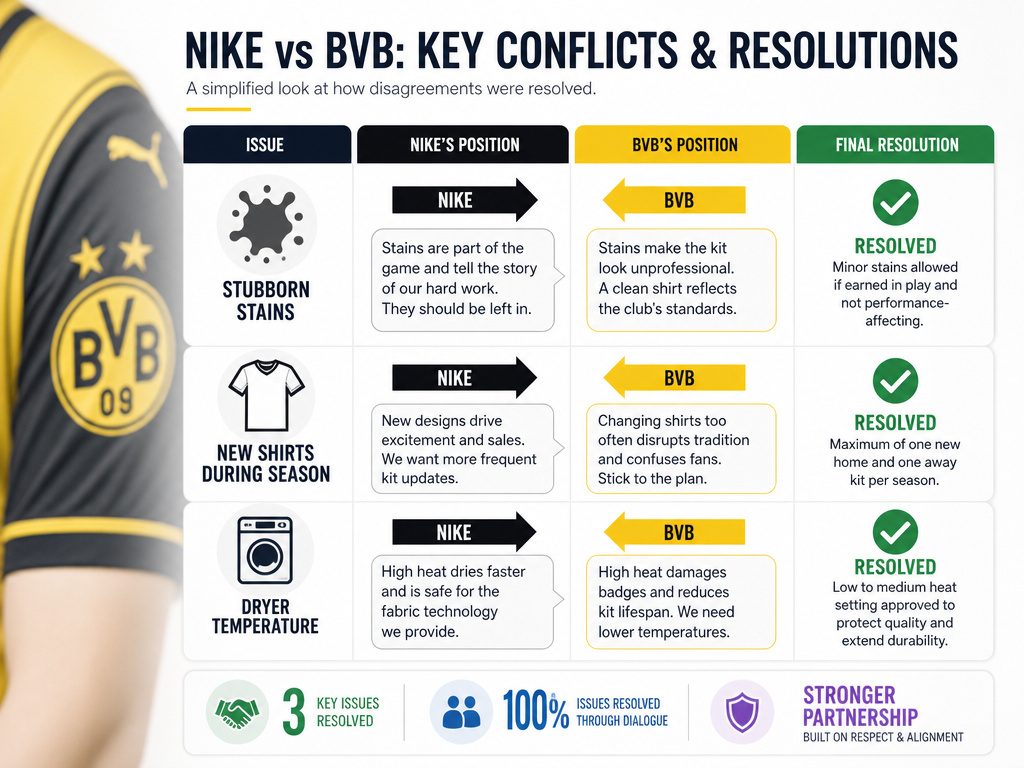
When official sources contradict each other, you need a rulebook.
| Point of Conflict | Nike TEAM Guide | Borussia Dortmund / Pendle | The Resolution |
|---|---|---|---|
| Stain Remover | Wash again if stains remain. No mention of stain remover. | Pre-treat with detergent. Do NOT use stain remover on prints. | Pre-treat with detergent only. Avoid chemical stain removers on prints. |
| First Wash | Pre-wash, then wash twice before wear. | Wash first item separately to remove excess dye. | Wash new items alone, and consider a double wash for dark colours. |
| Drying | Line dry when possible. Implies no machine drying. | Tumble dry on cool if care label permits. | Air dry is always safest. Only machine dry if the label explicitly allows it, on cool. |
Special Cases:
- Authentic vs. Replica Shirts: BVB notes that both replica and authentic shirts should be washed at 30°C, inside out, with no tumble drying. The wash rules (30°C, inside out) are the same for both. Understand the difference between authentic and replica shirts to know what you’re handling.
- Vintage/Classic Shirts: Treat these with even more caution. The fabrics are older and the prints are often more fragile. Hand washing in cool water is the recommended method.
- Other Gear: The same core principles apply to your other kit. For cleaning football boots or learning how to clean shin guards, check our dedicated guides, they need different techniques to avoid damage.
Washing football shirts with jeans, velcro, or abrasive items
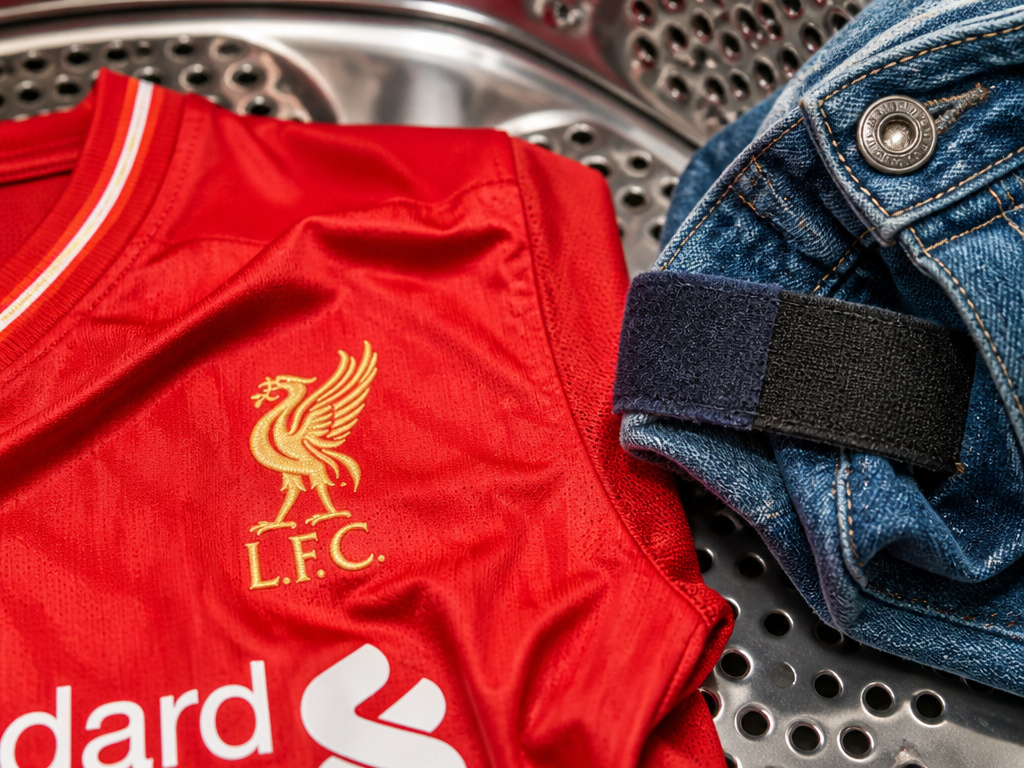
Keep your football shirt separate from rough fabrics and fasteners. Abrasive materials like denim or items with velcro can snag and pull the delicate polyester fabric, damaging its weave and surface. They can also scrape against heat-pressed logos and prints, causing them to crack or peel prematurely. Always fasten any hook and loop tapes on other garments before washing to prevent them from catching on your kit. For the safest clean, wash your shirt inside out by itself or with similar lightweight performance fabrics, following the permanent care label inside the garment.
Frequently Asked Questions
Can I iron my football shirt?
You can, but you must be extremely careful. Always turn the shirt inside out. Use the absolute lowest heat setting your iron has (often the synthetic or silk setting). Never let the iron sit directly on a printed number, name, or logo. Glide it over quickly if you must. For detailed steps, our guide on how to iron names and numbers on a shirt walks you through it. When in doubt, don’t iron.
Do football shirts shrink in the wash?
Modern polyester football shirts are designed not to shrink. However, high heat from a dryer can damage and distort the shirt. Stick to cold washes and air drying, and size should remain stable.
How should I wash a classic/vintage football shirt?
With kid gloves. The older the shirt, the more fragile the fabric and print. Hand washing in cool water with a mild detergent is the only safe method. Do not wring it out. Gently press water out with a towel, then lay it flat to dry away from sunlight. Avoid any machine washing.
Is it okay to wash my football shirt after every wear?
Yes, absolutely. In fact, you should. Washing it immediately after wear prevents sweat and body oils from setting into the fabric, which can lead to permanent odours and degrade the material over time. Fast action on stains is also much easier.
Before You Go
The whole routine boils down to avoiding heat and abrasion. Cold wash, inside out, air dry. That’s the mantra. The single biggest threat to your shirt isn’t a grass stain, it’s the inside of your dryer.
If you take one thing from this, let it be the habit of checking the care label. It’s the one piece of advice that Nike, Adidas, and every kit maker would agree on. Everything else is commentary. Treat that shirt like the technical garment it is, and it’ll look match-day ready long after the season ends.
