
How to Spot a Fake Football Shirt: The 5-Step Checklist
This post contains affiliate links. As an Amazon Associate, we earn from qualifying purchases.
To spot a fake football shirt, you need a multi-point inspection focused on labels, codes, and stitching. A fake usually reveals itself in the small details: pen marks on the care label, a generic or missing swing tag, or a product code that doesn’t match the shirt when searched online. The Premier League’s enforcement data shows the scale, over 1.1 million fake items seized between the 2020-21 and 2024-25 seasons, so knowing how to verify is essential.
The difference between a quality fake and the real thing is now measured in millimetres and font weights, not obvious flaws. High-quality counterfeits replicate genuine product codes, making a single check useless. This guide walks you through the specific, sometimes conflicting, advice from primary sources like the Anti-Counterfeiting Group and seasoned collectors on how to spot a fake football shirt.
What follows is a five-step system for evaluating online listings, a breakdown of what the physical shirt should feel like, and a clear look at where the experts don’t agree. By the end, you’ll know what to ask a seller for and which red flags are deal-breakers.
Key Takeaways
- Treat the product code as evidence, not proof. Counterfeiters copy real codes, so you must cross-check it with other details like stitching and label quality.
- Pen marks on a care label are a strong indicator of a counterfeit for modern replicas, according to the Premier League’s enforcement guide, though collectors note that for vintage shirts, minor imperfections should be considered alongside other era-specific details.
- Authentic shirts have a unique sequential number on a label or hologram; duplicates of this number mean the items are fakes.
- The presence of a ‘SPORT PERFORMANCE‘ branded swing tag is a stated indicator of a counterfeit product for modern replica shirts.
- If the price is suspiciously cheap and not from a club or major retailer, it probably isn’t genuine, as the Anti-Counterfeiting Group warns.
The 5-Step Bump-Feed Inspection (for Online Listings)
You’re scrolling through eBay or Depop, and a shirt catches your eye. The photos are decent, the description is vague, and the price is tempting. Before you message the seller, run through this checklist. It’s built from the confidential ACG Brand Protection Enforcement Guide and retailer insights, designed for the limited information an online listing provides.
Step 1: Demand a Clear Photo of the Product Code. Official Nike codes follow a 6-digit, dash, 3-digit format (e.g., 123456-789). For other brands like Adidas, the code is usually on a small white label inside the neck or side seam. If the seller can’t or won’t provide this, walk away. A missing code photo is the first red flag.
Step 2: Scrutinize the Swing Tag and Packaging. Does the cardboard swing tag have a sticker with a barcode and style details, or is the information pre-printed on the tag? Counterfeits often have the details pre-printed. Is the tag generic, saying something like “FOOTBALL SHIRT” instead of “ARSENAL HOME JERSEY S/S”? Generic statements are a giveaway. For modern replica shirts, the presence of a ‘SPORT PERFORMANCE’ branded swing tag is an indicator the product is counterfeit.
Step 3: Zoom In on Labels and Stitching. Ask for a close-up of the wash-care label inside the shirt. Look for any handwritten marks in pen or biro. According to the enforcement guide, pen marks on care labels indicate a counterfeit, as fake factories use them for manual checks. Also, examine the stitching around the club crest and sponsor logo in the photos. Is it neat and consistent, or does it wander? Fakes often have sloppy, uneven stitching you can spot if you look closely.
Step 4: Cross-Check the Code Online. Take the product code from the photo and type it into a search engine. As retailer James Humphrey advises, a genuine code should bring up images of that exact shirt. If the search returns a completely different kit or nothing at all, you’re likely looking at a fake. Remember, this step alone isn’t enough, some fakes use copied codes.
Step 5: Evaluate the Seller and Price. Check the seller’s history and feedback. Are they a known kit seller or a random account? Then, apply the common-sense rule from the Anti-Counterfeiting Group: if the price is suspiciously cheap and it’s not on a reputable website, it probably isn’t genuine. A brand-new shirt for a suspiciously cheap price isn’t a bargain; it’s a sign.
Where this goes sideways: Skipping step 3 (label inspection) because the product code checks out. High-quality fakes now replicate valid codes. If you don’t also look for pen marks and check stitching quality, you could buy a convincing counterfeit that fails after a few washes.
What a Genuine Shirt Feels Like (The Sensory Reality)
Reading tags is one thing. Holding the shirt is another. The sensory details are where your hands and eyes take over from the checklist. A genuine shirt has a specific weight, texture, and finish that fakes struggle to match consistently.
First, the fabric. An official replica has a certain heft and smoothness. Cheap fakes often use thinner, scratchier polyester that feels plasticky. Pick it up. Does it feel insubstantial? That’s a warning sign. The crest and sponsor logos should be crisp to the touch. Run your finger over the edge of a club badge on a real shirt. You should feel a clean, raised border. On a fake, the edges are often fuzzy or poorly defined because the heat-transfer material is lower quality.
Then, there’s the sound. A genuine, modern shirt made from recycled polyester has a soft, almost silent rustle. A fake might have a louder, crinklier sound, like a cheap rain jacket, because of the inferior material.
The fit is the final physical tell. Authentic shirts follow a consistent, brand-specific sizing across seasons. A fake might have odd proportions, sleeves that are too long, a body that’s boxy rather than tapered. If you own a genuine shirt from the same brand, compare them side-by-side. The difference in cut is often visible.
I learned this the hard way with a match-spec shirt. I’d only ever held replicas, so when I got my hands on the lighter, more technical authentic version, I almost thought it was a fake. The fabric was whisper-thin and perforated, the cut was aggressively athletic. It felt completely different from the roomier replica I was used to. Now I know that understanding the key differences between authentic match and replica fan shirts is part of the verification process.
Where the Sources Disagree (And What to Do)
Not all verification advice is universally agreed upon. The Premier League’s enforcement guide, vintage collectors, and retailers sometimes contradict each other. Knowing these conflicts stops you from incorrectly labeling a genuine shirt as fake.
| Point of Contention | Official / Enforcement Stance | Collector / Vintage Stance | The Practical Verdict |
|---|---|---|---|
| Product Code Reliability | A valid, searchable code is a key indicator of authenticity. | Codes are not infallible proof. Counterfeiters copy genuine codes. | Use the code as one piece of evidence. It must be combined with label and stitch checks. |
| Pen Marks on Labels | Any pen or biro marks on care labels indicate a likely counterfeit. | Original mass-produced shirts can have minor imperfections; don’t fixate on small flaws alone. | For modern replicas, treat pen marks as a major red flag. For vintage, consider it alongside other era-specific details. |
| Swing Tags on Retro Shirts | Retro replica shirts are unlikely to have any swing tag; a new tag indicates a fake. | Context matters. Some official reissues or deadstock shirts may have period-correct tags. | For a true vintage shirt, the absence of a tag is more common. Its presence requires research into the specific shirt’s release history. |
The biggest gap in the how to spot a fake football shirt process is between the black-and-white rules for new counterfeits and the nuanced reality of older shirts. The enforcement guide is designed for law enforcement seizing bulk shipments of current fakes. It’s brilliant for spotting a 2023 fake Manchester United shirt. It’s less reliable for authenticating a 1995 Arsenal away shirt, where sponsor variations were common and factory standards were different.
The collector community, like Cult Kits, stresses this: original shirts were mass-produced. Some wonky stitching or a slightly off-centre badge doesn’t automatically mean fake. Their advice is to look at the whole picture, materials, construction techniques of the era, and historical accuracy. A shirt that matches match photos from the period is a strong sign, regardless of minor imperfections.
The bottom line: Know what you’re buying. The rules for a new-season replica are stricter. The rules for a 30-year-old vintage shirt require more research and tolerance for factory quirks.
The Legal and Ethical Cost of a Fake
It’s not illegal to buy a fake football shirt in the UK. But selling one carries a prison term of up to 10 years and an unlimited fine. The BBC Sport counterfeit kits report frames the choice as more than just saving money.
The Premier League’s anti-counterfeiting programme seized 1.1 million items worth more than £70 million between the 2020-21 and 2024-25 seasons. They also removed more than a million online listings of fake products, with an estimated value of £20.4m. This isn’t a victimless crime. The Anti-Counterfeiting Group warns that buying from some websites could mean giving your personal and payment details to organised criminals.
Then there’s the impact on the legitimate market. Independent retailers like James Humphrey, quoted in the BBC report, say the flood of fakes threatens their livelihoods. Every fake shirt sale is a lost sale for a business that pays taxes and contributes to the local economy. For collectors, a fake devalues the entire market and makes finding genuine pieces harder and more expensive.
The mark-up covers design, licensing, and club revenue. When you buy a fake, that money doesn’t support your club, the brand’s innovation, or the players. It ends a financial chain that starts with your purchase.
Special Case: Verifying Vintage and Retro Shirts
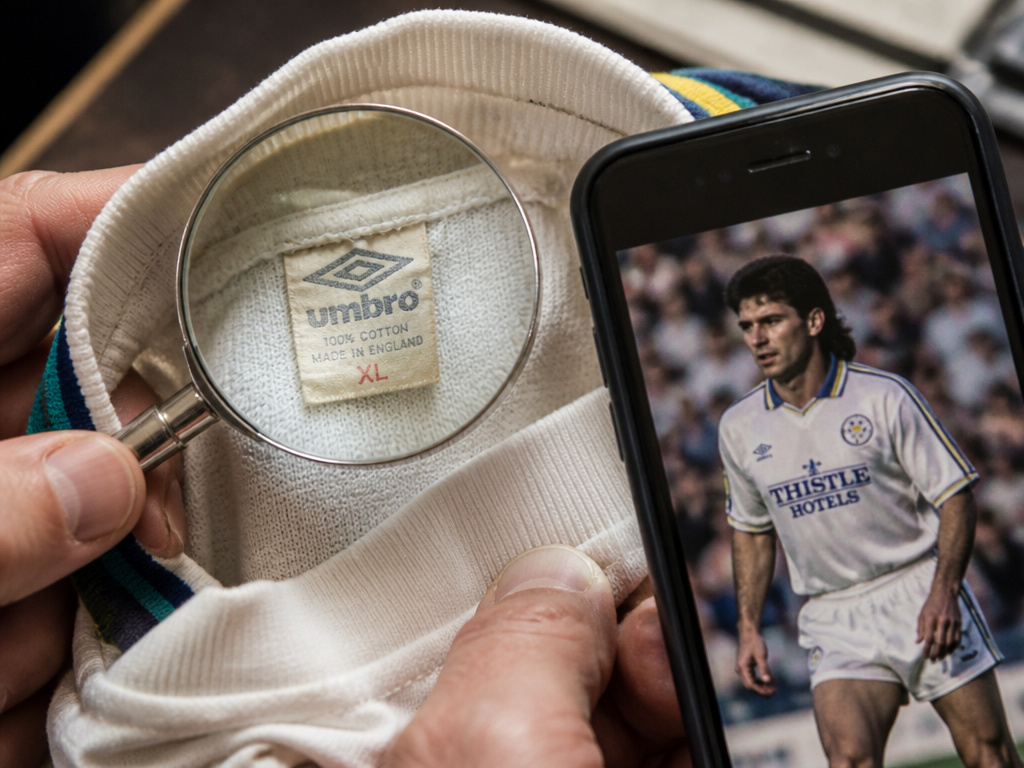
Vintage shirts are a minefield because the standard rules bend. A shirt from 1992 won’t have a scannable QR code or a tag that looks anything like a modern one. Your inspection needs to shift from checking compliance to verifying history.
First, define your terms. An original vintage shirt was manufactured in the period the design was used. An official reissue is a new, licensed reproduction. A fake is an unlicensed copy. Reissues from brands like Adidas Originals or Score Draw are legitimate products, but they are not vintage.
Here’s how to adjust the checklist for older shirts:
- Research the Model: Don’t just check a code. Know what the correct labels, sponsor fonts, and fabric composition should be for that specific year and brand. One shirt can have several sponsor variations, especially for European matches.
- Prioritize Photos Over Tags: Match photos are your best friend. Does the shirt in the listing match what the players wore in games from that season? Look at collar design, sleeve details, and sponsor placement.
- Beware of Artificial Ageing: A fake shirt that’s been worn and washed for a year will look old. Yellowing, fading, and slight pilling don’t prove authenticity. Focus on the construction details that can’t be faked through wear.
- Ask for More: A seller who provides extra photos of labels, seams, and inside stitching without hesitation is more likely to be reputable. If a seller refuses or gets defensive, that’s a significant red flag.
Common mistake: Assuming a retro shirt with a swing tag is fake. The enforcement guide says retro replicas are unlikely to have tags, which is generally true. However, some genuine deadstock (never sold) vintage shirts can still have their original tags. The key is whether the tag looks period-appropriate, not just that it exists.
How to Care for the Real Thing (So It Lasts)
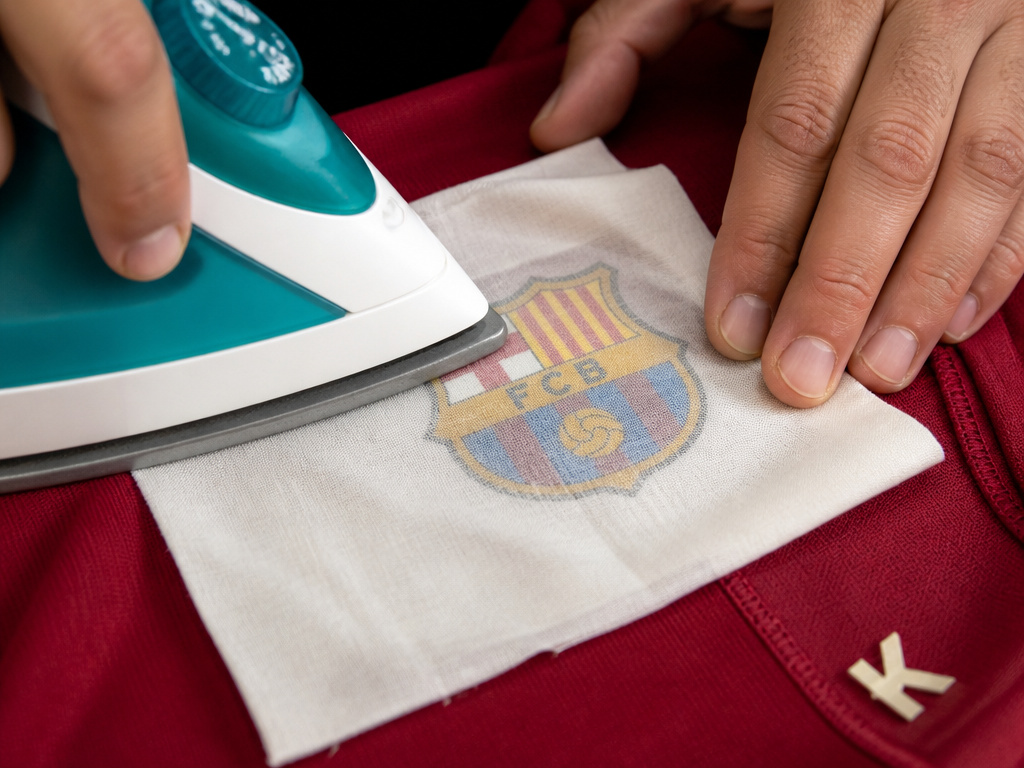
Once you’ve verified and bought a genuine shirt, proper care maintains its value and appearance. This is especially crucial for collectibles. My own mistakes taught me this.
I once ruined a flocked name and number by ironing it directly. Applying heat directly to the print caused the ‘K’ to curl up like a crisp packet. The rule now is simple: shirt inside out, a thin cotton cloth between the iron and any print, and the lowest heat that gets the job done. For daily washing football shirts, turn them inside out, use a gentle detergent, and avoid fabric softener. Hang them to dry; tumble drying is the fastest way to crack and fade prints.
For storing a collection, avoid hanging cotton shirts for years, it stretches the shoulders. I learned this after a couple of my older cotton jerseys developed permanent hanger bumps. Fold them neatly. If you’re framing a shirt, use UV-protective glass and hang it on an interior wall. I framed my first shirt against a sunny wall, and over time the white had turned a permanent creamy yellow on one side. Sunlight is a shirt’s worst enemy.
Using online tools/databases for verification
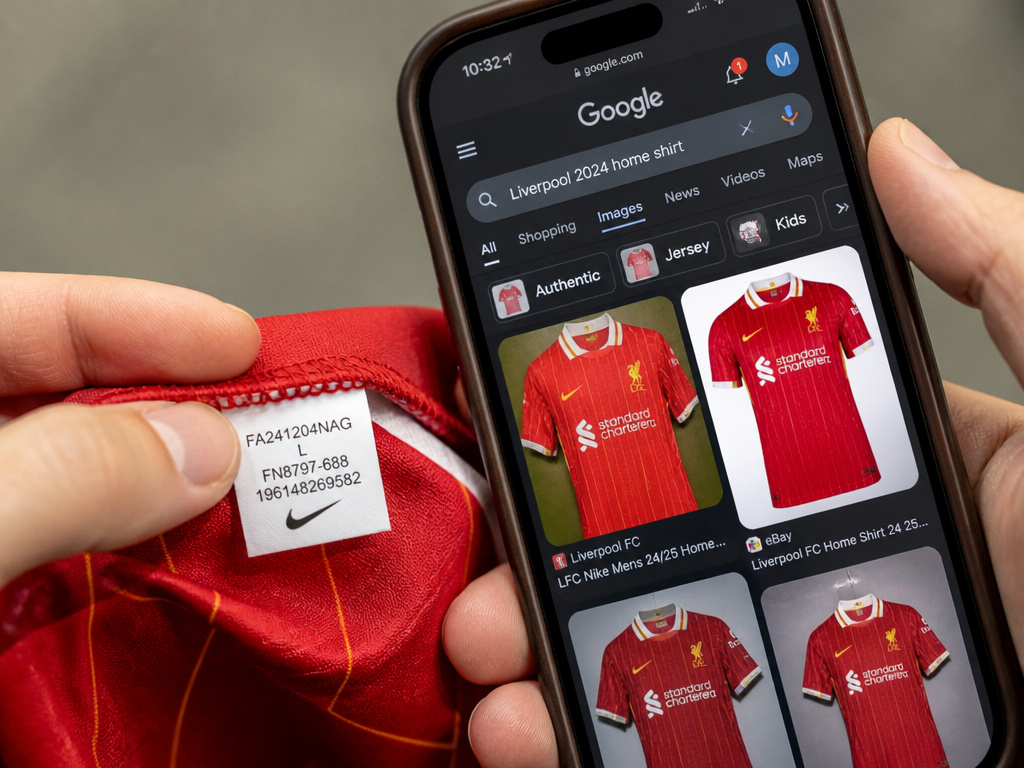
One practical verification method in the how to spot a fake football shirt process is to search a shirt’s product code online. For many brands, typing this code into a search engine should bring up an image of the genuine item. This can be a quick way to spot obvious fakes. However, this tool has limits. Counterfeiters are known to copy genuine codes, so a matching search result does not guarantee authenticity. For vintage shirts, match photos are a valuable resource, showing the exact details of shirts as they were worn. A seller should be willing to provide additional photographs of labels and codes before you commit to a purchase.
Understanding shirt terminology (replica vs authentic)
In this context, ‘replica’ refers to the official, mass-produced fan version of a team’s kit, distinct from a counterfeit fake. An ‘authentic’ vintage shirt is one manufactured during the period the design was originally used. Key checks for a genuine replica include looking for a barcode sticker applied separately, not one pre-printed on a tag, and avoiding items with pen marks on the care labels. Be aware that for older shirts, minor imperfections like wonky stitching do not automatically mean a fake, as original mass production had variances. One shirt design can also exist with different sponsor variations, especially for European competitions.
Frequently Asked Questions
Are fake football shirts worth it?
Financially, no. They use inferior materials that degrade quickly, often fading or falling apart after a few washes. Ethically, no. You risk funding organised crime and harm legitimate businesses. As an investment, absolutely not. A fake has zero collector value and will only depreciate.
What’s the most common giveaway on a fake shirt?
For modern shirts, it’s often the swing tag and labels. A generic ‘SPORT PERFORMANCE’ tag or pen marks on the care label are dead giveaways that appear on a huge number of counterfeits, as outlined in the primary enforcement guide.
How can I tell if a vintage shirt is real?
You need to become a mini-historian for that specific shirt. Cross-reference the shirt against match photos from the era. Check the labels and construction methods against known originals. When in doubt, buy from a specialized, reputable vintage dealer with a solid returns policy.
Is it illegal to buy a fake football shirt?
In the UK, it is not illegal to buy a fake for personal use. However, it is illegal to sell them, with penalties of up to 10 years in prison and an unlimited fine. The broader risks involve data security and supporting criminal enterprises.
Do all genuine shirts have a unique number?
According to the Premier League and ACG guide, on official product there is usually a unique sequential number on a label or hologram. If you find duplicates of this number, the items are counterfeits. However, some older vintage shirts may not have this feature.
Before You Go
The game has changed. Spotting a fake isn’t about looking for a glaring spelling mistake anymore. It’s a forensic exercise in checking codes, feeling fabrics, and reading the small print on labels. The most important shift is moving from a single test to a layered inspection. A product code is a clue, not a verdict.
If you take one thing from this, let it be the five-step bump-feed checklist for online buys. It turns the anxiety of a Depop listing into a systematic review. Ask for the code photo, scrutinize the tags, zoom in on the stitching. A seller with a genuine shirt won’t mind providing the evidence.
And if you’re ever holding a shirt and something feels off, the crest is fuzzy, the tag feels cheap, the price was too good, trust that instinct. Walk away. The satisfaction of finding a genuine shirt, one that will last and hold its story, is worth the wait and the full price. That’s where the real value is.
