
How to Command Your Box as a Goalkeeper: Step-by-Step
This post contains affiliate links. As an Amazon Associate, we earn from qualifying purchases.
A common framework for commanding your box, such as the one from SimpleDrills.com, involves mastering five vocal commands: KEEPER, AWAY, MAN ON, DROP, HOLD, and delivering them early, loud, and specific. Your starting position, with feet shoulder-width apart and weight forward, dictates whether you can claim a cross or must punch. This isn’t about being the loudest; it’s about using precise language to organize the penalty area before a shot is even taken.
That precision changes everything. A generic shout like “cover him” leaves three defenders looking at each other. A specific command like “Sarah, left, mark 9” moves one player exactly where she’s needed. The difference is the clarity that turns your voice from noise into a tactical tool, not volume. This is how to command your box as a goalkeeper.
What follows is the system: the five essential commands, the stance that allows you to act on them, the 19-minute drill that builds the instinct, and how to handle the moments, crosses, back-passes, 1v1s, where command is the only thing between a clean sheet and a conceded goal.
Key Takeaways
- Practice the five core commands, KEEPER, AWAY, MAN ON, DROP, HOLD, until they are automatic; in the SimpleDrills.com drill, a rep doesn’t count if you move before you call.
- Your starting position is everything: feet shoulder-width apart, weight on the front half of your feet, hands ball-width apart in front of your bodyline.
- Command early and specific, not loud and late. Use names and directions: “Jim, left, #9” not “who’s got him?”.
- The GK Command of the Box drill takes 19 minutes (4 to set up, 15 to run) and is suitable for U12 to adult players; it bridges the gap between knowing the calls and using them under pressure.
- Over-communication is a failure mode. Too much talking becomes background noise; communicate to organize, not to hear your own voice.
The 5 Core Commands You Must Own
Forget trying to invent commands in the moment. You need a short, shared vocabulary your entire defense understands. The SimpleDrills.com drill identifies five essential ones. These aren’t suggestions; they are the operating system for your penalty area.
KEEPER means “I’m coming.” It’s your claim to any ball you can reach. Shout it early so defenders know to step aside and avoid a collision. Sources disagree on the optimal phonetics: the FA Technical Manual and NSCAA manuals advocate for simple one- or two-word commands (e.g., ‘Keeper’), while the SoccerClinics.com guide argues that ‘Keep’ isn’t effective enough and that you need the second syllable ‘KEE-per’.
AWAY means “clear it now.” This instructs the nearest defender to launch the ball into row Z without a second thought. It’s for danger you cannot claim yourself.
MAN ON is a warning. It tells a teammate they have a player closing in behind them, usually before they’ve had a chance to scan their shoulder. It prevents a turnover in a catastrophic area.
A command like DROP (as used in the SimpleDrills.com drill) can tell your defensive line to retreat. However, sources disagree on the specific lexicon: the NSCAA manual might prescribe ‘Contain!’ or ‘Step!’, while SoccerClinics.com uses ‘Drop’ to instruct a specific defender.
HOLD means “don’t play.” It’s the command to stop, keep possession, and reset. Use it when a defender is about to launch a hopeful ball upfield under pressure.
Common mistake: Shouting generic directives like “cover him” or “who’s got 9?”. The SoccerClinics.com guide states the correct command should be specific: “Jim, left, #9”. A named, directed order gets one action. A vague question gets none.
The magic lies in drilling these words until the call comes before the thought. In the GK Command of the Box drill, if you move for the ball without shouting first, the rep is scrubbed. That rule exists for a reason.
It Starts With Your Stance: The “Set Position”
You can’t command what you can’t reach. Your authority is physical before it’s vocal. Everything begins with the “Set Position” as defined in the FA Technical Manual. This is your ready state, the posture from which you can move explosively in any direction.
Get this wrong, and you’re just a loud spectator.
- Feet: Approximately shoulder-width apart.
- Weight: On the front half of your feet, body slightly forward.
- Knees: Slightly flexed.
- Hands: In front of the bodyline, roughly ball-width apart.
This is a loaded spring, not a casual crouch. The weight forward is critical, it stops you from rocking onto your heels, which adds a half-second of delay to every dive and step. Your hands aren’t at your sides; they’re out in front, already in the catching zone. From here, you can step into a scoop technique for low balls, lead with your hands, and use “soft hands – strong wrists” to secure it.
Think of it as the foundation of your house. If your goalkeeper positioning is off, too deep, too narrow, weight back, the whole structure of your command collapses. You’ll be late to crosses, second to through balls, and your shouts will carry the tinge of desperation the SoccerClinics.com guide warns about: never sound panicky.
The Vocal Mechanics: How to Be Heard, Not Just Noisy
A firm voice with conviction is a leadership tool. A panicked scream is a liability. The FA Technical Manual gives the gold standard: communication must be “Early, Loud, clear, calm and concise.” Notice the order. Early comes first. If your call arrives as the cross is being headed, you’ve failed.
The SoccerClinics.com guide breaks down the delivery: your language is spoken with conviction, never desperate. A whisper makes you seem indecisive. The best communicator is the clearest keeper, not the loudest one.
Here’s where sources show a practical disagreement on specifics, which is useful to know. The NSCAA manual might prescribe “Contain!” for defensive organization, while SoccerClinics.com prefers “Drop”. Your team’s lexicon matters more than the absolute “right” word. Agree on the terms in training.
| Situation | Weak Communication | Strong, Specific Command |
|---|---|---|
| Opponent running at defense | “Careful!” | “Sarah, DROP!” |
| High cross you can claim | “Mine!” | “KEEPER!” |
| Back pass under pressure | “Man on!” | “Mike, AWAY! Left channel!” |
| Organizing at a corner | “Pick up!” | “Mark 6. Stay goal-side.” |
At the highest levels, with crowd noise, a hand gesture, a sharp point, might replace a shout. For the rest of us, verbal communication is essential. And a final, crucial warning from the SoccerClinics.com guide: don’t over do it. Constant chatter becomes background noise. Talk to organize, not to fill silence.
The 19-Minute Drill That Builds Instinct
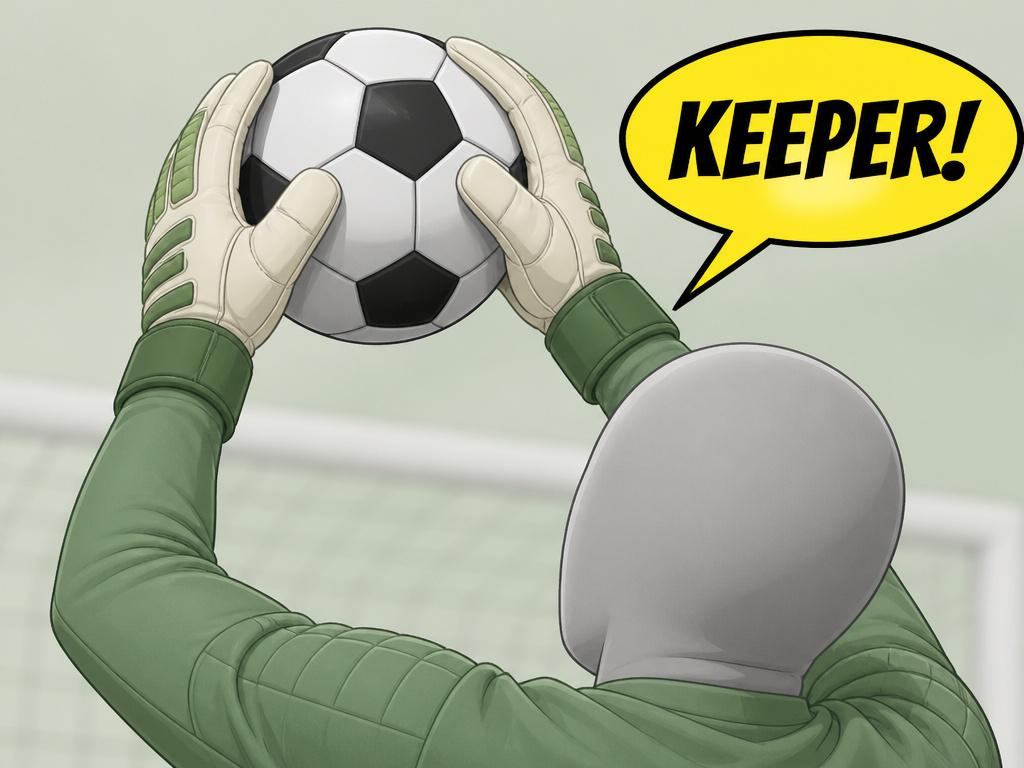
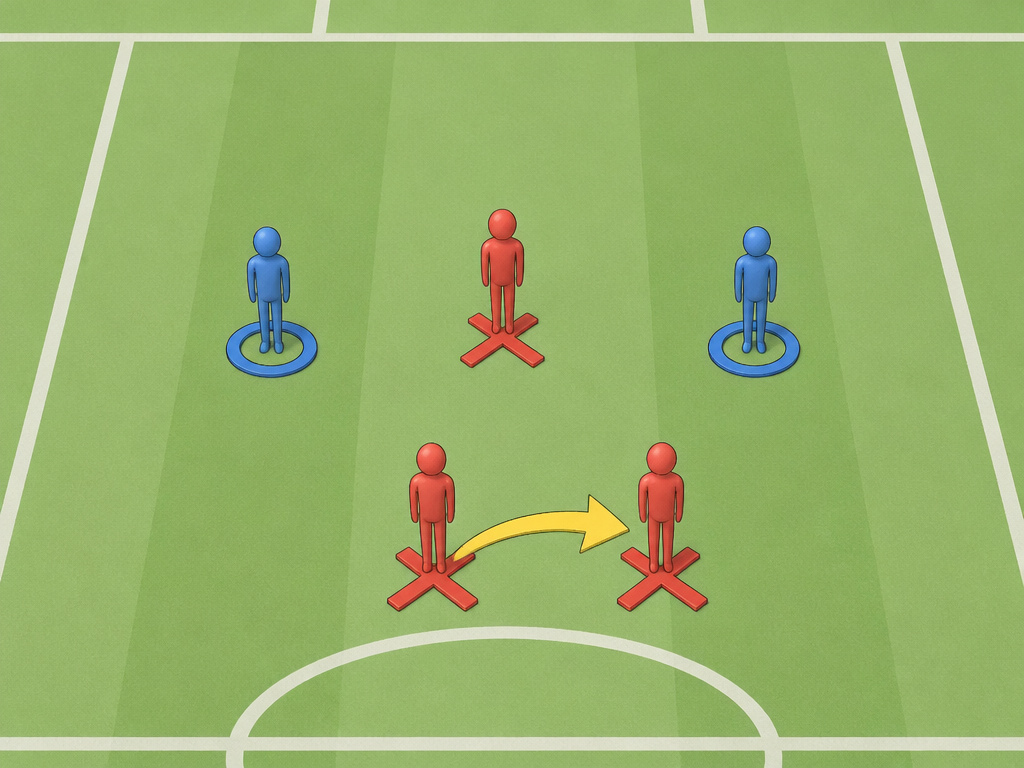
Knowing the commands in your head is useless. You need them in your muscles, under fatigue, when the pressure is on. The GK Command of the Box drill from SimpleDrills.com is built for exactly that. It takes 19 minutes total (4 to set up, 15 to run) and works for ages U12 to adult.
I’ve run this drill with youth keepers who were technically gifted but silent. The first few reps are awkward, shouting feels exposing. But by the third session, the call starts coming a split-second before the move. That’s the habit you’re building: voice then action.
The SimpleDrills.com drill is designed to work well with around 10 players. It bridges the gap between theory and a rainy Tuesday night match. It makes the command the trigger for the action, not an afterthought.
Commanding Specific Scenarios
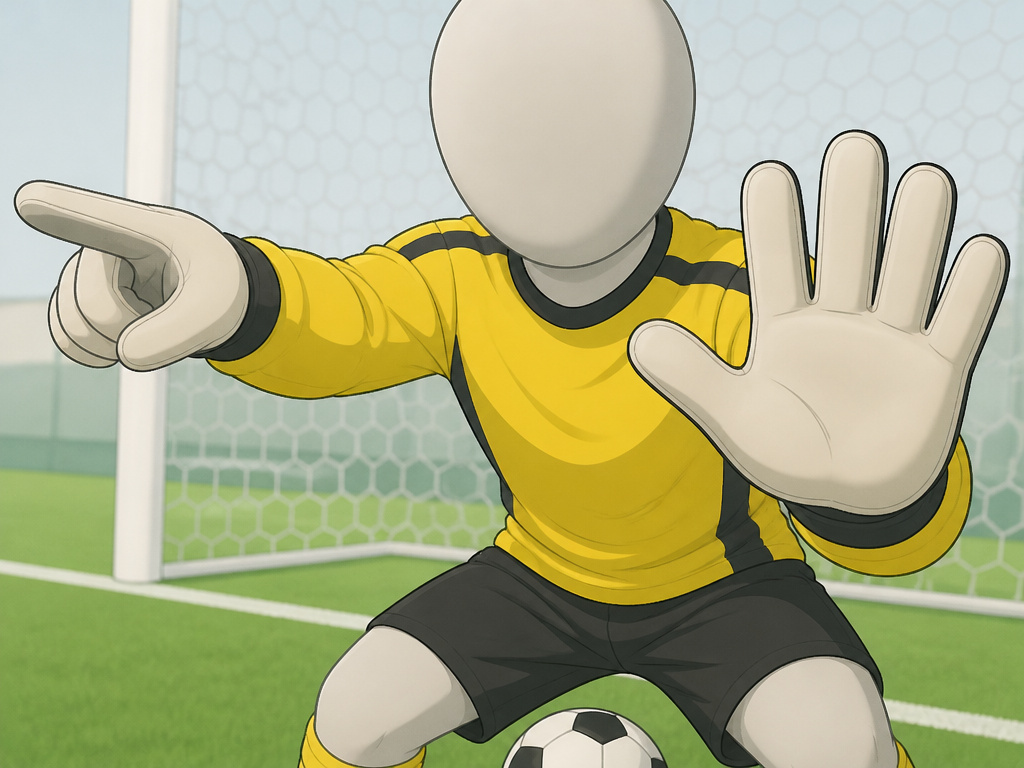
Your toolbox of commands gets applied to specific fires. Here’s how the system works in the moments that define games.
Dealing with Crosses
This is command central. Your first decision is catch or punch. If you’re coming, one loud “KEEPER!” clears a path. If you’re not, “AWAY” or a directed “Head it, Sam!” organizes the clearance. Your starting position is key, too deep and you’re under the ball, too far out and you’re lobbed. It’s the blend of positioning in the box and clear instruction.
Organizing Set Pieces (Corners & Free Kicks)
This is less about reflex and more about pre-planning. Before the kick, you are a manager. Point, assign markers: “You take 9, you stay on the post.” Use “HOLD” to keep defenders on the line until the ball is cleared. A silent keeper at a corner is a gift to the attacking team.
The 1v1 Breakaway
Command here is psychological as much as physical. Your presence, coming out early, big, with knees bent and hands ready, narrows the angle and forces the striker’s decision. A rushed shot is a win. Sometimes, the most powerful command is saying nothing and making yourself a physical barrier.
Back Passes & Playing With Your Feet
Modern commanding means using your feet. A back pass is a test. Shout “MAN ON” if pressure is coming. Your first touch must be clean, into space. The FA manual notes the Dribble and Drive is the most accurate and favored distribution technique today. Command here means relieving pressure with intelligence, not just booting it.
Common Mistakes and How to Fix Them
The Silent Reactor: You make great saves but only speak after a mistake. Fix: Run the 19-minute drill. The rule “no call, no rep” will break the habit fast.
The Chatterbox: You talk constantly, so your defenders tune you out. Fix: Remember the SoccerClinics.com warning. Ask your coach or a teammate after practice: “Did my commands at the end help or add noise?” Be ruthless with editing.
The Flat-Footed Commander: You shout good instructions but are always a step late to the ball. Fix: Drill your set position without the ball. Have a coach call “left” or “right” and practice exploding from your ready stance. Your voice is useless if your body can’t follow its orders.
The Hopeful Puncher: You default to punching crosses you could catch because your positioning is off. Fix: Work on claiming crosses in training. Start with static crosses, focus on catching at the highest point, and shout “KEEPER” every single time to build the association.
Technical Catching/Punching Technique
Your ability to command your box as a goalkeeper starts with a ready position that allows you to move instantly. Your feet should be about shoulder width apart with your weight on the front half of your feet, knees slightly flexed, and your body leaning forward. Your hands need to be in front of your body, roughly a ball’s width apart. For low balls, use the ‘Scoop’ technique: lead with your hands to bring your bodyweight forward and use soft hands with strong wrists to secure the ball. This balanced, aggressive stance projects confidence and allows you to cleanly claim or punch the ball, eliminating second chances and showing your defense you are in control.
Frequently Asked Questions
What are the most important commands for a goalkeeper?
The five core commands are KEEPER (I’m coming), AWAY (clear it), MAN ON (pressure behind you), DROP (defensive line retreat), and HOLD (keep possession, don’t play). Master these before adding any team-specific jargon.
How can I be more vocal if I’m shy?
Start in training with the isolated drill, just shouting the words with no one else around. The 19-minute GK Command drill adds pressure gradually. It’s not about being the loudest personality; it’s about executing a trained skill. The confidence comes from repetition.
What if my defenders don’t listen to me?
This is usually a training issue, not a match issue. First, ensure you’re using specific, early commands (“Jamie, left!”) not vague ones (“someone get it!”). Second, involve your coach. Run drills where defenders are required to react to your calls, like in the GK Command drill. They need to be trained to listen as much as you need to be trained to speak.
How do I command the box on corners?
Be proactive. Before the taker steps up, point and assign markers clearly. Use “HOLD” to keep defenders on the line. As the ball comes in, decide early, if you’re coming, shout “KEEPER!” with absolute authority. If you’re staying, command who should clear: “AWAY, near post!”.
Is commanding the box more about voice or positioning?
It’s both, but positioning enables your voice. If your starting position is poor, you can’t reach the ball to make your “KEEPER” call valid. Your voice organizes the defense, but your body must be able to execute what you’re organizing them around. Drill them together.
Before You Go
Learning how to command your box as a goalkeeper is a technical skill built on a foundation of stance, a vocabulary of five words, and a drill that takes 19 minutes. The goal is to be obeyed, not merely heard.
Start this week not by trying to shout more in a game, but by running the GK Command drill once in practice. Get the reps. Feel the awkwardness of shouting when you don’t have to. That awkwardness is the gap you’re closing between being a shot-stopper and being a commander.
Next time you watch a match, mute the commentary and watch the keeper. Count how many times they move without speaking. Then watch the best, they’re a step ahead, and their mouth moves before their feet do. That’s the habit. Now go build it.
