
How the Women’s Super League Works: The 14-Team Future
This post contains affiliate links. As an Amazon Associate, we earn from qualifying purchases.
The Barclays Women’s Super League (WSL) is England’s top-tier professional women’s football league. According to the league’s official website, it currently has 12 teams, though some sources like Wikipedia list 14. The team with the most points wins the league, and the bottom club is relegated to the second tier, WSL 2. From the 2026-27 season, the league expands to 14 teams, changing the promotion and relegation format and adding four extra games per club.
That expansion is the biggest structural shift since the league began. It forces a rewrite of the calendar and a re-think of what sustainability looks like for clubs in the second tier. The changes are unanimous on paper, but not everyone is convinced they’ll work, raising questions about how the Women’s Super League works.
What follows is a walkthrough of how the Women’s Super League works: the points system, the European spots, the strict license clubs need, and the complicated future that starts in 2026. We’ll also touch on the money, the player rules, and why some people think the whole plan might backfire.
Key Takeaways
- The WSL operates a double round-robin format, where each of the 12 teams plays the other 11 twice (home and away) for a 22-match season.
- Three teams qualify for the UEFA Women’s Champions League: the champions enter the group stage, second place enters Round 2 qualifying, and third place enters Round 1 qualifying.
- From the 2026-27 season, the league expands to 14 teams, creating a 26-game season and introducing a play-off between 13th in the WSL and the WSL 2 runners-up.
- Clubs must hold a Tier 1 License, which mandates a maximum squad of 25 players with at least eight being homegrown.
- The league uses a “soft” salary cap, allowing clubs to spend up to 40% of their revenue on player wages.
The Basic League Format
At its core, the WSL is simple. You have 12 professional clubs. Over a season running from September to May, each club plays every other club twice—once at home, once away. That’s 22 matches.
Three points for a win, one for a draw, zero for a loss. The team with the most points at the end wins the league. If two or more teams finish level on points, the tie is broken in this order:
- Goal difference (goals scored minus goals conceded).
- Most goals scored.
- Most matches won.
- Head-to-head league record between the tied teams.
- A play-off match(es).
This tie-breaking procedure is detailed in the league’s official competition rules. It ensures that even a deadlock on points, goals, and wins has a definitive resolution, avoiding shared titles.
The season wasn’t always a winter one. For its first six years (2011–2016), the WSL was a summer league. The switch back to a winter schedule happened for the 2017–18 season.
Where this goes sideways: New fans often get tripped up by the current team count. Some sources, like the league’s own website, state there are 12 teams. Others, like Wikipedia, list 14. The discrepancy reflects differing reporting; the league will be 14 teams from the 2026-27 season onwards, but sources disagree on the current count.
Promotion, Relegation and the Upcoming Expansion
This is where understanding how the Women’s Super League works gets interesting, because the rules are changing. We will examine the rules season by season.
For the 2025-26 season (the transition):
The league is still 12 teams. To set up the expansion, the promotion rules from the second tier (WSL 2) are different.
- The top two teams in WSL 2 are automatically promoted to the WSL.
- The third-placed team in WSL 2 enters a play-off against the bottom club in the WSL. The winner of that one-off match gets the final spot in the top flight for the next season.
From the 2026-27 season onwards:
The WSL becomes a 14-team league. The promotion and relegation format settles into a new normal.
- The bottom club in the WSL (14th place) is automatically relegated to WSL 2.
- The WSL 2 champions are automatically promoted to the WSL.
- A play-off is held between the 13th-placed club in the WSL and the runners-up in WSL 2. The winner plays in the WSL the following season.
| Season | WSL Teams | Promotion to WSL | Relegation from WSL |
|---|---|---|---|
| 2025-26 (Transition) | 12 | Top 2 from WSL 2 (auto) + Play-off (WSL 2 3rd vs WSL 12th) | Bottom club enters play-off |
| 2026-27 Onwards | 14 | WSL 2 Champion (auto) + Play-off (WSL 2 Runner-up vs WSL 13th) | Bottom club (auto) |
This new system is designed to create more “high-stakes” matches at the bottom of the table and increase movement between the divisions.
The changes to the wider pyramid, explained here, are also significant. From 2026-27, two teams will be relegated from WSL 2, making room for two automatic promotions from the third tier (the FA Women’s National League North and South winners).
The European Pathway
Finishing high in the WSL isn’t just about domestic glory; it’s the ticket to Europe. Each season, the top three clubs qualify for the UEFA Women’s Champions League (UWCL).
The exact entry stage depends on England’s coefficient ranking with UEFA, but the current format for the 2026-27 cycle is set:
- WSL Champions: Enter the UWCL league phase directly (the group stage equivalent).
- Runners-up: Also enter the UWCL league phase directly.
- Third Place: Enters the competition at the qualifying league path, needing to win a mini-tournament to reach the league phase.
This is a major incentive and a source of revenue. Competing in the Champions League raises a club’s profile and helps attract better players. It also creates a clear top tier within the WSL, with clubs like Chelsea, Arsenal, and Manchester City regularly battling for these spots.
The European place is one reason the switch to a winter schedule was so important. It aligns the WSL’s climax with the latter stages of the UWCL, preventing the awkward gap that existed when the WSL ended in October.
Common mistake: Assuming the Women’s FA Cup winners get a Champions League spot. Unlike the men’s game, there is no European qualification through the domestic cup in England. The route is league position only.
Licensing, Squads and the “Soft” Salary Cap
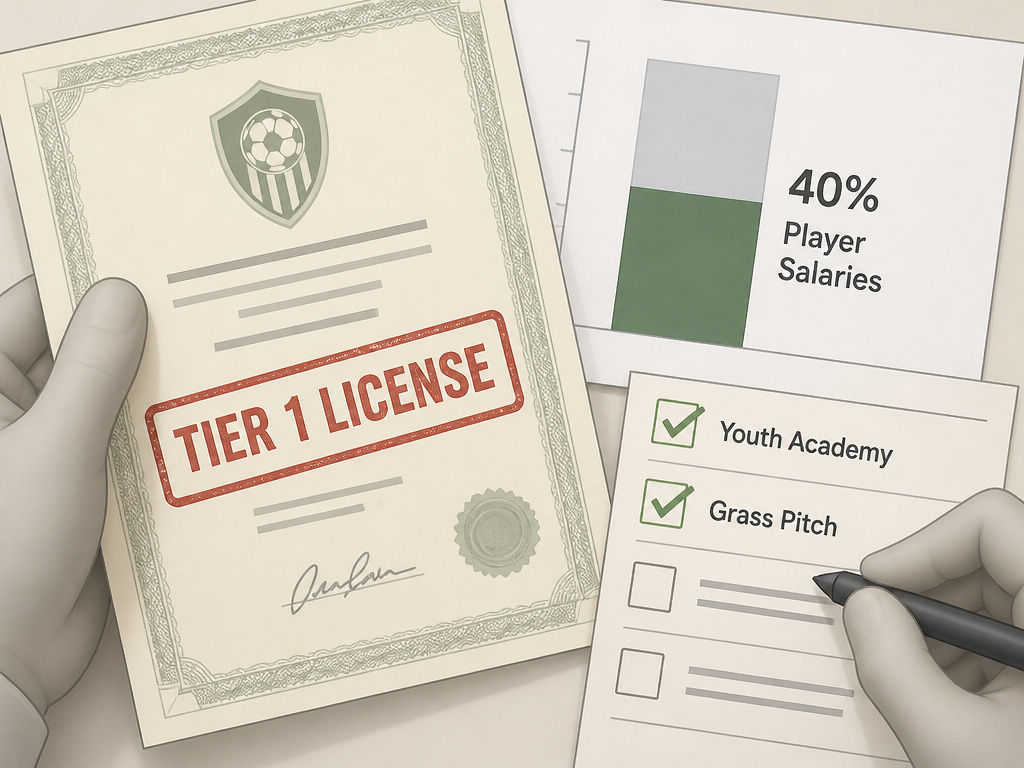
To even compete in the WSL, a club must hold a Tier 1 License. This isn’t a formality. The license enforces minimum standards that drive professionalism. Key requirements include operating a youth academy, playing on a grass pitch (unless an exemption is granted), and adhering to strict squad composition rules.
The squad rule is specific: a maximum of 25 registered players, of whom at least eight must be “homegrown.” A homegrown player is defined as one who has been registered with any club affiliated to the English Football Association (The FA) for a period of three entire seasons (or 36 months) before their 21st birthday.
On the financial side, the WSL currently operates a “soft” salary cap. Clubs are allowed to spend up to 40% of their revenue on player salaries. This is intended to prevent unsustainable spending and create a more level playing field, but it’s not a hard cap. The league has not ruled out introducing stricter financial regulations in the future, especially as revenues grow.
The push for higher standards has had casualties, with some clubs citing the financial burden of license requirements as unsustainable.
Challenges and Controversies of Expansion

The decision to expand to 14 teams was unanimous among the clubs, but the path forward is packed with obstacles. The BBC Sport WSL expansion report details the tightrope the league is walking.
The Calendar Squeeze
Adding two teams means each club plays four more league games (26 instead of 22). Finding space for those extra matchdays is a logistical nightmare. The calendar is already packed with: * UEFA Women’s Champions League matches.
- Domestic cups (Women’s FA Cup, League Cup).
- Mandatory breaks: a six-week rest after major tournaments, a two-week winter break.
- FIFA windows for international matches.
- New competitions: a Women’s Club World Cup from 2028, a Women’s Champions Cup from 2026.
With 24 available weekends, two midweek games will likely take place to fit the 26 games in.
The Sustainability Question
While the official line is that expansion will increase competitiveness and financial security, not everyone is convinced. As noted in ESPN’s reporting, some sources within the game worry that most WSL 2 clubs cannot match the financial investment at the top of the WSL. The fear is a “yo-yo effect,” where the same financially limited clubs bounce between the top two divisions without ever establishing themselves, risking stability as discussed here.
The part nobody mentions: The player welfare guidelines are strict for a reason. A maximum of two consecutive midweek games, and no midweek games directly after an international break. These rules protect players but also box the schedule planners into a corner. A single postponed game can cause a cascade of rescheduling headaches.
Frequently Asked Questions
How many games does each WSL team play?
Currently, each of the 12 WSL teams plays 22 league games (11 home, 11 away). From the 2026-27 season, when the league expands to 14 teams, each club will play 26 league games.
Do WSL players get paid?
Yes, the WSL is a fully professional league. All players are paid a salary by their clubs. The league operates a “soft” salary cap, limiting club spending on player wages to 40% of their revenue.
How does the WSL differ from the men’s Premier League?
The main differences are scale and structure. The WSL has 12 teams (moving to 14) vs. The Premier League’s 20. They share a similar points system and promotion/relegation concept, but the WSL has a salary cap and stricter licensing rules focused on developing the women’s game. The Champions League qualification also differs, with the top three WSL teams qualifying.
What is WSL 2?
WSL 2 (officially the Barclays Women’s Super League 2) is the second tier of women’s professional football in England. It is also fully professional and consists of 12 teams. It is connected to the WSL through the system described above for promotion and relegation.
When did the WSL start? The league was established by The Football Association (The FA) in 2010. Sources disagree on the inaugural season: the league’s website states it was 2011, while Wikipedia notes the establishment in 2010. It started with 8 teams and no relegation for its first two seasons, replacing the old FA Women’s Premier League as the top division.
The Bottom Line
The WSL is a league in deliberate transition. Its current 12-team, 22-game format is the foundation, built on clear licensing and a direct path to Europe. But the entire structure is pivoting towards a 14-team future that promises more games, more drama at the bottom of the table, and a serious test of the league’s depth.
It will be ensuring the clubs promoted into this bigger WSL have the resources to stay there. The Wikipedia Women’s Super League entry will update with the new champions and stats, but the story of the next decade will be written by whether the expansion strengthens the pyramid or stretches it too thin.
