
How the FA Cup Works: Format, Entry, and Ties Explained
This post contains affiliate links. As an Amazon Associate, we earn from qualifying purchases.
The FA Cup is a knockout competition that runs from August to May, open to hundreds of clubs from the Premier League down to amateur levels. It works on a single-elimination basis: win, you advance; lose, you’re out. The 92 professional clubs from the Premier League and English Football League enter in later rounds, while hundreds more non-league clubs battle through up to six qualifying rounds for a place alongside them.
That structure is the engine of the cup’s famous romance. It creates the possibility, however slim, for a village team to draw a Premier League giant. The competition isn’t just about who lifts the trophy at Wembley in May; it’s about the journey there, which starts on muddy pitches in August. This journey is a key part of how the FA Cup works.
What follows is a walkthrough of that journey and how the FA Cup works. We’ll break down the qualifying and proper rounds, explain exactly when clubs from different levels enter, cover the key rules on replays and substitutions, and look at what’s at stake for the winners.
Key Takeaways
- The competition is split into a Qualifying Competition (up to six rounds for non-league clubs) and the Competition Proper (six rounds for the professional clubs and qualifiers).
- Clubs enter based on their league tier, with Premier League and Championship sides exempt until the Third Round Proper in January.
- Since the 2024-25 season, replays have been abolished from the First Round Proper onwards; drawn matches go straight to extra time and penalties.
- The winner qualifies for the following season’s UEFA Europa League group stage, a major financial and sporting prize.
- For smaller clubs, the 50/50 split of gate receipts for drawn matches (before replays were removed) was a crucial financial incentive, highlighting the cup’s economic importance beyond glory.
The FA Cup Format in a Nutshell: Qualifying and Proper Rounds
The FA Cup is a marathon, not a sprint. It unfolds in two distinct phases: the Qualifying Competition and the Competition Proper. The entire tournament is a pure, single-elimination knockout from the first whistle in August to the last at Wembley.
The Qualifying Competition begins in August. This is where the dreams start for the 600-plus clubs from the National League System (the levels below the fully professional English Football League). They face up to six rounds of knockout football, with names like the Extra-Preliminary, Preliminary, and First through Fourth Qualifying Rounds. The prize for the survivors is a place in the First Round Proper and a shot at the professional clubs.
The FA Cup qualifying competition for the 2026-27 season involved 651 teams battling for 32 spots in the main tournament, which itself included 124 teams in total.
The Competition Proper is what most fans think of. It consists of six rounds:
- First Round Proper (November): The 48 clubs from League One and League Two enter, joined by the 32 qualifying round survivors.
- Second Round Proper (December): The 40 winners from the First Round face off.
- Third Round Proper (January): The big one. All 20 Premier League and 24 Championship clubs enter. This is “FA Cup weekend,” where giant-killings become national news.
- Fourth Round Proper (Late January)
- Fifth Round Proper (Late February)
- Quarter-finals (March)
- Semi-finals (April, at Wembley)
- The Final (May, at Wembley)
This structure is central to how the FA Cup works and creates a natural crescendo. The early rounds are a world of their own, full of local derbies and desperate scrambles for prize money. By January, the whole country is watching.
How Do Teams Enter the FA Cup? The Exemption Ladder
Not every team starts in August. The FA uses an exemption system, detailed in its official rules, to stagger entry based on a club’s league position. It’s a pyramid within a pyramid.
The higher you play, the later you start. This isn’t about privilege; it’s a practical necessity to make the 700-plus team tournament workable. The exemption system is defined by The FA’s Rule 4d, and it creates a clear ladder.
| League Tier / Level | Enters at Round | |————————–|———————-| | Premier League & Championship | Third Round Proper | | EFL League One & League Two | First Round Proper | | National League System (NLS) Step 1 | Fourth Qualifying Round | | NLS Step 2 | Second Qualifying Round | | NLS Step 3 | First Qualifying Round | | NLS Step 4 | Preliminary Round |
The logic is straightforward. A Step 4 club, perhaps playing in front of a few hundred fans, must win four qualifying matches just to reach the First Round Proper and a potential tie against a League Two side. A Premier League club, meanwhile, waits until January and enters a draw where they could face anyone from a non-league survivor to a top-flight rival.
This exemption system is why the Third Round Proper is such an event. It’s the first point where all 92 professional clubs are in the hat together. The draw is televised, and for supporters of smaller clubs, it’s a lottery ticket. The chance to pull a Manchester United or Liverpool away from home can transform a club’s finances.
Common mistake: Thinking non-league clubs have to win “six rounds” to face a Premier League team. A Step 2 club, for example, enters at the Second Qualifying Round. They’d need to win three qualifying rounds to reach the First Round Proper, then win two more proper rounds to reach the Third Round and the big boys. That’s five wins, not six. The path varies by starting point.
From Drawn Matches to Penalties: How Ties Are Decided
The rules for settling a drawn match have undergone the most significant recent change in the competition’s history. For decades, replays were part of the FA Cup’s soul. Now, they’re largely gone.
From the 2024–25 season onwards, replays were abolished from the First Round Proper onwards. This was a calendar decision, attributed to accommodating expanded UEFA club competitions. The impact on smaller clubs was real—a replay against a big team, especially at home, was a financial lifeline.
Now, the path is simpler and harsher:
- 90 minutes: The standard match duration, with a 15-minute half-time.
- Extra time: If the score is level after 90 minutes, the teams play 30 minutes of extra time (two 15-minute halves).
- Penalties: If the score remains level after extra time, a penalty shootout decides the winner.
This format applies all the way to the final at Wembley.
The substitution rule adds a tactical layer. Clubs can name seven substitutes and use three of them during regular time. If a match goes to extra time, they can use one additional substitute (a fourth in total). This encourages managers to hold one substitution back, just in case.
The removal of replays changes the calculus for an underdog. There’s no second chance at a payday. It’s 90 (or 120) minutes to make history. That raises the stakes for every single minute.
What’s at Stake? Prizes, Europe, and Legacy
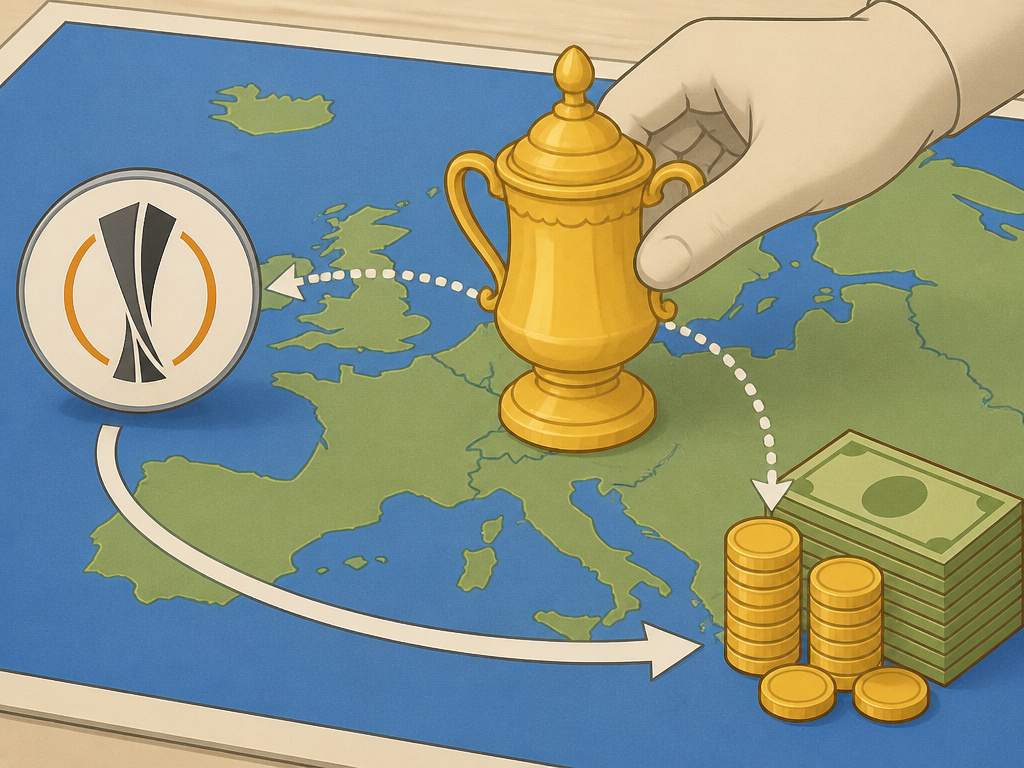
Winning the FA Cup is about more than a trophy and a place in history. It comes with tangible rewards that can shape a club’s future.
The most significant prize is qualification for the UEFA Europa League. The winners normally enter the following season’s Europa League at the league phase. This is a huge deal. It means European football, guaranteed revenue from UEFA, and a higher profile to attract players.
There’s a domino effect here. If the FA Cup winner has already qualified for the Champions League or Europa League through their Premier League finish, the Europa League spot passes to the next-highest Premier League team that hasn’t qualified for Europe. So, a cup win can indirectly send another club into Europe.
The winners also earn a place in the Community Shield, the traditional season opener against the Premier League champions. It’s a showpiece, but for many, the European place is the real target.
For clubs outside the top flight, the financial rewards are more immediate. Each round offers increasing prize money from the FA’s prize fund. But historically, the bigger windfall came from gate receipts. The rules mandated a 50/50 split of gate money for drawn matches before a replay. A non-league club drawing a Premier League giant away could earn hundreds of thousands of pounds from their share of a packed stadium—money that could fund facilities or an entire season’s budget.
With replays gone from the proper rounds, that specific financial boost for smaller clubs has diminished. The focus shifts entirely to winning on the day to advance and earn the next round’s prize money.
The FA Cup vs. The Premier League: A Different Kind of Contest
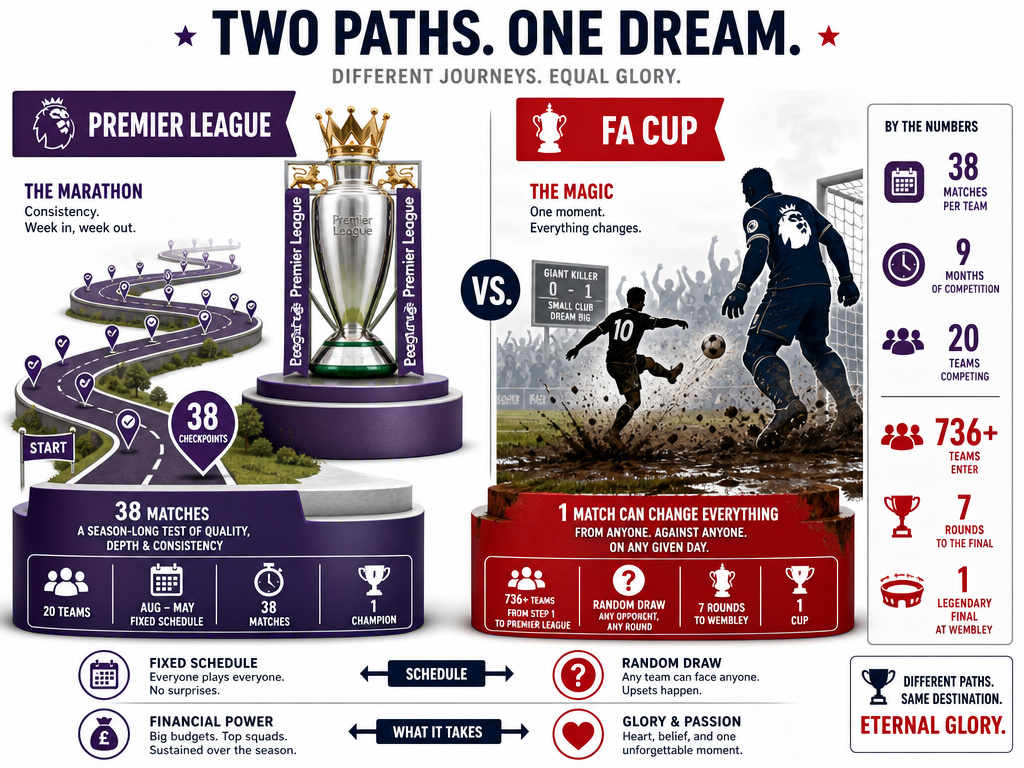
It’s easy to confuse the two, but they are fundamentally different competitions. Understanding this contrast is key to appreciating the cup’s unique magic.
The Premier League is a 38-game marathon. It rewards consistency, squad depth, and financial power over a long season. The best team almost always wins the league. The FA Cup is a knockout sprint. It rewards a single moment of brilliance, a tactical masterclass, or even sheer luck on one afternoon. The best team often does not win the cup.
This difference in format creates the possibility for “giant-killings,” where a semi-professional team beats a top-flight opponent. In a league, the bigger club would almost certainly win over two legs home and away. In a one-off cup tie, played on a possibly muddy pitch in a packed, hostile non-league ground, anything can happen. The pressure is asymmetrical; all of it is on the big club.
The draws are also different. The Premier League schedule is fixed. The FA Cup draw is random. There’s no protection for the big teams. A Premier League champion could be drawn away to a National League North side in the third round. This randomness is the source of endless speculation and drama in the build-up to each round.
Finally, the stakes are perceived differently. For a top-six Premier League club, the cup might be a third priority after the league and Europe. For a lower-league club, it can be their only shot at glory and financial security. That clash of motivations is where the cup’s emotional heart beats strongest.
Frequently Asked Questions
How many teams play in the FA Cup?
The number varies slightly each season as clubs join or leave the pyramid. Sources cite varying numbers; for example, the 2026–27 FA Cup is listed as having 743 entrants, while other sources describe it as open to over 700 clubs. The breakdown varies by season; for the 2026–27 season, it comprised 651 teams in the qualifying competition and 124 teams in the main competition, while other sources describe the first round proper as including the 48 clubs from League One and League Two plus the qualifying-round survivors. The total includes the 92 professional clubs from the Premier League and EFL plus clubs from the non-league system.
Do FA Cup winners get a Champions League place?
No. The FA Cup winners qualify for the UEFA Europa League group stage, not the Champions League. The only routes into the Champions League for English clubs are via Premier League position or by winning the Champions League or Europa League itself.
Has a non-English team ever won the FA Cup?
Yes, once. Cardiff City beat Arsenal 1-0 in the 1927 final. As a Welsh club playing in the English league system, they are eligible and remain the only club from outside England to lift the trophy.
What happens if the FA Cup final is a draw?
Since 1999, the final has always been decided on the day. If the score is level after 90 minutes, the match goes to 30 minutes of extra time. If it’s still drawn after extra time, the winner is decided by a penalty shootout. The era of FA Cup final replays is long over.
Can a player play for two different clubs in the FA Cup in one season?
No. A player shall not play for more than one Club in the Competition in the same season. This rule is absolute. If a player transfers mid-season, they are cup-tied for their new club if they have already played in the FA Cup for their previous club.
The Bottom Line
The FA Cup works because of its beautiful, brutal simplicity: lose once, and you’re out. That rule applies equally to a Premier League titan and a village team, creating a unique sporting democracy from August to May. The recent removal of replays has streamlined the competition, placing even greater emphasis on that one-off, do-or-die match.
For a fan, the advice is simple. In January, when the third-round draw is made, find a non-league club still in the hat and follow their story. Watch how their manager prepares for one shot at a giant. Listen to the noise in their tiny ground. That’s where you’ll feel how the FA Cup really works—not in the boardrooms or the balance sheets, but in those 90 minutes where anything is possible. It’s a reminder that the game’s greatest rewards aren’t always reserved for the richest. Sometimes, they’re earned on a single, muddy afternoon.
