
Buy Back Clauses in Football Explained: How to Choose
This post contains affiliate links. As an Amazon Associate, we earn from qualifying purchases.
A buy-back clause is a contractual agreement in a player’s transfer that gives the selling club a pre-agreed right to re-purchase that player for a fixed fee, within a defined future window. It’s not a gentlemen’s agreement or a vague promise, it’s a legally binding obligation that, when triggered correctly, forces the buying club to sell. The clause provides the selling club with insurance against a player’s future success while offering the buying club a more affordable initial price and guaranteed profit.
Think of it as a call option in the stock market, but for a human being’s registration rights. The selling club pays a premium upfront (often reflected in a lower initial transfer fee) for the right, but not the obligation, to buy back later at a set price. To understand this mechanism, which has moved from a niche tactic to a central part of how elite clubs manage talent, finances, and squad rules, you need to see buy back clauses in football explained.
What follows is a breakdown of the mechanics, the strategic calculus behind their surge, and the real friction points that happen when the ink on the contract meets the reality of the transfer window.
Key Takeaways
- A properly drafted buy-back clause is an automatic trigger; if the selling club meets the conditions and pays the fee, the buying club cannot refuse the transfer.
- The rise in their use is directly tied to Financial Fair Play (FFP) pressures and FIFA’s loan limits, making them a tool for immediate profit and long-term player control.
- For the clause to be valid under Italian federation rules (FIGC NOIF Article 102), it requires five specific conditions, including separate fees for the grant and the repurchase, and the player’s explicit written consent.
- The biggest risk for a buying club is instability; developing a star player only to have him snatched back can wreck long-term sporting planning.
- Even if a clause is triggered, the deal requires the player’s consent on personal terms, a final, often overlooked, human hurdle.
The Nuts and Bolts: What a Buy-Back Clause Actually Is
Forget the idea of a friendly phone call or a first refusal. A modern buy-back clause is a piece of precision engineering in a transfer contract. Its core function is to remove future negotiation from the equation. Sports lawyer Daniel Geey frames it bluntly: a properly drafted clause is an “automatic trigger”; the selling club “will not have any way of refusing the buy-back offer” if the conditions are met.
This distinguishes it from a “first refusal” or “matching rights” clause. First refusal only obligates the buying club to inform the original seller of an offer from a third party. The selling club can then match it, but the buying club could still refuse to sell at all. A buy-back clause removes that choice, it compels the sale to the original club at the pre-set price, provided the trigger conditions (like a specific transfer window or a performance milestone) are satisfied.
A buy-back clause is an automatic contractual trigger. When the selling club submits a formal offer meeting the pre-agreed fee and timing conditions, the buying club is legally obligated to accept it and transfer the player’s registration. The player’s separate agreement to personal terms remains a required, final step.
How a Buy-Back Clause Actually Works: The Step-by-Step Process
The trigger isn’t a single event. It’s a sequence, and missing a step can void the entire clause or lead to the kind of messy disputes that end up with lawyers.
- The Activation Window Opens. The clause specifies when it can be used, often not before two full seasons have passed, and usually within a specific summer or January window. For example, Real Madrid’s clause for Dani Carvajal at Bayer Leverkusen was set at €6.5m after one season, €7m after two, or approximately €8.5m after three.
- The Selling Club Submits Formal Notice. This isn’t an informal inquiry. It’s a written, formal offer to the buying club, referencing the specific clause in the original transfer agreement and tendering the exact buy-back fee.
- The Buying Club is Compelled to Accept. If the offer is valid (correct window, correct fee), the buying club has no contractual right to refuse. The transfer agreement is effectively amended at this point.
- The Player Negotiates Personal Terms. Here’s the critical human element. The clause binds the clubs, not the player. He must agree to the move, his salary, and his contract length with the selling club. If he refuses, the clause is triggered but the transfer collapses.
- Registration is Transferred. Once personal terms are signed, the buying club releases the player’s registration, the selling club submits it to the relevant federation, and the deal is completed.
Where does this process most commonly break down? Step four. A player who has settled with his new club, or who left the selling club on poor terms, holds a veto. The entire clause can be rendered useless by his signature, or lack thereof.
The Strategic Rise: Why Clubs Use Them Now
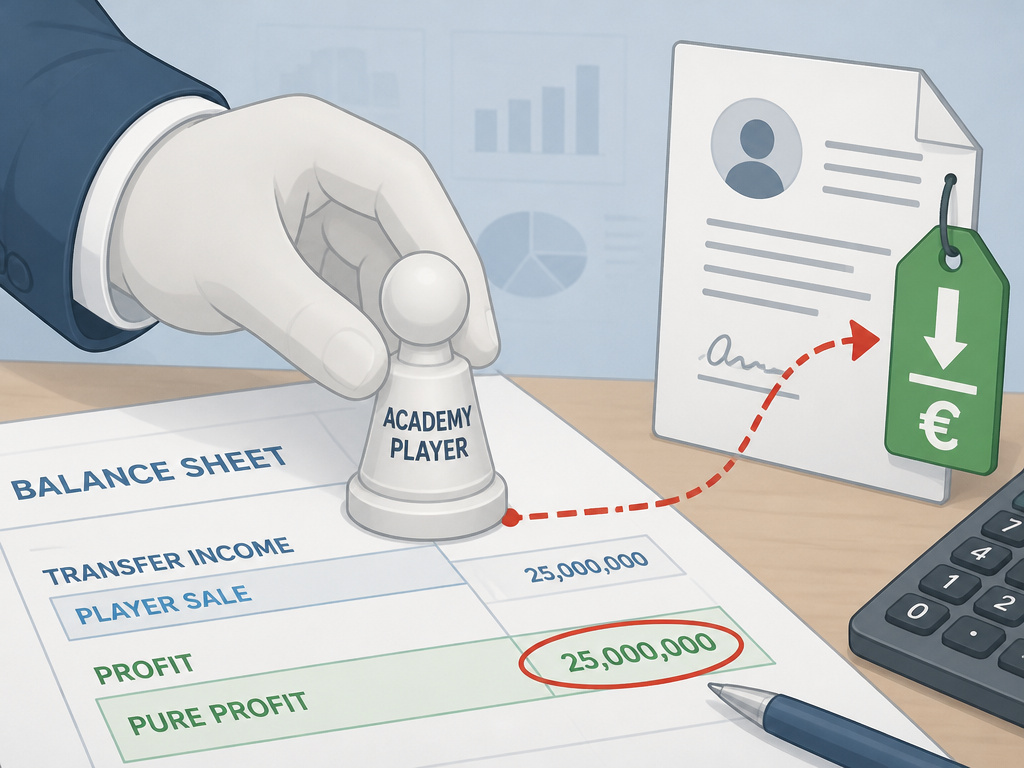
Their recent explosion isn’t an accident. It’s a direct response to two seismic shifts in football’s landscape: financial regulation and loan restrictions.
First, Financial Fair Play (FFP) and Profit and Sustainability Rules (PSR). Selling a homegrown academy player is “pure profit” on the balance sheet, as agent Jamie Khan notes. The sale of a homegrown academy player represents immediate ‘pure profit’ on the balance sheet. A buy-back clause allows a club to secure that profit now and also protects against the risk of the player becoming a £100m star for another team.
Second, FIFA’s loan limits. In July 2024, FIFA reduced the number of players a club can send out on loan internationally from eight to six. This directly attacks the “loan army” model used by clubs like Chelsea to stockpile talent. If you can’t loan 10 players, you have to sell some. A buy-back clause makes that sale palatable, you’re not losing the player forever, you’re placing him in a shop window with a repurchase ticket.
| Driver | Mechanism | Real-World Impact |
|---|---|---|
| FFP / PSR | Creates immediate “pure profit” from academy sales to balance books. | Chelsea selling Tammy Abraham (with £68m buy-back) or Marc Guéhi (with matching rights). |
| FIFA Loan Limits | Forces clubs to sell players they can’t keep or loan, retaining control via clause. | Clubs now sell young talents like Willy Kambwala (Man Utd to Villarreal) with buy-backs instead of loaning them. |
| Asset Management | Turns player development into a controlled, two-stage investment. | Real Madrid’s model: sell (Carvajal, Morata), let them develop, buy back low, then sell high or reintegrate. |
This isn’t just theory, as the buy back clauses in football explained concept shows. Look at Aston Villa’s activity: they sold Jaden Philogene to Hull City for £5m with a buy-back option, then activated it a year later to match Ipswich’s £18m bid. They effectively rented him out for a season, got him top-flight experience, and got him back, while Hull turned a significant profit. The system is working as designed.
Benefits and the Often-Overlooked Drawbacks
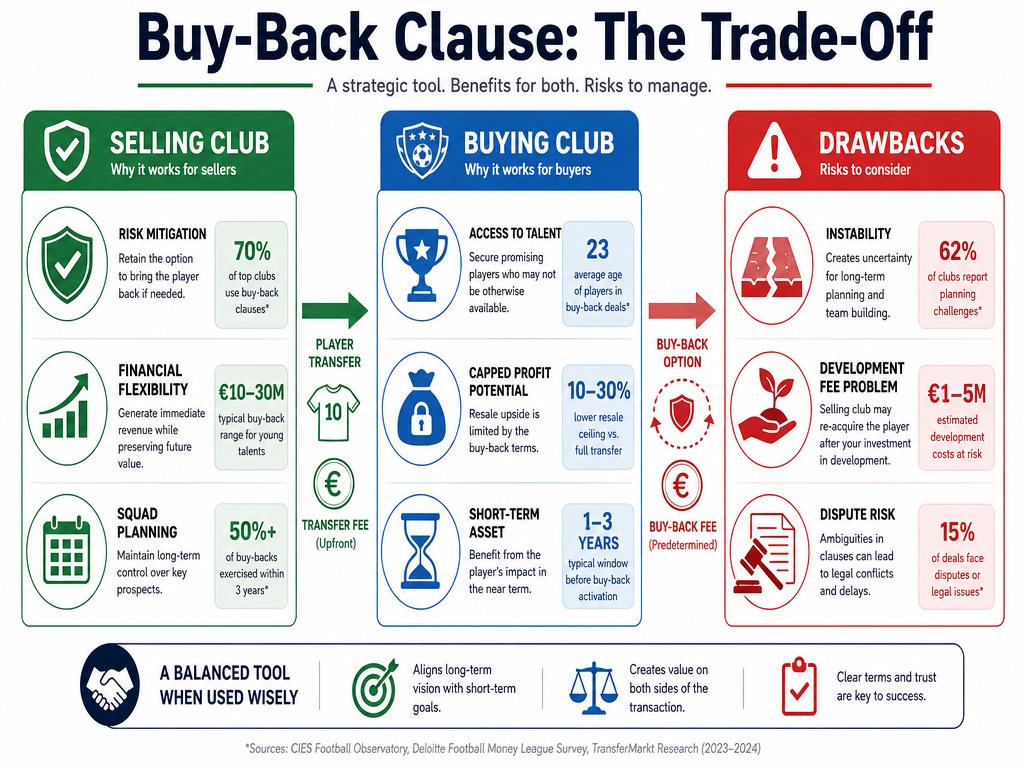
The standard buy back clauses in football explained guide lists the benefits. They’re real, but they’re only half the story.
For the Selling Club:
- Risk Mitigation: Insurance against selling the next superstar.
- Financial Flexibility: Books profit now for FFP, with a known future cost.
- Squad Planning: Can plan for a player’s return in 2-3 years as a finished product.
For the Buying Club:
- Access to Talent: Can sign a player from a bigger club they otherwise couldn’t afford.
- Guaranteed Profit: The buy-back fee is always higher than the original price.
- Short-Term Boost: Gets a high-potential player for a key period.
For the Player:
- Guaranteed Playing Time: Moves to a club where he will start.
- Career Development: Proves himself in a competitive environment.
- Potential Return: Path back to a top club if he excels.
Now, the drawbacks everyone whispers about but rarely prints:
- Instability for the Buyer: Why build a team around a player who could be gone in 18 months? It creates a short-term asset, not a franchise cornerstone.
- The “Development Fee” Problem: The buying club does all the coaching, mentoring, and development work, only to hand back the finished product. Their profit is capped, while the selling club reaps the sporting reward.
- Complexity and Dispute Risk: As the Toby Alderweireld case showed, when a third club enters with a bigger offer, things get messy. If the original contract includes a “buy-back cancellation sum,” the buying club can pay a penalty to void the clause and sell to the highest bidder. If it doesn’t, a legal battle ensues.
- Player Power: The player’s ultimate veto means the clause is a bet on his future goodwill as much as his future talent.
Real-World Examples: From Historic to Modern
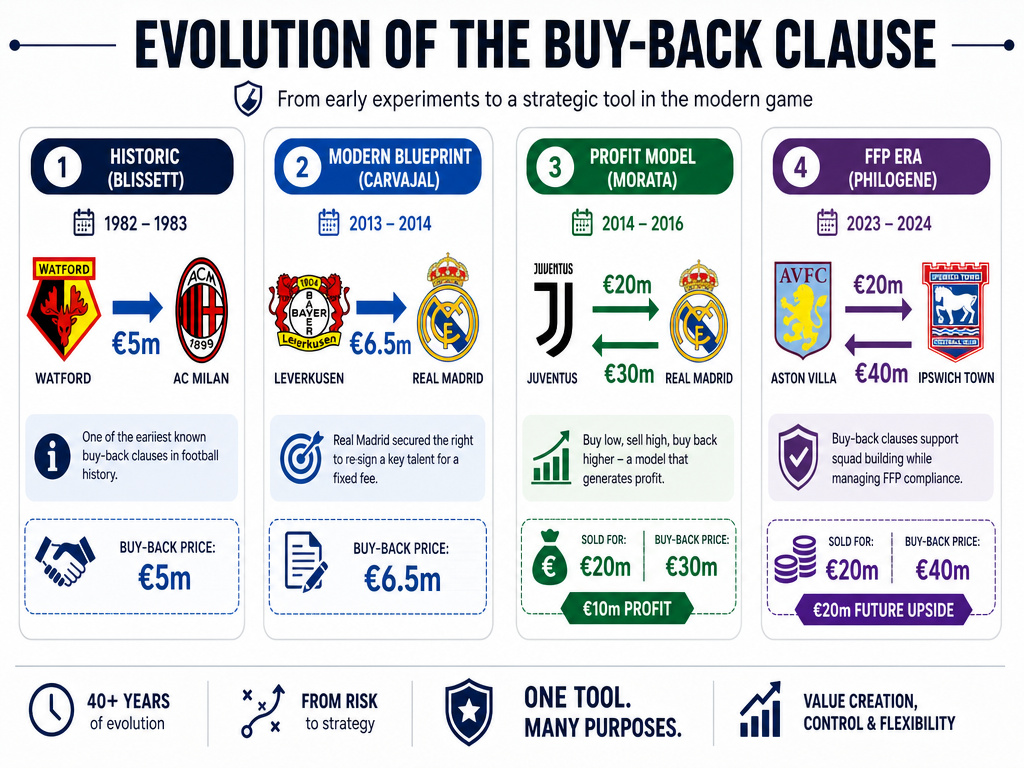
The clause isn’t new. Its history shows how its use has evolved from a simple safety net to a complex financial instrument.
- Luther Blissett (Watford, 1983): One of the first documented cases. Sold to AC Milan for £1m, bought back a year later for £550,000 after a tough season in Italy. A classic “cut your losses” repatriation.
- Dani Carvajal (Real Madrid, 2012): The modern blueprint. Sold to Bayer Leverkusen for €5m with a sliding buy-back (€6.5m/€7m/~€8.5m). Excelled, was bought back after one season for €6.5m, and became a club legend. This is the ideal outcome.
- Álvaro Morata (Real Madrid, 2016): The profit-making model. Bought back from Juventus for £26m and sold to Chelsea a year later for around £60m. The clause was used as a strategic asset play.
- Jaden Philogene (Aston Villa, 2024): The contemporary, FFP-driven move. Sold to Hull for £5m with a promotion-linked clause, bought back a year later for £18m after matching Ipswich’s bid. A perfect example of the loan-alternative system.
Where this goes sideways: Relying on a buy-back clause as a sure thing. In 2019, Aston Villa bought Douglas Luiz from Manchester City for £15m with a clause that expired in June 2021. Luiz became a star, but City never triggered it. Clauses have expiry dates, and clubs sometimes simply choose not to use them.
Buy-Back vs. Other Common Clauses
It’s easy to mix these up. How does a buy-back differ from its contractual cousins?
| Clause Type | What It Does | Key Difference |
|---|---|---|
| Buy-Back Clause | Grants selling club right to repurchase at fixed fee. | Automatic. Selling club decides; buying club must sell if terms met. |
| First Refusal / Matching Rights | Grants selling club right to match any third-party offer. | Reactive. Only activates if buying club decides to sell and gets an offer. |
| Sell-On Clause | Grants selling club percentage of any future transfer fee. | Passive. Selling club gets a cut but no control over where the player goes. |
| Release Clause | Allows player/any club to trigger a sale at a set fee. | Player/Third-Party Driven. Activated by an outside bid, not the original seller. |
Understanding these distinctions is crucial when reading transfer news.
Legal Validity and League-Specific Quirks
A contract is only as good as the law that enforces it. The Italian Football Federation (FIGC) has codified exactly what makes a buy-back clause valid in its territory under NOIF Article 102. Ignoring these rules makes the clause unenforceable in Italy.
For a buy-back to be valid there, the transfer agreement must contain:
- A fee for the grant of the buy-back right itself.
- A separate fee for the repurchase of the player.
- The player’s signature with an express declaration accepting the clause’s consequences.
- A minimum 2-season economic agreement between the selling club and player from the season after the transfer.
- A minimum 3-season economic agreement between the buying club and player.
Furthermore, the FIGC rule states that if the buying club definitively transfers the player to a third club, the original buy-back right automatically lapses. This prevents a chain of clauses and ensures clarity of ownership. These specific hoops show why clubs rely on specialized lawyers during the transfer process; a minor drafting error can void a multi-million euro option.
Examples of players with buy-back clauses
Real Madrid’s use of buy-back clauses is a classic template. They sold Dani Carvajal to Bayer Leverkusen with a clause allowing re-purchase at a set fee, which they later activated. Similarly, they re-signed Álvaro Morata from Juventus for a pre-agreed £26m. More recently, Aston Villa sold Jaden Philogene to Hull City with a buy-back option that would become active if Hull achieved promotion. These clauses allow selling clubs to retain a future stake in a player’s development and potential value, providing a structured path for a return if the player excels.
Comparison with first refusal clauses
A right of first refusal is a weaker, more passive right compared to a buy-back clause. It only obligates the buying club to inform the original seller if they receive a valid offer from a third party for the player. The selling club can then choose to match that offer. However, However, under a properly drafted buy-back clause, the buying club is obligated to sell if the conditions are met. A buy-back clause is fundamentally different; it is an automatic trigger that compels the buying club to sell the player back to the original club for a pre-agreed fee once specific conditions are met, removing future negotiation.
Comparison with release clauses
Release clauses and buy-back clauses serve opposite purposes for different parties. A release clause, often called a buyout clause, is a figure set in a player’s contract with their current club. It allows any third-party club to acquire the player by meeting that fee, triggering a release from the contract. The clause benefits the player or buying clubs. A buy-back clause is a right retained by the selling club, not the player. It allows that specific original club to re-acquire the player from their new club for a pre-set price, regardless of the player’s market value at that time. The clause benefits the seller.
Frequently Asked Questions
Can a player refuse a buy-back clause?
Yes. Absolutely. The clause is an agreement between the two clubs. It obligates them to transfer the player’s registration if the fee is paid. It does not obligate the player to sign a new contract. He must still agree to personal terms with his former club. His willingness to return is the final, and often most unpredictable, piece of the puzzle.
What’s the difference between a buy-back clause and a release clause?
Release clause (or buyout clause) can be activated by any club, or the player himself, to force a sale from his current club. A buy-back clause can only be activated by the original selling club to force a sale from the buying club. Think of a release clause as a universal key; a buy-back clause is a key that only one former owner holds.
Are buy-back clauses a new thing?
No. Their use has been documented since the 1970s and 80s, with cases like Kevin Keegan and Luther Blissett. What’s new is their scale and strategic sophistication. They’ve evolved from a rare safety net into a standard tool for managing squad depth, financial regulations, and player development pathways in the era of FFP and strict loan limits.
Can a buy-back clause be removed?
Yes, through negotiation. This is often called paying a “cancellation sum” or “buy-back cancellation fee.” If a third club makes a huge offer for the player, the buying club can negotiate with the clause-holder to pay them a penalty fee to nullify the buy-back option. This happened in the case of Toby Alderweireld (Atlético Madrid to Tottenham, with Southampton’s option), allowing a transfer to proceed. It’s a buyout of the buyout.
Do all leagues have the same rules for buy-back clauses?
No. As the FIGC’s NOIF Article 102 shows, national federations can impose their own specific requirements for a clause to be legally valid. The overarching framework is FIFA’s Regulations on the Status and Transfer of Players, but local law and federation rules always take precedence. A clause valid in England might not satisfy Italian authorities without the specific provisions listed above.
The Bottom Line
A buy-back clause is football’s version of a strategic retreat. This clause allows a club to sell a player now while retaining a future claim on him. In an era defined by spreadsheets and squad lists, it’s become the smart bridge between immediate financial necessity and long-term sporting ambition.
For a selling club, the calculus is clear: the guaranteed profit now is worth more than the potential, uncertain profit later. For a buying club, the gamble is accepting that your new star might have a pre-booked return ticket. And for the player? He gets a chance to play, with a potential golden ticket back to the big time, if he wants it.
The real lesson is in the details. The fixed fee, the trigger window, the cancellation sum, the federation fine print, this is where transfers are won or lost long before a medical is booked. It’s not about having a clause; it’s about having the right one, drafted tightly enough to be an automatic trigger, not just a hopeful option. In the high-stakes game of player valuation and asset management, that distinction is everything.
