
Football Fan Culture Explained: The Science and Stories
This post contains affiliate links. As an Amazon Associate, we earn from qualifying purchases.
Football fan culture is a global phenomenon of identity, ritual, and social bonding, driven by deep-seated psychological and biological mechanisms. It spans from collective rituals like chanting, which release bonding hormones, to organized groups like ultras, all within a framework where only a tiny minority engage in violence. The culture creates intense in-group loyalty and a tangible home advantage, but also manifests in diverse subcultures that reject simplistic labels.
That biological layer, the hormone release, the mirror neurons firing, is what turns a casual interest into a lifelong identity. It’s not just about watching a game; it’s about a shared physiological experience that forges a tribe. This is a core part of football fan culture explained.
What follows is a walk through the science of why we sing, the map of who sings, and the unwritten rules that keep the whole thing from tipping over. The article explains the brain chemistry, details the six types of fans researchers have identified, and provides the practical etiquette for anyone new to the stands.
Key Takeaways
- Matchday rituals like synchronized chanting trigger the release of endogenous opioids and oxytocin, chemicals that reduce anxiety and strengthen social bonds within the crowd.
- Academic research identifies six distinct clusters of football fans, from locally-engaged supporters to transnational engaged fans, debunking the idea of a single fan culture.
- The home advantage is real and measurable; partisan crowds lead to more home goals and more yellow cards for away teams, an effect that disappeared during pandemic “ghost games.”
- Hooliganism involves a tiny minority of fans, a fact often obscured by media and policing discourses that frame all fans as potentially violent.
- In North America, organized supporter groups explicitly reject the “consumer” label, positioning themselves as stakeholders and de facto constituents to whom clubs must be accountable.
The Matchday Ritual: More Than Just A Game
You don’t just watch a match; you feel it. Your heart rate jumps with a close chance. A last-minute winner produces a physical rush that lingers for hours. This is a documented psychobiological event.
A 2024 study in Frontiers in Psychology lays out the mechanics. Watching a match leads to physiological arousal, like tachycardia. On matchdays, fans experience a release of testosterone and cortisol; the extent of cortisol secretion may even correlate with how devoted you are to the team. This cocktail of hormones primes you for a collective experience.
The psychophysiological arousal experienced in collective settings like stadiums is associated with the release of endogenous opioids. Synchrony, e.g., chanting in unison, acts as a direct means of enhancing group cohesion via neurohormones that influence social bonding.
That’s the secret sauce. When you sing your club’s anthem with tens of thousands of others, you’re not just making noise. You’re engaging in a ritual that triggers a neurochemical reward system designed for social bonding. This “collective effervescence” turns a crowd of individuals into a single, fused entity. It also has a practical effect on the pitch.
The research is clear: partisan crowds lead to increased goals for home teams and increased yellow cards for away teams. When the COVID-19 pandemic forced teams to play “ghost games” in empty stadiums, that home advantage significantly decreased. The ritual is therefore a performance with a measurable outcome.
The Tribes Within the Tribe: Ultras, Casuals, and Six Fan Clusters
The idea of a monolithic “football fan” is useless. Walk into any stadium, and you’ll find a mosaic of subcultures, each with its own norms, fashion, and reasons for being there. A 2024 study using data from four European countries used cluster analysis to identify six distinct types of fans.
| Fan Cluster | Primary Engagement | Social & Community Focus |
|---|---|---|
| Locally-Engaged Supporters | Deep local club ties | High community involvement, traditional |
| Transnationally Engaged Fans | Follow clubs across borders | Low local ties, high digital engagement |
| Socially-Oriented Fans | Matchday as social event | Medium community focus, enjoy the day out |
| Passive National Fans | Follow national team only | Low club engagement, event-focused |
| Disengaged Spectators | Casual viewers | Low identity fusion, watch for entertainment |
| Anti-Establishment Fans | Opposition to commercialization | High identity, critical of football’s direction |
This table shows a spectrum. At one end, you have the locally-engaged supporter for whom the club is a pillar of community identity. At the other, the transnationally engaged fan who might support a top European club thousands of miles away, connecting primarily online.
Within these broad categories live specific, named subcultures. The ultras culture is a radical and highly organized group culture of sports supporters originating in Italy, defined by fervent, choreographed support and a strong, often oppositional, collective identity. Then there are the Casuals, a specific working-class English subculture from the late 20th century linked to football and distinct from hooliganism, known for its focus on designer sportswear.
Where this goes sideways: Assuming all passionate fans are ultras or all well-dressed young fans are hooligans. These are specific subcultures with their own histories and codes. Mistaking them is a quick way to show you’re an outsider.
The variation can be hyper-local. A linguistic ethnography of Burton Albion’s stadium found that different sections of the same crowd had distinct “normative ways” of performing fandom, different songs, chants, and interactions. The family stand and the vocal supporter’s terrace might as well be different countries.
“Supporters, Not Consumers”: Identity in the Modern Game
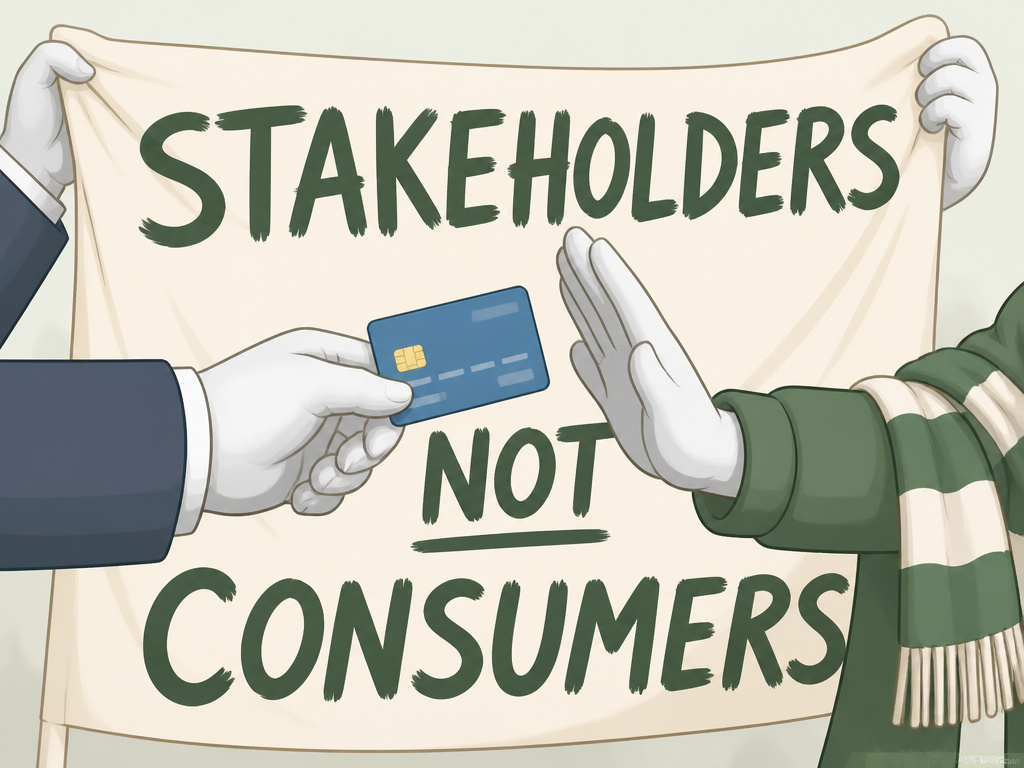
A fundamental tension in modern football is between two models: the fan as a consumer of sports entertainment and the fan as a stakeholder in a community institution. In many leagues, the commercial model is dominant. But in the stands, it’s fiercely contested.
Research into organized supporters’ groups in the US and Canada found they explicitly reject the consumer framing. They don’t see themselves as customers buying a product. Instead, they position themselves as “stakeholders” and “de facto constituents” to whom clubs must be accountable. This isn’t just semantics; it drives how these groups interact with club management, organize displays, and protect what they see as the club’s soul.
This stance shapes how global fan models are adopted. The study found that the ultras model is appropriated and adapted in North America, used as a tool to contest both the global commercial style and locally accepted, more passive models of fandom. They borrow the visual language of ultras, tifos, chants, continuous support, to build an identity that is both oppositional and deeply committed.
The lesson here, in the football fan culture explained, is that fan identity is often reactive. It defines itself not only by what it loves but by what it opposes: plastic flags, soulless stadiums, greedy owners, or silent crowds. This is why the history of the football shirt matters; it’s a canvas for expressing that identity, from local pride to anti-commercial statements.
Hooliganism, Bias, and the Lines of Conflict
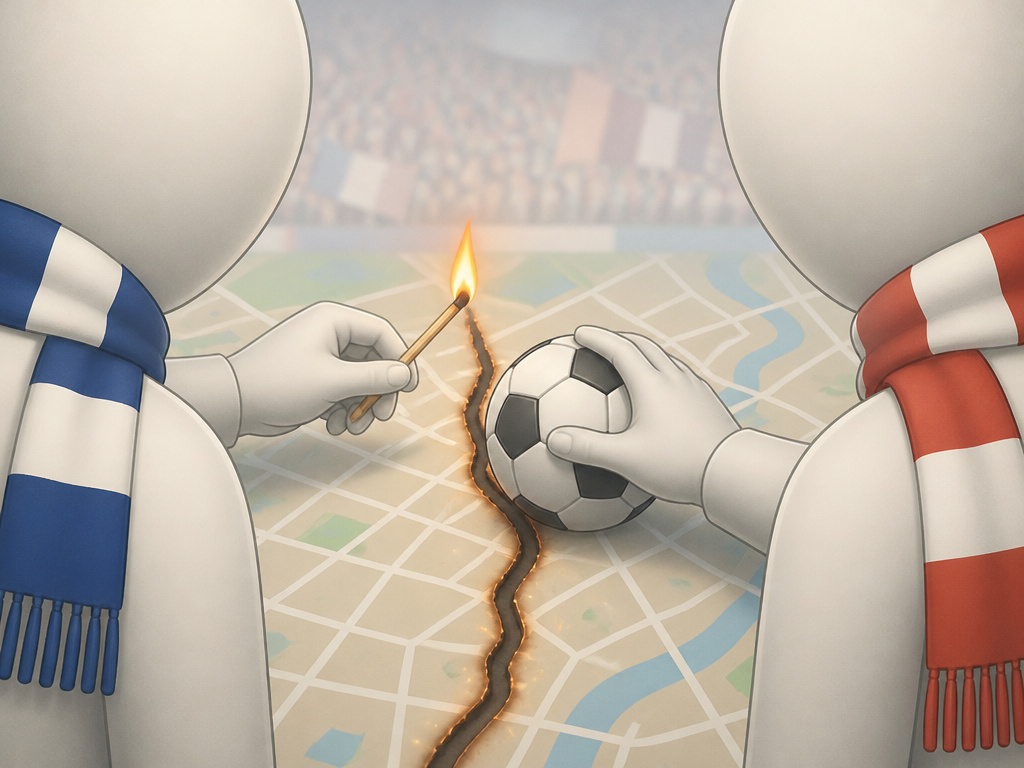
The persistent stereotype must be addressed. Public and policing discourse often perpetuates a stereotype: the football fan as hooligan, framing violent and aggressive behavior as a key marker of fan identity. However, academic research argues this is an ‘overly simplistic’ and ‘uncritical’ discourse. The narrative is persistent, especially after high-profile incidents.
Academic research argues this is an overly simplistic and uncritical discourse. The evidence in the football fan culture explained states disorder is perpetrated by a tiny minority of fans. The linguistic ethnography from Warwick University is blunt about this, emphasizing that fan culture is not monolithic but comprised of varied subcultures with different behavioral norms. Treating all passionate fans as potential hooligans is a category error.
That said, the conflict is real. Football naturally creates an “us vs. Them” dynamic. Fans are notoriously biased towards their own teams, as seen in wildly different perceptions of fouls committed during a match. This in-group favoritism has a neurological basis; being a fan can strengthen prior beliefs so powerfully that visual evidence of a bad tackle is given less weight in the brain’s processing.
Common mistake: Confusing rivalry with hatred. Banter and schadenfreude are part of the package, but the line is crossed when it fuels real-world discrimination or violence.
There is a replicated body of data suggesting major international tournaments are associated with increased alcohol consumption and incidents of alcohol-related domestic violence. But it’s crucial to separate correlation from the actions of the many. The story of Mohamed Salah at Liverpool is more instructive. His signing was associated with a small reduction in hate crimes in Merseyside and a halving of Islamophobic tweets from Liverpool fans. Fandom can be a channel for prejudice, but it can also be a powerful tool for undermining it.
A Beginner’s Guide to Fan Etiquette (The Unwritten Rules)
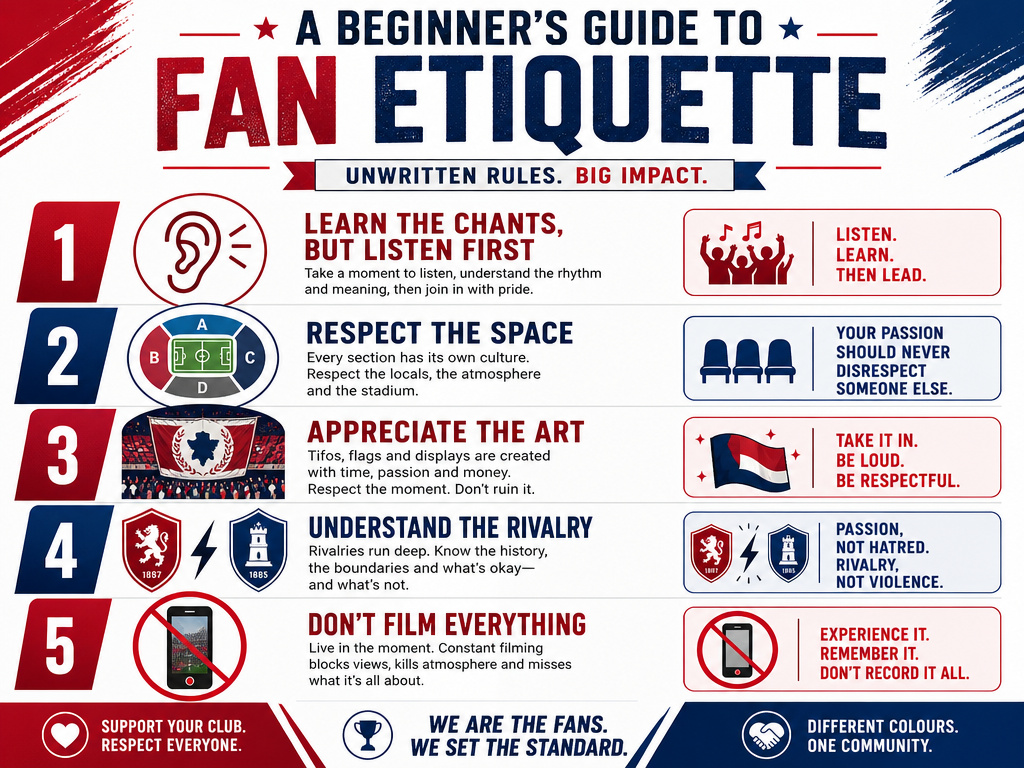
So, you’ve got your ticket. How do you navigate this complex social world without putting a foot wrong? Here are the unwritten rules, drawn from the norms that keep the culture functioning.
- Learn the Chants, But Listen First. Don’t bellow incorrect words. Spend the first half listening to the rhythm and the cues from those around you. The tradition of football chants is oral history; you learn by ear, not by Google.
- Respect the Space. Different stands have different purposes. The singing section is for standing and loud participation. The family stand is more subdued. Choose your seat accordingly. Our guide to your first football match breaks this down further.
- Appreciate the Art. When a large tifo display unfolds before kick-off, that’s months of work by fan groups. Applaud it, even if it’s for the opposition. It’s a sign of respect for the culture itself.
- Understand the Rivalry. Know the basic history of the biggest rivalries in football before you engage in banter. What’s playful to you might touch a raw nerve rooted in decades of history.
- Don’t Film Everything. Your phone is for the occasional photo, not for recording the entire match. Being present in the moment is part of the ritual. The constant glow of screens breaks the collective immersion.
The core principle is participation over observation. You’re there to be part of the event, not just to watch it. That might mean singing when you’re hoarse or staying to applaud the team off after a gut-wrenching loss. The etiquette is about contributing to the shared energy, responsibly.
The Global Tapestry and Football’s Social Footprint
Football fandom is a global language, but the dialects vary wildly. The feverish, carnival atmosphere of a Brazilian stadium differs from the precise, choreographed support of Italian ultras, which differs again from the nascent, identity-forging culture of supporters’ groups in North America. Platforms like FIFA and Football Manager have smoothed out some differences, creating global pools of knowledge, but local roots still run deep.
The sport’s social impact is a mixed picture. On one hand, playing football has been shown to have a small positive effect on the physical and mental health of people with schizophrenia. Major sporting events can transiently increase societal wellbeing, and there is some evidence they may temporarily decrease suicide rates. However, the same study concludes there is no consistent evidence that football fandom has positive effects on clinical mental illnesses.
On the other, the same Frontiers in Psychology study concludes there is no consistent evidence that football fandom has positive effects on clinical mental illnesses. It is not a treatment. The behavioral neuroscience of football fandom shows it’s primarily about identity and belonging, not therapy.
For the hobbyists within the culture, like the groundhopping community who travel to collect stadium visits, fandom is a passport to new places and people. For others, the drive is political, pushing for fan ownership to reclaim clubs from detached owners. This scope, from personal pilgrimage to collective action, is what makes it a culture, not just a pastime.
What do football fans wear to matches?
The scarf and the team shirt, or kit, are the fundamental uniforms of support. Wearing them is a direct signal of allegiance, transforming an individual into a visible part of the collective. This isn’t passive fashion; it’s active participation. Research shows that synchrony, like collective chanting while dressed in shared colors, enhances group cohesion through the release of neurohormones that influence social bonding. Within a single stadium, distinct subcultures can operate with different normative ways of performing fan identity, and your choice of attire can place you within one of these groups. For organized supporters in some regions, this display is a statement of being a stakeholder, not just a consumer.
How did football fan culture start?
Modern fan culture is a layered history of different movements. The ‘Ultras’ culture, defined as a radical and highly organized group culture of sports supporters, originated in Italy before spreading globally. In England, the ‘Casuals’ emerged as a specific working-class youth subculture linked to football, distinct from hooliganism. Today, these models are not simply copied. Studies show that organized supporters in places like the US and Canada appropriate and adapt these global templates, while explicitly rejecting the framing of themselves as mere consumers of sports entertainment. They position themselves as stakeholders and de facto constituents, demanding accountability from their clubs.
Who are the typical football fans?
With an estimated 3.5 billion fans globally, there is no single typical fan. A recent principal component and cluster analysis of survey data from four European countries identified six distinct clusters, showing the diversity within the crowd. The public discourse often perpetuates a simplistic view of the fan as a hooligan, but academic research argues this is uncritical, noting disorder is perpetrated by a tiny minority. Within one stadium, a linguistic ethnography found variation in songs, chants, and interactions between different physical sections, proving fan culture is a spectrum of identities, from the casual observer to the deeply devoted stakeholder.
Frequently Asked Questions
Are ultras the same as hooligans?
No. While both are organized, highly committed fan subcultures, they are distinct. Ultras are primarily defined by their choreographed, fervent support in the stadium, tifos, chants, and visual displays. Hooliganism is defined by seeking out violence and confrontation, often organized away from the stadium. There can be overlap, but most ultras groups focus on support, not fighting.
What is the “home advantage” and is it real?
The home advantage is the statistically observable phenomenon where teams win more games at their own stadium. Research confirms it’s real. Partisan crowds influence referee decisions (leading to more yellow cards for away teams) and can motivate players. This effect was proven when it largely disappeared during the COVID-19 pandemic when games were played in empty “ghost” stadiums.
How has social media changed fan culture?
Social media has created “digital fandom,” allowing fans to connect globally and engage constantly. It has amplified fan voices, enabling campaigns against club owners. However, it has also amplified toxicity, like the racist abuse of players, and can create a distorted, reactionary view of fan sentiment based on the loudest online voices, not the match-going crowd.
Is fan violence still a major problem?
While high-profile incidents occur, academic research consistently finds that disorder is perpetrated by a tiny minority of fans. The vast majority of match-going fans never engage in violence. The perception of it as a major problem is often sustained by media and policing frameworks that focus on the threat of disorder.
What’s the difference between a fan and a supporter?
This is often a self-defined distinction. Generally, a “supporter” implies a deeper, more active, and lifelong commitment to a specific club, often tied to local identity or family tradition. A “fan” can be a more general term for someone who enjoys the sport or a team. In practice, they are used interchangeably, but within core fan circles, “supporter” carries more weight.
The Bottom Line
Football fan culture is a story your body helps write. It’s a biological pull towards tribe and ritual, expressed through a thousand different subcultures, from the ultras in the curva to the quiet historian in the main stand. The science shows us the why: the hormone spikes, the mirror neurons, the opioid release from singing in sync.
The reality on the ground is messier and more interesting than any headline about hooliganism suggests. It’s a living culture of argument, art, and belonging, constantly negotiating its place between commerce and community. You can study the six clusters and the neurochemical pathways, but the point remains the same. It’s about finding your place in the chorus. The rest is just noise.
