
Ultras in Football Explained: A Complex Global Culture
This post contains affiliate links. As an Amazon Associate, we earn from qualifying purchases.
Ultras in football are highly organized, fanatical supporter groups whose primary role is to create an intense, choreographed stadium atmosphere through tifos, chants, and flags. Originating in Italy, with sources pointing to emergence in the early 1960s or the late 1960s and 1970s, they are defined by a formal hierarchy, a deep sense of territorial identity, and a complex, often ambivalent relationship with violence and politics. Sources cite different primary motivations for ultras: some emphasize the preservation of autonomous fan culture over on-field success, others report ultras stating it’s “all about territorial defence,” and for some, supporting the club is among the most important things in life.
That definition covers the basics, but it misses the texture, the smell of smoke in the air, the specific click of a drum starting a chant, the sheer weight of a banner being unfurled across an entire stand. To understand ultras, you have to move past the headlines about fights and flares and into the mechanics of the movement itself, and a place to start is with ultras in football explained. It is a culture built on contradiction: it creates beauty and chaos, community and exclusion, political protest and blind tribalism.
What follows is a walk through the stands. We will look at where ultras came from, how they operate, and why they clash with modern football’s authorities. We will also untangle the knotty question of violence and compare them to the hooligan firms they are often confused with, a key part of ultras in football explained. By the end, you will see the choreography, not just the chaos.
Key Takeaways
- Ultras are organized supporter groups first, not casual fans; their core function is to provide expressive, choreographed support through banners, chants, and displays.
- Sources disagree on the nature of the relationship with physical violence: academic research often frames it as one potential outcome, not the defining feature, while other sources emphasize its historical and ongoing association with ultras culture.
- A central tension exists between preserving fan culture and accommodating the commercial and security demands of modern football, often leading to protests against governing bodies.
- Distinguish ultras from football hooligans: ultras focus on organized support and territorial identity, while hooligan firms explicitly seek out violent confrontation.
- The logistics of a major tifo involve planning, funding (often tens of thousands of euros), and a hierarchy led by a capo with a megaphone directing the choreography.
What Are Football Ultras?
Forget the lone fan shouting from the seats. An ultra group is a machine. The core function, as defined in academic literature, is to provide expressive and colourful support using choreographed performances including banners, flags, chants, and sometimes pyrotechnics. This is not spontaneous cheering; it is a produced event.
The structure is formal. Groups are usually centred on a core group of founders or leaders who hold executive control. They can number from a handful of fans to hundreds or thousands. There is often a representative who liaises with the club about tickets, seat allocations, and storage for their flags. In some cases, clubs provide these groups with cheaper tickets and early stadium access to prepare displays. This creates a unique, interdependent relationship, the club gets an unmatched atmosphere, the ultras get a home.
The basic function of ultras is “to provide expressive and colourful support to their team” using choreographed performances including banners, flags, chants and fireworks. This support can also be expressed through aggressiveness and violence towards rivals fans.
That last line is crucial. The potential for violence exists, but it is presented as one form of expression among others, not the sole purpose. This separates the culture’s core intent from its most notorious outcomes.
A Brief History: From Italy to the World
The story starts with a timing disagreement. Some sources trace the origin to the early 1960s in Italy, while others point to the late 1960s and 1970s. The consensus is Italy, in a period of social and political upheaval known as the “Years of Lead.”
The groups that defined the modern ultra template emerged in Italy in the 1960s. AC Milan’s Fossa dei Leoni (Lion’s Den), founded in 1968, are widely regarded as pioneers. A year later, Sampdoria’s Ultras Tito Cucchiaroni became the first group to adopt the term “ultras” as its name. The word ‘ultras’ derives from the Latin for ‘beyond’ or ‘extreme’.
An older precedent exists. Hajduk Split’s Torcida in Croatia was founded in 1950 and is considered the first organized fan group in Europe. However, it is not generally seen as the first ultra group because the specific culture of choreographed support, territorial curva (end) takeovers, and the political dimensions truly crystallized with the Italian movement.
The model spread rapidly across Europe and has regional analogues: the barra bravas in Hispanic America and the torcidas organizadas in Brazil. Each adapted the core principles of organized, vocal support to local contexts.
The Ultras’ Matchday: A Ritual of Sound and Spectacle
A matchday for an ultra is a series of rituals, not just a 90-minute game. It often begins with a previa, a street party or march to the stadium. Picture this: a column of supporters, often dressed in black for unity and anonymity, following a banner. At the front, the capo (leader) with a megaphone and drummers set the rhythm. Flares might billow smoke, painting the street in club colours.
Inside the stadium, their domain is usually a dedicated standing area behind the goal, the curva. Here, the capo stands with his back to the pitch, conducting the chanting for the entire match. The coordination is military.
The visual peak is the tifo display. These are not just big flags. For major games, groups spend tens of thousands of euros on choreographies: stadium-wide mosaics made of coloured cards, massive banners that unfurl across multiple tiers, and coordinated flag waves. The goal is a single, breathtaking visual statement that lasts for the opening minutes of the match. This is where the practical logistics overshadow the romance, funding for major displays can reach tens of thousands of euros.
Ultras vs. Hooligans: The Critical Distinction

This is the most common point of confusion in ultras in football explained, and getting it wrong means missing the point of both groups. The distinction is not about who is more “hardcore,” but about fundamental objectives.
| Aspect | Ultras | Hooligan Firms |
|---|---|---|
| Primary Objective | Create atmosphere & show organized support for their team. | Seek out and engage in violent confrontation with rival fans. |
| Organization | Highly structured, with hierarchies, leaders (capos), and formal roles. | Can be organized, but often more fluid and based on informal networks. |
| Relationship to Club | Deeply intertwined; see themselves as the club’s cultural custodians. | Often detached; the fight is the point, the club is just the banner. |
| Visibility | Wear club colours, occupy a specific stadium section, want to be seen and heard. | Often dress as “casuals” in plain clothes to avoid police detection. |
| Violence | Can be a tool for territorial defence or political expression, but not the sole aim. | The central activity and primary reason for gathering. |
As one source explains, while football hooligans are typically characterised as drunk, irresponsible and chaotic, ultras tend to be more organised, with many adhering to clear structures and hierarchies. An ultra’s violence, when it occurs, is often framed as part of a broader conflict over space, identity, or politics. A hooligan’s violence is the conflict itself.
The Political and Protest Dimension
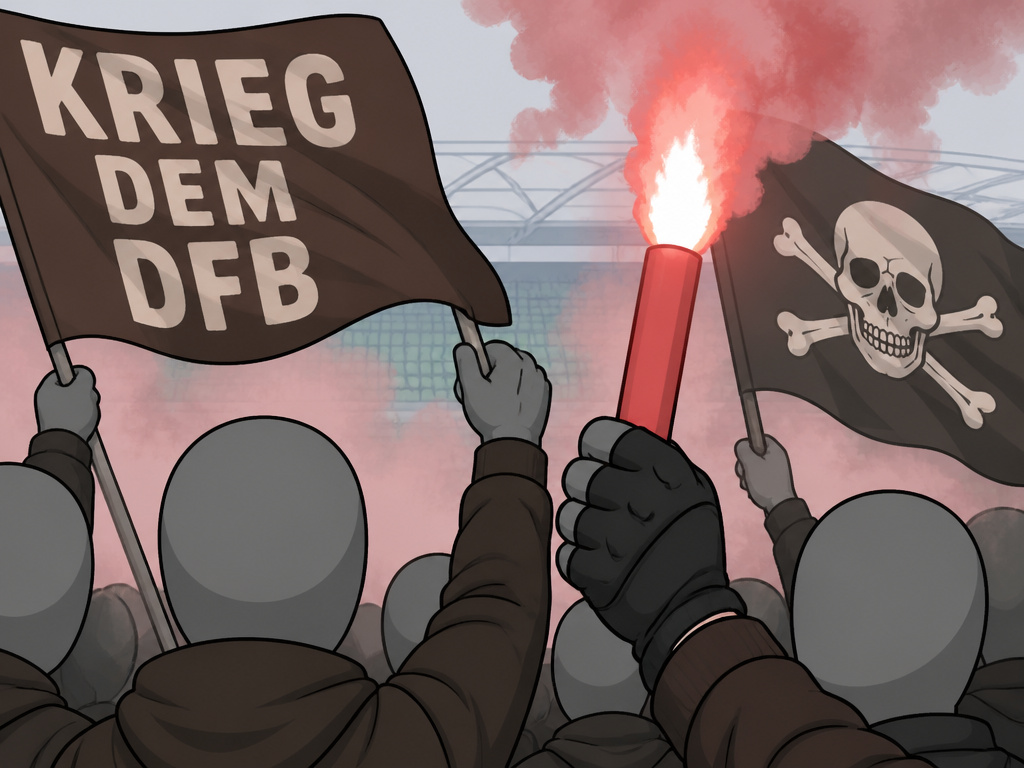
Ultras culture is inherently anti-establishment. This manifests in two main ways: political affiliation and protest against football’s modernization.
On politics, the scene is fragmented but potent. Historically, many of the most infamous groups in Italy and Eastern Europe have been associated with far-right and neo-fascist ideologies. However, there are also prominent left-wing ultra groups, like those of German club St. Pauli, who actively campaign against racism, fascism, sexism, and homophobia. The culture provides a structure for political mobilization, for better or worse.
The more consistent political thread is the protest against commercialisation. According to one academic source, ultras conceive of fans as those who attend football in person on a regular basis. They see TV deals, rising ticket prices, and sanitized, all-seater stadiums as attacks on their way of life.
The conversion of standing terraces to seats is an impediment to the ultras’ style of fandom, which is predicated on standing, jumping, and waving flags.
This discontent boils over into organized action. A stark example came in 2017, when approximately 2,500 SC Dynamo Dresden ultras marched in Karlsruhe. Their goal was not to attend the match, but to protest a punitive DFB (German Football Association) ticket reduction imposed for previous pyrotechnics use. They stormed the visitor sector behind a banner that read “KRIEG DEM DFB” (War on the DFB).
The Complicated Relationship with Violence and Pyrotechnics

Here is where sources genuinely disagree, and the article must show that. Is violence a defining trait or an external stereotype?
One academic article argues that ultras’ varied and ambivalent relationship to physical violence is frequently construed as a defining feature in popular culture and news media. It positions this portrayal as an oversimplification, framing ultras more as political actors and culture bearers.
Conversely, other sources state ultras first emerged primarily as pseudo-paramilitary groups and that there is often a violent element. The 2018 attack by Roma ultras on Liverpool fan Sean Cox, which left him with catastrophic injuries and resulted in a three-and-a-half-year prison sentence for one assailant, is a grim testament to this capacity.
The reality likely lives in the gap between these views. Violence can be a tool for territorial defence or political expression. It is not the sole purpose, but its presence is undeniable and shapes the entire dynamic with police and security.
Pyrotechnics (flares, smoke bombs) sit in a similar grey zone. They are illegal in most stadiums due to safety risks, but are a key part of the ultras’ visual spectacle. The tension is official prohibition versus tacit acceptance. A case study on Legia Warsaw notes that club authorities are usually informed in advance about the presence of pyrotechnics in the stands and that the club has a budget for these types of punishments. The understanding? The atmosphere they create has a value that sometimes outweighs the cost of the fine.
Ultras in the Modern Game: Tensions and the Future
The ultras movement exists in a permanent state of negotiation with the powers of modern football: club owners, league authorities, police, and security services. This relationship is a push-pull of mutual need and mutual suspicion.
Clubs rely on ultras for the unique atmosphere that can intimidate opponents and become a marketing point. In return, ultras demand influence over ticketing, safe-standing areas, and a voice in club decisions. When that balance breaks, protests erupt, silent stands, offensive banners, or coordinated walkouts.
Ulras perceive that financially motivated decisions often come at the expense of the hardcore fan experience.
Yet, the culture adapts.
How are ultras groups organized?
Ultras groups are highly structured, not chaotic crowds. At the center is a core group of founders or leaders who hold executive control. This leadership organizes the choreography, travel, and often liaises directly with the club on matters like ticket allocations and storage. Ultras groups can number from a handful of fans to hundreds or thousands, and some demonstrate a high degree of formalisation, including official membership cards.
Frequently Asked Questions
Why are football fans called ultras?
The term comes from the Latin word for “beyond” or “extreme.” It was first adopted as a formal name by Sampdoria’s Ultras Tito Cucchiaroni in 1969, reflecting the intense, organized, and “extreme” style of support they pioneered, which went beyond typical fan behaviour.
Are ultras the same as hooligans?
No. This is the most important distinction. Ultras are primarily focused on creating organized support and atmosphere for their team, often with a formal structure. Hooligan firms are primarily focused on seeking out violent confrontation with rival fans. Violence can be part of ultra culture, but it is not its sole reason for existing.
What football team has the best ultras?
This is subjective and depends on what you value, atmosphere, choreography, political stance, or notoriety.
Why do ultras not like being filmed?
This stems from their anti-establishment ethos and desire for autonomy.
The Bottom Line
Understanding ultras means accepting contradiction. They are the creators of the most breathtaking visual spectacles in sports and the perpetrators of some of its ugliest violence.
