
How to Clean Shin Guards: Step-by-Step (Without Damage)
This post contains affiliate links. As an Amazon Associate, we earn from qualifying purchases.
Clean your shin guards by wiping them down after every session with a damp cloth or disinfectant wipe, and performing a deeper clean every 2-4 weeks. Machine washing is controversial: Leatt, Sanabul, and Fairtex prohibit it, while Mitre advises checking your specific guard’s label and allows it if instructions permit. The core mistake is trapping moisture; proper air drying between uses is essential.
That moisture is the enemy. Sweat gets absorbed into the padding and lining, and if it doesn’t dry fully, bacteria thrive. The result is a bad smell and a breakdown of the materials that protect you. A pair of guards that stinks within a month has usually been stored damp. Knowing how to clean shin guards is therefore essential.
What follows is a breakdown of the daily wipe-down, the weekly deep clean, and the manufacturer rules that contradict each other on how to clean shin guards. Understanding the reason for each step matters, because just following a list is how you end up with a crusty, ineffective pair of pads.
Key Takeaways
- Wipe down after every single session with a damp cloth or disinfectant wipe, this prevents the bacterial buildup that causes permanent odor.
- Never assume machine washing is safe. Brands like Leatt and Sanabul explicitly forbid it; only follow machine-wash instructions if they appear on your specific guard’s label.
- Air dry for at least 8-12 hours between uses in a well-ventilated area, with straps opened and not looped. A fan speeds this up dramatically.
- Check your brand’s manual. The cleaning agent rule is fractured: Leatt says tap water only, Sanabul and Fairtex approve disinfectant sprays or mild soap, and Mitre recommends a sports detergent or soap and water.
- Replace shin guards every three years under normal use, per Leatt’s specific guideline. Inspect for cracks, deformed plastic, or deteriorated padding before each wear.
The Spray & Wipe Routine (After Every Session)
This is a two-minute habit that stops the deep clean from becoming a desperate salvage operation.
Right after training, grab a dry paper towel or cloth and blot any wetness from the interior. Don’t rub, just soak up the surface moisture. Then, take a disinfectant spray or a disinfectant wipe and go over the entire interior lining, the exterior shell, and the straps. Sanabul’s care guide is built on this method, and it works because it attacks bacteria before they multiply.
A quick post-session spray with a disinfectant keeps bacterial growth at bay and is the most effective way to prevent a permanent, set-in odor from developing.
If you use wipes, replace them as soon as they lose their wet feel and stop leaving cleaning fluid on the surface. Using a dry wipe just moves dirt around. This routine is as important as knowing how to wear shin guards properly, and is central to knowing how to clean shin guards as basic maintenance.
Common mistake: Tossing guards straight into your bag. The trapped heat and lack of air turn your gear bag into a bacteria incubator. Always do the wipe-down first, even if you’re in a rush.
The Weekly Deep Clean (Step-by-Step)
Every two to four weeks, or immediately after a particularly muddy or sweaty game, give your guards a thorough clean. Fairtex recommends a deep clean every 2 to 4 weeks for Muay Thai shin guards.
Here is the sequence. Skipping a step usually means leaving sweat or dirt in a seam, which defeats the whole purpose.
- Dry and Brush. Start with a dry cloth to remove loose mud and dirt. For guards with perforations or textured plastic, use a soft, dry brush (an old toothbrush works) to dislodge debris. This prevents you from just grinding mud into the foam during the wash.
- Prepare Your Solution. This is where manufacturer advice splits. Check the table below. If you’re unsure, the safest universal method is a damp cloth with a tiny drop of mild, scent-free soap, followed by a wipe with a water-dampened cloth to rinse.
- Scrub and Wipe. Dip a soft cloth or brush into your cleaning solution. Scrub the interior padding thoroughly, then the hard plastic exterior, and finally the Velcro straps. Be gentle on the straps, excessive scrubbing can damage the hooks.
- Rinse (If Using Soap). If you used any soap or detergent, take a cloth dampened with clean water and wipe all surfaces again to remove residue. Soap left in the padding will irritate your skin.
- Dry Completely. This is the most critical step. Move immediately to the drying section below.
| Brand / Source | Recommended Cleaning Agent | Machine Wash? | Key Rationale |
|---|---|---|---|
| Leatt Corporation | Tap water only. Never use cleaners or detergents. | No. Prohibits laundering. | Chemicals can damage protective materials invisibly, compromising safety. |
| Sanabul | Disinfectant spray or disinfectant wipes. | No. States “can not and should not” be machine washed. | Quick, effective bacterial control without saturating padding. |
| Fairtex | Disinfectant spray or a mild soap solution. | No for most Muay Thai models. | Balances cleaning power with protection for foam and adhesives. |
| Mitre | Quality sports detergent for machine washing; soap/water for handwashing. | Yes, if label allows. Use a pillowcase on gentle cycle. | Provides specific instructions for their product lines, which may vary. |
The takeaway? You cannot have one rule for all shin guards. A Leatt Knee & Shin Guard Dual Axis Pro requires tap water only, while a Mitre soccer guard might tolerate a gentle machine cycle. Your guard’s label is the final authority.
How to Air Dry Shin Guards (The Right Way)
Drying is an active process you manage. The goal is maximum airflow through the damp interior padding.
First, open all the straps. Do not leave them fastened or looped through the hooks as if you were wearing them. Attach the Velcro straps to each other so they hang loosely away from the guard’s body. This opens up the interior cavity.
Next, place them in a dry, well-ventilated spot away from direct sunlight and heat sources. A shaded room with a breeze from a window is perfect. A fan pointed at them can help speed up the drying process.
Air drying is most effective when the straps are attached to each other and hanging loose, creating the largest possible opening for air to circulate through the interior padding.
Sanabul advises a specific drying time between sessions if you train multiple times a day. If your guards feel even slightly damp or cool to the touch, they are not ready. Forcing them on traps moisture against your skin and starts the stink cycle over.
Where this goes sideways: Storing them in your zipped gym bag or a damp locker. Always transport dry guards in a separate mesh compartment or bag within your kit bag, as Fairtex suggests. In humid climates, consider using a dehumidifier in the room where gear dries, it’s more effective than sunlight, which can degrade materials.
Sport-Specific and Material Considerations
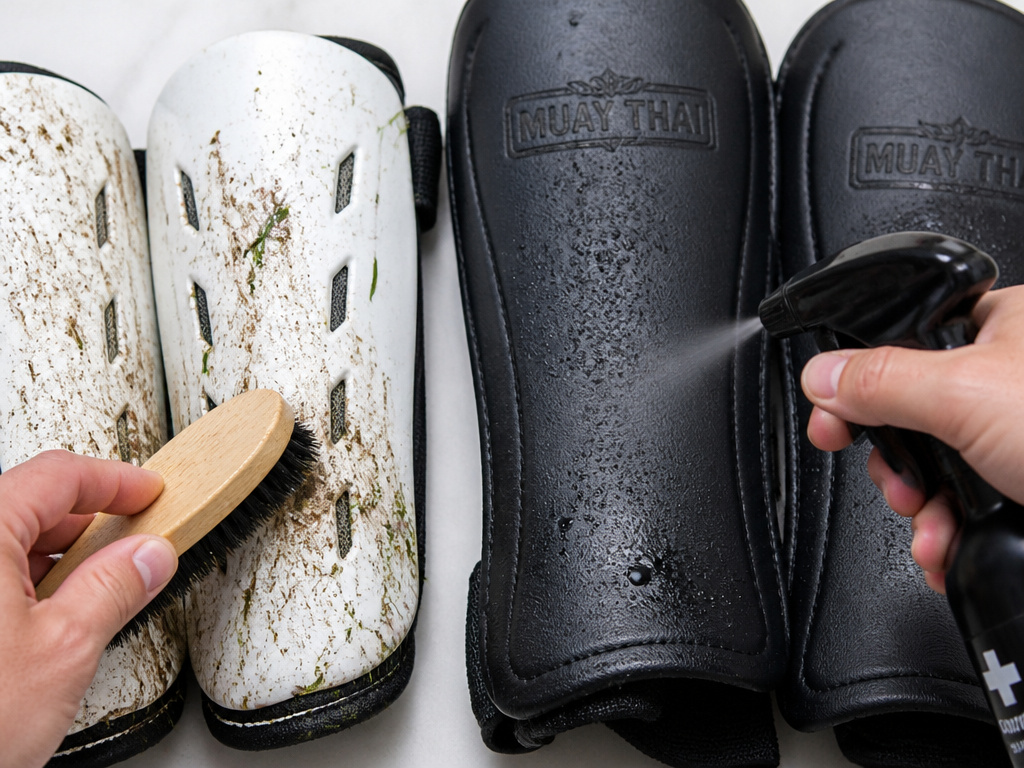
Not all shin guards face the same threats. A muddy Sunday league slide tackle presents different cleaning challenges than the sweat-soaked interior of a Muay Thai guard.
- Football/Soccer Guards: Mud and grass stains are the primary foes. Focus on the pre-clean brush to get dry dirt off. For plastic shell guards, a mild soap and water scrub works well. Pay close attention to cleaning the Velcro straps, as mud clogs the hooks and reduces their hold, affecting your shin guard fit.
- MMA/Muay Thai Guards: These are almost all foam-padded and soak up sweat. The disinfectant spray or wipe method is ideal because it sanitizes without oversaturating the foam. Fairtex’s deep-clean schedule (every 2-4 weeks) is crucial here.
- Slip-in vs. Ankle Guard Designs: Your cleaning approach changes with the shin guard styles you choose. Ankle guards have more fabric, straps, and seams to clean. Slip-in guards are simpler but require you to ensure the interior sleeve is fully dry.
Material matters, too. Mitre notes that guards made entirely of plastic are best hand-washed. Composite guards with foam, fabric, and plastic need more careful, non-chemical cleaning to preserve the adhesives bonding them together. Understanding the types of shin guards you own directly informs how you should care for them.
Inspection, Storage, and When to Replace

Cleaning is maintenance, but inspection is safety. Before you put your guards on, give them a quick once-over. Look for cracks in the plastic shell, deformation from a hard impact, or fraying and deterioration of the interior padding. The Leatt manual states you must stop using the protector immediately if you see any of this damage.
For storage, keep them in a dry place away from extreme temperatures and sunlight. Don’t pile heavy gear on top of them, as this can warp the plastic over time.
And they don’t last forever. Leatt Corporation recommends replacing knee and shin guards every three years under normal use conditions. The protective materials degrade with time, sweat, and impact, even if they look fine. It’s a lifespan, not just a guideline. This replacement cycle is part of a full gear care routine, similar to knowing how to clean football boots to extend their life.
How to Use Baking Soda for Shin Guard Odor
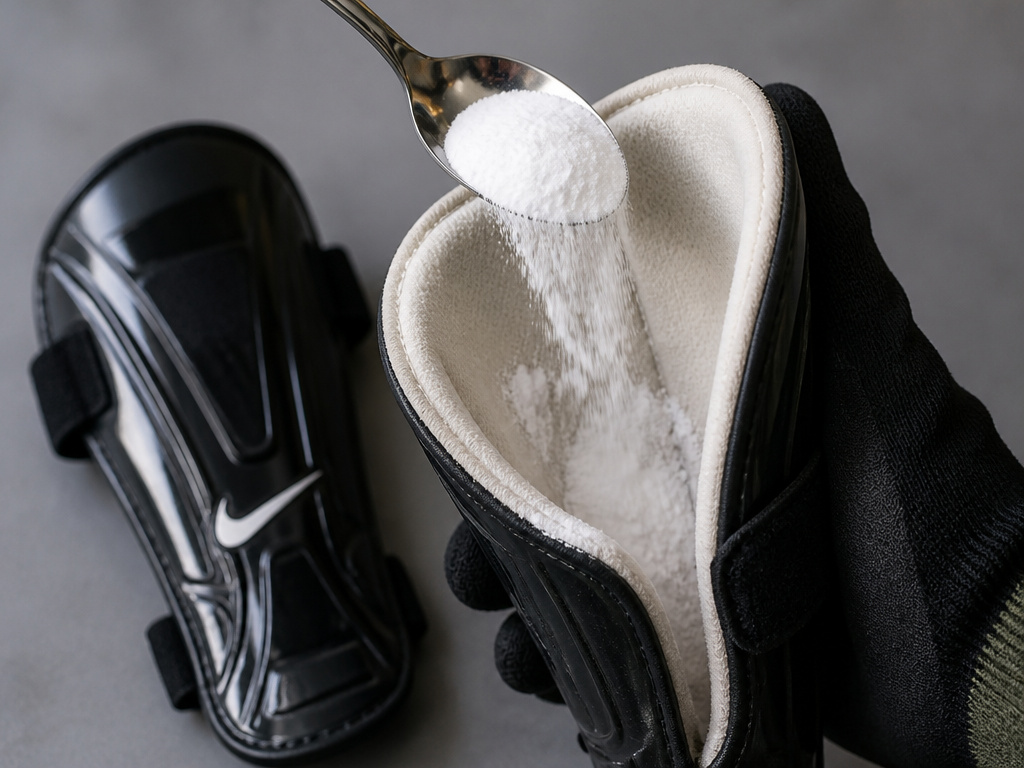
Baking soda is a common household deodorizer, but its use on shin guards depends on the manufacturer’s instructions. The fact sheet does not mention baking soda specifically. For guards where only tap water is recommended, using any additive could void warranties or damage materials. For other models, a light sprinkle inside the guard, left to sit before brushing out, may help absorb odors. Always allow the guard to dry completely in a well-ventilated area afterward, as moisture trapped with any substance can worsen smells. Check your specific product’s care guide first, as some materials may react poorly.
Soaking Shin Guards: Method and Warnings
Soaking can be an effective cleaning step for some shin guards, but it carries risks. Mitre suggests soaking the guards in a mixture of detergent and water for 15–20 minutes. However, prolonged or improper soaking can damage adhesives, foams, and fabrics, leading to delamination or padding breakdown. Never soak guards if the manufacturer prohibits the use of cleaners or detergents or does not include soaking in its instructions. After any approved soaking, rinse thoroughly with clean water if detergent was used. Always air dry the guards completely in an open area; never use a dryer, hair dryer, or heat gun.
How to Clean Leather Shin Guards
The fact sheet does not provide specific instructions for leather. For any specialized material, the first step is always to check the manufacturer’s care guide. General practical guidance for leather-like or synthetic materials involves a cautious approach. Wipe the surface with a damp cloth to remove soil. Avoid harsh scrubbing, strong detergents, or machine washing, as these can crack, discolor, or degrade the material. For touch-and-close fastenings, a nail brush can be used to clean debris. Store leather guards in a dry, well-ventilated place away from direct sunlight and temperature extremes to prevent drying and cracking.
Frequently Asked Questions
Can I put my shin guards in the washing machine?
Almost certainly not. Manufacturers like Leatt, Sanabul, and Fairtex explicitly advise against machine washing for most models, citing damage to foam, adhesives, and Velcro. The only exception is if your guard’s care label explicitly states it is machine washable. In that case, Mitre advises placing them in a pillowcase and using a gentle cycle with a sports detergent.
What is the best thing to clean shin guards with?
There is no single “best” thing, it depends on your brand. You must check your manufacturer’s instructions. The safest, most universal method is a damp cloth with a tiny amount of mild, unscented soap, followed by a wipe with a water-dampened cloth to rinse. Never use strong detergents, bleach, or solvents.
How do I get the smell out of shin guards?
Prevention is the only reliable cure. Once a deep, bacterial odor sets into the padding, it’s often permanent. To prevent it, never store guards damp. Always wipe them down after use and ensure they get a full 8-12 hours of air drying in a ventilated space. For mild odors, a thorough clean with a disinfectant spray or a mild vinegar solution can help before a full air dry.
How do I clean the Velcro on shin guards?
Use a dry nail brush or an old toothbrush to gently scrub debris out of the hook side of the Velcro. For the soft loop side, a damp cloth will usually suffice. Avoid getting the Velcro excessively wet, and never use fabric softener or conditioner on it, as this can coat the hooks and ruin their grip.
Before You Go
One rule cuts through all the brand disagreements: moisture is the ultimate enemy. Your cleaning method, whether it’s Leatt’s water-only rule or Sanabul’s disinfectant spray, is less important than your drying discipline. A perfectly cleaned guard stored damp is a waste of effort.
If your guards are old, cracked, or the padding has compacted into a hard shell, cleaning is no longer the issue. They’re done. Use the three-year guideline as a checkpoint, not an absolute, but let the condition of the materials make the final call. And when you buy your next pair, take five minutes to find and file the manufacturer’s care sheet. It’s the one playbook that actually matters for keeping them in the game.
