
Football Psychology Explained: The Core Mental Skills Used
This post contains affiliate links. As an Amazon Associate, we earn from qualifying purchases.
Football psychology is the study of mental processes, like confidence, focus, and emotional control, and how they directly influence a player’s performance and decision-making on the pitch. The latest research shows it’s less about vague ‘mentality’ and more about specific, trainable skills such as mental toughness, arousal regulation, and structured recovery, with professional support substantially weakening the negative impact of automatic thoughts.
Right, so this is the central point about the game. We spend hours talking about formations and fitness, but the plays that decide matches often happen between the ears. A study of six Norwegian pros found players were aware of how their mental state affected their play. That awareness is the starting point, not the finish line, and it is a core part of football psychology explained.
What follows is a breakdown of the mental skills that matter, grounded in what players and researchers are actually saying in the field of football psychology explained. We’ll look at the data on what works, where the experts disagree, and the practical routines, like the “four-phase” model, that turn theory into better performances on a muddy Saturday.
Key Takeaways
- The significance of mental toughness for future performance is debated: players cite it as the most significant mental process, while a 2026 meta-analysis of 3,748 players questions its reliability for predicting future talent.
- Psychological support has a measurable effect: in a study of 636 Turkish footballers, support reduced the detrimental link between automatic thoughts and decision-making from β = -0.353 to β = -0.142.
- The relationship between age and use of psychological support is nuanced: the youngest professional players report being the most aware of using a sport psychologist, while the same qualitative study also notes mental toughness as a product of age and experience, implying older players may rely more on experience.
- Effective psychology isn’t one-size-fits-all; an official position statement stresses that strategies must be tailored to the sport type and context.
- Leadership isn’t just inspiration; a 24-week study of 10 professional teams quantified how specific captain micro-behaviors directly stabilized team performance under pressure.
What Does a Football Psychologist Actually Do?
Forget the cliché of a motivational speaker in a tracksuit. A football psychologist’s job is to build a player’s mental toolkit for the specific demands of the sport. This work focuses on engineering reliability under pressure rather than giving pep talks.
Their work often follows a structured model, like the “four-phase” framework mentioned in the research. Think of it as a mental match plan that covers the entire performance cycle:
- Pre-phase: Match-day prep. This is where routines for focus and optimal arousal are set.
- During-phase: The match itself. The focus here is on in-the-moment regulation, resetting after a mistake, maintaining concentration.
- Post-phase: The evaluation. Processing the game without letting it define the next week.
- Transfer-phase: The reset. Switching off from performance mode to properly recover.
One Norwegian player put it plainly: he learned from his mental coach to “occasionally take a few breaks where I reset and breathe in, breathe out… To calm myself down on the pitch.” That’s a during-phase skill, delivered as a concrete technique, not a platitude.
The goal is to establish what researchers call a “common language” for performance within a team. When a manager says “reset,” or a player says “I need to lock in,” everyone understands the same actionable steps. This is a core goal of football psychology explained: turning abstract concepts like “confidence” into shared, executable processes. It’s the difference between shouting “be confident!” and having a pre-pass routine a player can default to under stress.
The Core Mental Skills Every Player Uses
The research consistently points to three interlocking skills that form the foundation. You can’t really have one without the others.
Mental Toughness: The Foundation or a Mirage?
Here’s where it gets interesting. Players themselves are unanimous. In interviews with professionals, mental toughness emerges as the most significant mental process for players’ performance. They describe it as the bedrock for handling a bad game, an injury, or a hostile crowd, the ability to endure and stay focused on the next action.
Where this goes sideways: Assuming mental toughness is an innate, unchangeable trait. The same players called it a product of age and experience. Older players have simply faced more situations and learned how to navigate them.
But the data scientists offer a crucial caveat. A Frontiers in Psychology (2026) systematic review with meta-analysis of 12 longitudinal studies and 3,748 players reached a different conclusion. It found the isolated prognostic value for future performance appears small, inconsistent, and highly sensitive to methodological choices. In scouting terms, judging a 16-year-old’s future career solely on a mental toughness score is a flawed gamble.
| Perspective | View on Mental Toughness | Key Insight |
|---|---|---|
| Player Experience | The most critical skill for coping and performing. | Built through lived experience and specific adversity. |
| Longitudinal Data | A poor standalone predictor of future talent. | Its value is inconsistent and easily overestimated in selection. |
| Practical Takeaway | It’s a trainable skill for handling now, not a crystal ball for later. | Focus on developing it in your current squad, not using it to filter your academy. |
So, who’s right? Both are. The players are describing its essential, day-to-day utility. The meta-analysis is warning against its misuse as a predictive magic bullet. Your takeaway: develop toughness through challenge and reflection, but don’t draft a team based on it.
Arousal Regulation: Finding the Right Pitch
This is the skill of managing your physical and mental activation level. It’s not about being “up” or “down,” but about being optimal for the task. A quiet, focused training session requires a different level than a cup final.
Players talk about the conscious work needed before a match. One described the old feeling of “walking around waiting for the match to start” as counterproductive, too much energy, too soon. The skill is in dialing it in at the right time. This is where breathing techniques, specific music playlists, or controlled visualization exercises earn their keep.
Self-Confidence: The Fleeting Commodity
Confidence in football is notoriously fragile. As one veteran player admitted, it’s “not something that’s permanent, it’s fleeting.” A great game builds it; a missed sitter can shatter it.
The research shows confidence is deeply tied to recent evidence. Players reported that after injury layoffs, a lack of “mastery experiences” directly drained their self-belief. Conversely, some found that being injured removed the daily pressure to perform, allowing a different kind of confidence to reset.
The most robust confidence comes from a stable self-image off the pitch. Players who derived worth from education, family, or other hobbies were less hostage to their last performance. This is why sport psychologists often work on identity, helping a player see themselves as more than just a footballer.
How Psychology Impacts Performance: The Evidence
It’s one thing to describe the skills. It’s another to prove they change outcomes. The latest studies move beyond surveys and into the field with hard numbers.
Decision-Making Under Pressure
A Behavioral Sciences (2026) survey study of 636 Turkish footballers aged 18-30 dug into how negative thoughts affect choices on the pitch. The key finding wasn’t just that “negative thoughts are bad.” It was that the detrimental impact of automatic thoughts on decision-making was substantially weaker for athletes who had received psychological support (β = -0.142) compared to those who had not (β = -0.353).
To put it plainly. The “β” is a measure of strength. A jump from -0.353 to -0.142 means the damaging link was cut by more than half. Support doesn’t stop the negative thought, but it drastically weakens its power to ruin the next pass or tackle. That’s a measurable performance return.
Leadership That Stabilizes Performance
We all know a captain who demonstrates leadership micro-behaviors matters. New research shows how in minute detail. A stepped-wedge field study in 10 professional teams over 24 weeks analyzed 1,567 player-day observations to track leadership micro-behaviors. These are the small, specific actions captains take under competitive pressure.
The study quantified how certain behaviors, like a calm, directive verbal cue after a conceded goal, or a positive physical gesture to a struggling teammate, directly correlated with stopping a performance slump from spiraling. This isn’t about rah-rah speeches; it’s about a captain’s trained, almost reflexive, interventions that act as a pressure-release valve for the entire team. You can read the full analysis in this Frontiers football leadership psychology article.
The Limits of the “Mental Edge”
While the benefits are clear, the PLOS One sports psychology meta-analysis of 127 studies offers a crucial reality check. The relationship between psychological factors and performance is complex and non-linear. A confidence boost might improve a striker’s composure but do nothing for a defender’s positional sense if the tactical instruction is wrong.
This complexity is why the Exercise and Sports Science Australia (ESSA) Position Statement in Sports Medicine is blunt: strategies must be tailored to sport type or context. The mindfulness routine that helps a golfer is useless for a goalkeeper if it doesn’t account for the explosive, reactive nature of the position. Effective techniques for staying focused during a match for a centre-back will look different than those for a winger.
The Role of a Sport Psychologist in Modern Football
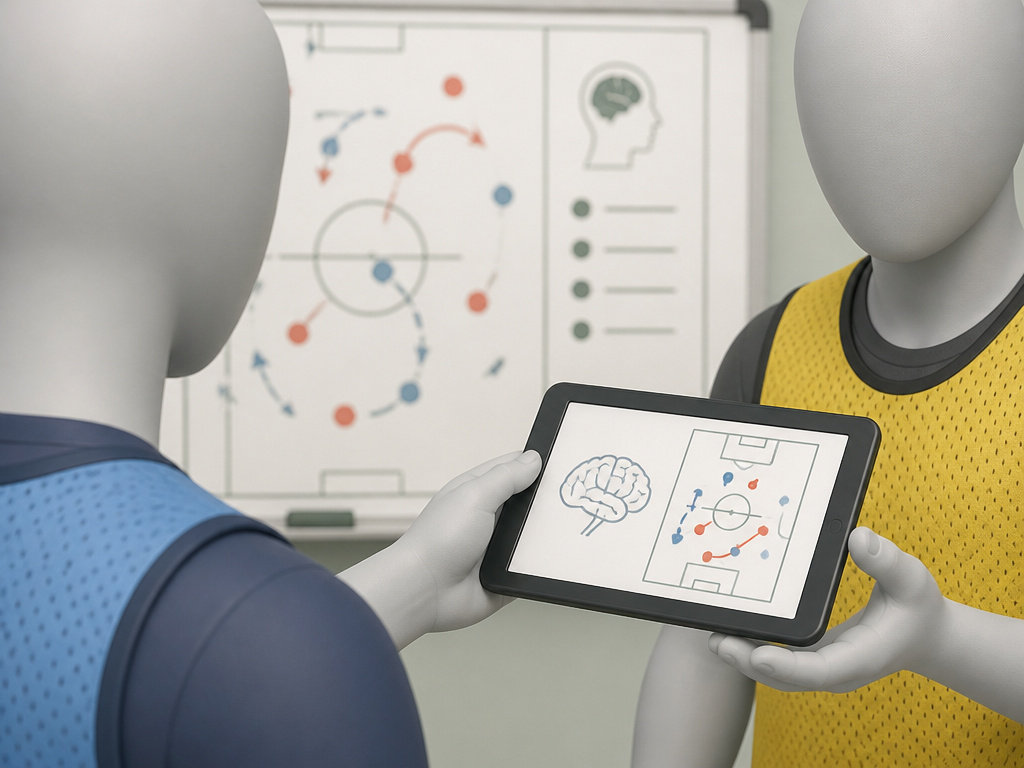
Despite the evidence, access isn’t a given. In the Norwegian study, players described a clear wish to have access to a sport psychologist in their own club. Yet, they faced familiar barriers: cost, a perceived lack of tangible results, and occasionally, a lingering “macho culture” that views mental work as a luxury or a weakness.
The dynamic of who seeks help is also counterintuitive. The research noted that the youngest players seem to be most aware of the use of a sports psychologist. This flips the script. It’s not the grizzled veteran seeking an edge, but the new-generation pro normalizing mental coaching as part of their toolkit from the start.
Common mistake: Treating the sport psychologist as an ambulance for crisis only. The most effective work is done in periods of stability, building skills that prevent the crisis from happening.
Their integration is also evolving. Some practitioners are exploring the integration of psychological observation into performance analysis. Imagine a video session where, alongside passing maps, a analyst points out a player’s body language shift after losing possession, and the psychologist suggests a one-word cue to trigger a reset. That’s the future, mental skills fully woven into the tactical fabric.
Psychology for Talent Development & Youth Football
This is where the rubber meets the road. If mental skills are trainable, the academy is the best place to start. The focus shifts from identification to development.
The biggest pitfall is falling for the “talent trap” warned about in the meta-analysis. Scout for technical and tactical ability first. Use the psychological characteristics behind soccer talent review as a guide for what to develop, not just what to select. Teach young players how to bounce back from a mistake as a drill, just like you teach them how to receive a ball.
Youth psychology is less about handling press conferences and more about building foundational habits. It’s teaching a 14-year-old how to use visualization techniques before taking a free-kick, or how to manage the specific anxiety of playing in front of scouts. The goal is to make the mental toolkit as familiar as their boots.
Mental Health, Stress, and Injury Recovery
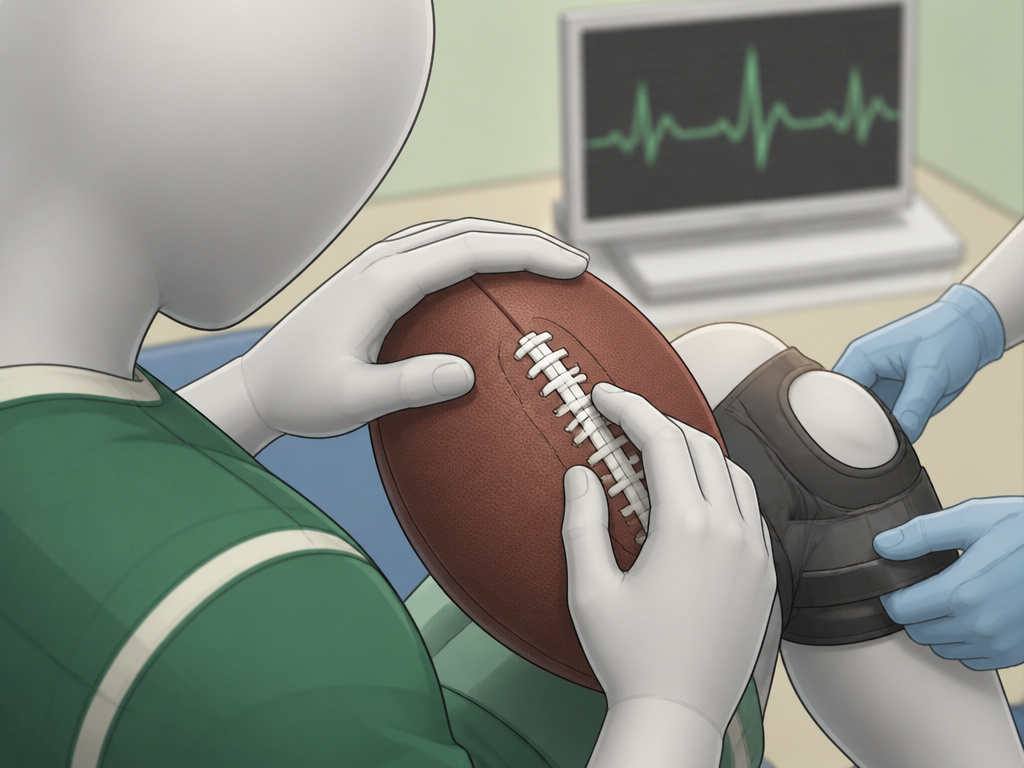
The line between performance psychology and mental health is often blurred. A player struggling with confidence may be dipping into anxiety; a loss of motivation could be a sign of burnout. A club psychologist who navigates both, knowing when a performance issue needs a clinical referral.
Injury recovery is a prime example. The psychological battle is immense. Players in the study spoke about the crushing blow to self-confidence when the “mastery experiences” of training and playing are ripped away. A psychologist works here to rebuild identity, set controlled recovery goals, and manage the frustration of the healing process, a critical part of getting a player back to 100% fit and 100% ready.
This work also involves dealing with nerves that are amplified after a long layoff, or the unique pressure in shootouts when a player is making their comeback game. The mental rehab is as structured as the physical one.
Building a Psychologically Informed Team Culture
Ultimately, this isn’t just about individual sessions. The highest impact comes from embedding psychology into the club’s culture. This is where the “common language” concept is vital.
When a manager’s feedback is framed through the four-phase model, it becomes more constructive. When captains are trained in those evidence-based leadership on the pitch micro-behaviors, they become force multipliers. When every player understands the principles of effective communicate on the pitch, which includes non-verbal cues of support after an error, the team’s resilience is baked into its interactions.
A study using artificial neural networks to profile elite players suggests the highest performers share cognitive patterns, not just physical traits. This decoding elite soccer psychological profile research points toward a future where training our cognitive patterns is as standard as training our weak foot.
It starts with the staff. Coaches don’t need to be psychologists, but they should be literate. Dismissing a second-half collapse as “a lack of bottle” closes the door. Asking, “Where did our focus routines break down?” opens a path to a solution. It changes the narrative from blame to problem-solving.
What are the key psychological traits for footballers?
Research points to mental toughness as a central mental process for performance. A study of Norwegian professional players highlighted its significance, noting it often develops with age and experience, helping older players handle adversity. However, a large meta-analysis cautions that the isolated power of traits like mental toughness to predict future performance is small and inconsistent. The impact varies widely. This suggests that while cultivating mental resilience is valuable, it must be integrated with physical and tactical training. Strategies should be tailored to the sport’s context, not treated as a standalone solution.
Frequently Asked Questions
What are the 4 C’s or 5 C’s of sports psychology?
While not explicitly outlined in the latest research we reviewed, the “4 C’s” are a common coaching framework: Confidence, Control, Commitment, and Concentration. Some models add a fifth: Composure. These align closely with the skills discussed, like self-confidence (Confidence), arousal regulation (Control/Composure), mental toughness (Commitment), and focus (Concentration). They’re a useful shorthand for categorizing mental training goals.
Which sport has the highest depression rate?
Athletes in high-pressure sports, including football, can face significant mental health challenges. Footballers face various professional stressors. The research shows that psychological support systems are essential for athlete well-being.
Is psychology just for fixing problems?
Absolutely not. This is the biggest misconception. The most effective use of sport psychology is proactive, not reactive. It’s about building mental strength and robust routines during normal periods to create resilience that prevents crises, improves consistent performance, and helps players thrive under normal pressure. It’s performance enhancement, not just problem repair.
How do I find a qualified football psychologist?
They should have experience working in football specifically, as the context is everything. Ask for referrals from local clubs, national federations, or university sports science departments.
Before You Go
The research makes one thing clear: football psychology has moved beyond motivational quotes and into the area of measurable, trainable skills. The Norwegian player interviews, the Turkish decision-making data, the leadership micro-behavior study, they all point in the same direction. The mental game is a series of specific processes that can be understood, practiced, and improved.
The most telling stat might be the simplest: the youngest pros are the most aware of this. They’re growing up in a football culture where working on your mind is becoming as standard as working on your touch. The challenge now isn’t proving it works, but integrating it thoughtfully, tailoring the practical confidence-building techniques to the individual, and building that common language from the first team down to the academy.
That’s how you build tougher players and smarter teams. And on a cold, rainy night when the tactics are stretched, that’s what makes the difference.
