
Headgear for Football Pros and Cons: How to Choose
This post contains affiliate links. As an Amazon Associate, we earn from qualifying purchases.
Headgear in football is not a simple safety upgrade. The debate is defined by two contradictory findings: a 2025 NFL preseason study reported a 53% reduction in concussions with Guardian Caps, while a 2024 systematic review found headgear does not prevent sport-related concussion at all. The pros are minor physical protection and confidence; the cons are unproven concussion prevention, potential for increased injury risk, and rulebook restrictions on fit and vision.
That gap between a headline-grabbing 53% and a definitive zero is where the real decision lives, requiring a clear look at the headgear for football pros and cons. It’s not about marketing claims. It’s about which impacts the gear can actually change, and which risks it might unintentionally create.
What follows is a breakdown of the specific evidence on each side, the physical trade-offs you’ll notice on the pitch, and the one scenario where the data suggests headgear might be worth considering.
Key Takeaways
- Many peer-reviewed studies in soccer, rugby, and high school football find no statistically significant reduction in concussion rates from headgear use, though a 2025 NFL analysis reported a reduction.
- The NOCSAE ND002-25 standard mandates a warning label on all football helmets stating “HELMETS CANNOT PREVENT CONCUSSION/BRAIN INJURY.”
- Guardian Caps showed a 53% reduction in NFL preseason concussions, but the study authors note the benefit is uncertain and disappeared when analyzing only helmet-shell impacts.
- A 2005 biomechanics study found headgear provided no reduction in impact response from ball strikes but a 33% reduction in head-to-head impacts.
- Some data indicates headgear use in rugby is associated with a 16–23% increase in all injury types, a possible risk-compensation effect.
Does Headgear Prevent Concussions? The 53% vs. 0% Disagreement
The most important question has the messiest answer. If you only read one study, you’d walk away convinced. Read them all, and you’re left with a stalemate.
On one side is the 2025 analysis of NFL preseason practices by Funk et al. It tracked over 213,000 practice exposures. After the league mandated Guardian Caps for certain positions in 2022, concussion counts in that group fell by 53%. That’s a massive number. But the researchers themselves pulled that figure apart. They found the reduction came from two places: a 30% drop in concussions involving a helmet shell and a 23% drop in those with no shell contact. When they isolated only the helmet-shell impacts, where the cap’s padding would actually compress, the link between Guardian Cap use and lower concussion rates was no longer statistically significant.
The 2025 NFL study’s authors concluded: “the results of this study provide some evidence that use of the Guardian Cap may be beneficial in reducing the incidence of concussions in football, but the degree of benefit is uncertain.”
Now look at the other side of the ledger. A 2024 systematic review and meta-analysis in the British Journal of Sports Medicine examined data from 6,311 soccer and rugby players across 173,383 exposure hours. Its conclusion was unambiguous: headgear does not prevent sport-related concussion. This aligns with a 2025 study of 2,610 high school football players, which found no significant association between Guardian Cap use and reduced concussion risk. A 2020 cluster randomised trial in adolescent soccer reached the same null result.
| Study / Source | Population | Key Finding on Concussion Prevention |
|---|---|---|
| Funk et al. (2025) | NFL preseason players | 53% reduction in concussion counts reported, but benefit uncertain and not significant for helmet-shell impacts. |
| Systematic Review (2024) | 6,311 soccer/rugby players | Headgear does not prevent sport-related concussion. |
| Cochrane et al. (2025) | 2,610 high school players | No significant association between Guardian Cap use and reduced SRC risk. |
| NOCSAE ND002-25 Standard | All football helmets | Mandated warning label: “HELMETS CANNOT PREVENT CONCUSSION/BRAIN INJURY.” |
The official NOCSAE football helmet standard settles the legal side. Every certified helmet must carry a permanent label with that exact warning. The standard sets pass/fail thresholds for linear force (a Peak Severity Index not exceeding 1200 SI) and rotational acceleration (not exceeding 6,000 rad/s²). It certifies a helmet’s ability to manage catastrophic skull fracture, not its guarantee against the brain sloshing inside.
So who’s right? They might both be. The NFL finding could reflect a specific, high-intensity practice environment. The broader research suggests that for the vast majority of players, the gear does not move the needle on concussion rates. The one thing everyone agrees on is that no piece of equipment eliminates the risks of head injury.
Physical Pros and Cons on the Pitch
Forget the lab for a minute. What does wearing the stuff actually feel like, and what does it do?
We begin with the physical advantages. A headguard or scrum cap prevents superficial scrapes and cuts. It saves your ears from the repeated grinding that leads to cauliflower ear, a real concern in the scrum or during aerial challenges. Some players report a genuine confidence boost, a feeling of being armored up for contact. For keepers or outfielders, a simple sweatband is a different tool entirely; it keeps hair and sweat out of the eyes, which is a pure performance aid with no safety pretense.
Then there’s the other side of the coin. That extra layer traps heat. Your head gets noticeably hotter and sweatier, especially during a summer session or a long match. Some designs, particularly the bulkier padded caps, can slightly impede peripheral vision and muffle hearing. You might miss a shouted call or a player drifting into your blind spot.
Where this goes sideways: Assuming a headband is a protective device. A standard soccer headband for sweat absorbs impacts about as well as a cotton t-shirt. The protection claim requires specific, padded construction.
But the biggest physical con isn’t about comfort, it’s about potentially changing how you play. A 2021 systematic review flagged a concerning trend: two studies reported a 16% and 23% increase in all types of injury risk for rugby players who wore commercially available headgear. The researchers raised the possibility of risk compensation, the idea that feeling more protected leads to more aggressive, risky behavior. You might go into a tackle harder, or lead with your head where you normally wouldn’t.
Guardian Caps vs. Helmet Tech: What Are You Actually Buying?
This is a crucial distinction that gets blurred. A Guardian Cap is an add-on, a padded shell that straps over an existing helmet. The latest NXT model used in the NFL study had a mass of 369 grams, that’s adding the weight of a small can of beans to your head. Its job is to add a layer of compressible foam to increase stopping distance during an impact.
Helmet technology itself is a different engineering challenge. Companies like Riddell and VICIS design the helmet shell, liner, and inner padding as an integrated system to manage both linear and rotational forces. Ratings like the Virginia Tech STAR evaluate the helmet as a whole unit. Adding a cap to a low-rated helmet doesn’t magically make it a high-rated helmet; it just adds a cap.
Think of it like car safety. A Guardian Cap is like adding an aftermarket bumper cushion. The car’s own crumple zones, airbags, and frame (the helmet tech) are still the primary safety system. The cushion might help in some low-speed bumps, but it’s not a substitute for the car’s core design.
If you’re considering protective football gear, the hierarchy is clear. A properly fitted, quality helmet is your foundational investment. A Guardian Cap or similar cover is a secondary, and highly debated, addition. For youth players, the money is almost always better spent ensuring the primary helmet is excellent and fits perfectly.
Position, Level, and the Rules: Who Might Benefit?
If the science is mixed, the decision becomes a practical evaluation of the headgear for football pros and cons. Who, in what situation, might find the pros outweigh the cons?
For Youth and High School Players: The high school study showing no benefit for Guardian Caps is a powerful datapoint. At this level, where technique is still developing, the risk-compensation concern is real. A young player feeling invincible might adopt dangerous tackling form. Most youth leagues that allow headgear require it to meet ASTM International testing standards. The priority here should be coaching safe technique and ensuring all essential safety equipment, like mouthguards and proper pads, is used correctly.
For Specific Positions: The NFL’s mandate targeted linemen, tight ends, and linebackers, positions involved in repetitive, high-force collisions at the line of scrimmage. If the cap’ benefit is real anywhere, it’s in this environment of constant, close-quarter helmet contact. For a winger, goalkeeper, or quarterback, whose contact profile is different, the bulky trade-off makes less sense.
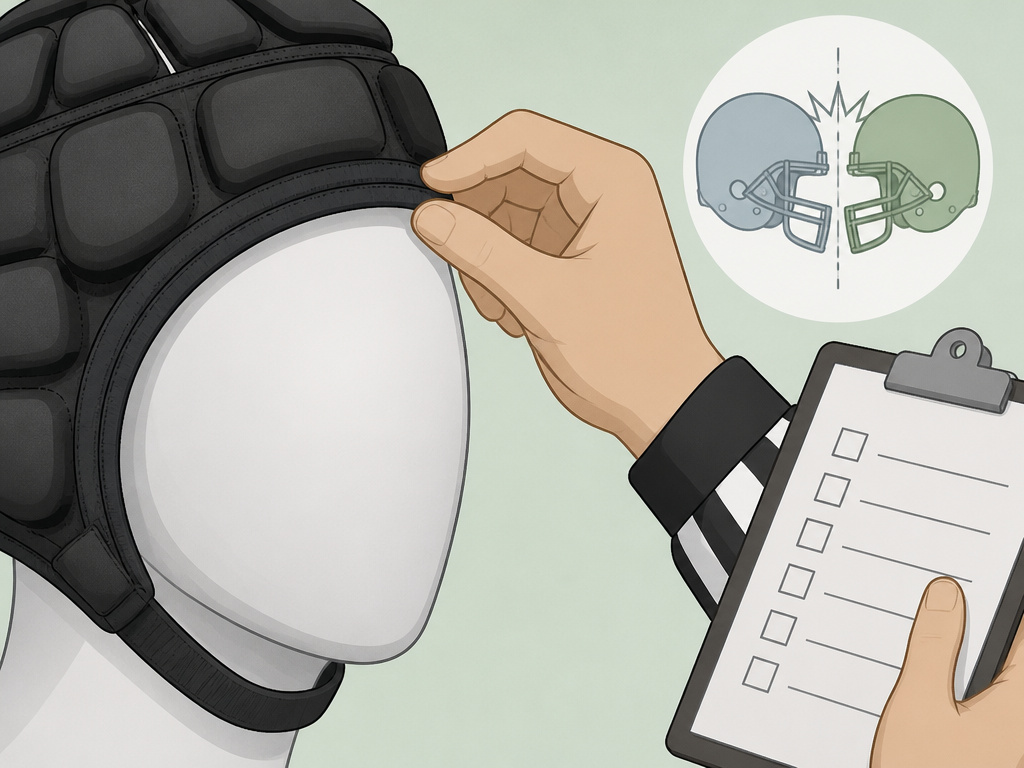
The Rules Constraint: This isn’t optional equipment. Leagues have strict rules. In football, any headwear must typically be made of soft, pliable material. Tinted visors often require medical exemption. Referees will check for anything that could be deemed dangerous to oneself or another player, which can include hard-backed headbands designed to reduce concussion risk if they’re not approved. Always check your specific competition regulations before buying.
A Practical Guide to Choosing and Using Headgear
If you’ve weighed the evidence on the headgear for football pros and cons and decided to try it, here’s how to do it right. This isn’t about grabbing the first thing you see.
- Identify Your Actual Need. Are you seeking padding for frequent head-to-head contact, or just a sweatband? Be honest. Buying a padded cap for sweat management is like wearing shin pads to keep your socks up.
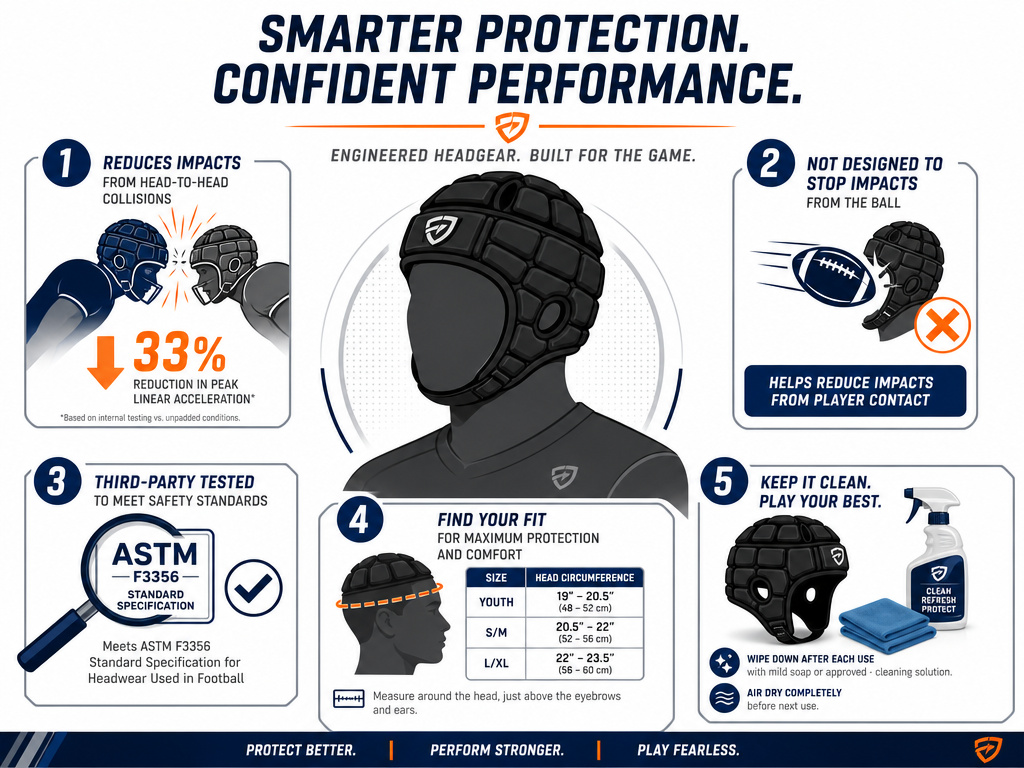
- Fit is essential. It must be snug but not constricting. It cannot shift or rotate during play. A sliding headguard is worse than useless, it’s a distraction. Try it on with your helmet if that’s how you’ll use it.
- Check for Certification. Check for a mark indicating it meets a recognized standard like ASTM F2439 (for soccer headgear) or that it’s approved by your relevant sports federation.
- Consider the “Why-Layer.” Remember the 2005 Withnall study: headgear provided a 33% reduction in head-to-head impacts but no reduction from ball strikes. The ball deforms more than the padding. So if your primary concern is collisions with other players, padding might help. If it’s from heading the ball, the gear likely won’t change the physics.
- Maintain It. Clean it regularly according to instructions. Sweat and dirt break down padding and fabrics. Inspect it for tears or compressed, hardened pads. If it’s damaged, replace it.
Pros and cons of football visors
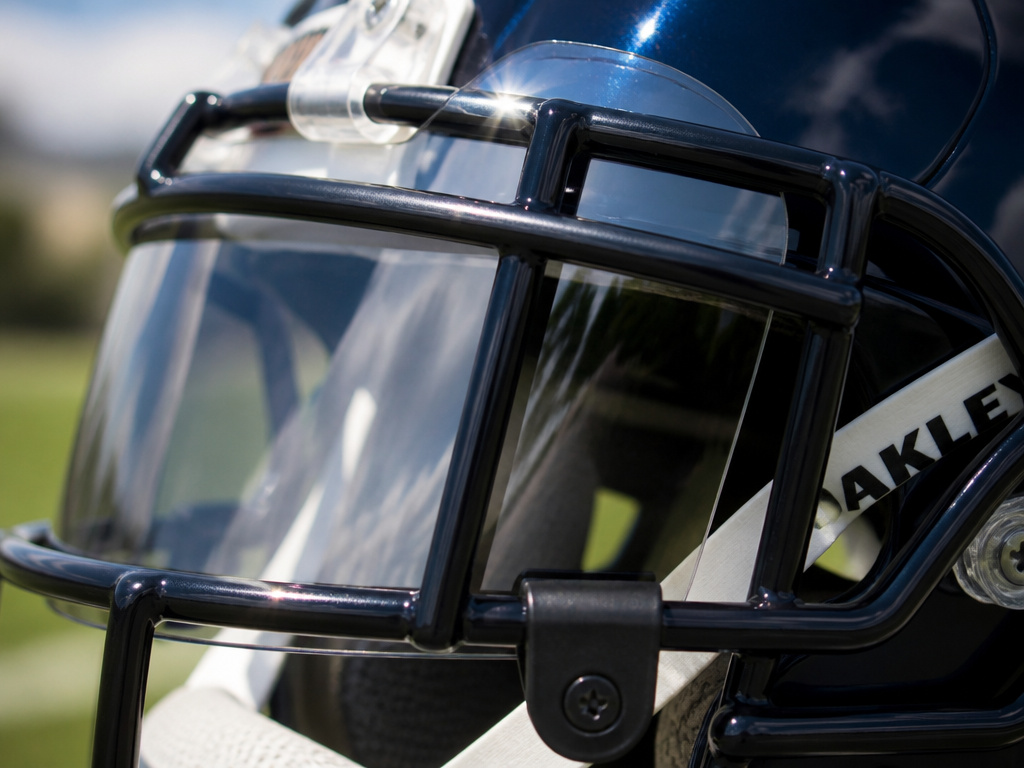
Football visors are primarily used to manage glare and protect the eyes from incidental contact, such as fingers. They are not designed to prevent concussions. Research on headgear in general shows mixed results regarding protection from impacts. For example, the Withnall et al. (2005) study found headgear provided a 33% reduction in impact response during head-to-head collisions. However, other studies, including a systematic review of soccer and rugby players, demonstrate that headgear does not prevent sport-related concussion. When choosing a visor, players should consider that any tint or material could potentially affect peripheral vision or visual clarity in certain lighting conditions, which is a trade-off for glare reduction and eye protection.
Helmet safety ratings
Helmets are certified to meet specific performance standards. These standards set limits on the forces transmitted to the head during an impact. For example, the NOCSAE ND002-25 Standard requires that the Peak Severity Index must not exceed 1200 SI for any impact. For lower-speed impacts, such as those at 11.34 ft/s, the NOCSAE ND002-25 Standard applies a stricter limit of 300 SI. The NOCSAE ND002-25 Standard also sets a maximum allowable peak rotational acceleration of 6,000 rad/s². It is crucial to understand that these ratings and certifications measure a helmet’s ability to manage certain impact forces in laboratory tests. They do not guarantee prevention of concussions during actual play, as the mandatory warning label on all certified helmets explicitly states. When evaluating safety information, look for helmets that meet the current certification standards.
Frequently Asked Questions
Why don’t more NFL players wear Guardian Caps in games?
The NFL’s mandate only applies to preseason practices. The league has not required them for regular-season games, likely due to concerns over player comfort, potential effects on performance (vision, heat), and the unresolved nature of the evidence regarding their game-time efficacy.
Does headgear actually prevent CTE?
There is no evidence that headgear prevents Chronic Traumatic Encephalopathy (CTE). CTE is associated with repeated head impacts, both concussive and subconcussive. Since headgear has not been proven to prevent concussions, and may do little to attenuate the subconcussive impacts believed to contribute to CTE, it cannot be considered a preventive measure.
Why does a helmet sit high on some players’ heads?
This is usually a fit issue. A helmet should sit low on the head, with the front edge about one inch above the eyebrows. A “high” fit often means the helmet is too large or the internal fit system isn’t adjusted properly, which significantly compromises its protective capabilities.
Are there differences between rugby scrum caps and football headgear?
Yes. Rugby scrum caps are traditionally softer, with thinner padding, and are designed primarily for ear protection and abrasion resistance in the scrum. Football headgear like the Guardian Cap is a thicker, add-on padding system designed specifically for high-energy helmet-to-helmet impacts in American football.
Do padded headbands for soccer work?
The scientific consensus, including the 2024 systematic review, is that they do not prevent concussions. They may offer minor protection against lacerations and abrasions, but players and parents should not view them as a meaningful intervention for reducing concussion risks.
The Bottom Line
The headgear question is a perfect football dilemma: a compelling story on one side, cold, hard data on the other. The 53% NFL headline is seductive. The three randomized controlled trials and a systematic review on headgear efficacy showing zero prevention are definitive.
So here’s the stance the evidence forces: don’t buy headgear expecting it to stop concussions. The standards body that certifies the helmets tells you it won’t. Buy it for the tangible, minor benefits, abrasion protection, maybe a confidence lift, and be acutely aware of the potential trade-offs: added heat, restricted senses, and the chance it changes your behavior for the worse.
If you’re a youth coach or parent, invest in teaching the game properly. If you’re a player in a high-collision position at an elite level, the calculus might tilt slightly. For everyone else, the smart money and the clear science say to focus on the fundamentals. The best protection still comes from between your ears, not on top of them.
