
ACL Injuries in Women’s Football Explained
This post contains affiliate links. As an Amazon Associate, we earn from qualifying purchases.
An ACL injury in women’s football is a complex problem with a 4 to 8 times higher incidence than in men’s football, driven by a combination of anatomy, biomechanics, hormones, and specific on-pitch situations like pressing and small-sided games. Prevention programs can cut the risk by up to 90%, but factors like delayed surgery and high re-injury rates complicate recovery.
That 4-to-1 headline ratio is a start, but it hides the real story. It flattens a landscape where a teenage player is seven times more at risk than her male counterpart, where the difference between a hamstring and a patellar tendon graft can double re-rupture odds, and where the first 28 minutes of a match carry half of all injuries. The data is getting sharper, and it points to specific, fixable problems, which is why a clear resource on ACL injuries in women’s football explained is so valuable.
What follows is a breakdown of the numbers that matter, the four injury patterns video analysis keeps seeing, the training tasks that are riskier than you think, and the one rule about return-to-play that top clubs now consider essential.
Key Takeaways
- Female footballers face a 4 to 8 times higher risk of ACL injury than males, with teenage players at the highest danger, up to seven times the rate.
- Proven neuromuscular prevention programs like the FIFA 11+ can reduce ACL injury risk by up to 90% when implemented consistently.
- The risk of a second ACL injury after return-to-play is known to be up to 30% according to the FC Barcelona Medical Department, while another study reported a rate of 31.7% for female players.
- Clubs like FC Barcelona mandate no return before 12 months for youth players, a timeline backed by data showing longer recovery improves outcomes.
The 4:1 Risk Ratio and Why It’s Misleading
The most quoted stat is that women footballers have a significantly higher risk of ACL injury than men, with various studies reporting multipliers ranging from 1.9 to up to eight times higher. The Futbol Club Barcelona medical department, tracking their teams for 14 seasons, puts the overall incidence at 4.6 times higher. But zoom in, and the picture fractures. In their youth academies, that multiplier jumps to seven times. One study found the match incidence for female professionals was 0.91 per 1000 hours, compared to 0.37 for men, a 2.5-fold difference.
The widely cited “4–6 times higher” risk is an average that masks critical details. In youth football (ages 15–18), the risk multiplier can be seven times or more, and match-specific data shows a 2.5-fold increase, not fourfold. This variability means prevention strategies cannot be one-size-fits-all.
Why the disagreement? Different studies measure different things, club training, match play, youth vs. Professional cohorts. The consistent thread is the elevated risk, especially during adolescence. The Barcelona study found 63% of their female ACL injuries occurred in players aged 15 to 18. This isn’t just a women’s football issue; it’s a crisis in youth development.
The sensory reality is in the timing. You can almost feel the collective muscle not quite being awake, the neural pathways to the knee a fraction slower than the game demands.
Anatomical and Hormonal Foundations
The structural differences start with the skeleton. The wider pelvis common in women creates a sharper angle from hip to knee, the Q-angle. This alignment can place more stress on the knee during cutting and landing. There’s also evidence that the ACL itself may be smaller in diameter in some female athletes, and hormonal fluctuations across the menstrual cycle can influence ligament laxity and muscle recruitment.
But anatomy is a predisposition, not a destiny. A smaller ACL doesn’t tear on its own. It fails under load, and that load is dictated by movement. This is where the NIH female athletes ACL injury overview notes that hormonal and anatomical factors interact with neuromuscular control. The body’s ability to fire the right muscles at the right time to protect the joint is a skill. And like any skill, it can be trained poorly or well.
This is why the old comparison to men’s physical benchmarks in the ACL injuries in women’s football explained context is so useless. It’s not about who is stronger in an absolute sense. It’s about how a specific body, with its unique mechanical advantages, manages force during a sport that was largely designed without that body in mind. The focus should be on building robustness within that framework, not wishing for a different one.
The Biomechanical Chain Reaction
So how does a non-contact tear actually happen? It’s a chain reaction, often starting at the hip. Watch a player change direction sharply. If the hip muscles don’t control the torso, the knee can cave inwards, a movement called valgus. That inward buckle puts a tremendous, twisting strain on the ACL.
Studies back this up. One found that medial knee displacement during landing was associated with a 40% increase in ACL injury risk. Another noted that female athletes tend to land with more extended knees and less hip flexion, absorbing force poorly. Fatigue worsens it all, degrading the precise muscle timing needed for stability.
Where this goes sideways: Focusing only on knee strength. The break often starts upstream at the hip or downstream at the ankle. A prevention program that doesn’t train single-leg balance, hip abduction, and controlled deceleration is missing the chain.
This is the core of effective strategies for injury prevention and the central ACL injuries in women’s football explained question. Drills from the FIFA 11+ program aren’t just about getting warm. They’re about reprogramming the nervous system to recognize dangerous positions and fire the glutes and hamstrings to protect the knee before the conscious brain even registers the threat. It’s muscle memory for safety.
The Four Injury Patterns Video Analysis Reveals
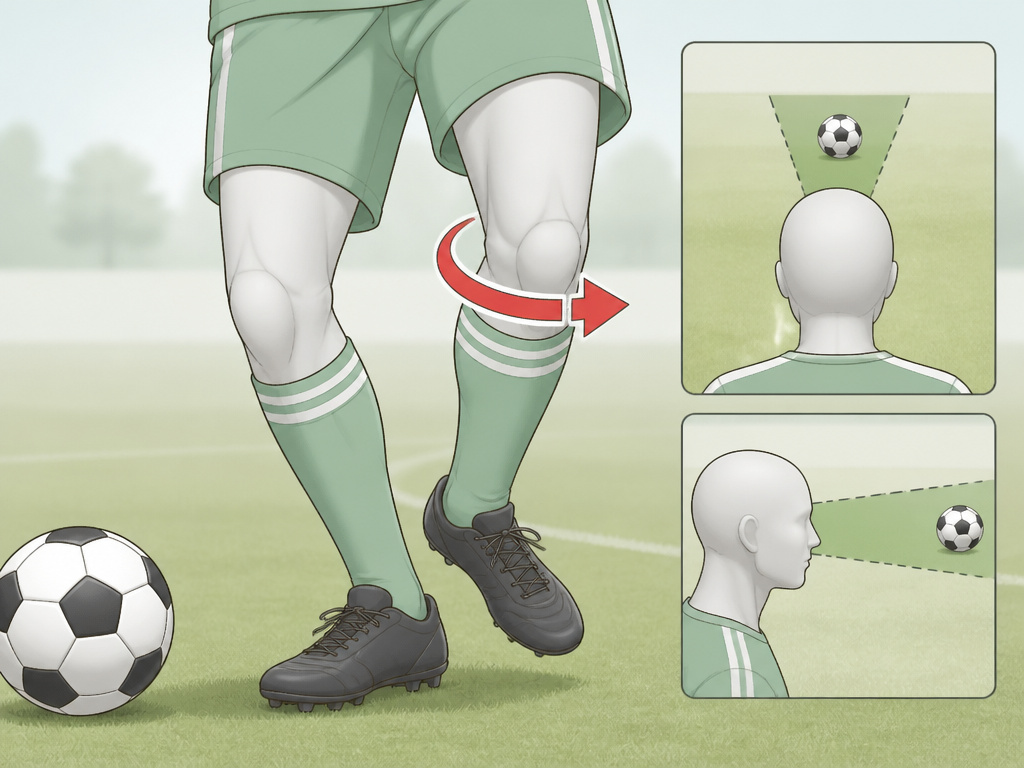
Talking about “non-contact” injuries is too vague. Modern video analysis of professional matches has categorized specific, recurring scenarios. A Spanish study in EuropePMC broke down the percentages of injury patterns. These aren’t freak accidents; they are systemic patterns.
| Injury Pattern | Description | Approx. Frequency |
|---|---|---|
| Pressing/Tackling | Aggressive defensive action, often leading to a planted-foot twist. | 42% |
| Being Tackled | Indirect contact from a challenge that disrupts posture and footing. | 26% |
| Dribbling | Sharp cut or change of direction while in possession under pressure. | 15% |
The Spanish video analysis of ACL tear patterns is particularly revealing. It found that 92% of non-contact tears involved motor-response or attentional inhibition errors. The player was focused on the ball or an opponent and didn’t prepare her body for the load. This shifts prevention from purely physical training to include cognitive drills: reactive agility, scanning under fatigue, and decision-making in small spaces.
Furthermore, training isn’t a safe haven. The same study found 56% of training ACL injuries happened during small-sided games, with another 22% during ball-possession games. The high intensity, tight turns, and competitive nature of these common drills replicate the very situations that cause match injuries.
The Surgical and Recovery Crossroads
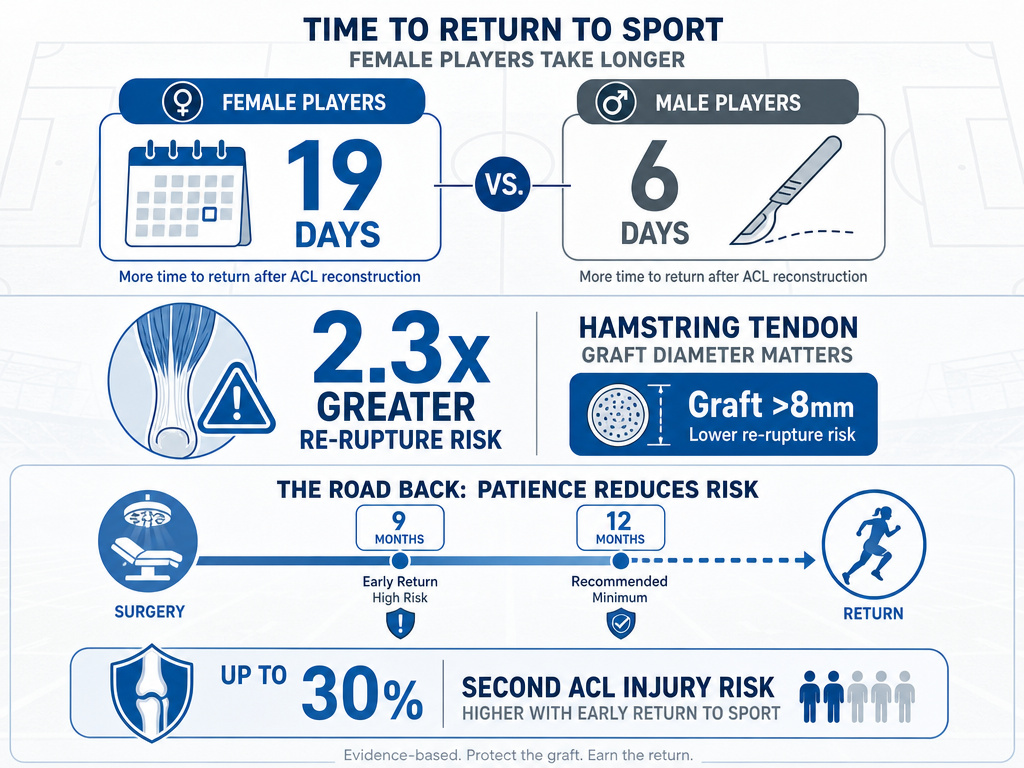
When prevention fails, the treatment path introduces its own set of challenges. Almost all ACL injuries in professionals (99.2% per the German study) are treated surgically. But here, sex disparities emerge starkly. The same study found female players waited a median of 19 days for surgery, compared to just 6 days for men. That delay matters, as it can increase the risk of secondary meniscal damage.
Graft choice is another critical decision with different outcomes for female athletes. The NIH PMC female athlete ACL article highlights that hamstring autografts in women carry a 2.3-times greater risk of re-rupture compared to bone-patellar tendon-bone (BPTB) grafts, especially for athletes under 20. This is partly because female athletes often have smaller hamstring tendons; the review recommends surgeons ensure the graft diameter is greater than 8mm.
The recovery timeline is where philosophy clashes with reality. The Barcelona medical department calls it “mandatory” to delay return to competition for no less than 12 months in youth players and at least 9 months for professionals, though other European data shows median time lost can be as low as 6-7 months. This is based on the high re-injury rate. Their data, echoed in the Apunts Sports Medicine ACL overview, shows the risk of a second ACL injury (to either knee) is up to 30% for female athletes. Yet, other European data shows median time lost can be as low as 6-7 months, revealing a tension between ideal rehab and competitive pressure.
This long road back is why a proper phased return to football is essential. It’s also where post-surgery strength training evolves from rehabilitation to re-prevention, building the resilience needed for the demands ahead.
Prevention: The 90% Solution
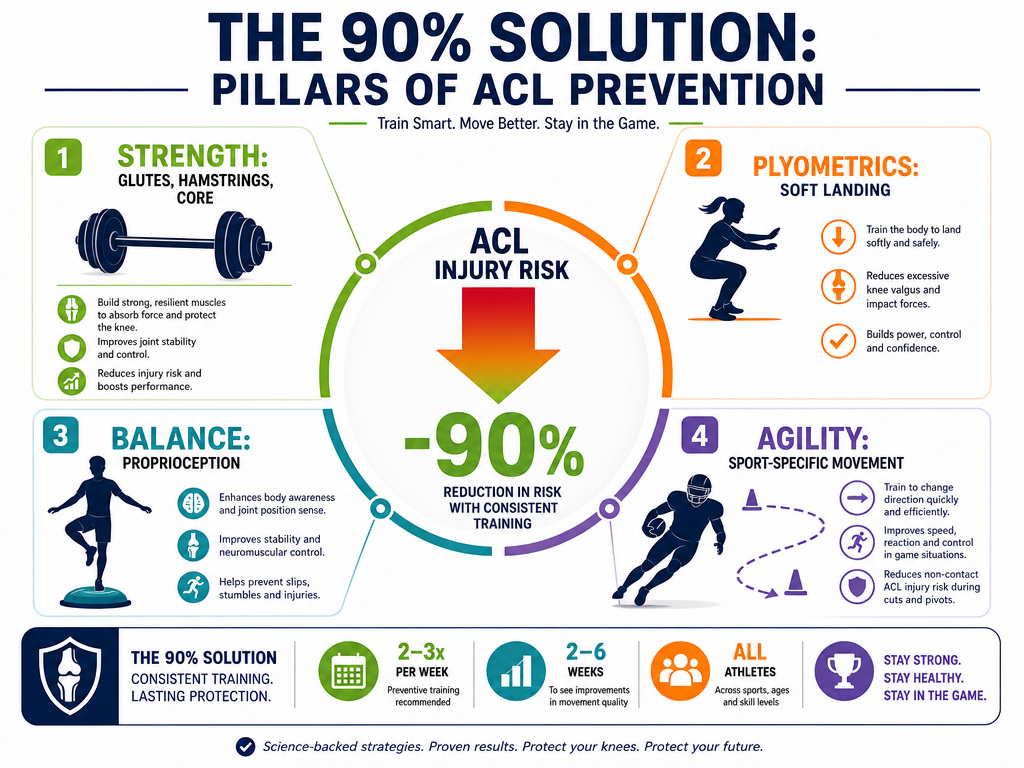
The most powerful number in this entire discussion isn’t a risk multiplier. It’s the up to 90% reduction in ACL injury risk linked to consistent neuromuscular prevention programs. This isn’t theoretical. Programs like the FIFA 11+, the PEP program, and the “Swedish knee control” model are validated.
These programs work because they are holistic. They combine:
- Strength: Focusing on the glutes, hamstrings, and core, the muscles that control the hip and knee.
- Plyometrics: Teaching safe jumping and landing mechanics, focusing on soft knees and aligned hips.
- Balance: Improving proprioception so the body senses and corrects awkward positions instantly.
- Agility: Incorporating sport-specific cutting and pivoting at sub-maximal speeds to build good technique.
Implementing them is the hard part. It requires buy-in from coaches and players, often needing to replace traditional warm-up routines. The key is framing it not as extra work, but as a fundamental part of training to stay on the pitch. After all, an ACL tear is often among the most common football injuries, but its severity and frequency make it a unique priority.
For the individual player, this means taking ownership. It means consistent strength training outside of team sessions, focusing on single-leg stability. It might mean tracking menstrual cycles to understand personal risk windows. And it certainly means using a proper, dynamic warm-up before every session, not just matches.
How do pitch and resources affect ACL risk?
While the fact sheet does not specify environmental data, practical guidance is clear. The majority of ACL injuries happen without direct contact, often during dynamic movements like pressing, tackling, or dribbling. These actions are influenced by the playing surface. Uneven or poor-quality pitches can increase instability during cuts and landings. Similarly, training load management is critical; a high proportion of training injuries occur during small-sided and possession games. Ensuring adequate recovery and monitoring training intensity on all surfaces is a key part of managing external risk factors for players.
What is the psychological impact of an ACL injury?
The psychological journey is a major part of ACL recovery. The success rate for returning to competition after surgery varies widely, and the risk of a second injury is significant. This high re-injury rate can create fear and anxiety, potentially affecting a player’s movement and decision-making upon return. Research indicates that a large majority of non-contact tears involve errors in motor-response or attention. A structured, phased rehabilitation that builds confidence in the knee and incorporates sport-specific cognitive training is essential. Rushing back increases risk, so a patient, psychologically-informed approach is as important as the physical work.
Frequently Asked Questions
Why are ACL injuries so common in women’s football?
ACL injuries are more common due to a combination of anatomical factors (like wider hips affecting knee alignment), hormonal influences on ligament laxity, and biomechanical movement patterns under load. Specific high-risk situations in football, such as pressing and sharp decelerations, then exploit these underlying predispositions.
What female sport has the most ACL injuries?
Football (soccer) is consistently cited as one of the highest-risk sports for ACL injuries in women, alongside basketball and handball. The cutting, pivoting, jumping, and physical contact involved create a perfect storm of risk factors.
Why are so many teen girls tearing their ACLs?
Adolescent girls are at a uniquely high risk due to a convergence of factors. They experience rapid growth, which can lead to muscle tightness and coordination lags. Hormonal changes increase joint laxity, and they are often exposed to high-intensity training and competition in sports like football before their neuromuscular control is fully developed to handle the loads.
Can ACL injuries be prevented in women’s football?
Yes, extensively. Research shows that structured neuromuscular prevention programs, which include strength, plyometric, balance, and agility drills, can reduce the risk of ACL injuries by up to 90%. Consistency in performing these programs as a warm-up is key.
How long does it take to return after an ACL tear?
Return-to-play timelines vary but are generally longer than many expect. For youth athletes, leading medical advice suggests a minimum of 12 months before returning to competition. For professionals, a minimum of 9 months is recommended. Rushing this process significantly increases the risk of re-injury, which occurs in roughly 30% of female footballers.
Before You Go
The data paints a clear picture: ACL injuries in women’s football are a multi-factorial epidemic, but not an inevitable one. The 90% reduction figure from prevention programs is the most important takeaway, it means we have the tools.
The challenge is shifting from reaction to prevention at every level. It means clubs investing in the same medical and performance resources for women’s teams as for men’s. It means coaches dedicating 15 minutes of every training session to a prevention-focused warm-up program. And it means players understanding that the most skilled thing they can do is prepare their bodies to withstand the game’s demands.
Start with the warm-up. If your team isn’t using a structured program like the FIFA 11+, introduce it. That single change is the lowest-hanging, highest-impact fruit on the tree. Everything else, the graft choice debates, the meticulous return-to-play protocols, matters most when prevention has, despite our best efforts, failed. Our goal is to make that failure much rarer.
