
Overlapping vs Underlapping Runs in Football
This post contains affiliate links. As an Amazon Associate, we earn from qualifying purchases.
Overlapping runs see a teammate run on the outside of the ball-carrier, while underlapping runs see a teammate run on the inside. The difference is spatial: overlap creates width for crosses, underlap attacks central channels for cut-backs. Sources disagree on which run is more effective against a compact defense; some coaches provide a ‘wholesale’ guide favoring the underlap, while Tactical Football Analysis states the decision is too complex for a wholesale answer.
That difference in path creates two entirely different problems for a defense. One pulls a defender wide and opens a crossing lane. The other drags a central player out of position and opens a passing lane into the heart of the penalty area. The choice between overlapping vs underlapping runs in football changes how you score.
This guide explains the structure of both overlapping and underlapping runs in football. You’ll get a side-by-side comparison of their tactical goals, the specific player profiles needed, and the exact game situations that call for one over the other. We’ll also look at the physical demands, common mistakes, and a coaching drill you can use this week.
Key Takeaways
- Overlap for crosses, underlap for central penetration. The overlap’s main advantage is a clear crossing angle; the underlap’s main advantage, according to Tactical Football Analysis, is that the runner is closer to the goal and therefore in a more threatening position.
- Some coaching advice suggests the underlap is more effective against a low block, while Tactical Football Analysis states the decision on when to use each run is too complex for a wholesale answer.
- Timing and communication are essential. A poorly timed overlap leaves your flank exposed; a mistimed underlap blocks your own central passing lanes.
- Full-backs overlap, midfielders underlap. By role, but not exclusively. An overlapping centre-back or an underlapping full-back can surprise a defense.
- Drill the decision, not just the run. Players must read the defender’s body position and the available space to know whether to go outside or inside.
Overlap vs Underlap: The Core Difference
Forget which one is “better.” Start with what each run literally is. An overlapping run is when a player runs on the outside of a teammate in possession of the ball. An underlapping run is when a player runs on the inside of that teammate.
The words “over” and “under” here are about geometry, not elevation. Think of the ball-carrier as the central point. The overlapping runner goes around them, wider toward the touchline. The underlapping runner goes through the inside lane, toward the centre of the pitch.
The difference between the overlap and the underlap lies in the path of the run in relation to the ball-carrier. An overlapping player commits his run on the outside of the ball-carrier and thereby in a wide area. An underlapping player commits the run on the inside of the ball-carrier and therewith in a more central area.
This spatial difference dictates everything that follows: which defenders are pulled out of position, what kind of pass is made, and what scoring chance is created.
| Aspect | Overlapping Run | Underlapping Run |
|---|---|---|
| Path | Outside the ball-carrier, toward the touchline. | Inside the ball-carrier, toward the centre/half-space. |
| Primary Target | The wide channel, behind the opposition full-back. | The half-space, between the full-back and centre-back. |
| Typical Pass | A straight or curved pass into the wide channel. | A diagonal, line-breaking pass into a central channel. |
| Ideal Outcome | A cross from the byline into the penalty area. | A cut-back pass or shot from a central position. |
| Most Common Executor | Full-back or wing-back. | Central midfielder or inverted full-back. |
The choice is a core part of the overlapping vs underlapping runs in football decision, directly responding to the space the defense gives you.
Why You Use Them: Tactical Goals and Advantages
Both runs share a common, simple aim: to create a numerical advantage. A 2v1 situation on the flank overwhelms a defender. But how they create that advantage, and what happens next, diverges sharply.
The Overlap’s Strengths and Trade-Offs
The overlap is the classic weapon. Its biggest advantage is clarity. The overlapping player gets wide, often into a position where they have a clear view of the penalty area. From there, they have a clear view of the penalty area for a cross.
FourFourTwo notes the obvious payoff: a “big advantage of becoming a virtuoso in overlapping is that you’ll have a far greater chance of getting quality crosses into the penalty area.” If your attack is built around a target man or late-arriving midfielders, the overlap is your bread and butter.
But it has a cost. That full-back sprinting 40 yards up the line is now 40 yards from his defensive position. As FourFourTwo points out, an overlapping run “can compromise your compactness, leaving the team vulnerable behind the runner.” The risk is a quick turnover and a counter-attack into the space he just vacated.
Common mistake: The overlapping runner going too early. If the ball-carrier hasn’t engaged the defender, the overlap just pulls a defender into the passing lane. The pass gets cut out, and now both attackers are ahead of the ball.
The Underlap’s Hidden Threat
The underlap is more subtle, and in many modern systems, more potent. Because the run is inside, it’s often out of the direct sightline of the defender marking the ball-carrier. Tactical Football Analysis highlights this: “the underlapping run is out of the defenders’ field of view. As a consequence, the defender can only guess the runner’s current positioning, making it nearly impossible to always cut off the passing lane.”
This run doesn’t just target the wide defender. It aims to pull a central midfielder or even a centre-back out of position. The Football Analyst notes an underlapping run “can pull defenders out of position, opening up shooting lanes for attackers outside the box.” By dragging a defender inward, it opens space for the runner and for others.
Its major advantage in the modern game is its effectiveness against packed defenses. Against a low block of six defenders in the box, a wide cross is a low-percentage play. An underlap that pulls one of those six out of the line, however, creates a seam. Suddenly, there’s a lane for a pass, a cut-back, or a shot from a dangerous central area.
When to Choose Overlap vs. Underlap: Player Cues
So when does a player decide to go outside or inside? The coaching manuals will tell you it’s complex. They’re right. But there are clear triggers.
Choose the OVERLAP when:
- The opposing full-back is “touch-tight” to your winger, marking them closely on the outside. Your overlap forces that defender to make a choice: stay with the ball or track the runner.
- Your winger is a traditional, touchline-hugging player. The overlap gives them the option to play a simple pass and continue their run inside.
- You have a significant pace advantage on the flank. A rapid full-back can burn past a tired winger and defender.
- The defense is spread, with space behind the full-back. This is ripe for a long, driving overlap.
Choose the UNDERLAP when:
- You’re facing a low block with no space in behind. A wide run is pointless; an inside run can drag a defender and create a pocket.
- Your winger is inverted (a right-footer on the left, or vice-versa) and wants to cut inside. An underlap from a midfielder gives them a passing option and doesn’t crowd their inside path.
- The opposing full-back is standing off, showing your winger inside. The underlap exploits that invited space.
- You need to connect play to the central channels. The underlap is a direct route from the flank into the half-space.
Tactical Football Analysis adds a crucial situational note: “The underlap is more sensible than the overlap in situations with available space for the ball carrier in 1v1 situations.” If your winger can take on their man, the underlap supports that duel without getting in the way. Conversely, “if the ball carrier is under pressure and needs an immediate option, the underlap is not as helpful as the overlap.” The overlap provides a clearer, safer outlet.
The Players: Who Makes These Runs?
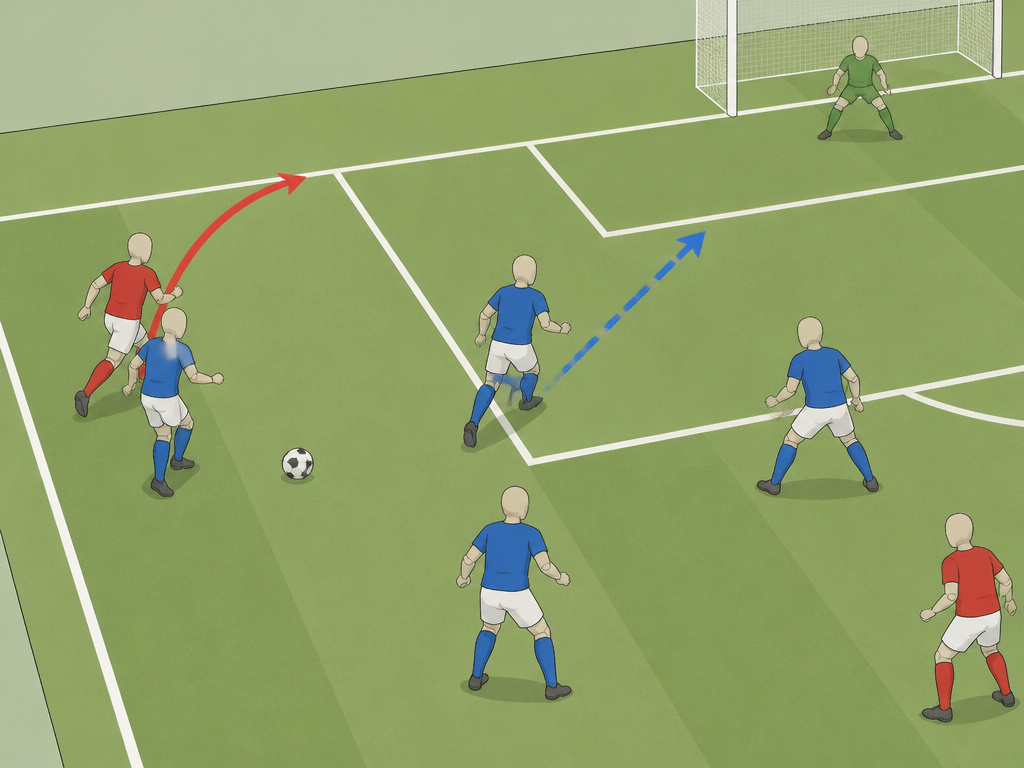
While any player can make these runs, certain roles are synonymous with them due to their starting positions.
The Overlapping Full-Back: This is the classic image. Players like Achraf Hakimi or the modern interpretation of players like Roberto Carlos. The MiMentor resource confirms it’s “an extremely physically demanding role and involves lots of high-speed running.” They need the engine to go up and down the flank all game.
The Underlapping Midfielder: Think of a Kevin De Bruyne or a Jude Bellingham. Starting from a central position, they see the gap between the opposition’s full-back and centre-back and surge into it. Their run is more about timing and vision than pure pace.
The Inverted Full-Back: A hybrid. Players like Trent Alexander-Arnold or Ben White might start as a full-back but drift inside, often making underlapping runs from deep. This is a key part of modern positional play, creating numerical advantages in central areas.
Overlapping Centre-Backs: A surprise weapon. Teams like Atalanta have used this, with a wide centre-back in a back three storming forward on the overlap. It’s unpredictable and adds an extra attacking dimension, a concept explored in depth in our guide on rotations.
Coaching the Runs: A Practical Drill
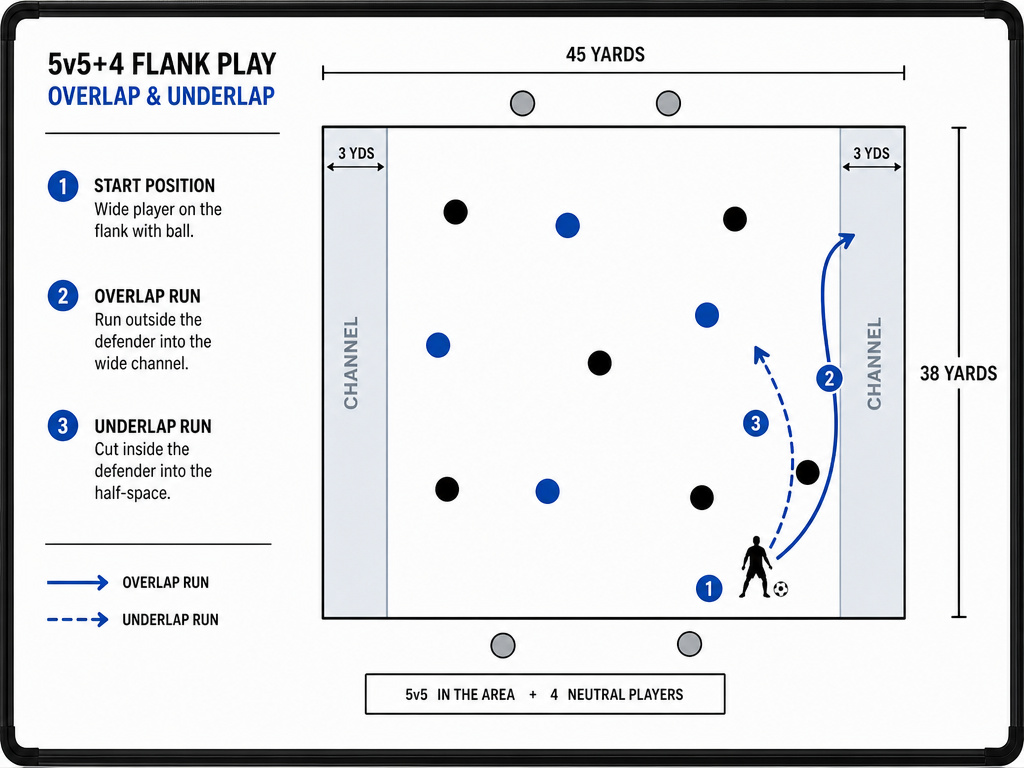
Knowing the theory is one thing. Training it is another. The key is to create drills that force the decision.
The WORLD CLASS COACHING Training Center provides a concrete example for underlapping runs: a 5 v 5 + 4 drill in a 45 x 38 yard area with 3-yard wide channels, run for 15 minutes.
You can adapt this principle. Set up a game situation on one flank. Have a winger, a full-back, and a central midfielder attacking against a full-back and a covering midfielder. The objective: score using an overlap or underlap.
The part nobody mentions: Don’t tell the players which run to make. Tell them they must create a 2v1. Let them figure out whether going outside or inside achieves it. The learning is in the failed attempts.
Start unopposed to groove the movement patterns. Then add passive defenders. Finally, make it fully opposed. The focus should shift from “can you make the run?” to “can you read the defender’s position and choose the correct run?”
This ties directly into the broader principles of breaking down a low block, where creating these disguised movements is essential.
Common Mistakes and How to Fix Them
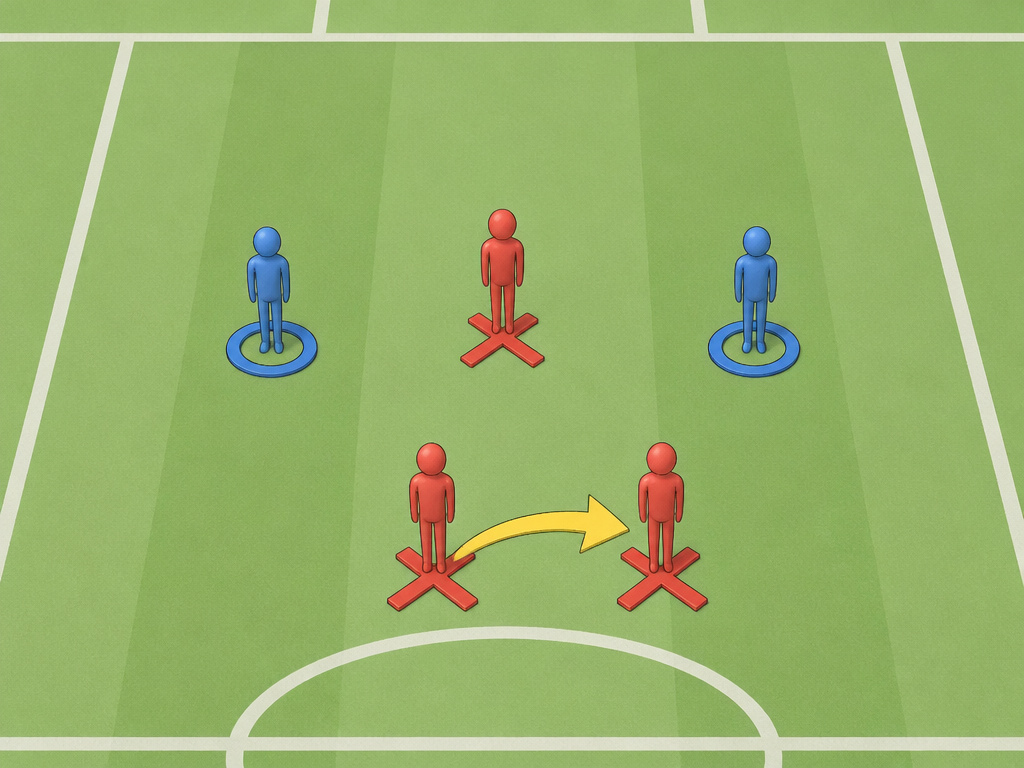
Even at professional levels, these runs break down. The errors are predictable.
Mistake 1: The Decoy Run That Doesn’t Decoy.
The runner goes, but the ball-carrier never looks up. The defender ignores the run, and the attack stalls. The fix is communication – a call, a point, or a pre-agreed trigger. The runner must also be a credible threat; they must have a history of actually receiving the pass.
Mistake 2: Crowding the Same Space.
An inverted winger cuts inside at the same moment the full-back underlaps. They both end up in the same central channel, easy to mark. The fix is coordination. One goes, the other holds or goes wide. This is a core tenant of maintaining width and depth.
Mistake 3: Ignoring the Defensive Transition.
The overlap is a defensive gamble. If the team doesn’t adjust – perhaps a midfielder slots into the full-back space, or a back three shuffles over – the counter-attack is on. The fix is rehearsed recovery patterns. Every attacking drill should end with a transition to defense.
The Modern Game: The Rise of the Underlap
For years, the overlap dominated coaching manuals. But football evolves. As teams defend more compactly and wingers become more inverted, the underlap has surged. The Athletic has tracked this trend extensively, noting the tactical shift in pieces like their analysis on The rise of the underlap article.
Coaches like Pep Guardiola and Mikel Arteta use underlaps to create central overloads and break the defensive line with diagonal passes. It’s become a signature for teams that dominate possession.
The run is perfect for the modern emphasis on the half-spaces, those channels between the full-back and centre-back. An underlap into the half-space is the most dangerous pass in football – it bypasses multiple defenders and sets up a high-value chance.
How do overlapping and underlapping runs connect to blindside and third-man runs?
These runs are part of a larger family of movements designed to disrupt defensive lines. The overall goal of overlaps and underlaps is to either get behind the opposition’s defence or to open up space in central areas, often by creating a numerical advantage. An underlapping run, which cuts inside, can function like a blindside run, moving into space outside the defender’s field of view. Both overlaps and underlaps can also set the stage for third-man runs, where a third player exploits the space or defensive distraction created by the initial runner. The choice between an overlap or underlap dictates the angle of attack and which spaces are opened up for subsequent players.
Frequently Asked Questions
What is the main difference between an overlap and an underlap?
The main difference is the path of the supporting run. An overlap is a run on the outside of the ball-carrier, heading toward the touchline to create width and crossing opportunities. An underlap is a run on the inside of the ball-carrier, heading toward the centre of the pitch to attack the half-space and create central passing lanes.
Which is more effective against a deep, compact defense?
The underlap is generally more effective against a deep block. A wide overlap often results in a cross into a crowded box, which is easy to defend. An underlap can drag one of those compact defenders out of position, creating a gap in the defensive line for a pass or shot from a more dangerous central area.
Can midfielders make overlapping runs?
Absolutely. While full-backs are the most common overlapping players, any player from a deeper position can overlap. Central midfielders can drift wide to overlap, and even centre-backs in a back three can make overlapping runs to add an unexpected attacking threat, a concept sometimes linked to third-man runs.
How do you coach players to choose between the two?
Coach the decision, not the technique. Set up small-sided games focused on one flank. Give the attacking team a numerical advantage (e.g., a winger and a full-back vs. One defender). Don’t instruct them on which run to make. Instead, challenge them to create a 2v1 and score. They’ll learn through trial and error that the defender’s position dictates whether going outside or inside is the better option.
Before You Go
One rule that reframes the whole debate: the effectiveness of an overlap or underlap is judged by whether the run changes the defender’s position, not by whether the runner gets the ball. A perfectly timed overlap that pulls the full-back two steps wide, giving your winger the space to cut inside and shoot, is a complete success – even if the overlapping player never touches it.
The best attacks are built two or three passes before the shot. So watch the runner, but watch the defender they’re targeting more closely. Did they move? If they did, the run did its job. Everything else is just the finishing touch. That’s the quiet geometry that decides matches.
