
Beach Soccer Rules Explained: How Matches Are Won
This post contains affiliate links. As an Amazon Associate, we earn from qualifying purchases.
Beach soccer is played on a sand pitch measuring 35–37m long by 26–28m wide, with a maximum of five players per side, one of whom must be the goalkeeper. A match consists of three 12-minute periods with unlimited rolling substitutions, uses a lighter ball (400–440g), and has no draws, ties are broken by extra time and penalties. Key rule differences from football include no offside, no walls on free kicks, and the fouled player must take the resulting direct free kick.
Watch the space, not just the ball. That old adage from the touchline applies doubly here, because the sand itself is the game’s defining player. The rules aren’t just a scaled-down version of football; they’re a complete rewrite for a faster, more vertical, and frankly more chaotic environment. This is beach soccer rules explained.
What follows is a breakdown of the twelve official rules that matter, pulled straight from the FIFA handbook, for a proper beach soccer rules explained. This section explains the pitch and player setup, the unique match format that bans draws, the specific fouls and restarts, and where even the official sources can’t quite agree. By the end, you’ll see why a beach soccer goalkeeper is the most important player on the pitch.
Key Takeaways
- A beach soccer match has three 12-minute periods, and the clock stops for goals, fouls, and injuries.
- No draws are allowed; a tied match goes to extra time, then a penalty shootout with a unique points system (3 for a regulation win, 2 for extra time, 1 for penalties).
- While unlimited rolling substitutions are a common principle, the FIFA Laws of the Game state that in official FIFA/confederation competitions, a maximum of seven substitutes may be used in a match.
- The fouled player must take the resulting direct free kick, a rule that turns every foul into a potential set-piece duel.
- There is no offside rule and no defensive walls, which completely changes attacking and defensive tactics in the final third.
The Pitch, Ball, and Player Basics
The game happens inside a tight, defined box of sand. According to the FIFA Laws of the Game, the pitch length (touchline) must be between 35 and 37 metres, and the width (goal line) between 26 and 28 metres. That’s roughly a third the size of a full grass pitch.
The official playing area is a compact rectangle of sand, 35–37m long and 26–28m wide. The penalty area is defined by an imaginary line 9 metres from each goal line, marked by flags. All lines are considered part of the area they enclose.
The ball is different too. It’s lighter and softer to account for the sand. The specs are precise: a circumference of 68–70 cm, a weight of 400–440 grams at the start of the match, and an internal pressure of 0.4–0.6 atmospheres. This creates the high, looping trajectories and controlled volleys the game is known for. You can’t just use any old ball; you need proper beach soccer balls designed for the job.
Each team fields five players: one goalkeeper and four outfielders. Here’s where a small contradiction pops up in the official documents. The core Laws of the Game state “a maximum of five players,” which implies five is the ceiling. The FIFA Coaching Manual, however, explicitly says “four outfield players and a goalkeeper.” For all practical purposes, you play with five.
| Element | Beach Soccer Specification | Why It Matters |
|---|---|---|
| Pitch Size | 35–37m x 26–28m | Creates a fast, end-to-end game with constant action. |
| Match Duration | 3 periods x 12 minutes | The stopped clock makes every second of possession critical. |
| Players (On Field) | 5 (1 GK + 4 outfield) | Fewer players mean more space and individual responsibility. |
| The Ball | 400–440g weight, 0.4–0.6 atm pressure | Lighter for aerial control; lower pressure for softer impact on sand. |
| Substitutions | Unlimited & rolling | Allows for high-intensity “shifts” and constant tactical changes. |
How Matches Are Won (The ‘No Draws’ Rule)
This is the rule that defines the competition structure. A beach soccer match cannot end in a draw. Ever. If the scores are level after the three 12-minute periods, the game goes to extra time. Beach Soccer Worldwide states this period is 3 minutes, while the FIFA Laws of the Game specify matches consist of three periods of 12 minutes each. If it’s still tied, we go to penalties.
The penalty shootout format involves each team taking 5 shots, followed by Sudden Death if needed. The points system changes tournament strategy. A win in normal time earns 3 points. A win in extra time earns 2 points. A win on penalties earns just 1 point. It makes chasing a late equaliser a calculated risk, you might force extra time, but you’re playing for fewer points.
The match also continues even if a team is reduced to fewer than three players.
This “no draws” philosophy pushes attacking play until the final second. Defending a one-goal lead is risky because a last-gasp equaliser doesn’t just cost you two points; it potentially relegates your win to a lower points tier.
The Substitution Game: Unlimited, But Not Always
Substitutions are a tactical weapon. The general rule is unlimited rolling subs, players can come on and off during open play without stopping the game, through a designated team zone. This allows coaches to run high-intensity shifts, similar to hockey line changes.
However, sources disagree on a key detail for the highest level. Beach Soccer Worldwide states the principle is “unlimited (rolling) substitutions,” while the FIFA Laws of the Game specify that in official FIFA/confederation competitions, a maximum of seven substitutes may be used in a match. For a casual game, it’s all-in. For the World Cup, there’s a roster limit.
Sources also differ on squad size: Beach Soccer Worldwide states a maximum of 12 players in the matchday squad, while FIFA’s general guide states each team has seven substitutes.
Key Rule Differences from Football
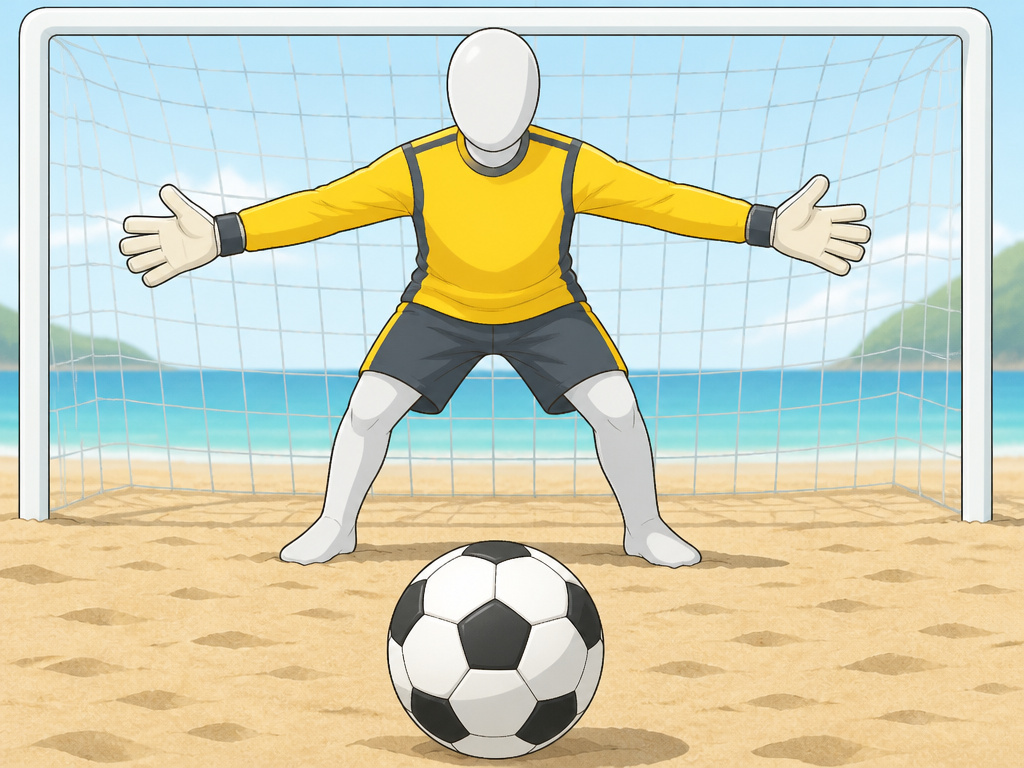
The sand changes everything, so the rules adapt. Here are the big four that flip football conventions on their head.
1. No Offside Rule.
This is the most liberating change for attackers. Without an offside line, forwards can camp near the opponent’s goal. It forces defenders to mark zonally and tightly, as a striker can receive a long goal-kick unchallenged. The game becomes about controlling space, not holding a line.
2. No Defensive Walls.
When a direct free kick is awarded, the defending team cannot form a wall. The goalkeeper must face the shot alone, with all other defenders positioned behind the ball. This turns every foul in shooting range into a genuine scoring opportunity and discourages tactical fouls.
3. The Fouled Player Takes the Kick.
For most fouls, the player who was fouled must take the resulting direct free kick, unless they are seriously injured. It personalises the set-piece and adds a layer of gamesmanship, do you foul the dangerous free-kick specialist and risk giving them a shot?
4. Throw-Ins Are ‘Kick-Ins’.
When the ball goes out over the touchline, play restarts with a kick-in or throw-in. The player can choose to use their hands or feet to put the ball back into play. This keeps the game moving at a frantic pace.
Fouls, Restarts, and the Unique Physical Game
The sand encourages acrobatics, and the rules protect them. It’s a recognition that the game’s spectacle is built on these moments.
The restart rules have other quirks. A goalkeeper cannot handle the ball from a teammate’s foot, resulting in an indirect free kick. And if the ball bursts or goes flat during play, it’s a dropped-ball restart unless it deflates off the goal frame and goes in, in which case the goal stands.
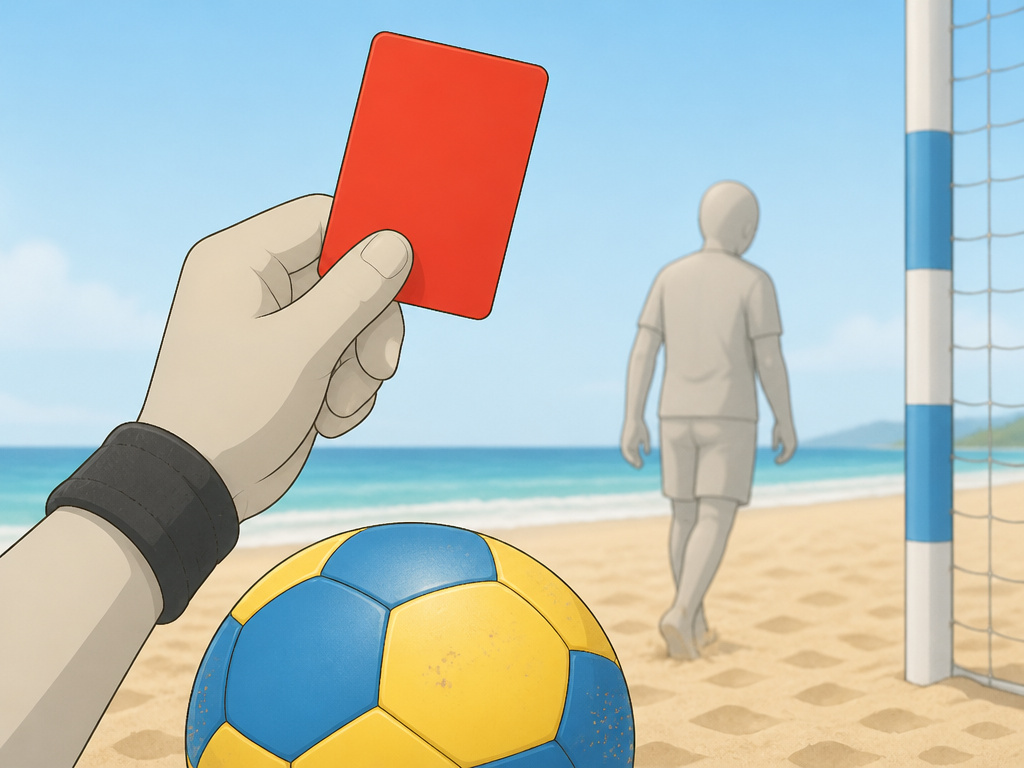
Red cards have a temporary punishment. A sent-off player can be substituted after two minutes of playing time, or immediately if their team concedes a goal before the two minutes are up. It’s a punishment, but not a match-ender for the team’s chances.
All these rules are documented in the official FIFA beach soccer regulations, which any serious player or coach should reference for a definitive beach soccer rules explained.
Equipment and Match Officials
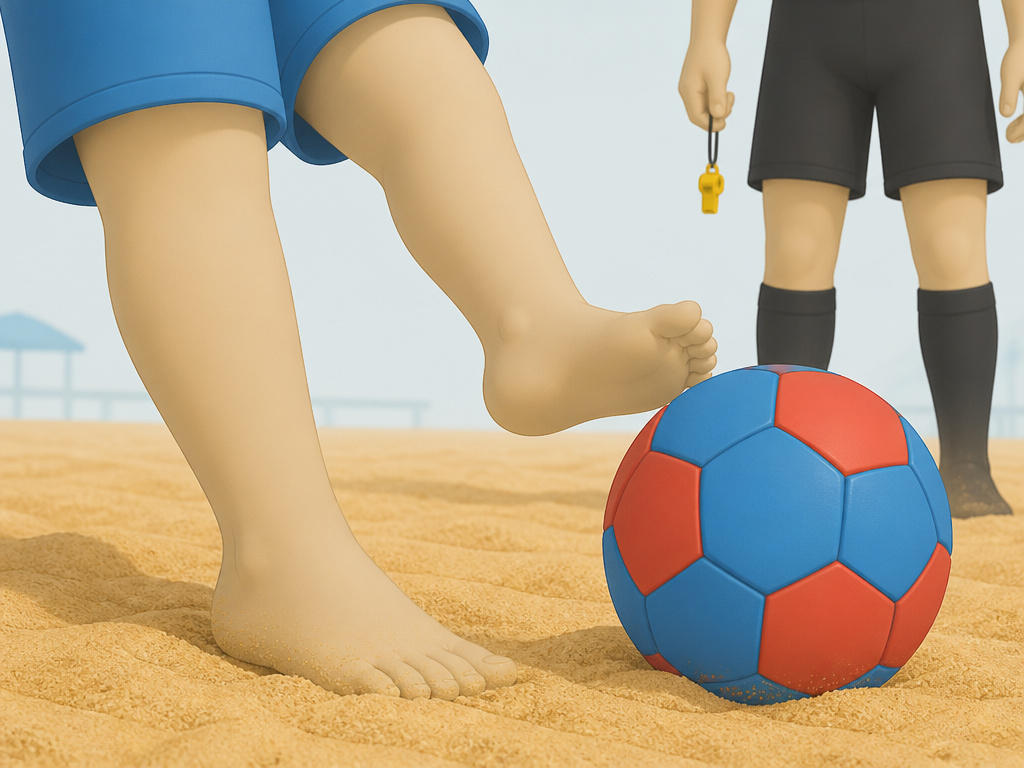
The equipment list is simple. Players wear shirts, shorts, and optional head protection. The one absolute? No footwear. You play barefoot. Goalkeepers can wear long trousers and a different coloured shirt.
The officiating team is larger than you might think. Two referees control the match on the pitch with equal authority. They are assisted by a third referee and a timekeeper, who manages the stopped clock. This team is essential for managing the rapid flow and frequent restarts.
For casual play, many of these rules adapt. A local 5-a-side football game on the beach might ignore the official points system. But the core mechanics, small teams, no offside, quick restarts, are what make the variant so accessible and fun. It’s a different test, one that rewards skill in the air and quick thinking over endurance running. The sand sees to that.
Goalkeeper Rules and Goal Clearances
Beach soccer goalkeepers have a unique and demanding role. They are the only player on the team allowed to use their hands, but only within a specific area. This area is defined by an imaginary line a set distance from the goal line. When distributing the ball, the goalkeeper must do so quickly and cleanly. They cannot handle the ball from a deliberate pass back from a teammate’s foot. Their goal clearances, whether thrown or kicked, are a crucial first step in launching a counter-attack.
Frequently Asked Questions
What are the 5 basic rules of beach soccer?
The five pillars are: 1) A maximum of five players per side on a small sand pitch, 2) Three 12-minute periods with a stopped clock, 3) No draws, extra time and penalties decide ties, 4) No offside rule and no defensive walls, and 5) Rolling substitutions, though the limit on substitutes varies by competition.
How is a beach soccer ball different?
Beach soccer ball is lighter (400-440g) and has lower air pressure (0.4-0.6 atm) compared to a standard football. This makes it easier to control in the air for volleys and overhead kicks and reduces its bounce on the sand. Don’t use a regular match ball; get proper beach soccer balls.
Is beach soccer harder than soccer?
It’s differently demanding. The sand adds immense physical resistance, making running and jumping more exhausting, which is why shifts are short. Technically, it demands superior first-touch and aerial control because the surface is uneven. Tactically, the removal of offside and walls changes defensive structures completely. It’s not harder, but it is a distinct athletic and technical challenge.
Can you score directly from a kick-off?
No. Similar to futsal rules, the kick-off in beach soccer is indirect. The ball must touch another player before a goal can be scored. This prevents a cheap goal from the centre circle on the tiny pitch.
What happens if a player gets a red card?
The player is sent off and cannot play further. However, their team can substitute another player onto the pitch after playing two minutes short-handed. If the team concedes a goal during those two minutes, the substitute can come on immediately. This rule prevents a single dismissal from ruining the contest.
Before You Go
The real beauty of beach soccer isn’t in memorising the rulebook. It’s in how those rules, the small pitch, the stopped clock, the banned draw, force a kind of pure, attacking football. Every moment has weight. Possession isn’t about control; it’s about imminent threat.
If you’re coming from football, forget about holding a defensive line. Watch the space. On sand, the game is won in the air and in the corners of the box, where the rules deliberately tilt the advantage toward the shooter. Try a casual game with the basic framework: five-a-side, no shoes, no offside. You’ll feel the difference in your calves within minutes and see the thrilling, chaotic logic of the rules by the first goal.
