
First Time at a Football Stadium Guide
This post contains affiliate links. As an Amazon Associate, we earn from qualifying purchases.
Your first time at a football stadium is about matching a few basic rules to the specific ground you’re visiting. The NFL’s clear bag policy (12” x 6” x 12” max) is standard for pro venues, but gate times, child ticket rules, and even bag dimensions can differ between college and pro venues. Arrive at least 90 minutes before kickoff to clear security, find your seat, and soak in the warm-ups.
That 90-minute buffer isn’t a suggestion, it’s the difference between a relaxed start and a panicked sprint past kickoff. Security lines snake, bag checks take longer than you’d think, and simply locating your gate in a sea of thousands is its own puzzle. This is why a first time at a football stadium guide is so essential.
What follows is a seven-point first time at a football stadium guide matchday map. We’ll walk through the essential policies, decode the stadium layout, explain what you’re actually seeing on the pitch before the whistle, and outline how to get out without spending an hour in the car park.
Key Takeaways
- Arrive at least 90 minutes early to account for security, bag checks, and finding your seat without missing kickoff.
- Follow the NFL Clear Bag Policy: bags must be clear and not exceed 12” x 6” x 12”, or use a one-gallon clear plastic freezer bag as a simple alternative.
- Your ticket dictates your entry gate; trying another can mean a long walk or a turned-away scan.
- Alcohol sales typically cut off at the end of the third quarter at NFL stadiums, so plan your concessions visits accordingly.
- There is no re-entry at many major stadiums; once you’re in, you’re in until the final whistle.
The Non-Negotiables: Bag Policy and Tickets
Get these wrong and you don’t get in. It’s that simple.
The NFL’s clear bag policy is the star of the show for a reason. Your bag must be made of clear plastic, vinyl, or PVC and cannot be larger than 12” x 6” x 12”. A small clutch bag no bigger than 4.5” x 6.5” is also allowed. The universal loophole? A one-gallon clear plastic freezer bag, like a Ziploc. It’s cheap, it’s compliant, and it holds your phone, wallet, and keys.
The NFL strongly encourages fans to not bring any type of bags. If you do so, please limit the number of carried items. Items may be placed in a clear plastic, vinyl, or PVC bag that does not exceed 12” x 6” x 12”.
Now, here’s where sources disagree. The University of Georgia’s Sanford Stadium states bags must be clear and “no larger than 12” x 12” x 6””. That’s the same volume but a different shape, a square tote versus a vertical bag. When in doubt, default to the NFL’s 12x6x12 dimensions; it’s the stricter, more common standard.
Your ticket is your passport. It’s almost certainly digital, living in your team’s app or your phone’s wallet. Have it ready and zoomed in before you reach the scanner. A patchy signal and a shuffling queue is a terrible combination. And use the gate printed on your ticket. Some stadiums, like Lucas Oil, are strict about this. Others might let you slide, but why risk a long walk back?
| Stadium / Policy | Clear Bag Max Dimensions | Small Clutch Max Dimensions | Notable Exception |
|---|---|---|---|
| Arrowhead Stadium (NFL) | 12” x 6” x 12” | 4.5” x 6.5” | One-gallon clear plastic freezer bag permitted |
| Los Angeles Chargers (NFL) | 12” x 6” x 12” | 4.5” x 6.5” | One-gallon clear slider storage bag permitted |
| Sanford Stadium (UGA) | 12” x 12” x 6” | Not specified in guide | Medical/Non-conforming bags can be checked at Gates 6 & 10 |
When to Arrive and What Happens at the Gates
Timing is everything. The parking lot at Arrowhead Stadium opens 4.5 hours before kickoff. General stadium gates open 2 hours before. Premium areas might open at the 2.5-hour mark. Lucas Oil Stadium gates open 2 hours prior. These are your official windows.
The smart play is to target an arrival well before kickoff. This gives you a cushion inside the official gate opening time to handle the inevitable queue. A line that looks short from the back can take a significant time to clear once bag checks and metal detectors start.
This is also your window to see the pre-game rituals. The Dawg Walk at Georgia happens approximately 2 hours and 15 minutes prior. The Chargers Express shuttle begins 2.5 hours before. If you want that full, behind-the-curtain experience, consult your specific stadium’s A-Z guide and aim for the earliest recommended time.
Common mistake: Planning your arrival based on kickoff time alone. Traffic, parking, and the security queue each add time you didn’t account for.
Choosing Your Seat and Understanding the Sections
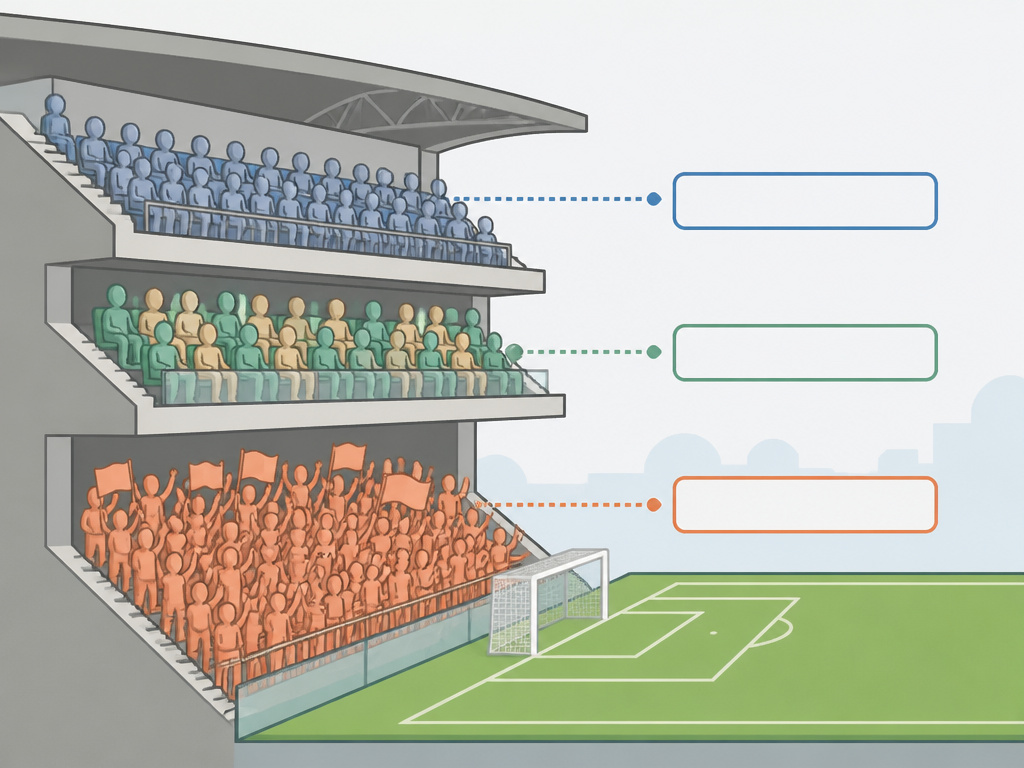
Not all seats get the same match. The atmosphere changes completely depending on where you sit, and the price difference between sections can be 20 to 40 percent.
- Behind the Goal / The “End Zone”: This is the engine room of noise. Expect constant standing, organized chanting, and a community feel. The view is panoramic but distant for midfield action. This is where you feel the game, not just watch it.
- The Sideline / “Midfield”: This is the tactical view. You see shapes, lines, and space. The crowd is often more mixed, families, casual fans, corporate guests. It’s generally calmer, with sitting the norm except for big moments. It’s the best spot if your priority is analyzing the game.
- The Upper Tier / “The Gods”: You trade proximity for a breathtaking, all-seeing perspective. The crowd noise becomes a unified roar below you. It’s often the most affordable option and surprisingly great for understanding team structure.
Your first time at a football stadium guide to the best stadium seats dives deeper into the sightlines and trade-offs for each section. Think about what you want from the day: pure atmosphere or clear analysis? Your answer points to your seat.
Navigating the Concourse Crush
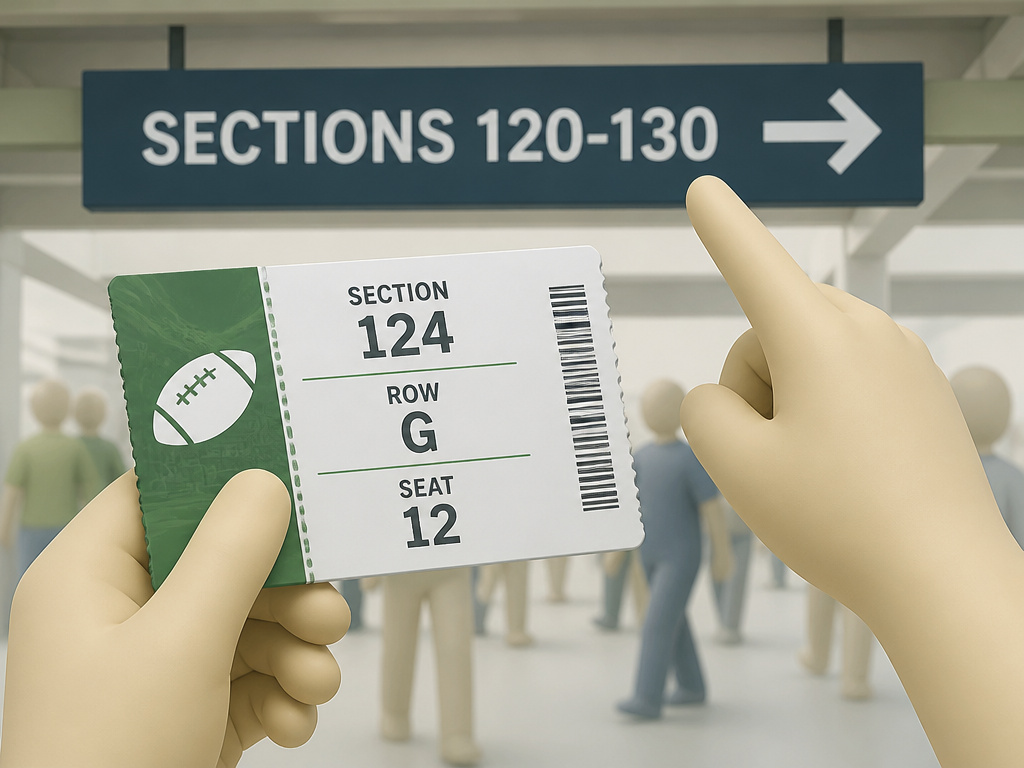
You’re in. Now what? The concourse is a river of people moving in all directions. Your first job is to find your section. Look for large numbered signs hanging from the ceiling or on pillars. Your ticket has a section, row, and seat number (e.g., Section 124, Row G, Seat 12). Find the section first.
Restrooms and concessions have the longest lines just before kickoff and at halftime. The smart move is to use them during the match. Pick a moment when play is settled in the middle third, you’ll miss less, and you’ll walk straight in.
Stadiums have largely gone cashless. Concessions and shops accept cards and mobile pay. A few, like Sanford Stadium, have no ATMs at all. Assume you’ll need a card.
The Unwritten Rules: Stadium Etiquette
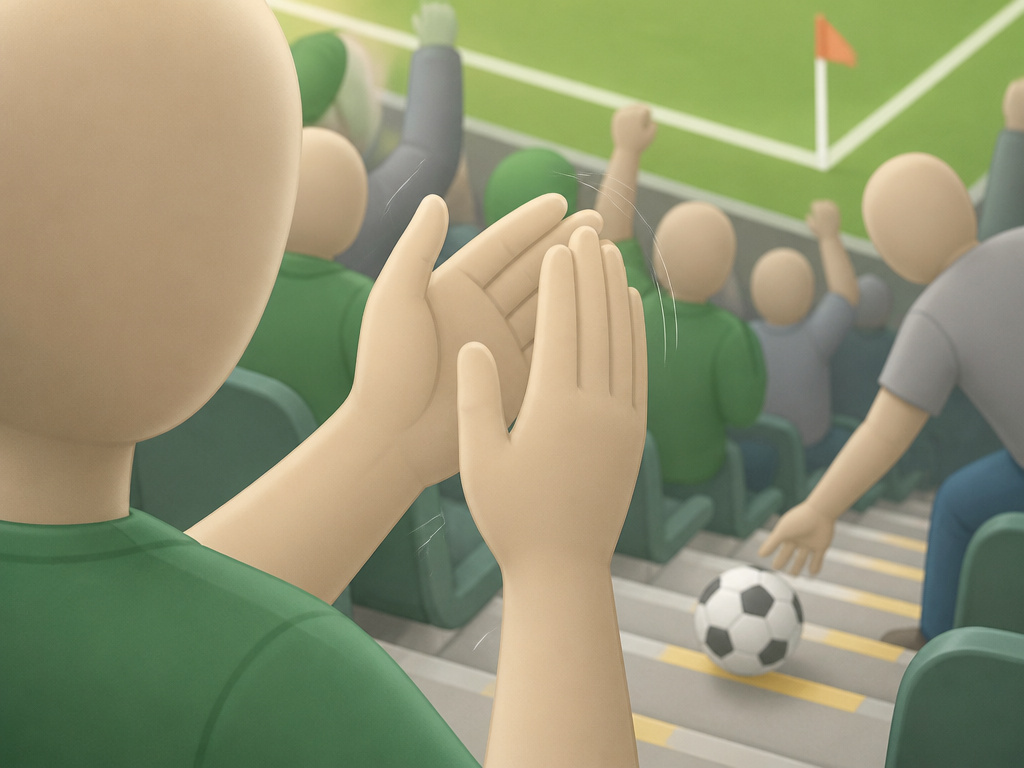
This is the stuff you pick up after a few visits, but knowing it upfront smooths everything.
- Standing vs. Sitting: In traditional seated areas, the norm is to sit. People stand for big moments, a corner, a breakaway, a goal, then sit back down. In the standing areas behind the goals, you’ll be on your feet the whole match. Watch what your immediate block does in the first five minutes and follow suit.
- Chants and Songs: You don’t need to know the words. Clap along, feel the rhythm. The history of football chant is a deep tradition, and most are simple, repetitive cycles. Listen for a round starting and join in on the beat.
- The Ball in the Stands: If a ball comes your way during warm-ups or play, you must return it. Per stadium policy, a football that enters the stands must be returned to the field or a stadium official.
- Be Aware of Your Space: The person behind you paid for their view, too. Avoid giant hats or holding up a phone to record for minutes on end. It comes down to the details of shared space.
The broader explanation of football fan culture is built on these shared, often unspoken, understandings.
The Post-Game Exit (It’s a Marathon)
The final whistle blows. Now, 60,000 people all want to be in the same place you are, their car. This is the least fun part of the day, but you can manage it.
If the result is certain late in the game, some fans leave early to beat the rush. It’s a trade-off: you miss the final moments but may save time on your exit. If you stay to the end, accept the slow march. Don’t rush for the nearest exit, look for less crowded gates, often at the opposite end from the main parking lots.
Rideshare is a specific headache. Designated pick-up zones are often a considerable walk from the gates. At Lucas Oil Stadium, it’s on Illinois Street. The Chargers Express return shuttle starts when there are six minutes left in the fourth quarter. Know your plan before you’re in a sea of people also trying to open their Uber app.
Patience is the only tool that works here. The concourse and stairwells will be packed, moving slowly. It feels endless, but it always ends.
Parking and Transportation
Plan your arrival around when the lots open. Some stadium parking opens several hours before kickoff, giving you time for tailgating. If you’re using a stadium shuttle service, check when it begins operating; some start a few hours before the game. Remember, once you leave the stadium, re-entry is typically not allowed. To avoid the worst of the post-game traffic, consider your exit strategy before you even park.
Accessibility / Disability Services
Stadiums provide services for guests with disabilities. This can include accessible parking, seating, and restrooms. Some venues offer a shuttle service for disabled patrons that starts operating hours before kickoff. If you require medical equipment or supplies, these items are exempt from the clear bag policy after proper inspection at the gates. Contact guest services ahead of your visit for specific accommodations.
Stadium Amenities (First Aid, Lost & Found)
Know where to find help if you need it. First aid stations are staffed for medical issues. If you lose an item, report it to stadium staff immediately; they will direct you to the lost and found. For safety, alcohol sales at concession stands end after the third quarter. If you are the designated driver, some stadiums have a booth where you can register for a non-alcoholic drink.
Frequently Asked Questions
How early should I get to a football stadium?
Aim to be at the stadium entrance 90 minutes before kickoff. This accounts for security lines, bag checks, and finding your seat. If you want to see player arrivals or pre-game festivities like a “Dawg Walk,” consult the specific stadium’s guide and add another 30-60 minutes.
Can I bring a backpack?
No. Standard backpacks are prohibited under the NFL Clear Bag Policy and most collegiate policies. You must use a compliant clear bag (max 12”x6”x12”), a small clutch (max 4.5”x6.5”), or a one-gallon clear plastic freezer bag.
What is the alcohol policy at NFL stadiums?
League-wide, alcohol sales conclude at the end of the third quarter. Stadium management can cut off sales earlier at their discretion. You must be 21+ with a valid ID to purchase, and venues like Lucas Oil Stadium enforce a maximum of two alcoholic beverages per concession visit.
Can I leave and re-enter the stadium?
No. Every major stadium has a strict no re-entry policy. Once your ticket is scanned to exit, you cannot come back in. Plan accordingly.
Before You Go
Your first match is about layering a simple plan over a complex event. The rules, bag, ticket, no re-entry, are fixed. The experience, where you sit, when you arrive, how you navigate, is yours to shape.
If you catch the bug, that’s where the real fun starts. The hobby of visiting stadiums, or groundhopping, turns each matchday into a unique collection of architecture, local food, and fan tradition. Your first game is just the opening whistle.
