
Football Tifo Displays Explained: The Logistics and Lore
This post contains affiliate links. As an Amazon Associate, we earn from qualifying purchases.
A football tifo is a large-scale, choreographed visual display created by supporters in the stadium stands. The term comes from the Italian “tifosi” (fans) and covers everything from giant painted banners to mosaics made of 20,000-30,000 colored cards. These displays are a grassroots expression of identity, support, and rivalry, requiring months of planning, thousands of pounds, and military-like coordination to execute.
The magic is in the reveal. For a brief moment, a stand transforms into a single, powerful image. That moment rests on a foundation of logistics most fans never see. This isn’t just about paint and passion. It’s about material science, stadium blueprints, and rehearsed commands. The process behind these football tifo displays explained is one of immense coordination.
What follows is a breakdown of the art and the arithmetic behind football tifo displays explained: the history, the real costs, the step-by-step setup, and the cultural rules that separate a legendary display from a memorable failure.
Key Takeaways
- The tradition is rooted in Italian and Southern European fan culture, with AC Milan’s 1984 banner and FC Barcelona’s 1992 mosaic as landmark early displays.
- Large card mosaics use 20,000-30,000 pieces and decent displays typically cost between £2,000 and £5,000, with some major displays funded by supporters raising up to £15,000.
- Success hinges on high-contrast design for distance legibility and a clear command hierarchy (Capo -> section leaders -> fans) for synchronization.
- Stadium access is critical; groups often need to get in a day early to lay out materials, and a last-minute security clearance can scrap the entire project.
- Modern tifo fabric is specified to meet European B1 classification for fire retardancy, an essential safety standard for materials brought into stands.
What is a Tifo? Definition and Origin
The word itself gives away the passion. “Tifo” stems from the Italian “tifosi,” meaning fans, which itself has roots in an old slang term for typhus fever, a disease known for its delirious outbursts. By the 1930s, newspapers were likening the frenzied support in football stands to the symptoms of the disease. The phrase “fare il tifo” literally means “to do the typhus,” which tells you everything about the intended emotional temperature.
A tifo is any choreographed visual display by football supporters in the stadium. This includes giant banners (often called “two-stickers”), card or foil mosaics held aloft by fans, coordinated flag waves, and the use of pyrotechnics like smoke bombs. The core idea is collective visual spectacle as an expression of identity.
The culture, like the word, has its roots in Italy and Southern Europe, flourishing alongside the rise of organized ultras groups in the late 1960s and 70s. AC Milan’s supporters are often credited with birthing the modern tradition; their first large-scale banner, covering the Curva Sud in the club’s red and black stripes, appeared in 1984. FC Barcelona commemorated its first mosaic display in 1992. In the 25 years that followed, the club produced 69 mosaics. The first to cover the entire Camp Nou stadium came in 1994.
This was always a fan-driven, oppositional culture. It was a way for the collective identity of supporters to own the visual space of the stadium, often in explicit contrast to the commercial messages on advertising hoardings. For a deeper look at the broader context of these traditions, our article exploring football fan culture delves into the rituals and collective spirit that football tifo displays explained spring from.
The Three Pillars of Tifo Design: Contrast, Scale, and Command
Designing for a stand is not like designing for a poster. You are working on a low-resolution screen viewed from a hundred meters away. Fine detail vanishes. The fundamental principle is brutal simplicity.
High-contrast color schemes are everything. Think bold, high-contrast color schemes. A simple, powerful symbol or a short, bold word has infinitely more impact than a complex portrait. The goal is immediate legibility for the fan in the opposite stand and the television camera. Some of the most memorable displays use no more than two or three dominant colors.
Scale is the second pillar. We’re talking about between 20,000 and 30,000 pieces for a large card mosaic. Each one is a pixel. The design is broken down into a precise map. The design is broken down into a precise map, often sketched first using computer programs or, as with Aberdeen’s 2014 League Cup final display, laid out on the terraces using tape to mark where color schemes start and finish.
The third pillar is human infrastructure. A clear, rehearsed command hierarchy is the only reliable method for synchronization. It typically flows: Capo (the leader with the megaphone or drum) -> section leaders positioned in the stand -> individual fans. On the signal, the fans must move as one. This military-style discipline is what turns a clear, rehearsed command hierarchy into a breathtaking moment. This level of organization is often driven by dedicated ultras groups, whose role extends far beyond matchday displays.
| Design Element | Why It Matters | Real-World Example |
|---|---|---|
| High Contrast | Ensures legibility from distance and on broadcast. | White text on a black background. |
| Simple Symbols | Complex images dissolve into blur; icons read instantly. | A giant club crest or a single, bold word like “BELIEVE”. |
| Limited Palette | Reduces material cost and simplifies fan coordination. | Using only club colors (e.g., red and white for Liverpool). |
| Steep Stand Geometry | A steeply raked stand presents a flatter, less distorted canvas to the opposite side and cameras. | Designs at grounds like Dortmund’s “Yellow Wall” are iconic partly because of the stand’s architecture. |
The Real Cost and Logistics of a Stadium Display
We’ll talk numbers, because passion doesn’t pay for fabric. The financial and physical scale is where most casual explanations stop.
A display typically costs between £2,000 and £5,000. The normal materials are card and foil. Smaller displays can be financed for under £1,000, but the big shows for cup finals or European nights are a different league. The cost of sourcing materials can run into five figures, with some supporters of Scottish clubs raising sums up to £15,000 to fund their work. This is often fan-funded, a point of pride that reinforces the display as a grassroots cultural expression, though there is a noted disagreement between sources on club sponsorship: some operating rules require tifos ‘avoid corporate sponsorship or promotion,’ while other sources note they are sometimes sponsored or arranged by the club itself.
For big displays, the process can start months before matchday. After design, the grueling work of material preparation begins, cutting, painting, and sorting tens of thousands of cards.
Where this goes sideways: Using untreated cotton for a large banner. When wet, it acts “like a giant sponge,” its weight increasing tenfold. This can cause control failure during the reveal and lead to paint runoff, ruining the display and creating a safety hazard.
Logistics then shift to the stadium. Supporters groups generally request access to the ground a day before the match. This is the time to lay out the design. Thousands of pieces of card are placed on the correct seats, a painstaking process that can take a small army of volunteers hours. Sometimes, access isn’t granted until the morning of the match, turning setup into a frantic race against the turnstiles opening.
Finally, there’s the clearance process. In leagues like Major League Soccer, supporters’ groups must coordinate with team personnel. The Kansas City Cauldron, for example, sends its tifo designs to the Sporting KC marketing and security team for approval. This process can reject the whole project on the morning of the match. The result, especially in American stadiums with stricter regulations, is often smaller, more tightly organised displays.
Tifo Culture Across the Pond: Europe vs. North America
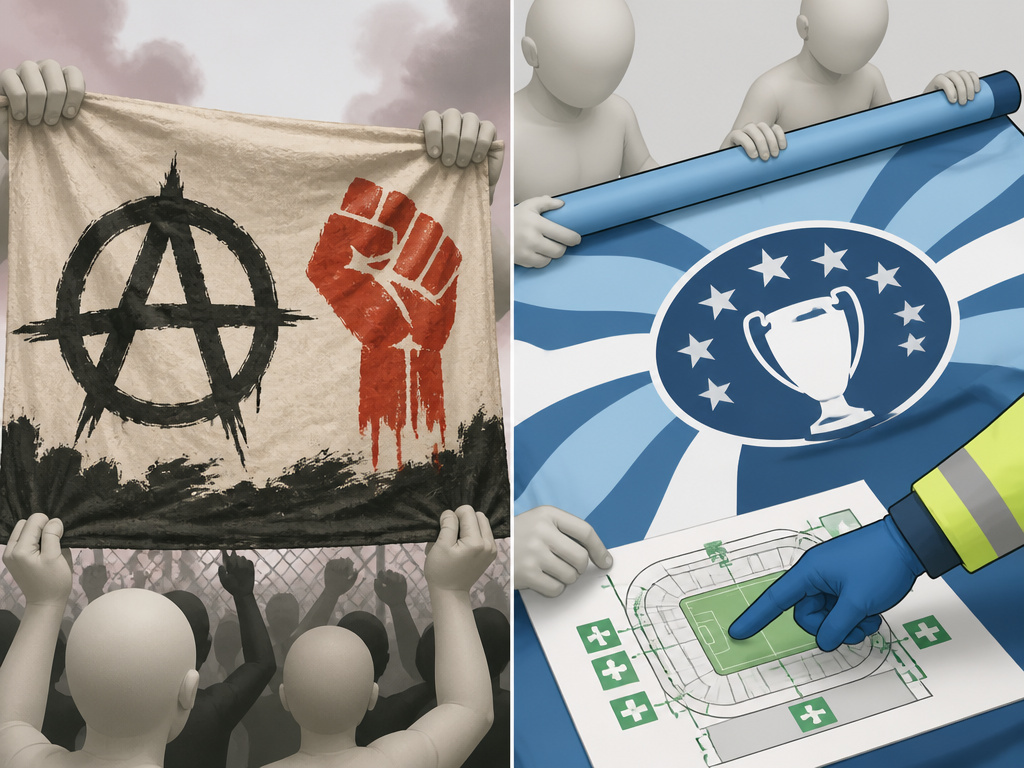
While the heart of tifo culture beats in Europe, its expression in North America has developed its own distinct rhythm. The difference isn’t just in scale; it’s in the relationship between fans and the clubs.
In Europe, the tradition is older, grittier, and often more overtly political or oppositional. It’s deeply entwined with ultras culture, where displays are acts of symbolic sovereignty by the fans, frequently critiquing club ownership or commercialization. The scale can be staggering, facilitated by stadium architecture and a historical tolerance for fan organization. The history of major football rivalries, like El Clásico, is written in these stands as much as on the pitch.
In the United States and Canada, tifo culture is younger, emerging prominently with the growth of Major League Soccer in the late 2000s. The framework is more collaborative. As noted in the BBC article on tifo culture, supporters’ groups work closely with club officials on design approval and safety logistics. The displays are often celebratory or unifying rather than confrontational, think of the USA-themed “Sailing to Victory” tifo unveiled by the American Outlaws in 2025.
This collaboration has pros and cons. It leads to polished, safe displays and a positive relationship that can make sections louder and more vibrant. But it also means the raw, adversarial edge of the European tradition is often sanded down. The threat of losing stadium access for non-compliance is a powerful motivator for sticking to the script.
| Aspect | European Tradition | North American Adaptation |
|---|---|---|
| Primary Relationship | Often oppositional (fans vs. Club/authority). | Collaborative (fans + club marketing/security). |
| Scale & Frequency | Can be stadium-wide, common for derbies and European nights. | Typically single-stand, frequent for big matches and playoffs. |
| Design Themes | Political, historical, mocking rivals, asserting fan ownership. | Celebratory, unifying, team-focused, league-promoting. |
| Regulatory Environment | Varies; often more lenient on pyrotechnics (though illegal). | Strict; pyrotechnics banned, designs require formal approval. |
| Funding | Almost exclusively fan-funded, a point of pride. | Primarily fan-funded, but occasional indirect club support for materials. |
Safety, Risk, and the Shadow of Pyrotechnics
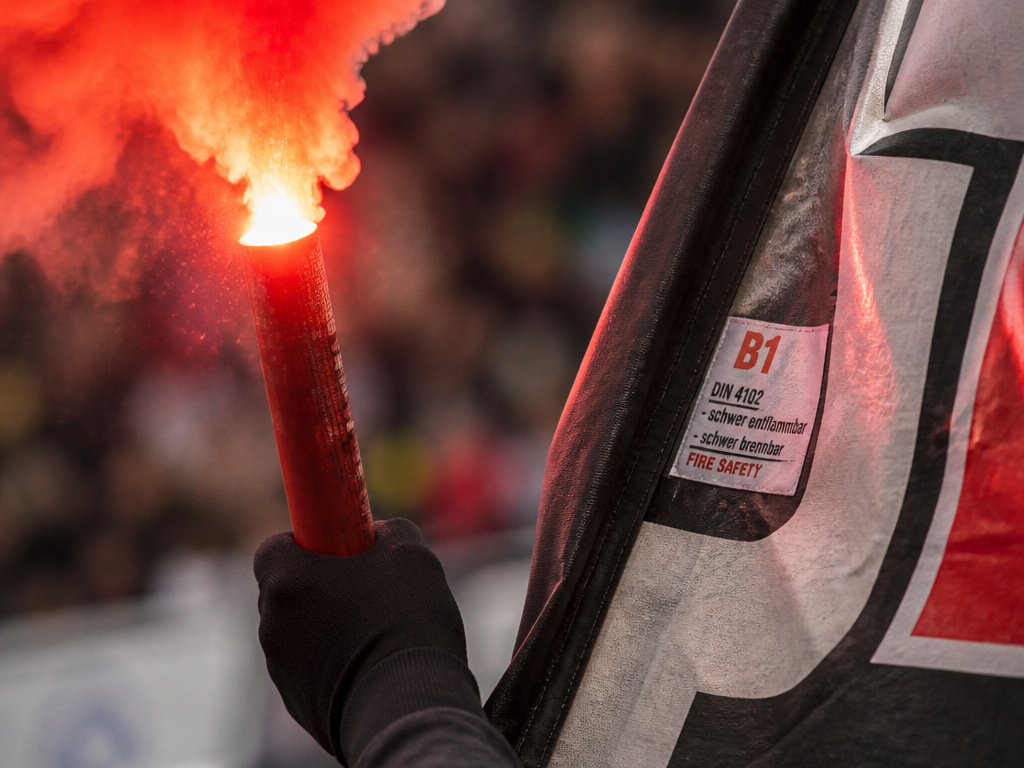
No discussion of tifos is complete without addressing the elephant in the room: pyrotechnics. Flares and smoke bombs are a visceral part of the spectacle for many ultra groups, but they sit in a legal and safety grey area.
The European Directive on Pyrotechnic Articles (2013/29/EU), fully in force since July 2017, sets strict standards. It categorizes devices and specifies minimum safety distances: 8 meters for Category 2, 20 meters for Category 3. These distances are physically impossible in packed football stands. A UEFA report on the issue notes that the directive may have inadvertently increased the supply of non-compliant or “home-made” items, which carry unquantifiable risk. The report plainly states pyrotechnics are “not immune from product failure,” which it terms “abnormal functioning.”
Beyond pyrotechnics, material safety is paramount. Modern tifo fabric is specified to meet B1 classification in Europe for fire retardancy. This isn’t a suggestion; it’s a prerequisite for bringing large amounts of material into a crowded, enclosed space. The tragic history of stadium fires hangs over every coordinator’s decision.
The risks aren’t always so dramatic. A simple logistical miscalculation can lead to very public failure. In March 2024, an Atlanta United tifo malfunctioned during its reveal and failed to fully rise as intended in the season opener. It was a stark reminder that gravity and mechanics are indifferent to passion. For a broader look at the darker side of fan mobilization, an exploration of the history of hooliganism shows how crowd dynamics can spiral in different directions.
Frequently Asked Questions
What is the difference between a tifo and a banner?
All tifos are displays, but not all displays are tifos in the traditional sense. A “tifo” implies choreography and scale, something that involves many fans acting in unison, like a card mosaic or a giant banner that requires coordinated unfurling. A simple two-pole banner held up by a few people is just a banner. The tifo is the collective performance.
How long does it take to make a tifo?
The timeline varies massively with scale. A large display for a cup final can take months of preparation. A simpler, single-stand banner might be turned around in a few weeks by a dedicated group.
Can clubs stop a tifo from being displayed?
Absolutely. Clubs and stadium security have the final say. Supporters groups must submit designs for approval to the club’s marketing and security teams. If a display is deemed unsafe, offensive, or a fire hazard, it will be rejected. There are countless stories of displays being vetoed at the last minute, with materials left piled outside the stadium.
Are tifos only for football?
While born in football stadiums, the concept has spread. You now see similar choreographed displays at major ice hockey, basketball, and Formula One events. The term “tifosi” is famously used to describe the passionate fans of the Ferrari F1 team. The core idea, large-scale, fan-created visual spectacle, translates anywhere there’s a dedicated crowd.
Do players notice tifos?
They absolutely do. Players often talk about the emotional lift of walking out to a stand transformed by their supporters. Captains frequently point to the displays during pre-match huddles. The academic research on football tifos, including sentiment analysis studies, confirms these displays are powerful emotional catalysts for everyone in the stadium, players included.
The Bottom Line
A tifo is a paradox. It’s a forty-second spectacle built on months of unseen grind. It’s an explosion of color governed by spreadsheets and safety regulations. At its best, it’s the purest expression of the mentality behind fan-owned football clubs: fans as authors of their club’s visual story.
The next time you see one unfold on screen, look past the image. See the geometry of the stand that makes it legible. Hear the rehearsed commands that synchronize it. Remember the volunteers who laid out 30,000 cards before dawn. That’s the real display, the invisible machinery of belonging.
And if you’re planning your first stadium visit, now you know to look up. The match hasn’t even started, and the first act of collective genius is already over.
