
How to Coach Youth Football: Step-by-Step
This post contains affiliate links. As an Amazon Associate, we earn from qualifying purchases.
To coach youth football effectively, you must build on three pillars: safety first, skill development over winning, and consistent, positive communication. The single most important rule is to follow the official heat-acclimatization and contact guidelines, as they are the essential foundation for keeping kids healthy and on the pitch.
That foundation is your starting point, not the finish line. The official guidelines from bodies like USA Football give you the guardrails, the “what not to do.” Your job as a coach is to fill in the “what to do” with sessions that are safe, progressive, and actually enjoyable for an eight-year-old. A key part of how to coach youth football is to treat the safety rules as a checklist and the rest as a creative exercise; you’ll keep players coming back.
What follows is a walkthrough of those essential safety rules, a concrete template for your first week of practice, and the philosophical shifts you need to make to develop players, not just win games this Saturday.
Key Takeaways
- Adhere to the mandatory 10–14 day heat acclimatization period, adding equipment and contact only as the schedule allows. This is a safety protocol, not a suggestion.
- For youth players, prioritize skill acquisition and positional rotation over perfecting a fixed tactical system. A player who understands multiple roles is a smarter footballer.
- Use age-based practice guidelines to structure your week: 8-year-olds should practice 60–90 minutes, 1–3 times per week (per USA Football).
- Script every minute of your practice. Winging it wastes time and signals to players and parents that you are unprepared.
- Limit full-contact sessions to one per week with at least three days between contact games in the postseason.
The Two-Week Heat Acclimatization Rule (Non-Negotiable)
This isn’t just about drinking water. Exertional heat stroke is a top cause of sport-related fatalities, and youth athletes are especially vulnerable. USA Football’s National Practice Guidelines mandate a two-week period (10–14 days) for heat acclimatization. You follow this schedule, period.
Before you start: The summer sun is deceptive. Ignoring the phased equipment and contact rules risks heat illness.
The schedule is specific and phased for a reason. It’s a controlled build-up.
| Practice Days | Permitted Equipment | Permitted Contact | Purpose |
|---|---|---|---|
| Days 1 & 2 | Helmet only | No player-to-player contact | Introduce heat stress safely; focus on movement fundamentals. |
| Days 3 & 4 | Helmet & shoulder pads | No full-contact drills | Add weight and insulation; teach technique without full collision. |
| Days 5 & 6 | Full pads (option) | Full contact can begin | Introduce controlled contact within recommended time limits. |
On practice days 5 and 6 of heat acclimatization, teams have the option to wear full pads and full contact drills can begin. If a practice is interrupted by inclement weather or heat restrictions, the practice should resume once conditions are deemed safe. On days when environmental conditions are extreme, modifications should be made, such as rescheduling to cooler parts of the day like before 10:00 a.m. Or after 6:00 p.m.
This phased approach is your first lesson in how to coach youth football: progress is incremental. You can’t teach a safe tackle on day one. You start with stance, movement, and understanding space. The Special Olympics football coaching guide calls coaching “dynamic,” meaning you must be ready to stop a drill that isn’t working. If a kid is overheating during a simple agility ladder drill, you stop. You move to shade, you hydrate, and you switch to a walking-through-the-motions demo. The plan is a guide, not a chain.
Your First Week: A Concrete Template
Most new coaches freeze when faced with a blank slate and twenty restless kids. Here is a minute-by-minute template for that first acclimatization week (helmet-only days). It’s built on the idea of constant, purposeful activity.
Day 1 (60 Minutes Total)
- 0–10 mins: Welcome & Active Warm-up. No lines. Get them moving immediately with a simple tag game in a grid. “Sharks and Minnows” works perfectly.
- 10–25 mins: Movement School. Teach three basic commands: “Go” (sprint), “Change” (change direction), and “Down” (get low in an athletic stance). Use the grid. Shout a command, they execute. Keep it fast, keep it fun.
- 25–45 mins: Ball Familiarity. Every kid with a ball at their feet. Simple exercises: toe-taps, rolling the ball with the sole, passing gently against a wall. The goal isn’t technique; it’s comfort. The sound of twenty balls softly thudding against a fence is the sound of learning.
- 45–55 mins: Small-Sided Game. 3v3 in tiny goals. No positions, no offside, just play. Your only rule: “Try to pass once before you shoot.”
- 55–60 mins: Cool-down & Talk. A slow jog, stretch, and one positive point. “Great energy today. Tomorrow, we get a tiny bit better.”
Where this goes sideways: Spending the first 10 minutes talking at them in a circle. Their energy is sky-high; your job is to channel it, not contain it. A static start guarantees fidgeting and a lost audience.
For the rest of the week, you layer complexity onto this frame. Day 2 might introduce receiving a pass with the inside of the foot. Day 3 (with shoulder pads) might focus on the body shape of a block.
Skill First, System Second: The Development Mindset
A common trap is to impose a complex tactical system because it looks good on a whiteboard. The Football Federation Australia’s Skill Acquisition Manual is blunt: “No amount of fitness or competitive spirit will ever compensate for deficiencies in functional game skills.” Talent matters, but your primary job is to build skill.
This means your early practices are about the “how,” not the “where.” How do I pass accurately? How do I control a bouncing ball? How do I approach a tackle safely? The tactical “where” – your position – should be fluid when you learn how to coach youth football.
My stance is clear: a coach who rotates players through different positions builds smarter, more adaptable footballers. A child who has played at full-back, in midfield, and up front understands the game’s connections in a way a specialist never will. This is why formations for youth teams should be simple and flexible, like a 4-3-3 that easily becomes a 4-5-1, not a rigid playbook.
I once watched a talented 10-year-old striker spend a whole season waiting for the ball to feet. He scored goals, but he never learned to create space or defend. The next season, his new coach played him on the wing and at full-back. He was frustrated for a month. By season’s end, he was the most complete player on the pitch because he saw the whole game.
Give the quiet defender a run in midfield where they have to communicate. Let the goal-hanger track back and experience defending.
The Three Conversations: Managing Your Ecosystem

Your job involves coaching the 20 kids on the pitch and managing the ecosystem around them: your assistant coaches and the parents.
1. With Your Coaching Staff
Assign them clear responsibilities, you coach the defenders, you run the shooting drill, and then let them coach. Before the season, get everyone on the same page with your philosophy, your practice plans, and your safety protocols.
2. With Parents
This conversation starts on day one. Hold a brief pre-season meeting. Set expectations:
- Timing: Drop-off and pick-up are on time.
- Communication: You are the point of contact, not the assistant coach.
- Sideline Behavior: Cheer for everything, coach nothing. The last point is critical. A parent shouting constant instructions undermines you and paralyzes the player.
3. With the Players
This is where your tone matters most. Coach with questions. Instead of “Pass it now!” try “Who is in space?” They learn the “why” by solving the problem themselves.
Rules, Adaptations, and Safety Certifications
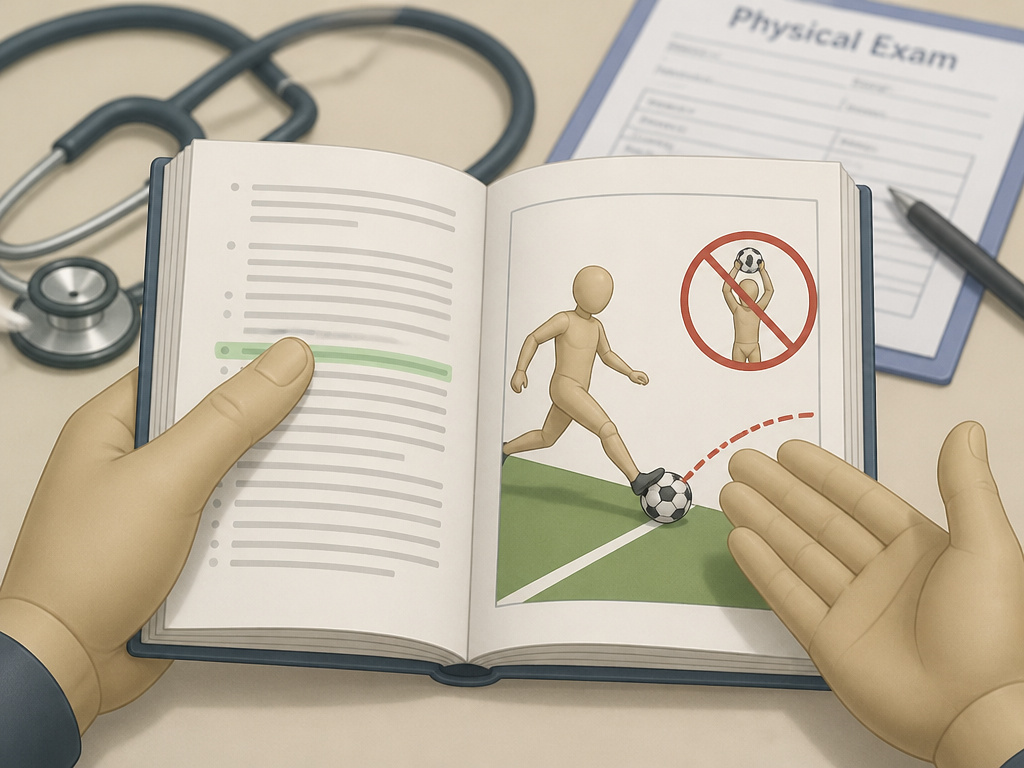
You must know the league’s rulebook, but also understand the spirit behind it.
For instance, Special Olympics rules for 5-a-side and 7-a-side football replace throw-ins with kick-ins from the sideline and have no offside rule. These aren’t simplifications; they’re designed to maximize playing time and reduce stoppages for developing players.
Finally, the baseline: USA Football strongly recommends a pre-participation physical examination before every season. This is mandatory. It’s your first and most important safety check.
How to choose simple offensive and defensive systems for youth football
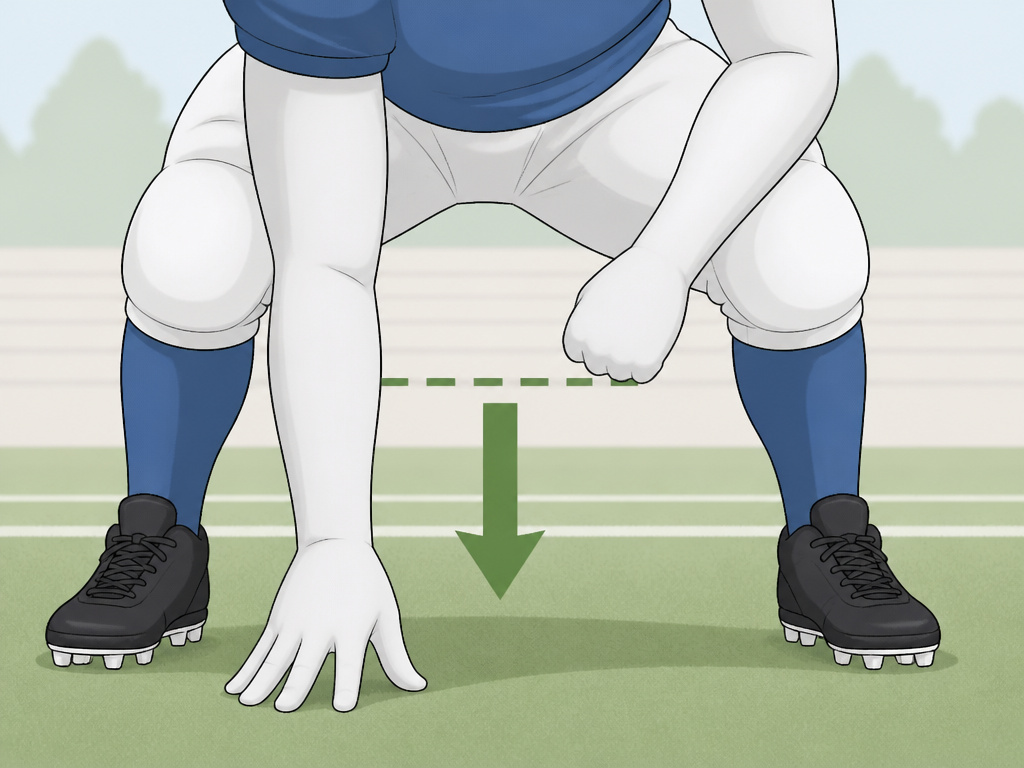
When choosing systems for your team, keep them simple. For non-contact or modified tackle games, USA Football recommends all players start from a two-point stance. At the Senior Tackle level, they encourage the two-point stance for offensive players. This simple starting position helps with balance and safety. Remember, a technical skill foundation is primary. No amount of fitness or competitive spirit will ever compensate for deficiencies in functional game skills.
Where to find coaching certifications and training resources
Start with your national governing body for football. These organizations provide essential training on safety, skill development, and practice planning. Their courses often cover mandatory topics like heat acclimatization protocols and recommended practice structures. Completing a certification ensures you understand the current best practices for youth sports. These resources will also teach you to be a dynamic coach. This means having backup activities ready and being willing to stop an activity that isn’t working, even after you try to modify it. This approach keeps practices safe, effective, and engaging for all athletes.
Frequently Asked Questions
What’s the single biggest mistake a new youth football coach makes?
Trying to coach the game they watch on TV. The professionals operate at a different physical and tactical universe. Your focus should be on fundamental movement, basic skills, and creating a positive environment where kids want to come back next week. Complexity is the enemy of development.
How long should youth football practice be?
It depends entirely on age. According to USA Football’s National Practice Guidelines: 8-year-olds practice 60-90 minutes, 1-3 times per week. 10-year-olds practice 75-105 minutes, 2-3 times per week. 12-year-olds (pre-high school) practice 90-120 minutes, 2-3 times per week. These are maximums, not targets.
How do I keep practice engaging for kids with different skill levels?
Use a stations-based approach with your assistant coaches. One group works on basic passing, another on 1v1 defending, another plays a small-sided game. Rotate the groups every 10-12 minutes. This keeps energy high and allows you to give focused attention to players who need it, whether they’re beginners or more advanced.
What if a player isn’t listening or is being disruptive?
Address it immediately, but calmly. Pull the player aside, away from the group. Use clear, direct language: “When you do X, it stops the drill for everyone. What you need to do is Y. Can you do that?” If the behavior continues, have them take a break (a “cool-down” minute) on the sideline. The key is to correct the behavior without humiliating the child.
Before You Go
Your success as a youth football coach won’t be measured by trophies. It will be measured by the player who struggled in week one but is still trying in week ten, by the shy kid who shouts for a pass in a game, by the team that learns how to lose without blaming each other.
So start with the safety rules, they are your bedrock. Build your sessions around skill, not systems. And remember that the most powerful tool you have is a well-timed question, not a shouted instruction. The goal is to hand them back to their parents at the end of the season as better players and as kids who love the game a little more than they did before they met you. That’s the win.
