
How to Get a Football Agent: The 4-Step Process
This post contains affiliate links. As an Amazon Associate, we earn from qualifying purchases.
To get a football agent, you need a player profile that proves your value and a targeted outreach strategy that connects you to the right representative. This means creating a professional highlight reel and CV, identifying agents who work with players at your level, and contacting them with a clear, compelling pitch. The agent must also be FIFA-licensed, which requires passing a periodic exam and meeting strict eligibility criteria.
The license is mandatory. Since October 2023, only FIFA-licensed agents can legally conduct transfers or contract negotiations. An unlicensed “advisor” can’t register a deal, which means any promise they make is empty. Your first question to any potential representative should be about their FIFA license number, which is a key step in learning how to get a football agent.
What follows is the full map: how to build the profile that gets an agent’s attention, the exact steps to make contact, how to vet them against the new rules, and what to do if the traditional path doesn’t open up for you. This is about making yourself discoverable, not waiting to be discovered.
Key Takeaways
- Build a targeted shortlist of 5–10 agents who actively work with players at your level and position, not just the biggest names.
- Your initial outreach must include a short highlight reel and a one-page CV; anything longer gets deleted unread.
- Verify an agent’s FIFA license status before any serious discussion; unlicensed intermediaries cannot legally complete transactions.
- Understand that service fees are capped by FIFA, 3% of your salary if you earn over $200,000, 5% if under, to avoid being overcharged.
- If you can’t secure representation, focus on self-managed exposure through platforms like Transfermarkt and direct club outreach.
The 4-Step Process to Getting an Agent
Most guides make this sound like sending one email. It isn’t. The process of how to get a football agent is a sales process where you are the product. You need to package yourself, find buyers interested in your profile, and pitch effectively.
Step 1: Build Your Professional Profile
You cannot ask someone to invest in you without a prospectus. For a footballer, that’s a highlight reel and a CV. Your reel should be concise. Open with your best three touches or goals. Show variety, a tackle, a pass, a finish. Use clips from actual matches, not training. The background noise of a crowd is more convincing than silence. Your CV is one page. It lists your personal details, football history (clubs, dates, appearances), any honors, and key attributes. Include a clear, recent headshot. This is a fact sheet, not a literary exercise.
Common mistake: Sending a 10-minute reel of every touch. Agents receive hundreds of these. The play button is a test of patience. Fail it, and the rest of your email goes unread.
Step 2: Research and Create a Target List
Do not email every agent on the FIFA directory. That’s spam. Research is about fit. Start with the FIFA Football Agent Directory to verify license status. Then, use social media and news searches. Which agents are active in your league or region? Which ones represent players in your position? A goalkeeper needs an agent who knows goalkeeper coaches and scouts. Aim for a targeted shortlist. Quality over quantity. A smaller, targeted list means you can personalize each outreach, which triples your response rate.
Step 3: Execute Your Outreach Campaign
This is the first impression. Your email subject line must contain your name, position, and status (e.g., “James Smith – Central Midfielder – Free Agent Seeking Representation”). The body is three short paragraphs:
- Introduction: Who you are, your current club/status.
- The hook: One specific achievement or attribute that makes you interesting.
- The call to action: Attaching your reel and CV, and proposing a brief call next week. Send it. Then, wait a reasonable period. If no reply, send a single, polite follow-up email with the original thread. If there’s still no response, move on. Pestering kills opportunity.
Step 4: The Conversation and Vetting Process
If an agent replies, the first call is an interview, for both of you, and a key part of learning how to get a football agent. Have questions ready.
- “Can you share your FIFA license number?” (Verify this online immediately after).
- “Who are some current clients at my level?”
- “What is your strategy for a player like me over the next 12 months?” Listen for specifics. Vague promises about “connections” and “potential” are red flags. A legitimate agent will ask you detailed questions about your goals, your game, and your willingness to relocate. This process mirrors the diligence you’d apply to any football transfer process. You are evaluating a business partner.
What Does a Football Agent Actually Do?
The job extends far beyond the transfer window cliché. A licensed agent is part career strategist, part contract lawyer, part life manager. Their core service is conducting Football Agent Services, defined by FIFA as any activity aimed at concluding a transaction. This includes negotiating a new contract with your current club, facilitating a transfer to a new one, or arranging a loan move. But the day-to-day is often quieter. It’s reviewing your contract for problematic clauses, like a one-way option in the club’s favor. It’s handling media inquiries so you can focus on training. It’s connecting you with financial advisors, physiotherapists, or even a real estate agent if you’re moving countries. The relationship is governed by a Representation Agreement. Under The FA’s guidance, a Player/Coach representation agreement can last a maximum of two years. Before you sign, the agent must advise you to seek independent legal advice, a clause that exists to protect young players. The modern agent also has significant admin duties. They must upload every Representation Agreement and service fee payment to FIFA’s platform within 14 days. Failure to meet such reporting obligations, along with failing to pay the annual fee or complete CPD, can lead to an automatic provisional suspension of their license.
The New Rules: FIFA Licensing & Fee Caps
The landscape changed completely in 2023. The old system, where anyone could pay a fee to become an intermediary, was scrapped. Now, the only legal path runs through Zurich.
The FIFA Licensing Gateway
To become a FIFA-licensed agent, an individual must pass a 20-question multiple-choice exam. You need a score of 75% (15 correct answers) to pass. The exam is “open book”, you can use the 686-page FIFA study materials, but Past exam sessions have seen a significant number of candidates fail. The exam is only held periodically. For 2025, the application window was 13 January–28 February for an exam on 21 May. If you miss the window, you wait for the next one, which FIFA announces. Passing the exam isn’t the end. You then have 90 days to pay the annual license fee to FIFA. If you don’t, your application is void. The license itself lasts for an indefinite period, provided you complete annual Continuing Professional Development (CPD) and stay compliant.
Who Can’t Be an Agent? The Eligibility Wall
The FIFA Football Agent Regulations (FFAR) build a high wall of eligibility. You cannot apply if you:
- Have certain criminal convictions (related to corruption, bribery, etc.).
- Have been suspended for two or more years by a regulatory body.
- Are an employee of FIFA, a club, a league, or a football association.
- Have held a business interest in sports betting in the last 12 months.
- Have been involved in a bankruptcy or insolvency in the last five years. This weeds out bad actors. It also means an agent’s license is a baseline credential, not a guarantee of quality.
| Client Type | Annual Remuneration ≤ $200,000 | Annual Remuneration > $200,000 |
|---|---|---|
| Player/Coach (Individual) | 5% of remuneration | 3% of remuneration |
| Engaging Club | 5% of remuneration | 3% of remuneration |
| Dual Representation (Player & Club) | 10% of remuneration | 6% of remuneration |
| Releasing Club (Transfer Fee) | 10% of transfer compensation | 10% of transfer compensation |
The Cap on Chaos: Service Fees
This is the most significant change for players. FIFA now enforces hard caps on what an agent can earn from a deal. These caps, shown in the table, are fixed and cannot be changed. For example, if you sign a new contract worth $250,000 per year, your agent can legally charge you a maximum of 3% of that, or $7,500, for the negotiation. If the agent also represents the club in the deal, permitted with explicit written consent from both parties, the total fee cap is 6%, or $15,000. These rules are designed to stop the multimillion-pound “super-agent” fees from draining money out of the game, especially at lower levels. As a player, you should understand these agent fees inside out. Any agent who suggests working “outside the cap” is inviting a sanction that could void your deal.
Red Flags: How to Spot a Bad or Scam Agent
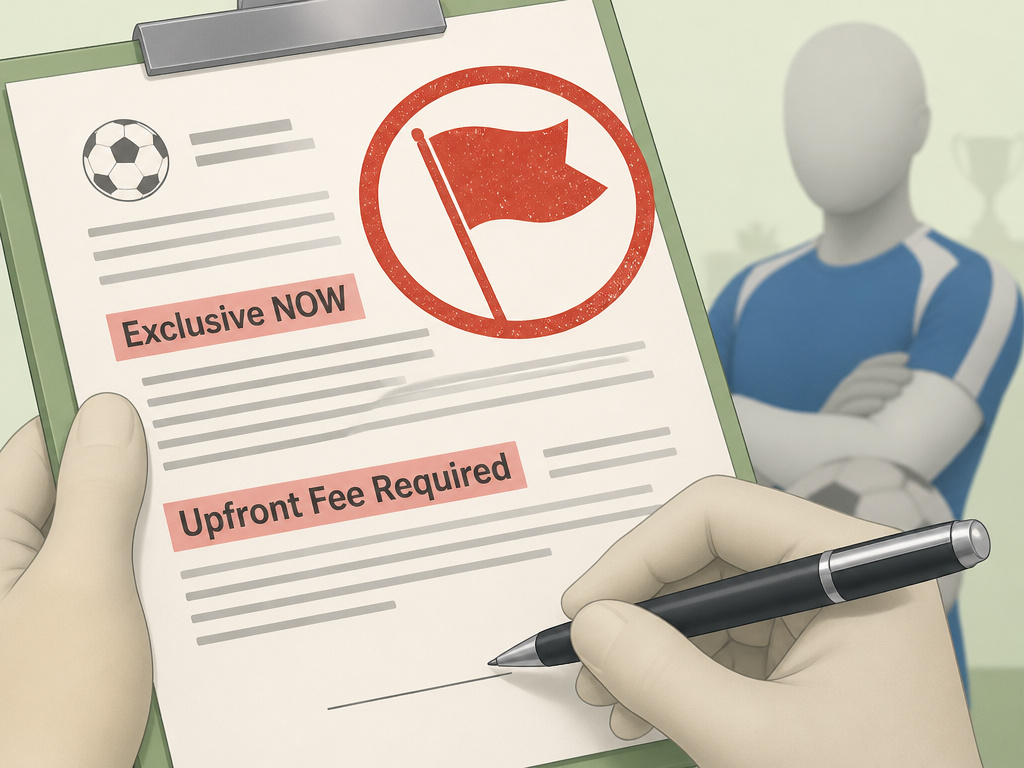
The new system filters out outright criminals, but it doesn’t stop poor practice. Here’s what to watch for.
- Pressure to sign an exclusive agreement immediately. A legitimate agent will want a trial period or will work on a non-exclusive basis initially to prove their value.
- Requests for money upfront. You should never pay a “registration” or “administration” fee. Agents earn their commission from a successful transaction, not from charging you to be on their books.
- Vague or evasive answers about their client list or strategy. Ask for specific examples. If they can’t name a single current client at your level, walk away.
- Guarantees. No agent can guarantee a trial, a contract, or a move. The market doesn’t work that way. Anyone who promises a specific outcome with 100% certainty is lying.
- Lack of basic organization. If they miss scheduled calls, send emails full of typos, or seem confused about your basic details, it reflects how they’ll handle a sensitive negotiation.
The biggest red flag is an agent who focuses more on what they’ll do for you “someday” than on what you should be doing right now to improve. A legitimate agent’s first advice is often about your training, your video analysis, or your next football trial process.
Tailored Strategies for Different Player Types

A 16-year-old academy prospect and a 24-year-old free agent need completely different approaches.
The Youth Player (Under 18)
Your goal is guidance, not immediate representation for a big move. Look for an agent with a proven track record of nurturing young talent and placing them in football academies. The right agent will talk to you and your parents about education pathways, the perils of moving abroad too early, and long-term development. Be wary of anyone who wants to uproot you immediately for a “big opportunity” overseas without a concrete plan.
The Amateur/Semi-Pro Player
You need an agent who understands the lower-league or non-league market. These moves are less about glamour and more about fit, logistics, and part-time work arrangements. Your highlight reel is critical, it must show you can handle the physicality and pace. Target agents who are based in your region and have links to clubs in the league above your current level. Your pitch should focus on readiness and a desire to step up.
The Free Agent
Time is your enemy, but desperation is your worst advisor. As a free agent, your profile must scream “available and match-fit.” Consider arranging a friendly match or a training session with a local club to generate fresh footage. Your agent search should be aggressive but broad, including looking at opportunities to play abroad where your attributes might be in higher demand. Be prepared for a shorter-term agreement with an agent, focused specifically on securing your next contract.
What to Do If You Can’t Get an Agent
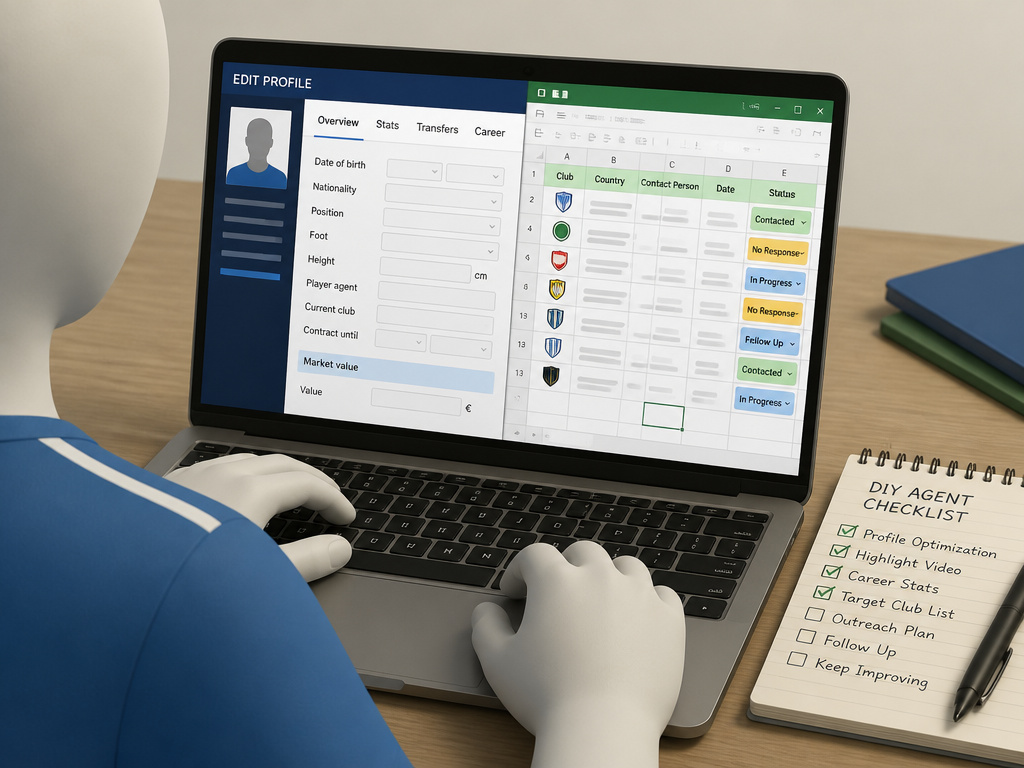
This is the reality for most players. The global pool is vast, and there are only about 7,000 licensed agents. If the traditional route stalls, your career doesn’t have to.
Become Your Own Agent (Temporarily)
This means handling the tasks an agent would do. Update your playing profile on platforms like Transfermarkt. Create a professional LinkedIn profile stating your position and availability. Research clubs that need your profile and identify the correct sporting director or head of recruitment to contact. Draft your own basic representation agreement for any potential deal. Use the FA’s standard template as a guide. It’s not ideal, but it forces you to learn the mechanics of a deal, which makes you a smarter partner when you do finally get representation.
Leverage Alternative Pathways
Sometimes the best way to get scouted is to bypass the agent altogether. Attend open trials, even for clubs a tier or two below your target. Performances there get recorded and circulated. Enroll in a showcase event where scouts from multiple clubs attend. The aim is to create interest that leads to a real offer, giving you a stronger position when you contact agents again. An agent is far more likely to take on a player who has a concrete offer in hand.
The Interim Hustle
Treat your search like a part-time job. Dedicate regular time to research, outreach, and profile-building. Track everything in a spreadsheet. This period of self-management is not wasted time. It builds the resilience and business acumen you’ll need to manage your career long-term, even with an agent. The players who understand the market are the hardest to take advantage of.
How to find and contact football agents online
Online platforms can be a practical starting point for identifying licensed agents. Since all agents must now be FIFA-licensed, you can use official directories and professional networking sites to search for qualified individuals. Focus on creating a clear and professional online profile that highlights your footballing credentials. When reaching out, be direct and include key information like your position, recent club, and a link to your match footage. Remember that agents are bound by strict reporting rules; any legitimate agent will be prepared to lodge a formal representation agreement with the relevant authorities within a specific timeframe if you decide to work together.
Frequently Asked Questions
How much does a football agent cost?
Agents are paid a commission, not a fee you pay upfront. FIFA regulations cap this commission. If your annual salary is $200,000 or less, the maximum an agent can charge is 5% of your salary for negotiating that contract. If you earn more than $200,000, the cap is 3%. The agent is paid only when they successfully complete a transaction for you.
Can my parent be my football agent?
Yes, they can, provided they pass the FIFA agent exam and obtain a license. However, many in the industry advise against it. Clubs can be hesitant to negotiate with family members, who may be emotionally invested, and it can blur personal and professional boundaries. A common middle ground is for a parent to get licensed to understand the industry better and oversee the work of a professional agent.
What’s the first thing I should ask a potential agent?
Ask for their FIFA license number. Verify it on the official FIFA Agent Directory. This single step filters out anyone operating illegally. Your second question should be about their specific plan for you over the next three to six months.
Is it easier to get an agent if I play abroad?
It can be, depending on your attributes. Some leagues have a specific demand for certain player profiles that are scarce locally. An agent based in that country will have direct contacts. Researching how to play football overseas can open up agent networks that aren’t saturated with local talent.
How long should I wait for an agent to reply?
Give an initial email one week. Send one polite follow-up if you hear nothing. If there’s still no response after the follow-up, consider that a “no” and move on to the next name on your list. Persistence is good, but pestering is counterproductive.
Before You Go
The search for an agent is a test of your professionalism before you ever meet one. The player who sends a crisp, 90-second reel, a clean CV, and a targeted email has already passed the first round. Remember that the license is a floor, not a ceiling. A FIFA badge means the agent knows the rules, not that they know how to build your career. Your vetting process must be ruthless. If the doors don’t open immediately, your job is to build your own door, not to wait. The discipline of self-management, the research, the networking, the relentless focus on your own development, is what separates the player who gets one shot from the player who builds a career. That part is entirely on you.
