
Biggest Football Rivalries Explained: Key Takeaways
This post contains affiliate links. As an Amazon Associate, we earn from qualifying purchases.
The world’s biggest football rivalries are defined by a mix of geography, history, politics, and iconic sporting moments. They are more than just games; they are cultural battles where the scoreline is often a footnote to a deeper story of industrial competition, like Liverpool vs Manchester United, or national trauma, like Argentina vs England. The most intense feuds, such as El Clásico or the Old Firm, weave together religious, political, and social divisions that make the 90 minutes on the pitch a proxy for much larger conflicts.
That mix is what separates a heated derby from a true, global rivalry. A local derby is about bragging rights. A historic rivalry is about identity.
What follows is a breakdown of the rivalries you need to know in our biggest football rivalries explained, the forces that created them, and the specific moments that turned competition into legend. This article examines the European giants, the South American superpowers, the international grudges, and even how American football builds its own version of this eternal drama.
Key Takeaways
- The most intense rivalries always have a non-sporting catalyst, like the industrial Manchester Ship Canal for Liverpool-United or the Falklands War for Argentina-England.
- Geography alone isn’t enough. Proximity creates derbies, but lasting global rivalries need layered conflict, political, religious, or historical, on top of it.
- Head-to-head records are often close, but trophy hauls define eras. Liverpool’s 69 major trophies just edge Manchester United’s 68, a stat that fuels the debate.
- The media narrative shapes perception. Rivalries sustained by scarce, high-stakes matches (like Argentina-England) often feel more “pure” and volatile than annually played fixtures.
- Even “storied” rivalries have lulls. The Packers-Bears NFL feud had a competitive drought from 1968 to 2025, proving time can soften even the fiercest feud.
What Actually Makes a Football Rivalry?
All rivalries start with two teams wanting to beat each other. The ones that last centuries, that people get tattoos about, need something else. They need a story that exists outside the stadium.
Geography is the simplest ingredient in the biggest football rivalries explained. Put two clubs in the same city, and you have a derby. Arsenal and Tottenham in North London, Roma and Lazio in Rome, Manchester City and Manchester United in Manchester. These are battles for local supremacy, and the tension is visceral because fans live and work together.
But for a rivalry to capture a global imagination in the biggest football rivalries explained, it needs layers. Politics, religion, economics, or war have to get involved. That’s when a match stops being a game and becomes a symbol. The rivalry between Celtic and Rangers in Glasgow isn’t about football; it’s about a 400-year-old religious schism between Catholicism and Protestantism, imported from Ireland. The rivalry between Barcelona and Real Madrid, known as El Clásico, became a proxy for the centralist Spanish monarchy (Madrid) against Catalan regional identity (Barcelona), especially during the Franco dictatorship.
The part nobody mentions: A rivalry can fade if the competitive balance disappears for too long. When one side dominates for decades, the external story remains, but the game itself loses its edge. The fear of losing is replaced by the expectation of winning, and that kills the tension that makes a rivalry electric.
The best rivalries manage to keep both the external story and the on-pitch competition alive across generations. That’s incredibly hard to do.
| Rivalry Ingredient | Creates… | Example | Risk If Missing |
|---|---|---|---|
| Geography (Proximity) | Local derbies, bragging rights | North London Derby (Arsenal vs Tottenham) | Remains a local concern, lacks global weight |
| Politics / Religion | Deep cultural identity, symbolic battles | Old Firm (Celtic vs Rangers) | Can lead to serious fan violence and societal tension |
| Historical Conflict | Nationalistic pride, layered resentment | Argentina vs England | Matches become rare, pressure-filled events that overshadow football |
| Sustained Competitive Success | Era-defining clashes, debates over “the best” | North West Derby (Liverpool vs Manchester United) | The rivalry becomes nostalgic, not current |
The European Powerhouses: El Clásico & The Old Firm
These two are the templates. One is a political struggle played out with ball control. The other is a religious war where the football is almost incidental.
El Clásico: FC Barcelona vs Real Madrid CF
This is the biggest club game in the world, and the reason has very little to do with tactics. For much of the 20th century, it was a clash between a club representing Catalan identity (Barcelona) and a club seen as the team of the Spanish central state and monarchy (Real Madrid). During Franco’s rule, Catalan language and culture were suppressed. Barcelona’s Camp Nou became one of the few places where Catalan identity could be openly expressed.
The footballing philosophy often mirrors this. Barcelona’s tiki-taka possession game under Pep Guardiola was seen as a cerebral, collective approach. Real Madrid’s galáctico model of buying global superstars represented imperial power and glamour. The rivalry is now a global commercial juggernaut, but that political undercurrent still hums. A win is never just two points; it’s a statement.
The Old Firm: Celtic FC vs Rangers FC
If El Clásico is politics, the Old Firm is theology. Celtic, founded in 1887 to aid poor Irish Catholic immigrants in Glasgow’s East End. Rangers, traditionally supported by the city’s Protestant population. The sectarian divide is the engine. For decades, Rangers didn’t sign a Catholic player; Celtic’s identity is inextricably linked to the Irish Catholic community.
It’s the purest example of a football match as a societal pressure valve. Managing the fallout from this game is a major logistical operation for police every year.
I used to dismiss the idea that a football match could be about something bigger than sport. Then you read about the banners, the songs, the employment practices tied to these clubs. The 90 minutes are just the most visible part of a much older, much deeper conflict.
The North West Derby: Liverpool vs Manchester United
This is the premier rivalry in English football, and its roots are in cargo ships, not corner kicks. As Sir Alex Ferguson noted in a BBC Sport interview, the industrial catalyst was the construction of the Manchester Ship Canal in the 1880s. The canal bypassed the Port of Liverpool, moving goods directly to Manchester. Liverpool dockworkers lost jobs; Manchester merchants gained power and wealth. A civic and economic rivalry was born.
Football poured gasoline on that fire. For thirty years, from the 1970s to the 1990s, Liverpool dominated English and European football. Then, from the 1990s onward, Manchester United under Ferguson took over. The baton of supremacy passed directly between them, with fans of each club forced to watch the other’s golden age. The head-to-head record is remarkably close, which fuels every new match. According to the rivalry’s Wikipedia entry, Manchester United holds 85 wins to Liverpool’s 72, with 61 draws.
But the trophy count is the real scorecard. As of May 2026, Liverpool have 69 major trophies. Manchester United have 68. That single-trophy gap is the statistical heart of the feud. Their combined haul is staggering: 40 league titles, 21 FA Cups, and 9 European Cups/UEFA Champions Leagues between them.
The modern rivalry has been marred by tragedy chanting, references to the Hillsborough and Munich disasters, which shows how the poison can seep in when the stakes feel existential. It’s a rivalry built on respect, envy, and a deep, historical desire to be the dominant port city, both economically and on the pitch.
International Grudge Matches: Argentina vs England
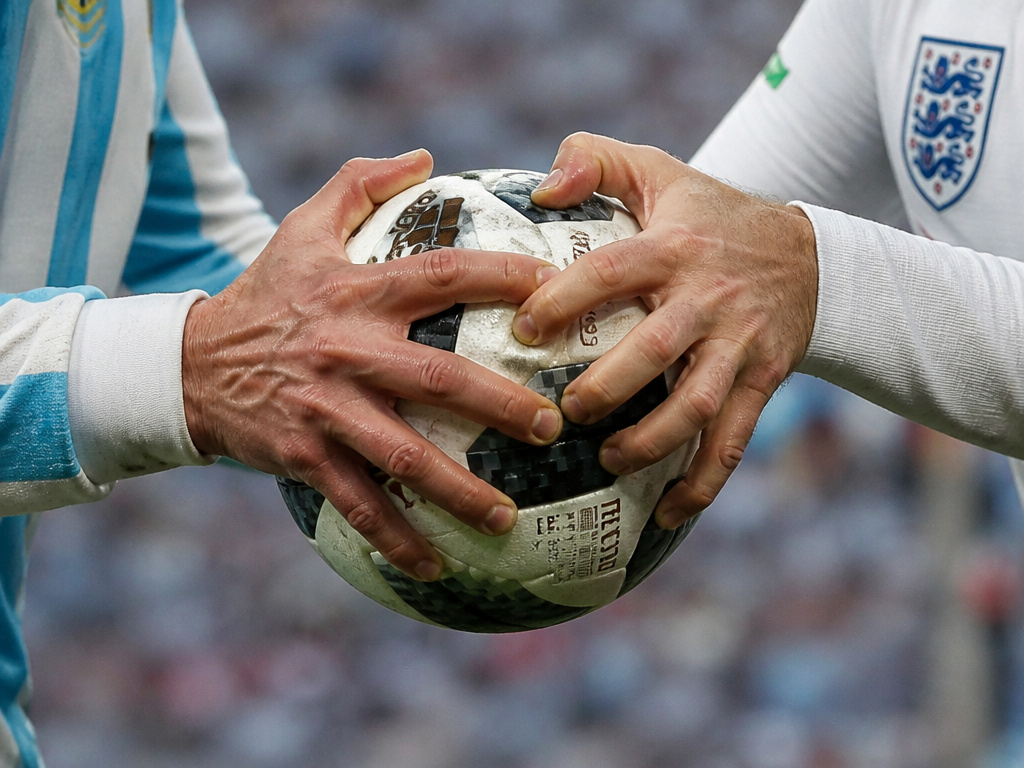
Some rivalries are born on the pitch. This one was born on a battlefield. The foundational geopolitical incident is the 1982 Falklands War (or Guerra de las Malvinas), a ten-week conflict over the South Atlantic islands claimed by both nations. When the two teams next met, in the 1986 World Cup quarterfinal on June 22, 1986, it wasn’t just a football match. It was the first major sporting encounter after the war.
Diego Maradona understood the assignment. His two goals in that match, the “Hand of God” and the “Goal of the Century”, encapsulate the entire rivalry. The first was cunning, deceptive, a thumbing of the nose at the old colonial power. The second was sublime, a moment of undeniable genius that asserted Argentine superiority. It was the perfect cocktail of resentment and brilliance.
Where sources disagree: Is this just a grudge match? The Guardian argues it’s more nuanced, a “weird and long-repressed kinship,” a messy, dialogic relationship between two cultures that influenced each other. The Conversation and ESPN frame it more directly through the lens of war and ritualized hostility. The truth is probably both: a deep, complex fascination underpinned by a history of conflict.
The rarity of the fixture adds to its potency. They don’t play often, so when they do, a century of political, cultural, and sporting history crashes onto the pitch at once. It’s the most volatile international rivalry in the sport because the stakes are always artificially, and understandably, sky-high.
Other Essential Global Feuds
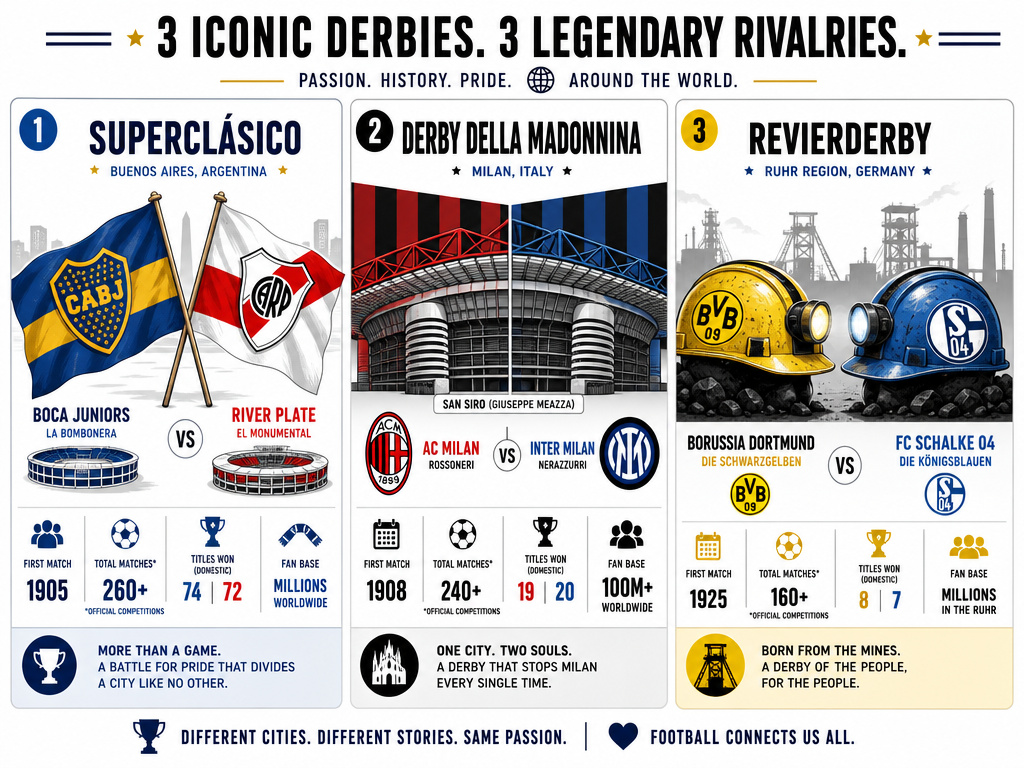
The rivalries above have the biggest profiles, but the football world is rich with other fierce, storied conflicts.
- Superclásico (Boca Juniors vs River Plate): The Buenos Aires derby is pure, uncut passion. The clubs represent a class divide. Boca (the port, the working class) vs River (the wealthy, “the Millionaires”). The atmosphere is famously deafening, and the matches are technically superb but physically brutal.
- Derby della Madonnina (AC Milan vs Inter Milan): Two giants sharing the same stadium (San Siro) in the same city. It’s a rivalry of style and ideology more than religion or politics. Traditionally, Inter was the club of the bourgeois Milanese, while AC Milan had stronger working-class roots.
- Revierderby (Borussia Dortmund vs Schalke 04): The Rhine derby is the heart of Germany’s industrial Ruhr region. When the stands at Dortmund’s Signal Iduna Park sway in unison, it’s a physical force. The rivalry is based on proximity and a fierce, working-class pride.
The American Football Dimension: NFL Rivalries
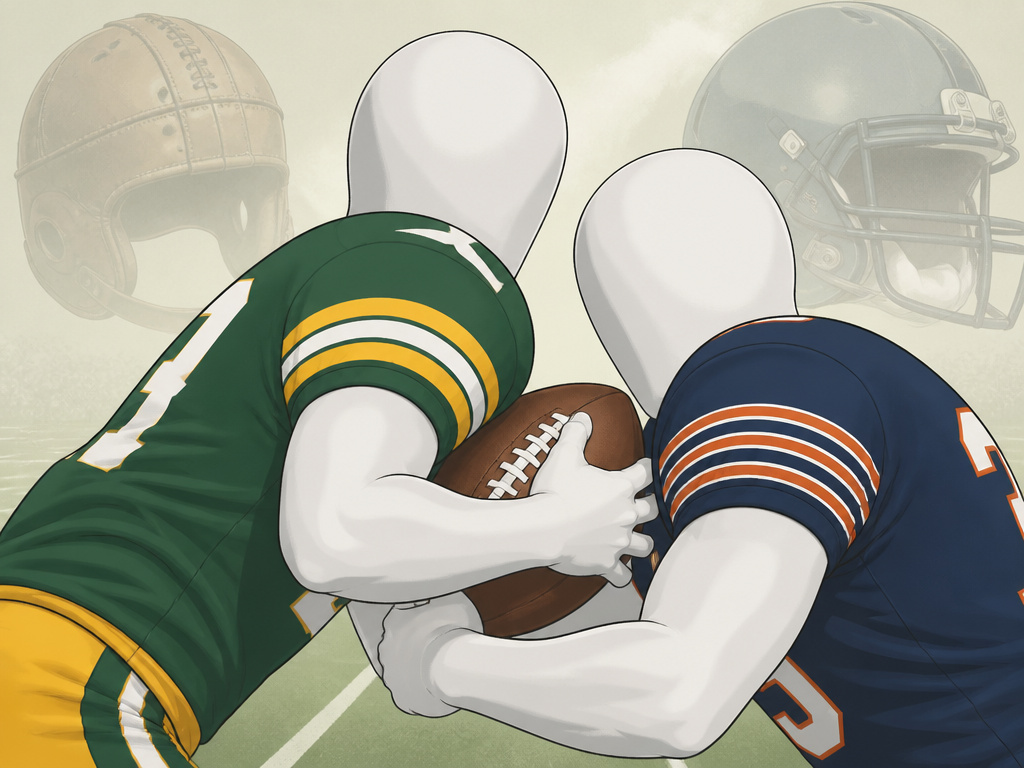
The query “biggest football rivalries” is ambiguous, it pulls in American football fans too. The NFL builds its rivalries differently. Without deep-seated political or religious divisions, they are constructed from geography, playoff history, and player transactions.
The most storied is Green Bay Packers vs Chicago Bears. It’s the league’s oldest rivalry, dating back to 1921. It’s a classic, blue-collar, Midwestern feud.
Easy to miss: This “storied” rivalry had a long period of diminished drama. As noted on Packers.com, a competitive “free-fall” started in 1968 and lasted until two close games in December 2025. Even the most historic feud needs competitive games to stay relevant.
Other iconic NFL rivalries include:
- Dallas Cowboys vs Washington Commanders: A divisional hate built on the 1970s and 80s, mixing politics and showmanship.
- Pittsburgh Steelers vs Baltimore Ravens: A modern, brutal rivalry defined by defensive brutality and almost identical, hard-nosed football philosophies.
- Michigan vs Ohio State (College Football): While not NFL, this college rivalry is arguably America’s fiercest. A 2024 Athletic article highlighted a new twist: the 2024 season was the first time the loser of “The Game” went on to win the national championship, thanks to the new 12-team playoff format.
What is the North London Derby?
Geography is the simplest ingredient. Put two clubs in the same city, and you have a derby. Arsenal and Tottenham in North London is a battle for local supremacy, and the tension is visceral because fans live and work together. The noise in a packed stadium for a derby has a specific, shrill pitch, it’s personal. This rivalry defines the area, splitting neighborhoods, workplaces, and even families. Winning means bragging rights over your closest neighbors, a feeling that lasts until the next showdown.
What is the Revierderby?
The rivalry between Borussia Dortmund and Schalke 04 is the defining fixture of Germany’s Ruhr region. This is a classic industrial derby, where the passion is fueled by proximity and shared history in a heartland of the game. The tension is visceral because the communities are intertwined. For a rivalry to become this entrenched, it often becomes a symbol of local identity and pride.
Frequently Asked Questions
What is considered the biggest rivalry in football?
Globally, El Clásico (Barcelona vs Real Madrid) has the largest worldwide audience and media footprint. Considering its intensity and historical baggage, the Old Firm (Celtic vs Rangers) is arguably the most fierce, as it is a direct extension of a religious and social conflict that transcends sport.
What are some of the biggest NFL rivalries?
The Green Bay Packers vs Chicago Bears rivalry is the NFL’s oldest and most storied. Other massive feuds include Dallas Cowboys vs Washington Commanders, Pittsburgh Steelers vs Baltimore Ravens, and the college football titan, Michigan vs Ohio State.
What are the top 5 biggest rivalries in the world?
Any top-five list will vary, but based on global impact, history, and intensity, a strong list would be: 1) El Clásico (Barcelona vs Real Madrid), 2) The Old Firm (Celtic vs Rangers), 3) Superclásico (Boca Juniors vs River Plate), 4) North West Derby (Liverpool vs Manchester United), 5) Argentina vs England (international).
Why are some rivalries more violent than others?
Rivalries tied to irreconcilable political or religious identities (like the Old Firm) carry a higher risk of violence because the match symbolizes a much larger, real-world conflict. Local derbies with a history of hooliganism can also be violent, but often as a tribal ritual rather than a political act. The culture of supporter groups, or ultras in football, plays a major role in organizing, and sometimes curbing, this aspect of fan culture.
Before You Go
The next time you see a derby billed as “the biggest rivalry in football,” look past the hype. Ask what the story is. Is it about a canal? A war? A language? A prayer?
The rivalries that last are the ones where losing feels like a tear in your identity. They’re exhausting, often toxic, and sometimes silly. But they’re also the reason the sport has a soul deeper than just entertainment. They connect Saturday afternoons to centuries of history. That’s a weight a simple game shouldn’t be able to carry, but the best ones always do.
So watch the full-back, not the ball. The tactics matter. But the story behind the scoreline is always better.
